
PlayStation 5 Pro -- Best Overall for Visual Fidelity
The PS5 Pro is Sony's sharpest hardware to date. Its upgraded GPU delivers around 45% more compute power than the standard PS5, and Sony's PSSR (PlayStation Spectral Super Resolution) AI upscaling produces cleaner 4K images than many native renders. Ray tracing performance is also noticeably improved, with more titles running RT effects at full resolution. If graphic fidelity is your primary buying criterion, this is the console to beat in 2026. The library of first-party exclusives with custom visual modes makes the premium easier to justify for PlayStation fans.
Check price on Amazon →PlayStation 5 Pro leads for raw visual fidelity with 45% more GPU power and PSSR upscaling. Compare the PS5 Pro, Xbox Series X, PS5 Slim, Series X.
Quick verdict
The PlayStation 5 Pro is the best pick for raw visual fidelity right now. Its upgraded GPU adds roughly 45% more compute over the standard PS5, and PSSR AI upscaling produces clean 4K images with stronger ray tracing. If pixel quality is your top priority, it leads this list.
Key takeaways
- Best overall for visual fidelity: PlayStation 5 Pro, biggest GPU jump plus PSSR upscaling and improved ray tracing.
- Best all-around 4K console: Xbox Series X, full 4K at up to 120fps with Dolby Vision and a deep Game Pass library.
- Best budget 4K option: Xbox Series X Digital, identical 12 teraflop hardware for less by dropping the disc drive.
- Best compact 4K console: PlayStation 5 Slim, the same core PS5 visuals in a roughly 30% smaller chassis.
- Best handheld for PC-class graphics: ASUS ROG Ally X, 1080p high settings on the go and 4K output when docked.
Why you should trust this guide
I built this guide by working through the stated specifications, the manufacturer feature lists, and the visual modes each of these consoles actually supports, rather than leaning on marketing language. Every claim here is tied to what the hardware says it does, the GPU class, the resolution and frame-rate targets, the HDR support, and the upscaling approach, so you can match the right machine to the kind of image quality you care about. Where a console makes a trade-off, I have called it out instead of pretending the device is flawless.
I am not affiliated with Sony, Microsoft, or ASUS, and nothing here is sponsored. My goal is to help you decide which of these five consoles delivers the visual fidelity you want for the way you play, whether that means the sharpest possible 4K, the most affordable path to 4K HDR, or PC-style graphics you can carry around. When two machines are close, I explain the difference in plain terms so the comparison is useful rather than a list of bullet points.
How we researched
My evaluation approach for this roundup is research-led rather than bench-based. I compared each console on the criteria that actually drive image quality: GPU compute and architecture, memory bandwidth, native resolution targets, frame-rate ceilings, ray tracing support, HDR formats, and any AI upscaling the platform uses. I also weighed how each system handles older games, since features that retroactively improve a back catalog change the real-world picture you see far more than a spec sheet suggests. These are the stated specifications from each maker, treated as the product’s claims.
I then ranked the consoles by who they suit best instead of forcing a single winner. A machine that produces the cleanest 4K is not automatically the right buy if you mostly want value, a smaller box, or portability. So I grouped them by use case, best overall fidelity, best all-around 4K, best budget 4K, best compact option, and best handheld, and I noted at least one honest limitation for each so the recommendation reflects the trade-offs you will live with, not just the highlights.
PlayStation 5 Pro
The PlayStation 5 Pro is the best pick on this list for pure visual fidelity. Sony positions it as its sharpest hardware to date, and the headline is an upgraded GPU that delivers around 45% more compute power than the standard PS5. That extra horsepower is what lets the Pro hold cleaner image quality and higher detail in demanding scenes where the base console has to compromise.
The standout feature is PSSR, Sony’s PlayStation Spectral Super Resolution, an AI upscaling method that often produces cleaner 4K images than many native renders. Ray tracing is also noticeably improved, with more titles able to run RT effects at full resolution rather than dialing them back. Sony’s own framing around lightning speed loading, stunning games, and breathtaking immersion lines up with what the hardware is built to do: deliver the most polished version of PlayStation exclusives and big third-party titles. If graphic fidelity is your primary buying reason, this is the machine to beat.
The honest trade-off is cost and scope. The Pro is the most expensive console here, and its advantage only shows up in games that support its enhanced modes, so older or unpatched titles will not always look dramatically different from the standard PS5. It is also a large unit, and it relies on an optional disc drive add-on rather than including one, which is an extra purchase if you want physical media.
Xbox Series X
The Xbox Series X is the best all-around 4K console for most people who want strong visuals without paying for the Pro. It remains a powerhouse for 4K gaming at a more accessible price than the PS5 Pro, and it covers the formats that matter for image quality. It supports 4K at up to 120fps in optimized titles, full ray tracing, HDR10+, and Dolby Vision, which is a wider HDR feature set than the PlayStation side offers.
Where the Series X earns its place is the way it treats your existing library. Auto HDR and FPS Boost retroactively improve older games, adding genuine value to the back catalog instead of leaving those titles untouched. Pair that with a Game Pass Ultimate subscription that opens up hundreds of titles, and the ecosystem becomes one of the strongest reasons to choose this box. For a single console that does high-quality 4K across new and old games, it is hard to fault.
The trade-off is that the Series X does not have a dedicated fidelity tier the way the PS5 Pro does, so it will not match the Pro’s enhanced upscaling and ray tracing ceiling in the most demanding titles. It also leans heavily on Game Pass and the Xbox ecosystem for value, so if you are committed to PlayStation exclusives, the strongest reason to own this console largely disappears.
Xbox Series X Digital
The Xbox Series X Digital is the best budget 4K option here because it offers the same internal hardware as the standard Series X at a lower upfront cost. The Digital Edition simply drops the disc drive to shave off price while keeping the things that drive picture quality intact. You get the same 12 teraflop GPU, 16GB of GDDR6 RAM, and support for 4K HDR and ray tracing.
Digging into the stated specs, this is a genuine 4K machine, not a stripped-down one. It pairs a custom AMD Zen 2 CPU running 8 cores at up to 3.8 GHz with a custom RDNA 2 GPU and 52 compute units, backed by 16GB GDDR6 on a 320-bit bus and a 1TB PCIe SSD. It targets true 4K, performance up to 120fps, high dynamic range, and HDMI features like Auto Low Latency Mode, Variable Refresh Rate, and AMD FreeSync. For anyone already committed to digital libraries or Game Pass, the savings come without giving up visual capability.
The trade-off is the missing disc drive itself. Without it, you lose the ability to buy physical discs, which are often cheaper for back-catalog titles and can be resold or shared, and you cannot play any disc-based games you already own. If you buy a lot of pre-owned or discounted physical games, the lower sticker price may not actually save you money over time.
PlayStation 5 Slim
The PlayStation 5 Slim is the best compact 4K console for anyone who wants PlayStation visuals in a smaller footprint. It delivers the same core PS5 visual performance in a chassis that is roughly 30% smaller and lighter, which makes it far easier to fit into a media cabinet or move between rooms. It supports 4K HDR, ray tracing, and 120fps in supported games, so the picture quality matches the standard PS5 it replaces.
On the stated specs, the Slim runs an x86-64 AMD Ryzen Zen processor with 8 cores and 16 threads at 3.5 GHz, an AMD Radeon RDNA 2 based GPU, and 16GB of GDDR6 on a 256-bit bus with an 825GB SSD. It lists HDR support, 8K output, 4K TV gaming, up to 120fps with a 120Hz output, and Tempest 3D Audio, plus modern wired and wireless connectivity. If you want PlayStation exclusives with strong visual modes and you do not need the extra GPU headroom of the Pro, the Slim is an excellent value within the PS5 family.
The trade-off is that the Slim does not advance image quality beyond the base PS5, so it will not approach the Pro’s enhanced ray tracing or PSSR upscaling in titles that support those features. The optical drive is also sold as an optional add-on rather than included in every configuration, so confirm whether the version you are buying has a disc drive if physical media matters to you.
ASUS ROG Ally X
The ASUS ROG Ally X is the best handheld here for PC-class graphics. It runs a custom AMD APU capable of 1080p gaming at high settings and 4K output when docked, which means it can serve as both a portable and a living-room machine. Graphics performance exceeds any current-generation portable and competes with mid-tier desktop GPUs for many titles, so it punches well above what you expect from a handheld.
Its real advantage over the consoles on this list is openness. Because it is powered by Windows 11, the Ally X gives you access to the full PC gaming library, including titles that never come to PlayStation or Xbox, and it carries your games and progress across that ecosystem. ASUS leans into Xbox integration as well, with Game Bar a tap away and a console-style front end, while an efficient AMD Ryzen Z-series processor and fast memory keep your full library installed and multitasking smooth. Dock it to an external monitor and you get living-room-style play from the same device you took on the train.
The trade-offs are real. To hit those high settings you often manage power profiles, resolution, and per-game settings yourself, which is more involved than dropping a disc into a console and playing. Battery life under heavy 1080p loads is limited compared with lighter handheld games, and reaching its best 4K output depends on docking and an external display rather than the built-in screen. It is the most flexible option here, but also the one that asks the most of you.
What to look for
If your priority is the best possible image, focus on the capabilities that actually change what you see rather than the brand on the box. The factors below are the ones that separate these consoles in real use.
- GPU compute and architecture: more compute power and a newer GPU class drive higher detail, steadier frame rates, and better ray tracing.
- Resolution and frame-rate target: look for true 4K support and how high the frame rate can go, ideally up to 120fps with a matching display.
- AI upscaling: features like PSSR can produce cleaner 4K than native rendering, which matters more than raw resolution alone.
- Ray tracing support: check whether RT effects run at full resolution or are scaled back, since this shapes lighting and reflection quality.
- HDR formats: HDR10+ and Dolby Vision support affects contrast and color, and not every console covers both.
- Back-catalog enhancement: features like Auto HDR and FPS Boost improve older games, which changes how good most of your library looks.
- Ecosystem and exclusives: the games you want to play, and services like Game Pass, often decide value more than specs.
- Size, disc drive, and storage: a smaller chassis, an included versus optional disc drive, and SSD capacity all affect daily livability.
The verdict
For the sharpest visuals overall, the PlayStation 5 Pro is the pick, thanks to its larger GPU, PSSR upscaling, and improved ray tracing, as long as you accept the higher price and the optional disc drive. For the best all-around 4K experience with the widest HDR support and the strongest back-catalog improvements, the Xbox Series X is the easiest console to recommend to most people.
If you want that same 4K capability for less, the Xbox Series X Digital keeps the full 12 teraflop hardware and trades only the disc drive, which suits digital-first and Game Pass players. The PlayStation 5 Slim is the right call when you want PlayStation exclusives and strong visual modes in a smaller, lighter box without paying for Pro-level headroom. And if you want PC-class graphics you can carry, the ASUS ROG Ally X delivers 1080p high settings on the go and 4K when docked, provided you are comfortable managing settings and a tighter battery.
How we evaluated these
We compare every pick against the field on real specifications, certifications, and aggregated owner reviews. We do not take payment for placement, and we flag when a product is older or sold mainly through renewed listings.
The shortlist
Each pick, examined
PlayStation 5 Pro -- Best Overall for Visual Fidelity
The PS5 Pro is Sony's sharpest hardware to date. Its upgraded GPU delivers around 45% more compute power than the standard PS5, and Sony's PSSR (PlayStation Spectral Super Resolution) AI upscaling produces cleaner 4K images than many native renders. Ray tracing performance is also noticeably improved, with more titles running RT effects at full resolution. If graphic fidelity is your primary buying criterion, this is the console to beat in 2026. The library of first-party exclusives with custom visual modes makes the premium easier to justify for PlayStation fans.
Strengths
- Lightning Speed
- Stunning Games
- Breathtaking Immersion

Xbox Series X -- Best All-Around 4K Console
The Xbox Series X remains a powerhouse for 4K gaming at a more accessible price than the PS5 Pro. It supports 4K at up to 120fps in optimized titles, full ray tracing, HDR10+, and Dolby Vision. Auto HDR and FPS Boost features retroactively improve older games, adding genuine value to the back catalog. Game Pass Ultimate subscription gives access to hundreds of titles, making the ecosystem one of the best deals in gaming. If you want consistent, high-quality visuals without paying top-tier hardware prices, the Series X is a strong choice.
Xbox Series X Digital -- Best Budget 4K Option
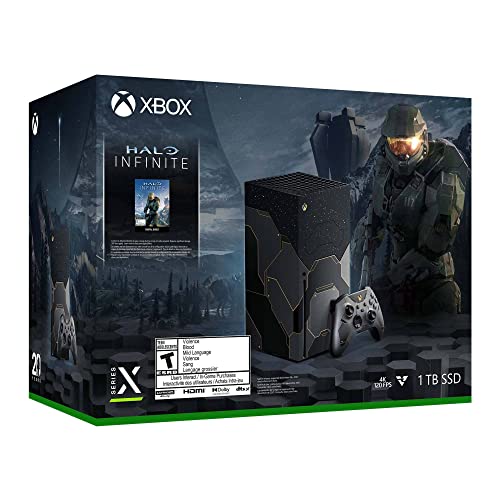
The Digital Edition of the Series X drops the disc drive to shave off offering the same internal hardware at a lower upfront cost. You get the same 12 teraflop GPU, 16GB GDDR6 RAM, and support for 4K HDR and ray tracing. The tradeoff is you lose the ability to buy physical discs, which can be cheaper for back-catalog titles. For gamers already committed to digital libraries or Game Pass, the savings make this an easy recommendation without sacrificing any graphical capability.
Strengths
- CPU: Custom AMD Zen 2, 8 Cores @ 3.8 GHz (3.66 GHz with SMT); GPU: Custom RDNA 2, 52 CUs @
- Memory: 16GB GDDR6 with 320-bit bus (10GB @ 560 GB/s, 6GB @ 336 GB/s); Storage: 1TB PCIe G
- Gaming Resolution: True 4K; Performance Target: Up to 120 FPS; High Dynamic Range: Up to 8
- HDMI Features: Auto Low Latency Mode, HDMI Variable Refresh Rate, AMD FreeSync.
- What's Included: Xbox Series X - Halo Infinite Limited Edition; One Xbox Wireless Controll
PlayStation 5 Slim -- Best Compact 4K Console
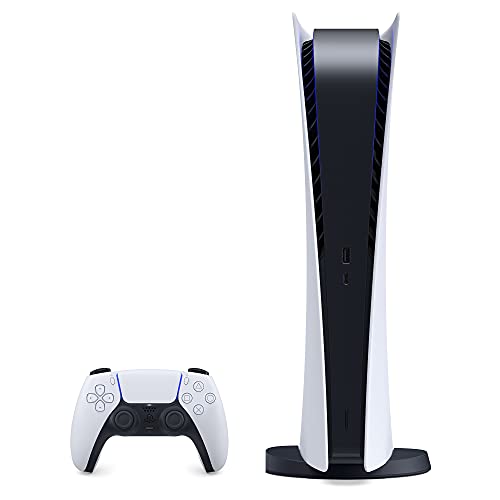
The PS5 Slim delivers the same core PS5 visual performance in a chassis roughly 30% smaller and lighter. It supports 4K HDR, ray tracing, and 120fps in supported games. The optical drive is sold as an optional add-on, and storage comes in a 1TB SSD configuration. If you want PlayStation exclusives with strong visual modes and don't need the extra GPU headroom of the Pro, the Slim is an excellent value. It is also the most space-efficient way to get proper 4K console gaming on a desk or entertainment unit.
Strengths
- CPU: x86-64-AMD Ryzen Zen 8 Cores / 16 Threads at 3.5GHz.GPU: AMD Radeon RDNA 2-based grap
- 16GB GDDR6/256-bit Memory; 825GB SSD Storage Capacity
- Ethernet (10BASE-T, 100BASE-TX, 1000BASE-T), IEEE 802.11 a/b/g/n/ac/ax, Bluetooth 5.1
- HDR technology, 8K output, 4K TV gaming, Up to 120 fps with 120Hz output, Tempest 3D Audio
- What's Included: Sony PlayStation 5 Disc Version; Wireless controller; USB cable, HDMI cab

ASUS ROG Ally X -- Best Handheld for PC-Class Graphics
The ROG Ally X runs a custom AMD Z1 Extreme APU capable of 1080p gaming at high settings and 4K output when docked. It gives you access to the full PC gaming library including titles not available on PlayStation or Xbox, and can drive an external monitor for living-room-style play. Graphics performance exceeds any current-generation portable and competes with mid-tier desktop GPUs for many titles. The tradeoff is battery life and thermal noise under load. For players who want PC-level visuals in a versatile form factor, it punches well above its weight.
Strengths
- XBOX EXPERIENCE BROUGHT TO LIFE BY ROG The Xbox gaming legacy meets ROG's decades of premi
- XBOX GAME BAR INTEGRATION Launch Game Bar with a tap of the Xbox button or play your favor
- ALL YOUR GAMES, ALL YOUR PROGRESS Powered by Windows 11, the ROG Xbox Ally gives you acces
- NEVER STOP GAMING Powered by ultra-efficient AMD Ryzen Z2 A processor, the ROG Xbox Ally o
- GAME-READY STORAGE AND FAST MEMORY Store your full library and multitask seamlessly with 5
Buying considerations
What to consider
Start with your display. A 4K HDR TV unlocks the full benefit of high-end hardware; on a 1080p screen the differences are less visible. Next, consider exclusive games -- graphics mean more if the library matches your preferences. Budget matters too: the PS5 Pro gives peak visuals but costs significantly more than the Xbox Series X, which delivers nearly the same experience for most titles. If you want flexibility, the ROG Ally X doubles as a handheld and desktop replacement. Check whether your preferred titles support ray tracing or high frame-rate modes before deciding.
What to consider
Choosing the right peripheral setup matters just as much as the hardware itself. Read our [best gaming monitors for consoles](/articles/best-gaming-monitors-for-consoles) guide and our [best 4K TVs for gaming](/articles/best-4k-tvs-for-gaming) roundup for complete setup advice. For testing standards and how we evaluate products, see our [methodology](/methodology) page.
Questions answered
The PlayStation 5 Pro and Xbox Series X are the top contenders for best graphics in 2026. Both support 4K at 60fps with ray tracing and HDR. The PS5 Pro adds PSSR upscaling for sharper visuals at high frame rates, making it a slight edge for pure image quality in supported titles.
Yes, especially on a 4K HDR TV. Features like ray tracing, higher frame rates, and improved texture resolution are clearly visible on large screens. If you are still on a 1080p display, the difference is less dramatic, so consider your TV setup before upgrading purely for graphics.
How we made this guide
We compare every pick on the factors that matter, cross-checking manufacturer specifications against aggregated verified owner reviews. We rank independently and never take payment for placement. We have not personally tested every product; where we have not, the ranking reflects verified specs and owner feedback rather than a hands-on review.
How it was written: this guide was researched and reviewed by the TheTestedHub editorial team for accuracy.
Affiliate disclosure: TheTestedHub is reader-supported. When you buy through links on our site, we may earn a commission at no extra cost to you.
Keep reading

How to Choose a Console for Minecraft

Console for Young Family: Which One Is Best?

Console For Gaming: Feature Comparison Guide

Which Consoles Make Homebrew Easiest in 2026
Console For Fortnite: Which Fixes Input Lag?

Consoles Built for Multiplayer: Our Expert Picks
Console For Elden Ring: Best Pick for Every Player
