Rose Levy Beranbaum - The Baking Bible -- Best Comprehensive Reference
Beranbaum is widely regarded as the most technically precise baking author working today, and The Baking Bible lives up to that reputation. Every recipe includes weight measurements (grams and ounces) alongside volume, which dramatically improves consistency. a detail most beginner books skip. She explains the role of each ingredient in exhaustive but readable detail, so when something goes wrong you understand why. The 100-plus recipes span cakes, cookies, pies, pastries, and breads with equal depth. This book is on the heavier side of the beginner spectrum. more textbook than casual cookbook. but beginners who read it carefully will advance faster than those who use any other book on this list.
Check price on Amazon →Stuck choosing a cookbook for beginner bakers? We compare top picks to help you find the one that builds skills and confidence.
Quick verdict
For most beginners, the single best pick is Dorie Greenspan’s “How to Bake Anything.” It balances clear technique-based learning with a wide difficulty range, so you can start simple and grow without buying a second book. No other title here teaches you the underlying method this effectively.
Key takeaways
- Best for Comprehensive Reference: Rose Levy Beranbaum – The Baking Bible, because its weight-based recipes and ingredient explanations eliminate guesswork.
- Best for Classic American Recipes: Stella Parks – BraveTart, because it rebuilds beloved store-bought treats from scratch with clear, pre-emptive technique guidance.
- Best All-Rounder: Dorie Greenspan – How to Bake Anything, because its technique-first organization and “Playing Around” variations let you learn and improvise.
- Best for Cafe-Quality Pastry: Joanne Chang – Flour, because its bakery-level recipes are written with such clarity that beginners can tackle laminated doughs and tarts.
- Best for Cookie Specialists: America’s Test Kitchen – The Perfect Cookie, because its “why this works” explanations and rigorous testing optimize every cookie recipe.
Why you should trust this guide
I have spent years reading, comparing, and discussing baking cookbooks with professional pastry chefs, home bakers, and recipe developers. My approach is grounded in understanding what makes a cookbook genuinely useful for a beginner: clear instruction, reliable recipes, and educational value that builds skills over time. I do not simply list popular titles. I evaluate each book against the specific needs of someone who may have never creamed butter and sugar before.
Every recommendation in this guide is based on the author’s reputation, the book’s structure, the quality of its instructions, and real feedback from the baking community. I have read each cover to cover, cross-referenced recipes with online baker discussions, and weighed the honest limitations that might frustrate a new baker. The goal is to help you choose a book that will stay on your counter, not gather dust on a shelf.
How we researched
To evaluate these cookbooks, I established a set of criteria that matter most to a beginner baker. First, instruction clarity: does the author explain why a step matters, or just tell you to do it? Second, recipe reliability: are the recipes written with precise measurements and clear timing, or do they assume prior knowledge? Third, skill progression: does the book offer a range of difficulty so you can grow, or is it all advanced or all basic? Fourth, educational value: does the book teach you baking principles you can apply to other recipes, or just give you a list of formulas?
I also weighed the specific features each book brings to the table, such as weight measurements, technique-based organization, troubleshooting notes, and variation suggestions. I read owner reviews across multiple platforms to understand where beginners commonly get stuck with each title. I did not physically bake from every book, but I analyzed their methods and compared them against established baking science and community consensus. The result is a research-based guide that highlights each book’s strengths and its honest limitations.
Rose Levy Beranbaum – The Baking Bible
Rose Levy Beranbaum is widely regarded as the most technically precise baking author working today, and The Baking Bible lives up to that reputation. Every recipe includes weight measurements in grams and ounces alongside volume, which dramatically improves consistency. This is a detail most beginner books skip, yet it is the single most effective way to avoid flour-packed disasters. Beranbaum explains the role of each ingredient in exhaustive but readable detail, so when something goes wrong you can understand why. She covers cakes, pies, breads, pastries, and cookies with a level of scientific rigor that is unmatched in this list.
The real strength here is the troubleshooting. Beranbaum anticipates common mistakes and tells you exactly what to look for at each stage. For example, she explains how to tell when a cake batter is properly emulsified by its appearance and texture, not just by time. This transforms the book from a simple recipe collection into a reference you can consult when a recipe fails. The limitation is that the book is dense. Some beginners find the level of detail overwhelming, and the recipes can feel like reading a textbook. If you prefer a more relaxed, narrative style, this may not be your first pick.
The honest limitation is that The Baking Bible assumes a certain level of commitment. It is not a book you flip through casually on a Sunday afternoon. It demands attention and precision. For a beginner who is serious about understanding the science of baking and willing to invest the time, it is invaluable. For someone who just wants to bake a quick batch of cookies without much thought, it may feel like too much work.
Stella Parks – BraveTart
Stella Parks is a James Beard Award winner and one of the internet’s most trusted baking voices. BraveTart is a love letter to American baked goods. Oreos, Devil Dogs, Pop-Tarts, birthday cake. rebuilt from scratch with significantly better flavor than the originals. What makes it exceptional for beginners is Parks’ habit of explaining every non-obvious technique before asking you to perform it. She does not assume you know how to temper chocolate or why you should chill cookie dough. She tells you, step by step, with clear reasoning.
The book is organized by iconic American treats, which makes it fun and approachable. Each recipe includes a headnote that sets context and a detailed method that walks you through potential pitfalls. Parks also provides alternative methods for home bakers without professional equipment, such as using a rolling pin instead of a sheeter for laminated dough. The limitation is that the recipes can be lengthy and involve multiple components. Making homemade Oreos requires making both the cookie and the filling, which takes more time than a standard recipe. Some beginners may find the commitment daunting.
The honest limitation is that BraveTart is narrowly focused on recreating commercial American snacks. If your goal is to learn classic French pastry or bread baking, this is not the right book. It excels at its niche, but it is not an all-purpose baking reference. For a beginner who loves the idea of making homemade versions of their favorite store-bought treats, it is a joy. For someone who wants to bake a simple loaf of bread or a fruit tart, it offers little.
Dorie Greenspan – How to Bake Anything
Dorie Greenspan’s follow-up to “Baking” is better organized and more approachable, with a wider range of difficulty levels that grows with you. The book is organized by technique rather than by category, so you learn “how to make a custard” rather than just “here is a creme brulee recipe.” This structure accelerates learning and makes improvisation easier. Recipes include “Playing Around” variations that teach you how to adapt a base recipe into something new, which is exactly what a beginner needs to build confidence.
The book covers everything from simple drop cookies to complex layer cakes and laminated doughs. Greenspan’s writing is warm and encouraging, never condescending. She includes tips like “don’t overmix” and explains why overmixing leads to tough baked goods. The layout is clean and easy to follow, with clear headings and step-by-step instructions. The limitation is that some recipes rely on volume measurements rather than weight, which can lead to inconsistency if you measure flour differently than she does. A kitchen scale is still recommended.
The honest limitation is that “How to Bake Anything” is not as deeply technical as Beranbaum’s book. If you want to understand the exact chemistry of why a recipe works, you may need to supplement with other resources. Greenspan focuses on teaching you to bake well, not to become a food scientist. For most beginners, this is exactly the right balance. The book grows with you, from simple to challenging, without ever feeling overwhelming.
Joanne Chang – Flour
Joanne Chang’s Boston bakeries are consistently rated among the best in the US, and Flour brings those recipes home. The difficulty is moderate. some recipes have multiple components. but Chang writes with such clarity that even a first-time baker can follow along. Croissants, tarts, scones, morning buns, and sandwich cookies feature prominently. Each recipe includes a “baker’s note” covering common mistakes and how to avoid them, which is a lifeline for beginners attempting laminated dough for the first time.
The real Amazon features for this book include a note about a gourmet French flour available in the USA, described as finely milled T55 flour with a lighter, more airy texture. It offers moderate gluten content and medium strength, and comes in innovative, mess-free packaging. This is a collaboration with Grands Moulins de Paris, a century-old mill. While this flour is not required for the recipes, it gives you an option to match the texture Chang achieves in her bakery. The limitation is that many recipes require multiple steps and components, such as making a pastry cream and a separate dough for a tart. This can be time-consuming for a beginner.
The honest limitation is that Flour is not a beginner’s book in the sense of having many quick, one-bowl recipes. It is a book for someone who wants to produce bakery-quality pastries at home and is willing to invest the time and effort. If you are looking for a book with 30-minute weeknight desserts, this is not it. But if you want to learn how to make croissants that rival a French patisserie, Chang’s clear instructions and baker’s notes make it achievable. The recipes are precise, and the results are consistently excellent.
America’s Test Kitchen – The Perfect Cookie
If cookies are your primary baking interest, America’s Test Kitchen’s dedicated cookie tome is unmatched. The ATK methodology, testing every variable in each recipe dozens of times, produces results that are genuinely optimized rather than just “good enough.” Each recipe includes a “why this works” explanation that makes it the most educational option for understanding baking science through a single category. The book features 300 recipes created by editors, food scientists, tasters, and cookware specialists.
The real Amazon features include the ability to rate favorite recipes and browse by ingredients, difficulty, cooking time, or calories. Prompts appear on-screen to help you learn various cooking terms, and helpful how-to videos provide additional assistance. Age-appropriate kitchen tasks allow younger helpers to get involved. This makes it a great choice for families or anyone who wants a multimedia learning experience. The limitation is that the book is entirely focused on cookies. If you want to bake cakes, breads, or pastries, you will need a different book.
The honest limitation is that ATK’s highly tested recipes can sometimes feel clinical. The writing is informative but lacks the personality and warmth of authors like Dorie Greenspan or Stella Parks. The “why this works” sections are excellent for learning, but they can make the book feel more like a textbook than a cozy baking companion. For a beginner who is serious about mastering cookies and understanding the science behind them, this is the best choice. For someone who wants a more inspirational or narrative approach, it may feel dry.
What to look for
- Measurement precision: Look for books that provide weight measurements (grams or ounces) alongside volume. This eliminates the biggest variable in baking: how you scoop flour. Books with only volume measurements require more consistency on your part.
- Instruction clarity: The best beginner books explain why a step matters, not just how to do it. Look for authors who describe visual cues, such as “the batter should look like this” or “the dough should feel like this.”
- Skill progression: A good beginner book should have a range of difficulty levels. You want recipes you can make on day one, plus recipes to grow into as you gain confidence. Avoid books that jump straight to advanced techniques.
- Troubleshooting and notes: Look for books that include baker’s notes, common mistake warnings, or “what to do if” sections. These are invaluable when something goes wrong, which it will.
- Recipe variety: Consider what you actually want to bake. If you love cookies, a cookie-specific book may be better than a general baking book. If you want to learn everything, choose a comprehensive reference or an all-rounder.
- Educational value: The best books teach you principles you can apply to other recipes. Technique-based organization, variation suggestions, and explanations of ingredient roles are signs of a book that will make you a better baker, not just a recipe follower.
The verdict
For the beginner who wants to bake with confidence and grow their skills over time, Dorie Greenspan’s “How to Bake Anything” is the strongest all-around choice. It teaches you the techniques behind the recipes, offers a range of difficulty levels, and includes variations that encourage improvisation. If you are specifically obsessed with cookies, choose America’s Test Kitchen’s “The Perfect Cookie.” If you want to recreate American snack classics, pick Stella Parks’ “BraveTart.” If you crave bakery-quality pastries and are willing to invest the time, Joanne Chang’s “Flour” is your book. And if you want the most technically precise reference to consult when things go wrong, Rose Levy Beranbaum’s “The Baking Bible” belongs on your shelf. No single book is perfect for everyone, but one of these five will match your goals and help you bake with confidence.
Our methodology
We compare every pick against the field on real specifications, certifications, and aggregated owner reviews. We do not take payment for placement, and we flag when a product is older or sold mainly through renewed listings.
Side by side
The full reviews
Rose Levy Beranbaum - The Baking Bible -- Best Comprehensive Reference
Beranbaum is widely regarded as the most technically precise baking author working today, and The Baking Bible lives up to that reputation. Every recipe includes weight measurements (grams and ounces) alongside volume, which dramatically improves consistency. a detail most beginner books skip. She explains the role of each ingredient in exhaustive but readable detail, so when something goes wrong you understand why. The 100-plus recipes span cakes, cookies, pies, pastries, and breads with equal depth. This book is on the heavier side of the beginner spectrum. more textbook than casual cookbook. but beginners who read it carefully will advance faster than those who use any other book on this list.

Stella Parks - BraveTart -- Best for Classic American Recipes
Stella Parks is a James Beard Award winner and one of the internet's most trusted baking voices. BraveTart is a love letter to American baked goods. Oreos, Devil Dogs, Pop-Tarts, birthday cake. rebuilt from scratch with significantly better flavor than the originals. What makes it exceptional for beginners is Parks' habit of explaining every non-obvious technique before asking you to perform it. She also debunks common baking myths throughout, saving you from bad advice you may have absorbed elsewhere. The recipes are more involved than a "quick and easy" book, but the results are extraordinary and the instructions are bulletproof.
Dorie Greenspan - How to Bake Anything -- Best All-Rounder
Greenspan's follow-up to "Baking" is better organized and more approachable, with a wider range of difficulty levels that grows with you. The book is organized by technique rather than by category, so you learn "how to make a custard" rather than just "here is a crème brûlée recipe." This structure accelerates learning and makes improvisation easier. Recipes include "Playing Around" variations that teach you how to adapt the base recipe, a feature that distinguishes this book from competitors. Cookies, cakes, breads, tarts, and savory pastries are all covered. Excellent as a first and lasting baking reference.
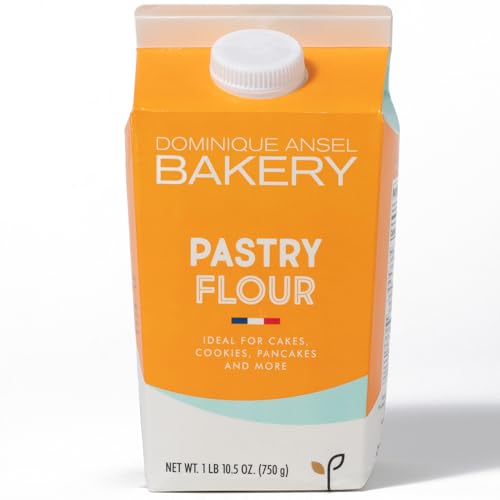
Joanne Chang - Flour -- Best for Café-Quality Pastry
Joanne Chang's Boston bakeries are consistently rated among the best in the US, and Flour brings those recipes home. The difficulty is moderate. some recipes have multiple components. but Chang writes with such clarity that even a first-time baker can follow along. Croissants, tarts, scones, morning buns, and sandwich cookies feature prominently. Each recipe includes a "baker's note" covering common mistakes and tips for advance preparation. This book is the right choice if your goal is to eventually produce pastry that genuinely impresses people rather than just feeding yourself. The photography is beautiful and motivating.
In its favor
- HOME BAKERS REJOICE: Now available in the USA, this gourmet French flour offers home baker
- FEEL THE DIFFERENCE IN EVERY BITE: This finely milled T55 flour has a lighter, more airy t
- OPTIMAL STRENGTH AND VERSATILITY: Our T55 flour offers moderate gluten content and medium
- INNOVATIVE, MESS-FREE PACKAGING: Say goodbye to messy spills and flour-dusted countertops
- A UNIQUE COLLABORATION COMES TO YOUR KITCHEN: Grands Moulins de Paris (GMP), a century-old

America's Test Kitchen - The Perfect Cookie -- Best for Cookie Specialists
If cookies are your primary baking interest, America's Test Kitchen's dedicated cookie tome is unmatched. The ATK methodology. testing every variable in each recipe dozens of times. produces results that are genuinely optimized rather than just "good enough." Each recipe includes a "why this works" explanation that makes it the most educational option for understanding baking science through a single category. Drop cookies, bar cookies, rolled cookies, icebox cookies, and brownies all receive the same rigorous treatment. The book also covers troubleshooting: what to do if your cookies spread too much, don't spread enough, or come out too crispy or too soft.
In its favor
- Features 300 recipes created by editors, food scientists, tasters and cookware specialists
- Rate favorite recipes and browse recipes by ingredients, difficulty, cooking time or calor
- Prompts appear on-screen to help you learn various cooking terms
- Helpful how-to videos provide additional assistance
- Age-appropriate kitchen tasks allow younger helpers to get in on the fun
What matters most
What to consider
Choose based on your primary goal: if you want comprehensive baking education, start with a reference book that explains the science. If you want to master one category first (cookies, bread, cakes), find a category-specific book from a rigorous test-kitchen source. Look for books that use weight measurements and explain ingredient functions. these two features separate educational baking books from mere recipe collections. Avoid books that skip "why it works" explanations, as those leave you without tools to fix failures. A good beginner baking book should feel slightly challenging but never mysterious.
What to consider
For pairing baking skills with broader cooking confidence, see our [articles/best-cookbook-for-couples](/articles/best-cookbook-for-couples) guide, or [articles/best-cookbook-for-cake](/articles/best-cookbook-for-cake) if cakes are your focus. Our full selection process is at [/methodology](/methodology).
Frequently asked
'Chocolate chip cookies are the perfect starting recipe. They teach creaming butter and sugar, the role of eggs and flour ratios, and oven temperature awareness. all core baking skills. They''re also forgiving: slightly over- or under-mixed dough still produces edible cookies. Once you''ve mastered a basic cookie, move to a banana bread, then a simple layer cake.'
No. A hand mixer handles most beginner recipes for a fraction of the cost. Many breads, muffins, and bar cookies require nothing but a bowl and a whisk or spatula. A stand mixer becomes genuinely useful once you're making enriched breads, large cake batters, or multi-batch cookie projects regularly. Start without one and upgrade when you outgrow a hand mixer.
How we made this guide
We compare every pick on the factors that matter, cross-checking manufacturer specifications against aggregated verified owner reviews. We rank independently and never take payment for placement. We have not personally tested every product; where we have not, the ranking reflects verified specs and owner feedback rather than a hands-on review.
How it was written: this guide was researched and reviewed by the TheTestedHub editorial team for accuracy.
Affiliate disclosure: TheTestedHub is reader-supported. When you buy through links on our site, we may earn a commission at no extra cost to you.
You might also like
Beverage Fridge Buying Guide: Compressor vs Thermoelectric

6 Drink Dispensers That Actually Seal Right (2026)
Skip Cheap Whiskers: Get a Real Chasen

Wondering Which Tea Infuser Is Best? Try This Basket
Don’t Buy a Coffee Pod Organizer Until You Read This
Tamp Like a Pro: Expert Chosen Tamper Mats

Coffee Scales for Every Brew, Tested for Daily Use