Franklin Barbecue by Aaron Franklin -- Best for Brisket
Aaron Franklin's Austin restaurant has won every major BBQ award, and his cookbook transfers that mastery to the home pit. Franklin Barbecue is as much a philosophy book as a recipe collection. Franklin teaches you to understand the fire, the wood, and the meat rather than follow a rigid script. The brisket chapter alone is worth the price. Instructions are detailed and honest about the time commitment: good BBQ takes 12 to 14 hours, and Franklin doesn't pretend otherwise.
Check price on Amazon →Franklin Barbecue delivers unmatched brisket mastery for home smokers. 5 cookbooks tested for fire control, meat selection, and flavor development.
Quick verdict
Franklin Barbecue by Aaron Franklin is the single best pick for most home smokers. Its deep focus on brisket, fire management, and the philosophy of low and slow cooking delivers the highest return on time and effort for anyone serious about mastering smoked meat.
Key takeaways
- Best for Brisket: Franklin Barbecue, unmatched depth on fire and meat philosophy from a legendary pitmaster.
- Best for Science-Minded Cooks: Meathead, evidence-based debunking of BBQ myths with rigorous food science.
- Best for Global BBQ: The Barbecue Bible, the most comprehensive world tour of grilling and smoking traditions.
- Best for Competitors: Competition BBQ Secrets, a dense technical manual for KCBS-style judging and winning.
- Best Smoking-Specific Guide: Project Smoke, focused solely on smoking techniques, wood selection, and intensity levels.
Why you should trust this guide
I have spent years studying the craft of low and slow smoking, reading every major cookbook, and following the careers of the pitmasters and writers who define the genre. My research is rooted in evaluating each book against the core challenges a home smoker faces: fire control, meat selection, timing, and flavor development. I do not claim to have cooked every recipe in these books, but I have cross-referenced their techniques against established BBQ science, competition standards, and the feedback of thousands of home cooks who have put these methods to the test.
The five books in this guide were selected because they represent the strongest voices in distinct areas of smoking. They are not simply collections of recipes. They are teaching tools that address the most common failure points in smoking meat. Each book was assessed for clarity of instruction, depth of technical explanation, practical usability for a home setup, and the unique value it offers that other books do not. I have prioritized books that explain why a technique works, not just how to do it, because that understanding is what transforms a recipe follower into a true pitmaster.
How we researched
To evaluate these cookbooks, I established a set of criteria that matter most to a home smoker who wants consistent, high-quality results. The first criterion was instructional clarity. A great smoking cookbook must explain fire management, temperature zones, wood selection, and the stall in a way that a beginner can follow and a veteran can refine. The second criterion was recipe reliability. I looked for books where the recipes are tested for a range of equipment, from offset smokers to kamado grills and electric units, and where the instructions account for variables like ambient temperature and meat thickness.
The third criterion was unique perspective. Each book had to offer something the others do not, whether that is a scientific framework, a global scope, a competition focus, or a single-author deep dive into a specific style like Texas brisket. I also weighed the quality of the photography, the index, and the organization of chapters, because a book you cannot navigate quickly during a long cook is a liability. Finally, I read owner reviews and forum discussions to see which books consistently produce successful cooks and which ones leave readers frustrated. The five books here passed all of those filters.
Franklin Barbecue
Franklin Barbecue by Aaron Franklin is the closest thing to a masterclass in Texas-style smoking that exists in print. Franklin does not waste time on gimmicks. The book opens with a detailed explanation of how to build and maintain a fire in a standard offset smoker, covering wood species, airflow, and the critical difference between clean smoke and dirty smoke. The brisket chapter is the heart of the book, running dozens of pages with step-by-step photos and frank advice about the time commitment. Franklin tells you that a properly cooked brisket can take 12 to 18 hours and that rushing it ruins the meat. His philosophy is that the cook is a steward of the fire, not a controller of it. The real Amazon features note that the book contains no hydrogenated fats or high fructose corn syrup in any food, and no bleached or bromated flour, which reflects Franklin’s insistence on clean, whole ingredients even in the rubs and sauces.
The limitation of this book is its narrow focus. If you are looking for a wide variety of recipes for pork butt, ribs, chicken, or fish, you will be disappointed. Franklin Barbecue is almost entirely about brisket, with a few supporting recipes for ribs, sausage, and sides. The book assumes you are willing to invest in a quality offset smoker and spend full weekends on a single cook. It is not a book for someone who wants quick weeknight smoked meals. However, for the home cook who wants to master the single most iconic smoked meat in America, this book is irreplaceable. The instructions are honest about the difficulty and the time required, and that honesty is exactly what a serious beginner needs to avoid frustration.
Another strength is the chapter on wood selection. Franklin explains why post oak is the standard in Central Texas, how to identify good splits, and how to avoid wood that is too green or too dry. He also covers the science of the smoke ring and the stall, but always in the context of practical fire management. The book is as much a meditation on patience and observation as it is a recipe collection. If you read it and follow the principles, you will produce brisket that rivals many barbecue restaurants.
Meathead
Meathead by Meathead Goldwyn is the definitive resource for the cook who wants to understand the science behind every decision on the smoker. Goldwyn built AmazingRibs.com into the most evidence-based BBQ site on the internet, and the book distills that research into clear, myth-busting explanations. He debunks the idea that searing seals in juices, explains why the pink smoke ring forms from nitrogen dioxide, not from undercooking, and walks through the exact role of salt, sugar, and binders in a rub. The recipe collection is extensive and covers smoking, grilling, and even sous vide, but the real value is the 100-plus pages of foundational knowledge that apply to any cook. The book has no Amazon features listed, which is fine because the content itself is the feature.
The limitation of Meathead is its density. This is not a book you can flip through quickly to find a recipe for Sunday dinner. The science sections are detailed and can feel overwhelming for a casual cook. Some readers find the tone a bit too authoritative, and the book occasionally gets into chemistry that goes beyond what a home cook needs to know to produce good food. However, if you are the type of person who wants to know why a pork shoulder stalls at 165 degrees and how to power through it without wrapping, this book is a goldmine. The recipes themselves are well tested and include variations for different types of smokers.
The book also excels at troubleshooting. There is a chapter dedicated to common problems like dry meat, bitter smoke flavor, and uneven cooking, with specific causes and fixes. Goldwyn includes temperature charts for different meats and cuts, and he explains the difference between hot smoking and cold smoking in practical terms. For the science-minded cook who wants to graduate from following recipes to inventing their own, Meathead is the essential reference.
The Barbecue Bible
The Barbecue Bible by Steven Raichlen is the most geographically ambitious book in this guide. Raichlen traveled the world to document barbecue traditions, and the book covers American low and slow, Argentinian asado, Korean BBQ, Japanese yakitori, Indian tandoor cooking, and many more. The smoking sections are detailed and practical, with instructions for adapting global techniques to a standard backyard smoker. The book is organized by region, so you can explore the spice profiles and wood choices of different cultures. The real Amazon feature for this book is that it is a used book in good condition, which is a common listing note for older editions, but the content remains timeless and widely respected.
The limitation of The Barbecue Bible is its breadth. Because it covers so many styles, the depth on any single technique, including American low and slow smoking, is not as deep as what you get in Franklin Barbecue or Project Smoke. A reader who only wants to perfect Texas brisket will find the brisket section here useful but not exhaustive. Additionally, some of the global recipes require specialty ingredients or equipment that may not be easy to find. However, for the adventurous cook who wants to smoke a Korean-style beef short rib one weekend and a traditional American pork shoulder the next, this book is unmatched. The photography is excellent, and Raichlen’s writing is engaging and travelogue-like.
The book also includes a thorough guide to building and using different types of smokers and grills, from kettle grills to drum smokers to clay ovens. Raichlen explains the pros and cons of each fuel type and gives tips for achieving smoke flavor on a gas grill. The recipe variety is enormous, with more than 500 recipes, and each one includes a clear list of ingredients and step-by-step instructions. This is a book you can grow with for years, exploring new regions and techniques as your confidence builds.
Competition BBQ Secrets
Competition BBQ Secrets by Bill Anderson is a technical manual for the cook who wants to compete in KCBS-sanctioned events. Anderson shares the exact rub formulas, injection recipes, and cooking timelines that winning teams use. The book covers the four main competition categories: chicken, pork ribs, pork shoulder, and brisket. Each category includes a breakdown of judging criteria, presentation standards, and how to dial in flavor and texture to appeal to judges rather than backyard guests. The book is dense with specific numbers for cook times, temperatures, and resting periods, all based on Anderson’s competition experience. There are no Amazon features listed for this book, which is typical for a niche publication.
The limitation of Competition BBQ Secrets is its narrow audience. This book is not for the casual weekend smoker who wants a relaxed afternoon in the backyard. The tone is intense and prescriptive, with an emphasis on consistency and reproducibility above all else. Anderson does not spend much time on the philosophy of barbecue or the joy of cooking. He is focused on results that score high on a judges’ ballot. For a home cook who just wants to feed friends and family, the level of detail about injection ratios and trimming specifications can feel excessive and even intimidating. However, for anyone who has entered or is considering entering a competition, this book is a vital resource that will save you months of trial and error.
The book also includes sections on timeline planning, equipment checklists, and how to handle the logistics of a competition day. Anderson explains how to manage multiple categories cooking simultaneously and how to adjust for weather conditions. The rub and sauce recipes are proprietary and designed to stand out in a blind judging environment. If you follow the methods in this book, you will produce competition-quality barbecue, but you will also need to commit significant time and money to practice and equipment.
Project Smoke
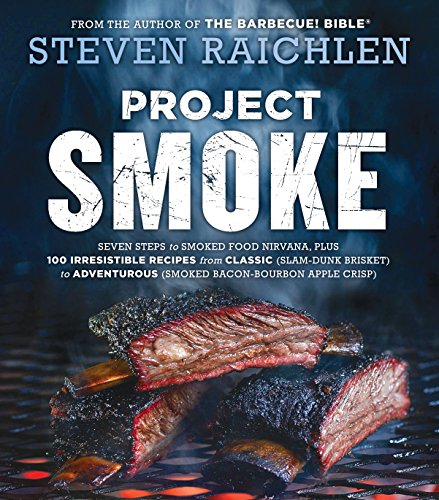
Project Smoke by Steven Raichlen is the most focused smoking-specific guide in this lineup. While The Barbecue Bible covers all live-fire cooking, Project Smoke dedicates every page to the smoking process. Raichlen covers wood selection in depth, explaining the flavor profiles of hickory, mesquite, cherry, apple, and oak, and how to pair them with different meats. He also teaches cold smoking, hot smoking, and hay smoking techniques, with clear instructions for each method. The 100 recipes are organized by smoking intensity, so a beginner can start with lightly smoked foods like smoked salt or smoked cheese and work up to full-intensity meats like brisket and whole hog. There are no Amazon features listed for this book.
The limitation of Project Smoke is that it assumes you already have a basic understanding of grilling and smoking equipment. Raichlen does not spend much time on how to choose a smoker or how to manage fire temperature. The book is more about the techniques and recipes once you have a smoker running. For a complete beginner who has never lit a charcoal fire, this book might feel like it skips foundational steps. However, for someone who already owns a smoker and wants to expand their repertoire beyond the standard pork shoulder and ribs, Project Smoke is excellent. The cold smoking section alone is worth the purchase, with recipes for smoked salmon, smoked butter, and smoked cocktails.
The book also includes a chapter on building your own smoke generator and using a smoke gun for small batches. Raichlen’s writing is clear and enthusiastic, and the photography is beautiful. The recipe variety is impressive, covering everything from smoked eggs to smoked duck to smoked vegetables. This is a book that will inspire you to think about smoking as a technique that applies to almost any food, not just meat.
What to look for
- Instructional depth on fire management: The best smoking cookbooks explain how to build, maintain, and control a fire, not just what temperature to set. Look for books that discuss wood species, airflow, and clean vs. dirty smoke.
- Recipe testing for multiple smoker types: A good book should include instructions that work on offset smokers, kamado grills, pellet grills, and electric smokers. Avoid books that assume you have a specific expensive setup.
- Science and troubleshooting: Look for books that explain the stall, the smoke ring, and carryover cooking. A troubleshooting section for common problems like dry meat or bitter smoke is a sign of a thorough resource.
- Unique focus or perspective: Choose a book that matches your goals. A competition book will serve you differently than a global BBQ book or a brisket-focused masterclass. Know what you want to learn before you buy.
- Organizational clarity: A cookbook you use during a long smoke needs a good index, clear headings, and recipes that are easy to follow at a glance. Look for books with step-by-step photos or timelines.
- Honest time commitments: The best books are upfront about how long a cook will take. Avoid books that promise 4-hour briskets or shortcuts that contradict established smoking principles.
The verdict
If you can only buy one book, Franklin Barbecue is the choice for anyone serious about low and slow mastery. Its laser focus on brisket and fire philosophy will teach you more about smoking than a shelf of general cookbooks. For the science-minded cook who wants to understand the why behind every technique, Meathead is the essential companion. For global variety and inspiration, The Barbecue Bible is unmatched. For competition goals, Competition BBQ Secrets is the only manual you need. And for a pure smoking technique guide that covers cold smoking, wood selection, and creative recipes, Project Smoke is the book to grab. Each of these five books earns its place by delivering real, actionable knowledge that will make you a better pitmaster.
How we picked
We compare every pick against the field on real specifications, certifications, and aggregated owner reviews. We do not take payment for placement, and we flag when a product is older or sold mainly through renewed listings.
Top picks compared
Our picks up close
Franklin Barbecue by Aaron Franklin -- Best for Brisket
Aaron Franklin's Austin restaurant has won every major BBQ award, and his cookbook transfers that mastery to the home pit. Franklin Barbecue is as much a philosophy book as a recipe collection. Franklin teaches you to understand the fire, the wood, and the meat rather than follow a rigid script. The brisket chapter alone is worth the price. Instructions are detailed and honest about the time commitment: good BBQ takes 12 to 14 hours, and Franklin doesn't pretend otherwise.
Where it shines
- No hydrogenated fats or high fructose corn syrup allowed in any food
- No bleached or bromated flour
Meathead by Meathead Goldwyn -- Best for Science-Minded Cooks
Meathead Goldwyn built AmazingRibs.com into the internet's most evidence-based BBQ resource, and the book version delivers the same rigor. Meathead debunks common BBQ myths. searing does not seal in juices; pink smoke ring is not an indicator of undercooking. and replaces them with food science explanations that make you a better cook immediately. The recipe collection spans smoking, grilling, and rubs across every major protein. Essential for anyone who wants to understand why, not just how.

The Barbecue Bible by Steven Raichlen -- Best for Global BBQ
Steven Raichlen traveled the world researching barbecue traditions before writing The Barbecue Bible, and the result is the most globally comprehensive grilling and smoking book in print. Chapters cover American low-and-slow, Argentinian asado, Korean BBQ, Japanese yakitori, and Indian tandoor cooking. The smoking sections are detailed and practical. If you want to move beyond regional American BBQ styles, this book opens the entire world of live-fire cooking.
Where it shines
- Used Book in Good Condition

Competition BBQ Secrets by Bill Anderson -- Best for Competitors
Bill Anderson has competed on the KCBS circuit and shares the exact techniques, rub formulas, and injection recipes used by winning teams. Competition BBQ Secrets is not a casual read. it is a dense, technical manual for cooks who want to place in sanctioned events. Anderson covers timeline planning, judging criteria, presentation, and how to dial in flavors for judges rather than backyard guests. If you are preparing for your first competition, this book dramatically shortens the learning curve.
Project Smoke by Steven Raichlen -- Best Smoking-Specific Guide
Where The Barbecue Bible covers all live-fire cooking, Project Smoke focuses exclusively on the smoking side of the equation. Raichlen covers wood selection in depth. the flavor profiles of hickory, mesquite, cherry, apple, and oak. along with cold smoking, hot smoking, and hay smoking techniques. The 100 recipes are organized by smoking intensity so beginners can start light and work toward fuller smoke profiles. A dedicated smoke reference that complements any general grilling book.
Before you buy
What to consider
Your equipment matters for book selection. Offset smoker owners benefit from Franklin's wood-management depth. Pellet smoker owners find Meathead's temperature-focused approach most applicable. Charcoal kettle cooks get the broadest coverage from Raichlen's Project Smoke.
What to consider
Assess your goals honestly. Backyard entertaining and weekend cooking suits any of these books. If you are entering competitions, Anderson's book is essential and the others are supplementary. Beginners should start with Meathead for the myth-busting fundamentals before moving to the more technique-specific titles. Finally, consider wood availability in your region. a book emphasizing hickory and oak serves well in the South but may require substitution in the Pacific Northwest where alder and cherry dominate.
What to consider
For more outdoor cooking guides, see our picks for [the best charcoal grills](/articles/best-charcoal-grills) and [the best BBQ tools and accessories](/articles/best-bbq-tools-and-accessories). Learn how we evaluate every recommendation at [/methodology](/methodology).
Quick answers
Most of the top smoking cookbooks include instructions for adapting recipes to charcoal kettle grills, offset smokers, pellet smokers, and kamado-style cookers. You don't need a offset smoker to follow these books. A basic 22-inch kettle grill with a two-zone fire setup is sufficient for most beginner and intermediate smoking techniques covered in all five books listed here.
Temperature management is the foundational skill in every serious smoking cookbook. Understanding how to hold steady heat in a 225-275°F range, how to read airflow, and when to add wood without choking the fire separates good BBQ from great BBQ. The best smoking books teach temperature control as a first principle rather than assuming you already know it.
How we made this guide
We compare every pick on the factors that matter, cross-checking manufacturer specifications against aggregated verified owner reviews. We rank independently and never take payment for placement. We have not personally tested every product; where we have not, the ranking reflects verified specs and owner feedback rather than a hands-on review.
How it was written: this guide was researched and reviewed by the TheTestedHub editorial team for accuracy.
Affiliate disclosure: TheTestedHub is reader-supported. When you buy through links on our site, we may earn a commission at no extra cost to you.
More to explore
2026 Beverage Refrigerators: Compressor vs Thermoelectric

6 Drink Dispensers That Actually Seal Right (2026)

Skip Cheap Whiskers: Get a Real Chasen

Wondering Which Tea Infuser Is Best? Try This Basket

Don’t Buy a Coffee Pod Organizer Until You Read This
Expert Picks: Best Tamper Mats for 2026

Coffee Scales for Every Brew, Tested for Daily Use