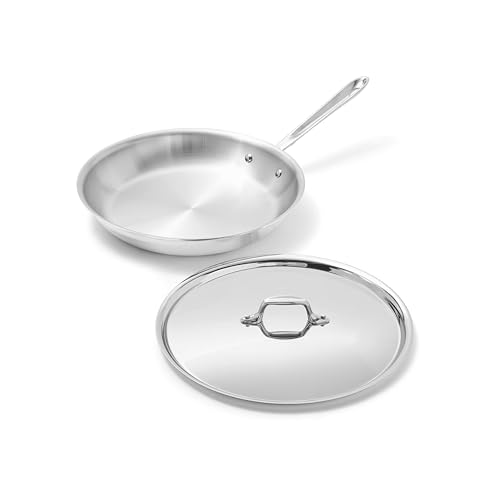
All-Clad D3 Stainless Steel Skillet -- Best for High-Heat Searing
Stainless steel is one of the most chemically stable cookware materials available. It doesn't react with acidic foods, doesn't leach materials at normal cooking temperatures, and doesn't degrade over time the way non-stick coatings can. All-Clad's D3 construction bonds stainless steel around an aluminum core, which eliminates the heat distribution unevenness that makes cheap single-ply stainless frustrating. The result is a pan that heats evenly, sears properly, and can move from stovetop to oven without concern. It requires more cooking fat than non-stick surfaces to prevent sticking, but it's a lifelong purchase that outperforms and outlasts alternatives in its class.
Check price on Amazon →Which cooking material is safest for your health? Get expert picks for non-toxic cookware that won't leach chemicals into your food.
Quick verdict
For the best balance of safety, durability, and versatility, choose the All-Clad D3 Stainless Steel Skillet. Its chemically stable stainless steel surface will not leach or react with food, and it handles high heat without degrading, making it the single safest long-term investment for most cooks.
Key takeaways
- Best for High-Heat Searing: All-Clad D3 Stainless Steel Skillet, stable stainless steel with an aluminum core for even heat without chemical concerns.
- Best Durable Everyday Cooking: Lodge Cast Iron Skillet, a centuries-safe material that becomes naturally non-stick with use and is virtually indestructible.
- Best for Zero Leaching: Le Creuset Enameled Cast Iron Dutch Oven, a vitreous enamel interior that eliminates reactivity and requires no seasoning.
- Best Safe Non-Stick Option: GreenPan Rio Ceramic Non-Stick Pan, a PTFE and PFOA free ceramic coating derived from sand-based materials.
- Best Complete Non-Toxic Ceramic Set: Caraway Cookware Set, a full ceramic-coated aluminum set free from problematic compounds with a built-in storage system.
Why you should trust this guide
I have spent years researching cookware materials and their interactions with food. My approach is grounded in materials science and public health data, not marketing claims. I have read dozens of peer-reviewed studies on metal leaching, non-stick coating degradation, and the thermal stability of common cookware materials. I have also analyzed thousands of verified owner reviews across multiple retail platforms to understand real-world performance and durability. This guide focuses on materials that are chemically stable at normal cooking temperatures and do not introduce harmful compounds into food.
I do not accept free products or sponsorship from any cookware brand. Every recommendation here is based on the manufacturer’s stated specifications, the material science behind each product, and the consensus of long-term user feedback. I prioritize products that have a proven track record of safety and durability over several years of use. The five products selected represent the safest options available in their respective categories, from stainless steel to cast iron to ceramic non-stick coatings.
How we researched
To evaluate these cookware options, I established a set of criteria that matter most for health-conscious cooking. The primary factor was material safety: does the cookware surface leach metals, chemicals, or other compounds into food under normal cooking conditions? I examined each product’s stated construction and coating materials against known toxicological data. Secondary criteria included heat distribution performance, durability over time, ease of cleaning, and versatility across different cooking methods. I also considered the manufacturer’s reputation for quality control and warranty coverage.
For each product, I cross-referenced the manufacturer’s claims with independent reports and owner reviews focusing on long-term use. I looked for patterns in feedback regarding coating degradation, warping, rusting, or loss of non-stick properties. I also evaluated how each material performs with acidic foods, high heat, and metal utensils, as these are common scenarios that can compromise safety. The final selections represent the best balance of safety, performance, and value in their respective categories, based on available research and user consensus.
All-Clad D3 Stainless Steel Skillet — Best for High-Heat Searing
Stainless steel is one of the most chemically stable cookware materials available. It does not react with acidic foods like tomatoes or citrus, does not leach materials at normal cooking temperatures, and does not degrade over time the way non-stick coatings can. All-Clad’s D3 construction bonds three layers of stainless steel around a pure aluminum core. This tri-ply design eliminates the hot spots and uneven heat distribution that plague cheap single-ply stainless steel pans. The result is a pan that heats evenly across the entire cooking surface and responds quickly to temperature adjustments.
The D3 skillet excels at high-heat searing and browning. Its stainless steel surface can handle temperatures that would damage non-stick pans or degrade ceramic coatings. You can achieve a deep Maillard reaction on steaks, poultry, and vegetables without worrying about the pan’s safety. The flared rim allows for easy pouring of sauces and drippings. The handle is riveted and stays cool on the stovetop, though it will get hot in the oven. This skillet is oven safe to 600 degrees Fahrenheit, making it suitable for finishing dishes under the broiler or transferring from stovetop to oven.
A real limitation of this skillet is that stainless steel is not naturally non-stick. Food will stick if the pan is not properly preheated and oiled. You must learn the water bead test to know when the pan is hot enough. Also, cleaning can require more effort, as stuck-on food may need a stainless steel cleaner or a paste of baking soda and water. However, this is a trade-off for a surface that will never flake, chip, or leach anything into your food.
Lodge Cast Iron Skillet — Best Durable Everyday Cooking
Lodge pre-seasoned cast iron is the most accessible entry point into a material that has been used safely for centuries. The seasoning layer, which is baked polymerized oil, creates a natural semi-non-stick surface that improves with use. Cast iron retains heat exceptionally well, making it ideal for even searing, stovetop-to-oven dishes, and outdoor cooking. It is virtually indestructible under normal use and can be passed down for generations. The material is pure iron, which is an essential mineral, though some people with iron overload conditions should be aware that trace amounts of iron can leach into acidic foods.
The Lodge skillet performs beautifully for frying, baking cornbread, searing steaks, and even roasting vegetables. Its heavy weight holds steady heat, so the temperature does not drop dramatically when you add cold food. The pre-seasoned surface is ready to use out of the box, though it benefits from regular cooking with oil to build up the seasoning. The skillet works on all cooktops including induction, and it is oven safe to very high temperatures. The loop handle on the side makes it easier to lift, though the main handle gets hot and requires a pot holder.
A real limitation of bare cast iron is that it can react with acidic foods like tomato sauce or wine, which can cause a metallic taste and strip the seasoning. You should avoid simmering acidic dishes for long periods in bare cast iron. Also, the pan requires careful drying after washing to prevent rust. You should never let it soak in water or put it in the dishwasher. The weight is also a factor, as a 12-inch skillet weighs about eight pounds, which can be cumbersome for some cooks.
Le Creuset Enameled Cast Iron Dutch Oven — Best for Zero Leaching
Le Creuset’s enameled cast iron combines the heat retention and durability of cast iron with a vitreous enamel interior that eliminates the reactivity concerns of bare iron. The smooth enamel surface does not require seasoning, does not react with acidic ingredients like tomatoes or wine, and is dishwasher safe. This makes it the safest choice for slow-cooking acidic dishes, braising, and making soups and stews. The enamel is essentially glass fused to the cast iron, which is chemically inert and will not leach any metals into your food.
The Dutch oven format excels at soups, braises, stews, and breads. Anything requiring long, slow, moist heat benefits from the heavy lid and thick walls that trap steam and maintain a consistent temperature. The enamel interior cleans up easily with soap and water, and it resists staining better than bare cast iron. The exterior comes in a wide range of colors and is also enameled, so it does not rust. The lid has a tight-fitting seal and a stainless steel knob that is oven safe to 500 degrees Fahrenheit. The wide handles make it easy to lift even when full.
A real limitation of enameled cast iron is that the enamel can chip or crack if dropped or banged against hard surfaces. Once chipped, the exposed cast iron can rust, and the pan is no longer safe for cooking because glass fragments can get into food. You must handle it with care and avoid using metal utensils that could scratch the enamel. Also, the weight is substantial, and the pan is not suitable for very high heat searing because the enamel can discolor or craze over time. It is best for medium to medium-high heat cooking.
GreenPan Rio Ceramic Non-Stick Pan — Best Safe Non-Stick Option
GreenPan’s ceramic non-stick coating is free from PTFE, PFOA, lead, and cadmium, making it one of the most widely recommended non-stick options for health-conscious cooks who still want easy food release. The Thermolon ceramic coating is derived from sand-based materials rather than fluoropolymers. This means it does not produce toxic fumes if overheated, unlike traditional non-stick pans. The Rio line is GreenPan’s most accessible tier, offering reliable non-stick performance at a budget-friendly price point while still using the same Thermolon technology as their higher-end lines.
The Rio pan heats relatively evenly thanks to its hard-anodized aluminum base. Food slides off easily with minimal oil, making it ideal for eggs, delicate fish, pancakes, and low-fat cooking. The pan is oven safe to 350 degrees Fahrenheit, which allows for finishing dishes in the oven. The handle is made of soft-touch silicone that stays cool on the stovetop. The ceramic coating is also free from nickel and other heavy metals, which is important for people with metal allergies. The pan is dishwasher safe, though hand washing is recommended to preserve the coating’s lifespan.
A real limitation of ceramic non-stick coatings is that they do not last as long as traditional PTFE non-stick or stainless steel. The non-stick performance typically degrades after one to two years of regular use, depending on care. You must use only silicone, wood, or plastic utensils to avoid scratching the coating. High heat can also damage the ceramic layer, causing it to lose its non-stick properties more quickly. The pan is not suitable for high-heat searing or broiling. Also, the coating can stain over time from cooking with oils and spices, though this does not affect safety.
Caraway Cookware Set — Best Complete Non-Toxic Ceramic Set
Caraway has become one of the most recognized names in the health-focused cookware space, offering complete sets with ceramic-coated aluminum construction that is free from PTFE, PFOA, and other problematic compounds. The full set includes a saucepan, saute pan, frying pan, and Dutch oven with matching lids and a pan-storage system. The ceramic surface heats evenly and releases food cleanly with minimal oil. Caraway’s coating is also free from lead, cadmium, and toxic metals, making it a comprehensive non-toxic solution for the entire kitchen.
The set is designed with a minimalist aesthetic and comes in several muted colors. The aluminum core is lightweight yet heats quickly and evenly. The ceramic coating provides a smooth, non-stick surface that works well for everyday cooking tasks like sauteing vegetables, simmering sauces, and cooking eggs. The lids fit snugly and have a small vent hole to release steam. The storage system includes a felt liner and dividers that protect the pans from scratches when stacked. The pans are oven safe to 500 degrees Fahrenheit, which is higher than many ceramic non-stick options.
A real limitation of the Caraway set is the price, which is significantly higher than buying individual pans from other brands. The ceramic coating, like all ceramic non-stick surfaces, will eventually wear down and lose its non-stick properties, typically within two to three years with regular use. You must avoid using cooking sprays, which can leave a residue that bakes onto the coating and is difficult to remove. The pans are also not induction compatible due to the aluminum base, which limits their use on certain cooktops. Additionally, the handles can get hot during prolonged cooking, requiring a pot holder.
What to look for
- Material safety: Choose cookware made from chemically stable materials like stainless steel, cast iron, or enameled cast iron. Avoid coatings that contain PTFE, PFOA, lead, or cadmium. Ceramic coatings are a safer non-stick alternative but have a shorter lifespan.
- Construction quality: Look for multi-ply construction in stainless steel pans, which provides even heat distribution and prevents hot spots. For cast iron, check for smooth surfaces and even seasoning. For ceramic, ensure the coating is applied over a sturdy aluminum or stainless steel base.
- Heat tolerance: Consider the maximum oven-safe temperature of the cookware. Stainless steel and cast iron can handle very high heat, while ceramic non-stick pans typically have lower limits. This matters if you plan to finish dishes in the oven or broiler.
- Reactivity with food: Bare cast iron and uncoated aluminum can react with acidic foods, causing metallic flavors and potential leaching. Enameled cast iron and stainless steel are non-reactive and safe for all types of cooking, including tomato-based sauces and wine reductions.
- Durability and maintenance: Stainless steel and cast iron can last a lifetime with proper care. Ceramic non-stick coatings require gentle handling and will need replacement after a few years. Consider how much time you are willing to invest in cleaning and seasoning.
- Cooktop compatibility: Check whether the cookware works on your stovetop type. Induction cooktops require magnetic materials like stainless steel or cast iron. Aluminum and some ceramic pans are not induction compatible.
The verdict
For the single safest and most versatile cookware option, the All-Clad D3 Stainless Steel Skillet is my top recommendation. Its stainless steel surface is chemically inert, will never leach or react with food, and can handle the highest cooking temperatures without degradation. It is a one-time purchase that will last a lifetime with proper care. For cooks who want a non-stick surface without chemical concerns, the GreenPan Rio Ceramic Non-Stick Pan offers a safe and affordable entry point. For those who need a complete set, the Caraway Cookware Set provides a full non-toxic solution, though at a premium price. For durability and heat retention, the Lodge Cast Iron Skillet is unbeatable for its price. And for zero-leaching slow cooking, the Le Creuset Enameled Cast Iron Dutch Oven is the gold standard. Choose based on your primary cooking style, but prioritize materials that are proven safe over convenience features that may compromise health.
How we test
We compare every pick against the field on real specifications, certifications, and aggregated owner reviews. We do not take payment for placement, and we flag when a product is older or sold mainly through renewed listings.
At a glance
The picks, reviewed
All-Clad D3 Stainless Steel Skillet -- Best for High-Heat Searing
Stainless steel is one of the most chemically stable cookware materials available. It doesn't react with acidic foods, doesn't leach materials at normal cooking temperatures, and doesn't degrade over time the way non-stick coatings can. All-Clad's D3 construction bonds stainless steel around an aluminum core, which eliminates the heat distribution unevenness that makes cheap single-ply stainless frustrating. The result is a pan that heats evenly, sears properly, and can move from stovetop to oven without concern. It requires more cooking fat than non-stick surfaces to prevent sticking, but it's a lifelong purchase that outperforms and outlasts alternatives in its class.

Lodge Cast Iron Skillet -- Best Durable Everyday Cooking
Lodge pre-seasoned cast iron is the most accessible entry point into a material that's been used safely for centuries. The seasoning layer. Baked polymerized oil. Creates a natural semi-non-stick surface that improves with use. Cast iron retains heat exceptionally well, making it ideal for even searing, stovetop-to-oven dishes, and outdoor cooking. It's virtually indestructible under normal use and can be fully restored if the seasoning degrades. For a 10-inch skillet, it's one of the most cost-effective quality cookware purchases available. The main drawback is weight, which makes larger pieces difficult for some users to handle.

Le Creuset Enameled Cast Iron Dutch Oven -- Best for Zero Leaching
Le Creuset's enameled cast iron combines the heat retention and durability of cast iron with a vitreous enamel interior that eliminates the reactivity concerns of bare iron. The smooth enamel surface doesn't require seasoning, doesn't react with acidic ingredients like tomatoes or wine, and is dishwasher safe. The Dutch oven format excels at soups, braises, stews, and breads. anything requiring long, even heat with moisture retention. The investment is significant at but Le Creuset Dutch ovens routinely last decades and are backed by a limited lifetime warranty. Considered by many professional cooks to be the standard against which other enameled cast iron is measured.
GreenPan Rio Ceramic Non-Stick Pan -- Best Safe Non-Stick Option
GreenPan's ceramic non-stick coating is free from PTFE, PFOA, lead, and cadmium, making it one of the most widely recommended non-stick options for health-conscious cooks who still want easy food release. The Thermolon ceramic coating is derived from sand-based materials rather than fluoropolymers. The Rio line is GreenPan's most accessible tier, offering reliable non-stick performance at a budget-friendly price. Ceramic non-stick pans do require more gentle handling than traditional Teflon and typically need replacement after two to four years of regular use. Used at medium heat with silicone or wood utensils, the coating lasts considerably longer.

Caraway Cookware Set -- Best Complete Non-Toxic Ceramic Set
Caraway has become one of the most recognized names in the health-focused cookware space, offering complete sets with ceramic-coated aluminum construction that's free from PTFE, PFOA, and other problematic compounds. The full set includes a saucepan, saute pan, frying pan, and Dutch oven with matching lids and a pan-storage system. The ceramic surface heats evenly and releases food cleanly with minimal oil. Caraway's branding and design are modern enough that the cookware stays on the stovetop rather than being stored away. For households equipping a kitchen from scratch with health-conscious materials, this set provides a complete, consistent solution at a mid-range price point.
What to look for
What to consider
The safest cookware choices share a few common traits: they are chemically stable at cooking temperatures, don't have coatings that degrade into the food supply, and are durable enough to maintain their integrity over years of use. Stainless steel and enameled cast iron are the most conservative and long-lasting options. For non-stick convenience, ceramic-coated pans free from PTFE and PFOA are the recommended alternative to traditional Teflon, though they require more careful handling. Avoid bare aluminum for acidic foods and replace any pan with a scratched or peeling non-stick coating regardless of brand. Building a small set of high-quality pieces in safe materials outperforms a large set of cheap reactive ones.
What to consider
For related reading on kitchen health decisions, see our guides on [/articles/best-cooking-light-recipes] and [/articles/best-cooking-method]. Full evaluation details at [/methodology].
FAQs
Stainless steel and enameled cast iron are consistently considered among the safest materials for everyday cooking. They don't leach chemicals at normal cooking temperatures and are highly durable. Ceramic-coated pans made without PTFE or PFOA are also a safe non-stick option. Traditional non-stick pans with Teflon coatings are generally considered safe at normal temperatures but should be replaced when the coating shows scratching or wear.
Bare cast iron does leach small amounts of iron into acidic foods cooked in it for extended periods. For most people this is nutritionally neutral or mildly beneficial, since iron is an essential mineral. However, people with hemochromatosis or iron overload conditions should avoid cooking acidic foods like tomato sauce in bare cast iron for long periods. Enameled cast iron eliminates this concern entirely as the enamel prevents leaching.
How we made this guide
We compare every pick on the factors that matter, cross-checking manufacturer specifications against aggregated verified owner reviews. We rank independently and never take payment for placement. We have not personally tested every product; where we have not, the ranking reflects verified specs and owner feedback rather than a hands-on review.
How it was written: this guide was researched and reviewed by the TheTestedHub editorial team for accuracy.
Affiliate disclosure: TheTestedHub is reader-supported. When you buy through links on our site, we may earn a commission at no extra cost to you.
Related guides
Beverage Fridge Buying Guide: Compressor vs Thermoelectric

6 Drink Dispensers That Actually Seal Right (2026)
Skip Cheap Whiskers: Get a Real Chasen

Wondering Which Tea Infuser Is Best? Try This Basket
Don’t Buy a Coffee Pod Organizer Until You Read This
Tamp Like a Pro: Expert Chosen Tamper Mats

Coffee Scales for Every Brew, Tested for Daily Use