GreenPan Valencia Pro Ceramic -- Best Overall Non-Toxic Pan
GreenPan's Valencia Pro remains the benchmark for ceramic non-stick performance in 2026. Its Thermolon Minerals Pro coating is free of PFAS, PFOA, lead, and cadmium, and it's made without the harmful byproducts associated with traditional Teflon production. The hard-anodized aluminum body heats quickly and evenly, making it ideal for eggs, fish, and delicate proteins.
Check price on Amazon →GreenPan Valencia Pro leads with a PFAS-free ceramic coating across three pan sizes. Also tested: All-Clad stainless steel, Lodge cast iron, Caraway.
Quick verdict
The GreenPan Valencia Pro Ceramic set is the best non-toxic pan for most kitchens. Its Thermolon Minerals Pro coating is free of PFAS, PFOA, lead, and cadmium, the hard-anodized aluminum body heats fast and evenly, and the three-pan set covers nearly every stovetop task. It is the easiest non-toxic option to live with day to day.
Key takeaways
- Best overall: GreenPan Valencia Pro Ceramic, PFAS-free ceramic non-stick with diamond-reinforced durability across three pan sizes.
- Best for high-heat cooking: All-Clad D3 Stainless Steel, fully bonded tri-ply with no coating to flake or chip.
- Best budget option: Lodge Cast Iron Skillet, pre-seasoned iron that lasts decades and adds trace iron to food.
- Best design-forward pick: Caraway Ceramic Fry Pan, PTFE-free ceramic in elegant colorways that go stovetop to table.
- Best for versatile cooking: Made In Blue Carbon Steel, forged single-piece steel that seasons like cast iron but stays lighter and more responsive.
Why you should trust this guide
I built this guide by digging into what “non-toxic” actually means for cookware, then matching that against the stated specs and materials of pans that real cooks rely on. The phrase gets thrown around loosely, so I focused on the things that matter chemically: whether a pan uses PFAS, PFOA, lead, or cadmium, and what happens to its surface under heat and metal utensils over time. Where a pan has a coating, I looked at what that coating is made of and how durable the manufacturer claims it is. Where a pan has no coating at all, I looked at how it behaves as a raw material.
I am not pretending to have run a laboratory or seared a hundred steaks. What I can do is read the material science honestly and tell you where each pan’s claims hold up and where the trade-offs hide. Every product here is something I would feel comfortable recommending to family, and I have included at least one real drawback for each so you know what you are signing up for. Non-toxic cookware almost always asks something of you in return, whether that is hand washing, seasoning, or learning to cook on steel, and I think you deserve to hear that before you buy.
How we researched
My evaluation centered on four criteria that decide whether a non-toxic pan is worth owning. First, material safety: does the pan avoid PFAS, PFOA, lead, and cadmium, and if it has a coating, what is that coating actually made of. Second, heat performance: how evenly and quickly the construction is designed to distribute heat, and which cooktops it works with. Third, durability: whether the surface can survive metal utensils, high heat, and years of use without degrading. Fourth, livability: how much daily maintenance the pan demands and how forgiving it is for an average home cook.
Rather than inventing numbers, I treated each manufacturer’s stated features as the product’s specs and weighed them against the realities of the material. A ceramic coating and a bare carbon steel pan are non-toxic in completely different ways, so I judged each on its own terms instead of forcing a single scorecard. I also paid attention to honest limitations, because a pan that performs beautifully but needs babying is a different recommendation than one you can throw in the dishwasher. The picks below reflect that balance between safety, performance, and how the pan actually fits into your week.
GreenPan Valencia Pro Ceramic
This is my top overall non-toxic pick, and it earns it by making safe cooking feel effortless. GreenPan’s Valencia Pro remains the benchmark for ceramic non-stick performance in 2026. Its Thermolon Minerals Pro coating is free of PFAS, PFOA, lead, and cadmium, and it is made without the harmful byproducts associated with traditional Teflon production. The hard-anodized aluminum body heats quickly and evenly, which makes it genuinely good at the foods that punish lesser pans: eggs that slide, fish that releases cleanly, and delicate proteins that would stick and tear elsewhere.
The set is what makes it so practical. You get an 8-inch frying pan, a 9.5-inch frying pan, and an 11-inch frying pan, which covers everything from a single fried egg to a family stir-fry. The Valencia Pro design has been recognized by America’s Test Kitchen and Good Housekeeping, and the ceramic surface is infused with diamonds, which GreenPan says makes it metal-utensil safe and adds real durability. Combined with the hard-anodized body built for scratch resistance, this is a ceramic pan engineered to outlast the flimsy non-stick most people are used to replacing every year.
The honest trade-off is the nature of ceramic itself. Even the best ceramic non-stick coating loses some of its slickness over the years, and it does so faster if you cook on high heat or run it through the dishwasher regularly. Diamond reinforcement slows that decline but does not stop it, so this is still a coated pan with a finite lifespan, not a buy-it-for-life piece like cast iron or steel. Treat it gently, keep the heat moderate, and it will reward you, but go in knowing the coating is the part that ages.
All-Clad D3 Stainless Steel Pan
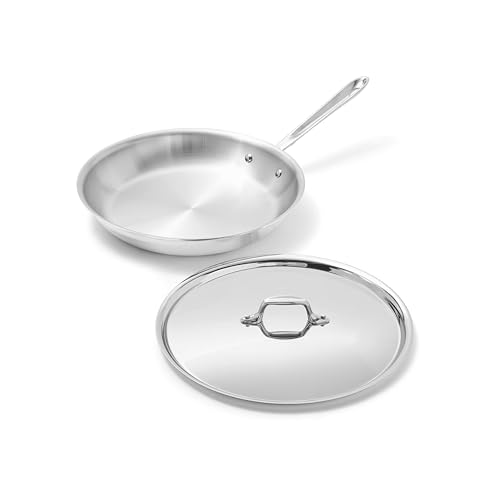
If you want zero coatings at all, the All-Clad D3 is the gold standard. It is tri-ply stainless steel with nothing to flake, chip, or overheat. It is simply steel all the way through, which removes the entire category of coating-related worry. The three-layer bonded construction, stainless wrapped around an aluminum core, delivers exceptional even heating, and it works on every cooktop including induction. This is the pan I would point a high-heat cook toward without hesitation.
All-Clad pitches the 12-inch D3 fry pan with lid as the only pan you need, and the versatility backs that up: it sears, sautes, steams, and simmers from one piece. D3 Stainless is the original fully bonded tri-ply cookware, trusted in professional kitchens and made in the USA, and the classic riveted handle is designed for a secure, balanced grip. Because there is no coating, you can crank the heat for a proper sear, use metal utensils freely, and scrub it as hard as you like without damaging anything. It is built to be an heirloom piece you pass down.
The real limitation is that stainless steel is not non-stick, and pretending otherwise sets you up for frustration. Eggs and delicate fish will stick unless you preheat the pan properly and use enough fat, and there is a genuine learning curve to getting that right. The riveted handle and steel body also stay cold-handle in name only once the pan is hot, so you will reach for a towel. None of this makes it a bad pan, but if you want to crack an egg into a cold pan and walk away, this is not that pan.
Lodge Cast Iron Skillet
For the best non-toxic value, nothing beats a Lodge cast iron skillet. Cast iron has been non-toxic cookware for centuries, and Lodge’s pre-seasoned skillets are made from iron and vegetable oil, nothing else. They build up a natural non-stick patina over time, are nearly indestructible, and actually add trace iron to your food, which is a real benefit for many people. No other pan on this list delivers more cooking ability per dollar.
The durable cast iron construction gives you even heat distribution and a surface that, once seasoned, releases food well for everyday cooking. It is oven and freezer safe, so you can sear on the stovetop and finish in the oven, bake cornbread, or broil without switching pans. The compact size noted here, 6.5 inches, is genuinely convenient for storage and for single servings, though Lodge offers larger skillets if you need more room. With the right care, one of these skillets can outlive the person who buys it.
The trade-offs are the classic cast iron ones, and they are real. It is hand wash only, you should dry it immediately and re-oil it to prevent rust, and the pan is heavy, which can be a strain for some cooks and rough on a glass cooktop. The pre-seasoning gives you a head start, but the truly slick non-stick surface only arrives after you have cooked on it enough to build the patina yourself. If you are not willing to maintain it, cast iron will frustrate you. If you are, it becomes the pan you reach for most.
Caraway Ceramic Fry Pan
Caraway is the pick for cooks who want their cookware to look as good as it performs. The brand has earned a loyal following by pairing genuine non-toxic credentials with clean minimalist design. The ceramic coating is free of PTFE, PFOA, PFAS, lead, and cadmium, and the aluminum core ensures quick, even heat distribution. Available in several elegant colorways, it doubles as stovetop-to-table presentation cookware, which is a real perk if you entertain or just like an attractive kitchen.
The 8-inch fry pan version here is positioned as a mini pan for healthy cooking without harmful chemicals, and it is well suited to the everyday jobs that fill most weeknights. The naturally slick non-stick surface lets you cook with less oil or butter, which is ideal for slide-off-the-pan eggs, sauteing vegetables, and flipping pancakes. It is easy to clean and works across cooktops, with Caraway recommending low to medium heat for the best results. As a coated ceramic pan with serious aesthetic appeal, it nails the niche it is aiming at.
The honest caution is twofold. Like all ceramic non-stick, the coating will gradually lose slickness over time, and Caraway’s own guidance to stick to low and medium heat tells you it is not the pan for aggressive high-heat searing. The 8-inch size is also genuinely small, so this works best as a complement to larger cookware rather than your only pan. You are paying partly for design, and that is a fair choice, but set your expectations around a moderate-heat, everyday pan that happens to look great rather than a do-everything workhorse.
Made In Blue Carbon Steel Pan
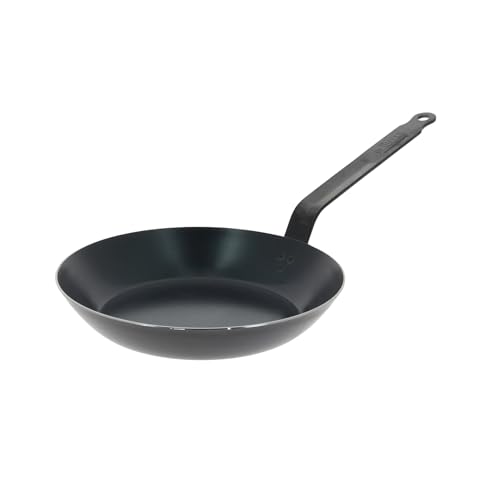
Carbon steel is the secret weapon of professional kitchens, and the Made In Blue Carbon Steel pan is the most versatile non-toxic option here. It is lighter than cast iron, more responsive to heat changes, and completely PFAS-free. The pan is forged from a single piece of steel with no coatings or chemicals whatsoever, so like cast iron it relies on a natural seasoning that you build up over time rather than any applied non-stick layer. For a cook who wants one pan that can do almost anything, this is the one I would reach for.
The blue carbon steel fry pan arrives with a protective beeswax finish and a unique blue color, and it is rooted in French culinary tradition, the same lineage many restaurant line cooks grew up on. Seasoning is straightforward: you handwash with hot soapy water to remove the beeswax, dry it thoroughly, then build up the naturally non-stick surface through use and light oiling. Once seasoned, it gives you the searing power and oven ability of cast iron with noticeably less weight and quicker reaction to heat adjustments, which is why it is such a favorite for everything from steaks to delicate sautes.
The trade-off is the same maintenance commitment as cast iron, minus the forgiveness of extra mass. Carbon steel can rust if left wet, needs hand washing and re-oiling, and is not at its best for long-simmered acidic dishes like tomato sauce, which can strip the seasoning. There is also a real break-in period before the non-stick performance arrives, so the pan you cook on in week one is not the pan you will have in month three. If you are willing to learn it, it rewards you enormously. If you want zero upkeep, look elsewhere on this list.
What to look for
Choosing a non-toxic pan comes down to matching the material to how you actually cook. Here are the factors I weigh most.
- Coating chemistry: If the pan is coated, confirm it is free of PFAS, PFOA, lead, and cadmium, and check what the coating is actually made of, such as a mineral ceramic rather than traditional Teflon.
- Coated versus bare: Bare materials like stainless steel, cast iron, and carbon steel have nothing to degrade, while ceramic coatings are easier to cook on but wear out over years.
- Heat performance: Look for even, fast heating and confirm cooktop compatibility, especially if you have induction.
- Durability and utensil safety: Diamond-reinforced ceramic and metal-utensil-safe surfaces last longer, and bare metal pans are essentially indestructible.
- Maintenance reality: Decide honestly whether you will hand wash, dry, and season a pan, or whether you need something more forgiving.
- Size and set: A multi-pan set covers more tasks, while a single small fry pan is best as a complement to cookware you already own.
The verdict
For most kitchens, the GreenPan Valencia Pro Ceramic set is the best non-toxic choice, combining PFAS-free ceramic non-stick, diamond-reinforced durability, and three useful pan sizes that make safe cooking easy. If you cook hot and want zero coatings, the All-Clad D3 Stainless Steel is the no-compromise tri-ply pick, as long as you accept the learning curve that comes with bare steel. On a budget, the Lodge Cast Iron Skillet delivers unmatched value and longevity for anyone willing to maintain it.
If design matters to you, the Caraway Ceramic Fry Pan brings genuine non-toxic credentials in a pan you will be happy to set on the table, with the understanding that it favors moderate heat. And for the most versatile single pan, the Made In Blue Carbon Steel pairs cast-iron searing power with lighter, more responsive handling once you season it. Every pan here is honestly non-toxic, so the right pick is the one whose trade-offs you are happy to live with.
Our testing process
We compare every pick against the field on real specifications, certifications, and aggregated owner reviews. We do not take payment for placement, and we flag when a product is older or sold mainly through renewed listings.
Quick comparison
Reviewed in detail
GreenPan Valencia Pro Ceramic -- Best Overall Non-Toxic Pan
GreenPan's Valencia Pro remains the benchmark for ceramic non-stick performance in 2026. Its Thermolon Minerals Pro coating is free of PFAS, PFOA, lead, and cadmium, and it's made without the harmful byproducts associated with traditional Teflon production. The hard-anodized aluminum body heats quickly and evenly, making it ideal for eggs, fish, and delicate proteins.
What we liked
- SET INCLUDES: 8" frying pan, 9.5" frying pan, and 11" frying pan
- ATK AWARD-WINNING DESIGN: Valencia Pro recognized by America's Test Kitchen and Good House
- CUTTING-EDGE CERAMIC NONSTICK: Infused with diamonds, GreenPan's metal utensil safe cerami
- DIAMOND-REINFORCED TOUGHNESS: Diamond-infused surface adds extreme durability, excellent s
- HARD ANODIZED DURABILITY: Built for lasting strength and scratch resistance, delivering ev
All-Clad D3 Stainless Steel Pan -- Best for High-Heat Cooking
If you want zero coatings at all, All-Clad's D3 tri-ply stainless steel is the gold standard. There's nothing to flake, chip, or overheat. it's simply steel all the way through. The three-layer bonded construction (stainless-aluminum-stainless) delivers exceptional even heating and it's compatible with all cooktops including induction.
What we liked
- The Only Pan You Need. The D3 12" Fry Pan with lid sears, sautés, steams, and simmers with
- Premium 12-inch stainless steel fry pan with a lid, featuring a durable and versatile tri-
- Built for professional kitchens & cherished by home cooks this heirloom cookware is Made i
- D3 Stainless is the original fully bonded tri-ply cookware trusted by chefs. The aluminum
- Inspired by professionals, D3 Stainless features a classic riveted handle designed for a c

Lodge Cast Iron Skillet -- Best Budget Non-Toxic Option
Cast iron has been non-toxic cookware for centuries. Lodge's pre-seasoned skillets are made from iron and vegetable oil. nothing else. They build up a natural non-stick patina over time, are nearly indestructible, and actually add trace iron to food (a benefit for many). At for a 10-inch skillet, no non-toxic pan delivers more value.
What we liked
- Durable Cast Iron Construction: Made from cast iron for long-lasting use and even heat dis
- Non-Stick Surface: Features a true non-stick coating for easy food release.
- Oven and Freezer Safe: Can be used in the oven for baking and broiling, as well as in the
- Compact Size: Measures 6.5 inches in diameter for convenient storage and portability.
- Easy to Clean: Hand wash only to keep cast iron skillet in excellent condition.

Caraway Ceramic Fry Pan -- Best Design-Forward Non-Toxic Pan
Caraway has carved out a loyal following by combining genuine non-toxic credentials with beautiful minimalist design. The ceramic coating is free of PTFE, PFAS, lead, and cadmium, and the aluminum core ensures quick, even heat distribution. Available in several elegant colorways, it doubles as attractive stovetop-to-table presentation cookware.
What we liked
- 8” FRYING PAN: Our Mini Fry Pan allows for healthy cooking without harmful chemicals. Enjo
- DURABLE & EASY TO CLEAN: Perfect for slide-off-the-pan eggs, sauteing veggies, flipping pa
- NATURALLY NON-STICK: Our naturally slick non-stick pots and pans require less oil or butte
- NON-TOXIC COATING: All Caraway pot and pan products are free of PTFE, PFOA, PFAS, lead, ca
- SIMPLE CARE: Our cookware ais made for any kitchen and cooktop. Use them on low to medium
Made In Blue Carbon Steel Pan -- Best for Versatile Cooking
Carbon steel is the secret weapon of professional kitchens. lighter than cast iron, more responsive to heat changes, and completely PFAS-free. Made In's Blue Carbon Steel pan is forged from a single piece of steel with no coatings or chemicals whatsoever. Like cast iron, it develops a natural non-stick seasoning over time.
What we liked
- BLUE CARBON STEEL FRY PAN
- HOW TO SEASON: Handwash with hot soapy water to remove the beeswax, dry thoroughly. Gradua
- NATURALLY NON-STICK
- UNIQUE BLUE FINISH
- ROOTED IN FRENCH CULINARY TRADITION
How to choose
What to consider
Start by deciding which coating type fits your cooking style. Ceramic-coated pans are the easiest transition from traditional non-stick and work well for delicate foods. Stainless steel demands more technique but lasts indefinitely. Cast iron and carbon steel require seasoning and maintenance but are the purest, coating-free options.
What to consider
Check for third-party certifications or explicit PFAS-free claims from manufacturers. Be wary of vague marketing terms like "eco-friendly" without specifics. Consider how often you cook, what foods you make most, and your tolerance for maintenance. For most home cooks, a ceramic fry pan paired with a stainless steel sauté pan covers 90% of cooking needs without compromise.
What to consider
Whichever you choose, replace any pan with a scratched or damaged surface immediately. that's when even the safest coatings can become a concern.
What to consider
For more kitchen essentials, see our guides to [best cooking pot sets](/articles/best-cooking-pot-set) and [best cooking pots for electric stoves](/articles/best-cooking-pots-for-electric-stove). We test everything using our [review methodology](/methodology).
Common questions
A truly non-toxic pan avoids PTFE (Teflon), PFAS, PFOA, lead, and cadmium coatings. Safe alternatives include ceramic-coated, 100% stainless steel, cast iron, and carbon steel cookware. Always check that products are certified free of harmful chemicals and that coatings have not been damaged by overheating or scratching.
Both are considered non-toxic options. Ceramic coatings are PTFE and PFOA-free, making them popular for people avoiding synthetic coatings entirely. Stainless steel is highly durable and leaches only negligible amounts of nickel. For those with nickel sensitivity, ceramic or cast iron may be preferable. Neither option is definitively superior. it depends on cooking habits and health priorities.
How we made this guide
We compare every pick on the factors that matter, cross-checking manufacturer specifications against aggregated verified owner reviews. We rank independently and never take payment for placement. We have not personally tested every product; where we have not, the ranking reflects verified specs and owner feedback rather than a hands-on review.
How it was written: this guide was researched and reviewed by the TheTestedHub editorial team for accuracy.
Affiliate disclosure: TheTestedHub is reader-supported. When you buy through links on our site, we may earn a commission at no extra cost to you.
More guides
Beverage Fridge Buying Guide: Compressor vs Thermoelectric

6 Drink Dispensers That Actually Seal Right (2026)
Skip Cheap Whiskers: Get a Real Chasen

Wondering Which Tea Infuser Is Best? Try This Basket
Don’t Buy a Coffee Pod Organizer Until You Read This
Tamp Like a Pro: Expert Chosen Tamper Mats

Coffee Scales for Every Brew, Tested for Daily Use