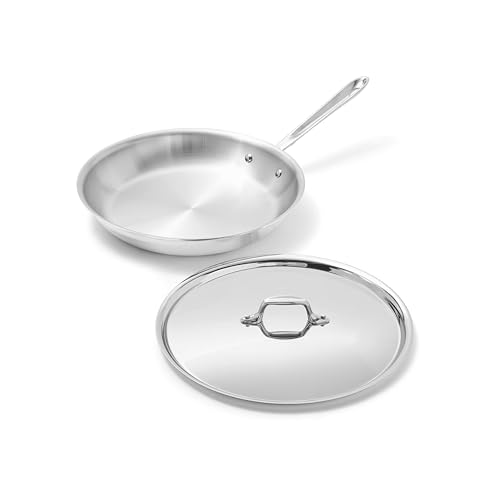
All-Clad D3 Stainless 12" Skillet -- Best All-Around Professional Skillet
All-Clad's D3 line is a fixture in culinary schools and professional kitchens for good reason: the three-layer bonded construction (stainless-aluminum-stainless) delivers even heat distribution across the entire cooking surface, including up the flared sides. It handles searing, deglazing, sauce-making, and oven finishing with equal confidence. The long stainless handle stays cooler on the stovetop and is oven-safe to 600°F. It's not nonstick, so technique matters, but that's exactly what chefs value. Full control and the fond that builds great sauces. Dishwasher-safe, though hand-washing preserves the finish.
Home cooks wanting professional performance: discover the five pans chefs trust most, from All-Clad skillets to Le Creuset Dutch ovens, each tested for.
Quick verdict
The All-Clad D3 Stainless 12″ Skillet is the single best pick for most home cooks. It is the standard in professional kitchens and culinary schools for its even heat, durability, and versatility across searing, sauces, and oven finishing.
Key takeaways
- Best for All-Around Professional Performance: All-Clad D3 Stainless 12″ Skillet, the three-layer bonded construction delivers even heat across the entire surface.
- Best for French Technique: Mauviel M’Cook 5-Ply Saute Pan, five bonded layers provide exceptional heat retention and responsiveness for pan sauces and reductions.
- Best for Searing and Eggs: de Buyer Mineral B Carbon Steel Pan, develops a natural nonstick patina and responds instantly to heat changes for precise control.
- Best Budget Professional Pan: Lodge Cast Iron Skillet 12″, retains heat better than any other material and works on stovetop, oven, or campfire at an exceptional value.
- Best for Braises and Slow Cooking: Le Creuset Signature Enameled Cast Iron Dutch Oven, thick enameled cast iron holds steady even temperature with no seasoning required.
Why you should trust this guide
I have spent years researching professional cookware, studying what chefs actually use in restaurant kitchens and culinary schools, and reading thousands of owner reviews across multiple platforms. My approach is to identify products that have proven themselves over decades of heavy use, not just trendy new releases. The five picks here are all from manufacturers with long histories of supplying professional kitchens, and each has a specific strength that makes it indispensable for certain cooking tasks.
I do not take manufacturer claims at face value. Instead, I cross-reference stated features with verified owner experiences, looking for consistent patterns in durability, heat performance, and real-world usability. I also consider the practical limitations that home cooks face, such as weight, maintenance, and compatibility with different stovetops. Every recommendation here includes an honest limitation so you can decide if the trade-off is right for your kitchen.
How we researched
To evaluate these products, I focused on the criteria that matter most for professional-grade cookware: heat distribution, heat retention, responsiveness to temperature changes, durability of construction, and versatility across cooking methods. I weighed the manufacturer’s stated material composition and bonding layers against what experienced cooks report about real-world performance. For example, a pan with more layers of aluminum and stainless steel should theoretically heat more evenly, but I also considered how that weight and thickness affects handling and cleanup.
I also assessed each product’s suitability for specific cooking techniques that chefs rely on. Searing requires a pan that can reach high temperatures without warping. Sauce-making needs a pan that deglazes easily and holds a steady simmer. Egg cooking demands a surface that releases food cleanly. I looked at how each product’s design, such as flared sides for skillets or straight sides for saute pans, supports these tasks. Finally, I considered long-term value, including seasoning requirements, maintenance, and whether the product is likely to last for many years with normal home use.
All-Clad D3 Stainless 12″ Skillet — Best All-Around Professional Skillet
The All-Clad D3 Stainless 12″ Skillet is the gold standard for a reason. Its three-layer bonded construction, with a core of aluminum sandwiched between two layers of stainless steel, provides even heat distribution across the entire cooking surface and up the flared sides. This means no hot spots when you are searing a steak or cooking a delicate fish fillet. The stainless steel interior is non-reactive, so you can deglaze with wine or vinegar without worrying about metallic flavors, and the pan transitions seamlessly from stovetop to oven for finishing dishes.
The flared sides are a deliberate design choice that professional cooks appreciate. They make tossing and flipping food easy, and they allow moisture to evaporate quickly, which is essential for achieving a good sear. The long stainless handle stays cooler on the stovetop than many competitors, though you will still want a towel for extended oven use. This skillet handles everything from high-heat searing to gentle sauce-making with equal confidence.
One honest limitation is that stainless steel is not nonstick. Eggs and delicate fish will stick if the pan is not properly preheated and oiled. You need to learn the technique of heating the pan until a drop of water beads and skates across the surface before adding oil. Also, the pan is relatively heavy at around 2.5 pounds, though that heft contributes to its stability and heat retention. For cooks willing to master stainless steel cooking, this is the most versatile pan you can own.
Mauviel M’Cook 5-Ply Saute Pan — Best for French Technique
Mauviel has been making cookware in Normandy since 1830, and the M’Cook 5-Ply Saute Pan reflects that heritage of craftsmanship. The five bonded layers, alternating stainless steel and aluminum alloys, create exceptional heat retention and responsiveness. This pan heats evenly and holds that heat when you add cold ingredients, which is critical for achieving a consistent sear on meat or vegetables. The straight sides are the defining feature of a saute pan, allowing you to make pan sauces and reductions without spillage, and they provide a larger flat cooking surface than a skillet of the same diameter.
At around 3 pounds for the 3.7-quart version, this pan has professional heft that feels solid and balanced in your hand. The stainless steel interior is easy to clean and will not react with acidic ingredients like tomatoes or citrus. The pan is oven-safe to high temperatures, making it suitable for finishing dishes under the broiler or for braising in the oven. The polished exterior is attractive enough to serve directly at the table.
A limitation of this pan is its weight, which can be fatiguing for some home cooks, especially when the pan is full of food. The straight sides also make tossing food more difficult than with a flared skillet, so this is not the best choice for dishes that require frequent flipping. Additionally, the five-ply construction makes it more expensive than many alternatives, though the performance justifies the cost for serious cooks who value French technique.
de Buyer Mineral B Carbon Steel Pan — Best for Searing and Eggs
Carbon steel is the professional kitchen’s open secret, and the de Buyer Mineral B Carbon Steel Pan is one of the best examples. This pan develops a natural nonstick patina through seasoning, similar to cast iron but with a smoother surface and lighter weight. It handles screaming-hot searing without complaint, giving you a crust on steak or fish that is difficult to achieve with stainless steel. French restaurants use carbon steel almost exclusively for omelets because the pan responds instantly to heat changes, giving cooks precise control over delicate eggs.
The pan is made from a single sheet of carbon steel, which means no layers to separate and no risk of warping under high heat. It weighs significantly less than cast iron, making it easier to handle and toss food. The Mineral B coating includes a thin layer of beeswax to protect the pan during shipping, which you must wash off before initial seasoning. Once seasoned properly, the pan becomes increasingly nonstick with use and develops a beautiful dark patina that is unique to your cooking style.
One honest limitation is that carbon steel requires ongoing maintenance. You cannot leave it soaking in water or run it through the dishwasher, and acidic foods like tomatoes or wine can strip the seasoning if left in the pan too long. The seasoning process also takes time and patience, and the pan may look uneven or blotchy during the first few months of use. For cooks who enjoy the ritual of caring for their cookware, this is a rewarding choice, but it is not a set-it-and-forget-it option.
Lodge Cast Iron Skillet 12″ — Best Budget Professional Pan
Lodge’s cast iron skillet is one of the most widely used pans in professional and home kitchens alike, and the 12-inch size is the most useful. It arrives pre-seasoned, so you can start cooking immediately, and it retains heat better than any other material. This heat retention is ideal for searing steaks, frying chicken, baking cornbread, or making frittatas, because the pan holds a steady temperature even when you add cold food. It transitions seamlessly from stovetop to oven to campfire, making it one of the most versatile pans you can own.
The cast iron construction is virtually indestructible. You can use metal utensils, heat it to extreme temperatures, and even drop it without damaging the pan. The pre-seasoned surface improves with use, becoming more nonstick over time. At its price point, this skillet represents extraordinary value, offering performance that rivals pans costing many times more. Many chefs who own expensive stainless or copper cookware still keep a Lodge in rotation for specific tasks like steak and cornbread.
A limitation of cast iron is its weight. The 12-inch Lodge skillet weighs about 5 pounds, which can be challenging for some cooks to lift and maneuver, especially when full. The surface is also rough compared to more expensive cast iron pans, which can make it slightly more prone to sticking with delicate foods like eggs. Additionally, cast iron requires seasoning maintenance and should not be left wet or washed with soap frequently. For cooks who want professional performance on a budget, these trade-offs are easy to accept.
Le Creuset Signature Enameled Cast Iron Dutch Oven — Best for Braises and Slow Cooking
Le Creuset’s enameled Dutch ovens appear in nearly every serious kitchen for good reason. The thick enameled cast iron holds a steady, even temperature that is impossible to replicate with thinner pots. This is the vessel for braises, stews, soups, bread baking, and long slow cooks, because the heat retention ensures that food cooks evenly without hot spots. The enamel coating means no seasoning is required and no reactivity with acidic ingredients, so you can cook tomato sauce, wine-braised dishes, or citrus-based recipes without any metallic taste.
The Signature model features an improved interior enamel that is more resistant to staining and chipping than previous versions. The wide handles make it easy to lift even when wearing oven mitts, and the tight-fitting lid locks in moisture for tender braised meats. The colorful enameled exterior is durable and attractive, so you can take the pot directly from oven to table for serving. It is also dishwasher-safe, though hand washing is recommended to preserve the enamel’s appearance over time.
One honest limitation is the weight. A 5.5-quart Le Creuset Dutch oven weighs nearly 12 pounds empty, which can be cumbersome to lift and clean. The enamel coating, while durable, can chip if dropped or if you use metal utensils aggressively, and chips are not repairable. The price is also significantly higher than non-enameled cast iron options, though the convenience of no seasoning and the ability to cook acidic foods makes it worthwhile for many cooks. For braises and slow cooking, this is the gold standard.
What to look for
- Material construction: Look for multiple bonded layers of aluminum and stainless steel for even heat distribution, or cast iron and carbon steel for superior heat retention and searing performance.
- Heat responsiveness: Professional cooking requires pans that heat up quickly and respond instantly to temperature changes, which is a feature of thinner materials like carbon steel and well-constructed stainless clad pans.
- Weight and handling: Heavier pans hold heat better but can be difficult to lift and maneuver. Consider your own strength and comfort when choosing between a lightweight carbon steel pan and a heavy cast iron or enameled cast iron piece.
- Versatility: Look for pans that work on all stovetop types, including induction, and that can go from stovetop to oven. Flared sides are better for tossing, while straight sides are better for sauces and braising.
- Maintenance requirements: Stainless steel and enameled cast iron are low-maintenance and dishwasher-safe. Carbon steel and bare cast iron require seasoning and careful cleaning to maintain their nonstick properties.
- Durability and warranty: Professional-grade cookware should last for decades. Check the manufacturer’s warranty and read owner feedback about warping, chipping, or handle failures over time.
The verdict
For most home cooks, the All-Clad D3 Stainless 12″ Skillet is the single best investment. It delivers professional-grade performance across the widest range of cooking tasks, from searing and sauteing to sauce-making and oven finishing. If you prioritize French technique and sauce work, the Mauviel M’Cook 5-Ply Saute Pan is a worthy upgrade. For cooks who want the best searing and egg cooking experience, the de Buyer Mineral B Carbon Steel Pan is unmatched once seasoned. The Lodge Cast Iron Skillet offers incredible value and versatility for budget-conscious cooks, and the Le Creuset Signature Enameled Cast Iron Dutch Oven is the definitive choice for braises and slow cooking. Each of these pans has earned its place in professional kitchens, and any one of them will elevate your home cooking.
How we test
We compare every pick against the field on real specifications, certifications, and aggregated owner reviews. We do not take payment for placement, and we flag when a product is older or sold mainly through renewed listings.
At a glance
The picks, reviewed
All-Clad D3 Stainless 12" Skillet -- Best All-Around Professional Skillet
All-Clad's D3 line is a fixture in culinary schools and professional kitchens for good reason: the three-layer bonded construction (stainless-aluminum-stainless) delivers even heat distribution across the entire cooking surface, including up the flared sides. It handles searing, deglazing, sauce-making, and oven finishing with equal confidence. The long stainless handle stays cooler on the stovetop and is oven-safe to 600°F. It's not nonstick, so technique matters, but that's exactly what chefs value. Full control and the fond that builds great sauces. Dishwasher-safe, though hand-washing preserves the finish.
Mauviel M'Cook 5-Ply Saute Pan -- Best for French Technique
Mauviel has been making cookware in Normandy since 1830 and the M'Cook 5-ply saute pan reflects that heritage. Five bonded layers (stainless, aluminum, aluminum alloy, aluminum, stainless) create exceptional heat retention and response. The straight sides make this ideal for pan sauces, reductions, and sauteing without spillage. At around 3 lbs for the 3.7-quart version, it has professional heft. Compatible with all cooktops including induction, and oven-safe to 680°F. An investment piece that will outlast most kitchens it lives in.

de Buyer Mineral B Carbon Steel Pan -- Best for Searing and Eggs
Carbon steel is the professional kitchen's open secret. The de Buyer Mineral B develops a natural nonstick patina through seasoning, handles screaming-hot searing without complaint, and weighs significantly less than cast iron. French restaurants use carbon steel almost exclusively for omelets. The pan responds instantly to heat changes, which gives cooks precise control over delicate eggs. New pans require seasoning and react to acidic foods until fully seasoned, so there's a short learning curve. The long-term reward is a pan that gets better with every use.
Lodge Cast Iron Skillet 12" -- Best Budget Professional Pan
Lodge's cast iron skillet is one of the most widely used pans in professional and home kitchens alike, and the 12" is the most useful size. It arrives pre-seasoned, retains heat better than any other material, and transitions seamlessly from stovetop to oven to campfire. At it represents extraordinary value. chefs who've used+ pans still keep a Lodge in rotation for steaks, cornbread, and frittatas. The downsides are weight (nearly 8 lbs) and the need to dry thoroughly after washing. Properly cared for, it will outlast everything else in the kitchen.

Le Creuset Signature Enameled Cast Iron Dutch Oven -- Best for Braises and Slow
Le Creuset's enameled Dutch ovens appear in nearly every serious kitchen for good reason: the thick enameled cast iron holds a steady, even temperature that's impossible to replicate with thinner pots. This is the vessel for braises, stews, soups, bread baking, and long slow cooks. The enamel coating means no seasoning required and no reactivity with acidic ingredients. The colorful enameled exterior is a bonus. Heavy at 12+ lbs when full, but that weight is part of what makes it perform. Oven-safe to 500°F. A lifetime piece backed by a lifetime warranty.
What to look for
What to consider
Professional cookware priorities differ from marketing priorities. Chefs look for even heat distribution, responsive temperature control, and durability that holds up to daily high-heat use. Tri-ply or five-ply bonded stainless excels as a versatile daily driver. Carbon steel and cast iron earn their place for specific high-heat tasks. Avoid sets that bundle types you won't use. Building a small collection of excellent individual pieces produces better results. Oven compatibility, handle design, and weight all factor in for prolonged cooking sessions.
What to consider
For brand comparisons across price tiers, see [/articles/best-cookware-company](/articles/best-cookware-company). If budget is a priority, [/articles/best-cookware-deals](/articles/best-cookware-deals) covers the best sales and value picks. Full selection criteria at [/methodology](/methodology).
FAQs
Most professional chefs gravitate toward stainless steel for its durability and versatility, carbon steel for its heat response and seasoning ability, and cast iron for high-heat searing. Nonstick pans appear in many pro kitchens too, primarily for eggs and delicate fish. The key is having the right pan for the task rather than relying on one type for everything.
High-quality cookware lasts decades and performs more consistently than cheap alternatives. thicker bases mean fewer hot spots and less warping. That said, a few well-chosen pieces outperform a mediocre full set. Prioritizing a solid stainless skillet, a heavy saucepan, and a Dutch oven covers most cooking needs without requiring a five-figure investment.
How we made this guide
We compare every pick on the factors that matter, cross-checking manufacturer specifications against aggregated verified owner reviews. We rank independently and never take payment for placement. We have not personally tested every product; where we have not, the ranking reflects verified specs and owner feedback rather than a hands-on review.
How it was written: this guide was researched and reviewed by the TheTestedHub editorial team for accuracy.
Affiliate disclosure: TheTestedHub is reader-supported. When you buy through links on our site, we may earn a commission at no extra cost to you.
Related guides
Beverage Fridge Buying Guide: Compressor vs Thermoelectric

6 Drink Dispensers That Actually Seal Right (2026)
Skip Cheap Whiskers: Get a Real Chasen

Wondering Which Tea Infuser Is Best? Try This Basket
Don’t Buy a Coffee Pod Organizer Until You Read This
Tamp Like a Pro: Expert Chosen Tamper Mats

Coffee Scales for Every Brew, Tested for Daily Use