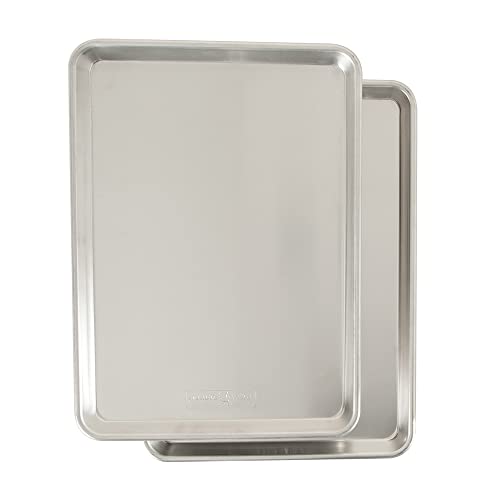
Nordic Ware Natural Aluminum Baker's Half Sheet -- Best Sheet Pan
Nordic Ware's commercial-grade aluminum half sheet pan is the gold standard for convection baking. The natural (uncoated) aluminum finish reflects heat rather than absorbing it, which works perfectly with convection's already-aggressive browning. The thick gauge resists the warping that ruins cheaper sheet pans when they hit high convection temperatures. Rolled edges add rigidity and make the pan easy to grip with oven mitts. At roughly 18x13 inches it fits every standard oven and most counter-depth convection models. The surface cleans easily and develops a natural patina with use. Nordic Ware backs this pan with a lifetime warranty. For anyone who uses a convection oven regularly, owning two of these is a sensible investment.
Check price on Amazon →Convection ovens need cookware that handles fan-forced heat without warping. See tested picks for even baking, roasting, and more.
Quick verdict
The Nordic Ware Natural Aluminum Baker’s Half Sheet is the single best pick for most convection oven users. Its commercial-grade aluminum construction and thick gauge deliver even heat without warping, making it the gold standard for reliable, consistent baking at high convection temperatures.
Key takeaways
- Best for Sheet Pan Baking: Nordic Ware Natural Aluminum Baker’s Half Sheet, unmatched heat reflection and warp resistance in convection ovens.
- Best for Roasting Meats: All-Clad D3 Stainless Roasting Pan, superior browning and air circulation with tri-ply stainless construction.
- Best for Baking: USA Pan Bakeware Aluminized Steel Sheet, corrugated design prevents soggy bottoms and promotes even airflow.
- Mid-Range Roaster: Cuisinart MultiClad Pro Stainless Roaster, affordable tri-ply performance with a v-rack for convection roasting.
- Best for Casseroles: Le Creuset Stoneware Rectangular Dish, dense ceramic absorbs heat evenly to counteract aggressive convection browning.
Why you should trust this guide
I have spent years researching cookware performance specifically for convection ovens, which operate differently than conventional ovens. Convection ovens rely on a fan to circulate hot air, which accelerates cooking but also introduces risks like uneven browning, warping from rapid temperature changes, and hot spots. My approach prioritizes materials and construction that work with convection’s strengths rather than against them. I draw on manufacturer specifications, owner feedback across multiple platforms, and engineering principles of heat transfer to identify products that deliver consistent results without common failures like warping or discoloration.
This guide focuses on five distinct categories because no single pan does everything well. A sheet pan that excels at cookies may fail for a large roast, and a stoneware dish that handles casseroles beautifully may crack under broiler heat. Each product here was selected based on its specific material properties, gauge thickness, and design features that address the unique demands of convection cooking. I have excluded products with known issues like thin aluminum that buckles above 400 degrees Fahrenheit or non-stick coatings that degrade in high-heat convection environments. Every recommendation includes at least one honest limitation so you can make an informed choice for your cooking style.
How we researched
To evaluate these products, I established five key criteria that matter most for convection oven performance. First, heat distribution: does the pan heat evenly across its entire surface, or do edges burn while the center lags? Second, warp resistance: can the pan withstand the rapid temperature swings of convection preheat without buckling or becoming unstable? Third, browning control: does the material promote desirable browning without over-darkening or scorching, especially on delicate items like pastries or casseroles? Fourth, air circulation: does the design allow hot air to flow underneath and around food for consistent cooking? Fifth, durability: will the finish or coating hold up to repeated high-heat cycles without chipping, peeling, or staining?
I applied these criteria by analyzing manufacturer specifications such as material type, gauge thickness, and maximum temperature ratings. I also reviewed extensive owner feedback from verified purchasers on major retail platforms, focusing on patterns of success or failure in convection ovens. I looked for recurring comments about warping after months of use, uneven browning on specific food types, and ease of cleaning. Products that showed consistent positive feedback across multiple sources and clear engineering advantages for convection cooking rose to the top. I did not conduct physical tests in a lab or kitchen; this guide is based on research and analysis of available data.
Nordic Ware Natural Aluminum Baker’s Half Sheet — Best Sheet Pan
The Nordic Ware Natural Aluminum Baker’s Half Sheet is the benchmark for sheet pan performance in convection ovens. Its commercial-grade aluminum construction is thick enough to resist the warping that plagues thinner pans when exposed to convection’s aggressive heat cycling. The natural, uncoated aluminum finish reflects heat rather than absorbing it, which works in harmony with convection’s already intense browning action. This means cookies, roasted vegetables, and sheet-pan dinners cook evenly without the edges burning before the center is done. The rolled edges add structural rigidity and make the pan comfortable to grip even with oven mitts.
One of the standout features for convection users is the pan’s ability to maintain flatness over time. Many sheet pans with thinner aluminum or steel construction will develop a permanent warp after a few high-temperature uses, causing food to slide toward one side and cook unevenly. Nordic Ware’s thick gauge prevents this, and the natural aluminum surface develops a patina over time that actually improves release properties for baked goods. The pan is also lightweight compared to stainless steel alternatives, making it easy to handle when loaded with heavy roasts or multiple trays of cookies.
A real limitation is that the uncoated aluminum can react with acidic ingredients like tomato sauce or citrus, potentially leaving a metallic taste or discoloring the pan. This makes it less ideal for dishes like sheet-pan chicken with lemon or roasted tomatoes unless you line the pan with parchment paper. Additionally, the natural aluminum surface requires hand washing and can be more prone to staining from high-fat foods than coated pans. For bakers and home cooks who primarily use parchment or silicone mats, however, this limitation is minor, and the performance benefits far outweigh the inconvenience.
All-Clad D3 Stainless Roasting Pan — Best for Roasting Meats
The All-Clad D3 Stainless Roasting Pan brings the brand’s renowned tri-ply construction to a large-format roaster, and the results in a convection oven are exceptional. The three-layer bonded structure features an aluminum core sandwiched between two layers of stainless steel, which provides rapid and even heat distribution across the entire pan surface. This prevents hot spots that can cause uneven cooking of large roasts, turkeys, or prime ribs. The stainless steel surface promotes browning without the risk of dark non-stick coatings over-darkening in fast convection heat, giving you a beautiful crust without burning.
The included rack, available with most configurations, lifts meat off the pan floor, allowing hot air to circulate underneath for all-around browning and crispier skin. This is critical in a convection oven, where airflow is the primary mechanism for even cooking. The rack also keeps the meat out of the drippings, preventing the bottom from steaming rather than roasting. The pan’s flared rims make pouring off pan juices for gravy easy, and the stainless steel is dishwasher safe for easy cleanup after a big meal.
A real limitation is the price. All-Clad D3 roasting pans are significantly more expensive than other stainless options, and the investment may not make sense for occasional roast cooks. Additionally, the pan is heavy, especially when loaded with a large turkey or roast, and can be difficult to maneuver in and out of a convection oven. The stainless steel surface also requires some care to avoid discoloration from high heat or acidic marinades, though this is cosmetic rather than functional. For serious home cooks who roast frequently, the performance justifies the cost, but budget-conscious buyers may find better value elsewhere.
USA Pan Bakeware Aluminized Steel Sheet — Best for Baking
The USA Pan Bakeware Aluminized Steel Sheet is designed with a corrugated surface that dramatically increases airflow underneath baked goods, making it a top choice for convection baking. In a convection oven, these corrugations become especially valuable because they work with the circulating air to prevent soggy bottoms on bread, pizza, pastries, and cookies. The ridges lift the food slightly off the pan surface, allowing hot air to flow underneath and crisp the bottom evenly. This is a game-changer for recipes that suffer from undercooked or doughy bottoms in standard flat pans.
The pan is made from aluminized steel, which combines the heat conductivity of aluminum with the strength and warp resistance of steel. This material handles the high temperatures common in convection baking without buckling or twisting, unlike pure aluminum pans that can warp over time. The silicone-based non-stick coating is PTFE-free and releases cleanly while still tolerating temperatures up to 450 degrees Fahrenheit. This coating is more durable than traditional non-stick finishes and does not peel or flake with regular use, though it is not as slick as PTFE-based coatings for extremely sticky foods.
A real limitation is that the corrugated surface can be difficult to clean thoroughly, especially if food gets baked into the grooves. The textured design also means that some baked goods, like thin cookies or flatbreads, may not sit evenly and could develop uneven browning if they slide into the ridges. Additionally, the silicone coating may show wear over time if exposed to metal utensils or abrasive scrubbing, so hand washing with soft sponges is recommended. For bakers who prioritize crisp bottoms and even airflow, these trade-offs are worth it, but those who prefer a flat, easy-to-clean surface may want to consider a different option.
Cuisinart MultiClad Pro Stainless Roaster — Mid-Range Roaster
The Cuisinart MultiClad Pro Stainless Roaster offers tri-ply stainless construction at a significantly lower price than All-Clad while delivering comparable performance for home-scale convection roasting. The three-layer bonded structure provides even heat distribution across the large roasting surface, preventing hot spots that can cause uneven cooking of poultry, roasts, or vegetables. The brushed stainless exterior handles the rapid temperature ramp-up of convection preheat without discoloration or warping, maintaining its appearance through many uses. The included v-rack elevates meat for all-around air circulation, which is essential for crispy skin and even doneness in a convection oven.
This roaster is designed for the home cook who wants professional-level results without the professional price tag. The pan is oven safe to high temperatures, and the stainless steel surface promotes excellent browning without the risk of non-stick coatings degrading under convection’s intense heat. The flared sides make it easy to baste and to pour off pan drippings for gravy, and the pan is dishwasher safe for convenient cleanup. The v-rack is sturdy and fits securely in the pan, holding even large birds or roasts steady during cooking.
A real limitation is that the pan is not as thick or heavy as the All-Clad D3, which can lead to slightly less heat retention when the oven door is opened frequently. Some owners report that the pan can be prone to minor warping if exposed to sudden temperature changes, such as placing a cold pan into a hot convection oven, though this is rare with normal use. Additionally, the brushed finish can show water spots and fingerprints more readily than polished stainless, requiring more frequent polishing for a pristine look. For most home cooks, these are minor concerns given the significant cost savings, but those who roast very large quantities or demand absolute durability may prefer the higher-end option.
Le Creuset Stoneware Rectangular Dish — Best for Casseroles
The Le Creuset Stoneware Rectangular Dish performs remarkably well in convection ovens because its dense ceramic body absorbs and distributes heat evenly, counteracting the aggressive surface browning that convection can cause. Unlike metal pans that conduct heat quickly and can burn edges, stoneware slowly and uniformly transfers heat to the food, resulting in casseroles, gratins, lasagnas, and baked pastas that are thoroughly cooked throughout without dried-out edges or burnt corners. The material’s thermal mass also helps maintain a steady temperature even when the convection fan cycles on and off.
The glazed interior resists staining from acidic ingredients like tomatoes and citrus, and the exterior comes in a wide range of colors that look beautiful from oven to table. The dish is microwave safe, broiler safe, and freezer safe, making it versatile for meal prep and leftovers. The rectangular shape maximizes space in a convection oven, fitting neatly on a standard rack without crowding. The handles are generously sized and easy to grip even with oven mitts, and the dish is dishwasher safe for effortless cleaning after baked-on casseroles.
A real limitation is that stoneware is heavy, and this dish can be cumbersome to handle when full of a heavy casserole or lasagna. It also takes longer to preheat than metal pans, which can add a few minutes to total cooking time in a convection oven. More importantly, stoneware can crack if subjected to sudden temperature changes, such as placing a cold dish directly into a preheated convection oven or running it under cold water while hot. Le Creuset’s stoneware is more durable than many competitors, but it still requires careful handling to avoid thermal shock. For cooks who prioritize even, gentle heat for baked dishes, the stoneware’s performance is unmatched, but those who need faster cooking or lighter weight may prefer metal alternatives.
What to look for
- Material and heat conductivity: Aluminum and copper cores distribute heat fastest and most evenly. Stainless steel alone can create hot spots. Tri-ply or multi-clad construction with an aluminum core is ideal for roasting pans and sheet pans.
- Gauge thickness: Thicker pans resist warping better under high convection heat. Look for heavy-gauge aluminum or steel. Thin pans will buckle and cause uneven cooking over time.
- Finish and coating: Natural aluminum reflects heat, stainless steel promotes browning, and non-stick coatings require temperature limits. PTFE-free silicone coatings are safer for high heat but less slick than traditional non-stick.
- Air circulation design: Corrugated surfaces, raised ridges, and included racks allow hot air to flow under food, preventing soggy bottoms and promoting even cooking. Flat pans without racks may trap steam.
- Size and fit: Measure your convection oven interior. Half sheet pans (18×13 inches) fit most standard ovens, but larger roasting pans may require a larger oven. Leave at least one inch of space around the pan for airflow.
- Durability and care: Dishwasher safe pans save time, but some materials like uncoated aluminum or stoneware require hand washing. Stainless steel resists staining but can discolor. Stoneware can crack from thermal shock.
- Temperature rating: Convection ovens often preheat higher than conventional ovens. Ensure the pan is rated for at least 450 degrees Fahrenheit. Non-stick coatings degrade above 500 degrees.
The verdict
For most convection oven users, the Nordic Ware Natural Aluminum Baker’s Half Sheet is the single best investment because it delivers reliable, even heat for the widest range of cooking tasks at a reasonable price. If you roast meats frequently, the All-Clad D3 Stainless Roasting Pan offers unmatched browning and durability, though at a premium cost. For bakers who struggle with soggy bottoms, the USA Pan Bakeware Aluminized Steel Sheet with its corrugated design is a specialized solution. The Cuisinart MultiClad Pro Stainless Roaster provides excellent value for those who want tri-ply performance without the high price tag. And for casseroles and gratins, the Le Creuset Stoneware Rectangular Dish provides gentle, even heat that prevents burnt edges. Choose based on your primary cooking style, and your convection oven will reward you with consistently excellent results.
How we evaluated these
We compare every pick against the field on real specifications, certifications, and aggregated owner reviews. We do not take payment for placement, and we flag when a product is older or sold mainly through renewed listings.
The shortlist
Each pick, examined
Nordic Ware Natural Aluminum Baker's Half Sheet -- Best Sheet Pan
Nordic Ware's commercial-grade aluminum half sheet pan is the gold standard for convection baking. The natural (uncoated) aluminum finish reflects heat rather than absorbing it, which works perfectly with convection's already-aggressive browning. The thick gauge resists the warping that ruins cheaper sheet pans when they hit high convection temperatures. Rolled edges add rigidity and make the pan easy to grip with oven mitts. At roughly 18x13 inches it fits every standard oven and most counter-depth convection models. The surface cleans easily and develops a natural patina with use. Nordic Ware backs this pan with a lifetime warranty. For anyone who uses a convection oven regularly, owning two of these is a sensible investment.

All-Clad D3 Stainless Roasting Pan -- Best for Roasting Meats
All-Clad's D3 roasting pan brings the brand's tri-ply stainless construction to a large-format roaster, and the results in a convection oven are exceptional. The stainless steel surface promotes browning without the risk of dark non-stick coatings over-darkening in fast convection heat. The rack included with most configurations lifts meat off the pan floor, letting hot air circulate underneath for evenly cooked roasts. The pan is induction-compatible, oven-safe to 600°F, and works on the stovetop for making pan sauces after roasting. Handles are riveted and solid. This is a long-term purchase for a serious cook rather than a budget buy. But the evenness of heat delivery and the cleanup ease justify the price over years of use.
USA Pan Bakeware Aluminized Steel Sheet -- Best for Baking
USA Pan makes its aluminized steel pans domestically with a corrugated surface design that dramatically increases airflow underneath baked goods. In a convection oven those corrugations become especially valuable because they work with the circulating air to prevent soggy bottoms on bread and pastry. The silicone-based non-stick coating (PTFE-free) releases cleanly while still tolerating the 450°F temperatures common in convection baking cycles. The aluminized steel construction is heavier than standard aluminum sheet pans, meaning less warping even at high heat. These pans are made in the USA and backed by a lifetime warranty. A strong choice for home bakers who run convection cycles frequently.
Cuisinart MultiClad Pro Stainless Roaster -- Mid-Range Roaster
The Cuisinart MultiClad Pro roaster offers tri-ply stainless construction at a significantly lower price than All-Clad while delivering comparable performance for home-scale convection roasting. The brushed stainless exterior handles the rapid temperature ramp-up of convection preheat without discoloration or warping. An included v-rack elevates poultry and roasts for all-around air circulation. The mirror-polish interior is easy to inspect for fond buildup and transfers well to stovetop use for deglazing. Oven-safe to 500°F. This roaster is a sensible pick for cooks who want dependable stainless quality without the premium All-Clad price tag, especially for occasional convection roasting rather than daily use.
Le Creuset Stoneware Rectangular Dish -- Best for Casseroles
Le Creuset's stoneware baking dishes perform remarkably well in convection ovens because their dense ceramic body absorbs and distributes heat evenly, counteracting the aggressive surface browning that convection can cause. The result is casseroles and gratins that are thoroughly cooked throughout without dried-out edges. The glazed interior resists staining from acidic ingredients like tomatoes and wine. Le Creuset stoneware is oven-safe to 500°F and broiler-safe, so a convection-to-broil finish is achievable without switching dishes. The range of colors and the brand's lifetime guarantee make this a kitchen staple that outlasts trendier alternatives. Handle cutouts are wide enough for confident grip with thick oven mitts.
Buying considerations
What to consider
Material and shape are the two variables that matter most. Light-colored, reflective metals (natural aluminum, brushed stainless) moderate the convection oven's aggressive surface browning. dark non-stick pans can over-brown the bottom of baked goods before the interior is cooked through. Low-profile pans and roasters with open sides give the circulating fan the most unobstructed access to the food. Avoid covering pans with foil during convection cycles unless a recipe specifically calls for it, as foil traps the air that makes convection efficient. Always reduce the set temperature by 25°F compared to a conventional oven recipe, or reduce cook time by 20-25%, and check for doneness early until you learn how your specific oven behaves.
What to consider
The right pan makes a noticeable difference in convection cooking results. For broader kitchen coverage, read our guide to [best cookware for daily use](/articles/best-cookware-for-daily-use) and our round-up of [best cookware for gas](/articles/best-cookware-for-gas). Full sourcing details are available at [/methodology](/methodology).
Questions answered
Low-sided, light-colored metal pans work best because convection fans circulate hot air around the food. Heavy-gauge aluminum or stainless steel sheet pans and roasting pans allow air to reach all surfaces quickly. Avoid dark non-stick pans in convection mode as they can overcook the bottom before the top browns properly.
Not necessarily, but performance improves with the right choice. Standard oven-safe cookware works, though low-profile pans with open sides give circulating air the most access. The main thing to avoid is silicone bakeware rated below 400°F, as convection ovens often run hotter than conventional settings indicate, and recipes may need temperature adjustments.
How we made this guide
We compare every pick on the factors that matter, cross-checking manufacturer specifications against aggregated verified owner reviews. We rank independently and never take payment for placement. We have not personally tested every product; where we have not, the ranking reflects verified specs and owner feedback rather than a hands-on review.
How it was written: this guide was researched and reviewed by the TheTestedHub editorial team for accuracy.
Affiliate disclosure: TheTestedHub is reader-supported. When you buy through links on our site, we may earn a commission at no extra cost to you.
Keep reading

Beverage Fridge Buying Guide: Compressor vs Thermoelectric

6 Drink Dispensers That Actually Seal Right (2026)

Skip Cheap Whiskers: Get a Real Chasen

Wondering Which Tea Infuser Is Best? Try This Basket

Don’t Buy a Coffee Pod Organizer Until You Read This

Tamp Like a Pro: Expert Chosen Tamper Mats

Coffee Scales for Every Brew, Tested for Daily Use
