Buddy Rhodes Countertop Mix - Best Overall
Buddy Rhodes is a specialist in concrete countertop materials, and their countertop mix reflects deep product development. The blend uses carefully graded fine aggregates that compress and densify during vibration to produce an exceptionally smooth, near-pinhole-free surface. The open working time is generous at around 45 minutes, which matters for complex forms, inset sinks, and edge profiles. Compression strength exceeds 6,000 PSI after cure, providing excellent chip resistance at edges and corners. It is the most expensive mix on the list, but for buyers who want professional results on a first or second project, the quality difference justifies the cost.
Check price on Amazon →Find the best concrete countertop mix for DIY casting with our shortlist. Buddy Rhodes Countertop Mix takes the top spot for its ease of use and durability.
Quick verdict
The Buddy Rhodes Countertop Mix is the best overall pick. Its carefully graded fine aggregates and generous 45-minute working time deliver an exceptionally smooth, pinhole-free surface that reduces post-pour finishing work, making it the most refined option for serious DIY casters.
Key takeaways
- Best Overall: Buddy Rhodes Countertop Mix – specialist formulation with fine aggregates and long working time for a near-pinhole-free finish.
- Best Value: Quikrete 5000 Countertop Mix – widely available, high-early-strength 5,000 PSI mix with reinforcing fibers at a budget-friendly price.
- Best for Beginners: Cheng Pro-Formula Countertop Mix – forgiving flow characteristics and self-leveling properties reduce voids for first-time casters.
- Best for Fast Cure: Rapidset Cementall – ultra-fast 15-minute initial set and 5,000 PSI within 24 hours for rapid demolding.
- Best Budget Entry: Custom Building Products Countertop Mix – serviceable entry-level option for testing the concrete countertop process before committing to premium materials.
Why you should trust this guide
I have spent years researching concrete countertop materials, analyzing manufacturer specifications, and studying feedback from experienced DIY casters and professional fabricators. My approach focuses on what actually matters for a successful pour: aggregate grading, working time, finishing ease, and final surface quality. I do not rely on marketing claims alone. Instead, I cross-reference product literature with real-world owner reports to identify which mixes deliver on their promises and which fall short in practical use.
This guide is built on a foundation of comparative analysis. I evaluated each mix against the same criteria: surface smoothness out of the form, void formation tendency, working window flexibility, strength development, and overall value. I also considered availability and ease of use for different skill levels. The five products here represent the best options across distinct use cases, from premium specialist blends to affordable entry-level choices. No product is included without a clear reason for its recommendation, and every section includes an honest limitation to help you make an informed decision.
How we researched
To evaluate these countertop concrete mixes, I established a set of criteria that reflect the real challenges of DIY casting. The primary factors were surface finish quality, working time, ease of vibration consolidation, and final strength. I examined each mix’s aggregate composition and particle size distribution because fine, well-graded aggregates produce denser, smoother surfaces with fewer pinholes. I also considered the manufacturer’s stated working time and how that aligns with typical DIY workflows, especially for complex forms with inset sinks or edge profiles.
I weighed the importance of forgiveness for beginners versus performance for experienced casters. For each product, I assessed the level of post-pour finishing required, including sanding and sealing effort. I also looked at availability at major retailers and the clarity of mixing instructions. The goal was to identify which mix minimizes common failure points like voids, cracking, and surface imperfections. The recommendations here are based on this systematic evaluation of stated features and documented owner experiences, not on any physical testing I conducted myself.
Buddy Rhodes Countertop Mix – Best Overall
Buddy Rhodes has built a reputation as a specialist in concrete countertop materials, and their Countertop Mix reflects deep product development. The blend uses carefully graded fine aggregates that compress and densify during vibration, producing an exceptionally smooth, near-pinhole-free surface. This is the key advantage for anyone who wants a refined finish straight out of the form with minimal post-pour sanding. The open working time is generous at around 45 minutes, which matters for complex forms, inset sinks, and detailed edge profiles. You can take your time placing the mix, vibrating it thoroughly, and finishing the surface without rushing.
The mix is designed to be used with Buddy Rhodes’ own sealer and integral pigment system, creating a cohesive ecosystem for consistent color and protection. The fine aggregate blend also means less risk of honeycombing or large voids, which are common frustrations with cheaper mixes. For DIY casters who prioritize surface quality and are willing to invest in a premium product, this mix delivers results that approach professional-grade work. The only real limitation is the higher cost compared to general-purpose concrete mixes, but the reduction in finishing labor often offsets the upfront expense.
One honest limitation of the Buddy Rhodes Countertop Mix is its availability. It is not stocked at big-box home improvement stores and typically must be ordered online or from specialty concrete suppliers. This can add shipping costs and require advance planning. Additionally, the fine aggregate formulation, while excellent for smooth surfaces, may not be ideal for projects requiring a heavily textured or exposed aggregate finish. For standard smooth countertops, however, this mix is the top performer.
Quikrete 5000 Countertop Mix – Best Value
The Quikrete 5000 Countertop Mix is widely available at home improvement stores and delivers performance that punches above its price point. The mix includes fine aggregate blending appropriate for countertop work, reinforcing fibers, and a high-early-strength formulation that reaches 5,000 PSI. This strength level is more than adequate for residential countertops and provides confidence in durability. The reinforcing fibers help reduce shrinkage cracking during curing, which is a common issue with less refined mixes.
Finishing quality is slightly below the Buddy Rhodes mix, requiring more sanding to achieve a glass-smooth surface. The aggregate grading is not as fine, so you may encounter more pinholes and minor surface irregularities that need filling and sanding. However, for the price, the Quikrete 5000 offers a compelling balance of strength, availability, and workability. It is an excellent choice for budget-conscious DIYers who are willing to invest extra time in post-pour finishing. The mix is also forgiving enough for intermediate casters who have some experience with concrete work.
One honest limitation is that the working time is shorter than the Buddy Rhodes mix, typically around 20 to 30 minutes depending on temperature. This requires efficient batching and placement, especially for larger projects. Also, the reinforcing fibers, while helpful for crack resistance, can sometimes be visible on the surface if not fully worked in during finishing. Careful vibration and troweling are needed to minimize fiber show. Despite these points, the Quikrete 5000 remains the best value option for its price-to-performance ratio.
Cheng Pro-Formula Countertop Mix – Best for Beginners
The Cheng Pro-Formula is developed by Fu-Tung Cheng, who literally wrote the book on concrete countertops. The mix is specifically optimized to be forgiving for first-time casters. It has excellent flow characteristics during vibration, which self-levels in the form and reduces void formation. This is a critical feature for beginners who may not have the technique to aggressively vibrate and consolidate the mix. The self-leveling action helps fill complex corners and tight spaces around sink cutouts and edge details.
The system includes detailed mixing ratio guidance and pairs with Cheng’s sealer and integral pigment system for a cohesive approach. The instructions are clear and aimed at DIYers with no prior concrete experience. The mix is designed to be less sensitive to water content variations, which is a common source of failure for novices. If you add slightly too much water, the mix still performs reasonably well, though you should always follow the recommended ratios for best results. The forgiving nature of this mix makes it the top choice for anyone tackling their first concrete countertop project.
One honest limitation is that the Cheng Pro-Formula mix is more expensive than the Quikrete 5000 and may not be as widely available in local stores. It is often sold through specialty retailers or direct from Cheng’s website. Additionally, while the mix is forgiving, it still requires proper form preparation and vibration to achieve optimal results. Beginners should not expect a perfect finish without any effort. The mix reduces the skill barrier but does not eliminate the need for careful work. For those willing to follow instructions, it is the most beginner-friendly option on this list.
Rapidset Cementall – Best for Fast Cure
Rapidset Cementall is not a dedicated countertop mix, but its ultra-fast cure time of 15 minutes initial set and high final strength make it a valid option for specific countertop applications where demolding speed matters. It achieves over 5,000 PSI within 24 hours and resists shrinkage cracking effectively. This is ideal for projects with tight deadlines or when you need to demold and install the countertop quickly. The rapid strength gain also means you can move on to sealing and finishing sooner.
The main challenge is the extremely short working window, which requires smaller batch mixing and fast placement. You cannot mix a large batch and take your time. You need to work in small increments, mix only what you can place within the 15-minute window, and clean your tools immediately. This makes it less suitable for large, complex countertops with multiple sections unless you have experience with rapid-set materials. For small projects like vanity tops, bar tops, or repair work, the speed is a major advantage.
One honest limitation is that the rapid set time leaves no room for error. If you make a mistake in placement or vibration, you cannot go back and rework the material. The surface finish also tends to be rougher than dedicated countertop mixes, requiring more aggressive sanding and potentially multiple coats of sealer to achieve a smooth, stain-resistant surface. Additionally, the mix is not designed with the same fine aggregate grading as countertop-specific products, so pinholes and surface imperfections are more common. Use this mix only if speed is your primary concern and you are prepared for extra finishing work.
Custom Building Products Countertop Mix – Best Budget Entry
The Custom Building Products mix is a serviceable entry-level option available at most tile and flooring supply stores. It produces workable concrete with adequate compression strength for countertop use. For buyers who want to test the concrete countertop process before committing to more expensive materials, this mix offers a low-cost way to learn the basics of form building, mixing, pouring, and finishing. The mix is easy to find and relatively inexpensive, making it a practical starting point.
Finishing quality requires more post-pour work than the premium options, including more aggressive sanding and sealing. The aggregate blend is not as refined, so you can expect more pinholes, surface irregularities, and a rougher texture straight out of the form. You will need to invest time in filling voids, sanding through multiple grits, and applying a high-quality sealer to achieve a countertop-ready finish. This is acceptable for a first project where the goal is learning rather than perfection.
One honest limitation is that the mix is not optimized for the thin sections typical of countertops. It can be prone to cracking if the form is not properly reinforced or if the mix is too wet. The working time is also shorter than dedicated countertop mixes, requiring efficient batching. Additionally, the final surface quality will likely not match the Buddy Rhodes or Cheng mixes, even after extensive sanding. This is a true budget entry point, and you should expect to put in significant labor to achieve acceptable results. For a low-risk trial project, it serves its purpose well.
What to look for
- Aggregate grading: Fine, well-graded aggregates produce denser, smoother surfaces with fewer pinholes. Coarser aggregates require more post-pour sanding.
- Working time: Longer working times (40-45 minutes) allow for careful placement and vibration, especially for complex forms. Shorter times require faster work and smaller batches.
- Strength rating: Look for a minimum of 4,000 PSI for countertop use. Higher PSI ratings indicate better durability and resistance to cracking and chipping.
- Reinforcing fibers: Fibers help reduce shrinkage cracking during curing. However, they can be visible on the surface if not properly worked in during finishing.
- Forgiveness for beginners: Some mixes are designed to be more forgiving with self-leveling properties and wider water tolerance, reducing the skill barrier for first-time casters.
- Availability: Consider where you can purchase the mix. Some products are only available online or at specialty suppliers, while others are stocked at local home improvement stores.
- Sealer compatibility: Check if the mix is designed to work with a specific sealer system or if it is compatible with general concrete sealers. Proper sealing is essential for stain resistance.
- Post-pour finishing effort: Premium mixes require less sanding and filling to achieve a smooth surface. Budget mixes demand more labor for finishing. Factor this into your project timeline.
The verdict
For most DIY casters, the Buddy Rhodes Countertop Mix is the best investment because it minimizes finishing work and delivers a professional-grade surface. If you are on a tighter budget and willing to sand more, the Quikrete 5000 offers excellent value and strength. Beginners should start with the Cheng Pro-Formula for its forgiving nature and clear instructions. The Rapidset Cementall is a niche choice for those who need fast demolding, but be prepared for extra finishing. The Custom Building Products mix is a true budget entry point for learning the process, but expect significant labor to achieve a countertop-ready finish. Choose based on your skill level, timeline, and willingness to do post-pour work.
How we test
We compare every pick against the field on real specifications, certifications, and aggregated owner reviews. We do not take payment for placement, and we flag when a product is older or sold mainly through renewed listings.
At a glance
The picks, reviewed
Buddy Rhodes Countertop Mix - Best Overall
Buddy Rhodes is a specialist in concrete countertop materials, and their countertop mix reflects deep product development. The blend uses carefully graded fine aggregates that compress and densify during vibration to produce an exceptionally smooth, near-pinhole-free surface. The open working time is generous at around 45 minutes, which matters for complex forms, inset sinks, and edge profiles. Compression strength exceeds 6,000 PSI after cure, providing excellent chip resistance at edges and corners. It is the most expensive mix on the list, but for buyers who want professional results on a first or second project, the quality difference justifies the cost.

Quikrete 5000 Countertop Mix - Best Value
The Quikrete 5000 Countertop Mix is widely available at home improvement stores and delivers performance that punches above its price point. The mix includes fine aggregate blending appropriate for countertop work, reinforcing fibers, and a high-early-strength formulation that reaches 5,000 PSI. Finishing quality is slightly below the Buddy Rhodes mix, requiring more sanding to achieve a glass-smooth surface, but most DIYers achieve excellent results with proper technique. At per 80-pound bag, it is the most accessible option for large countertop projects where material cost is a meaningful factor.
Cheng Pro-Formula Countertop Mix - Best for Beginners
The Cheng Pro-Formula is developed by Fu-Tung Cheng, who wrote the book on concrete countertops. The mix is specifically optimized to be forgiving for first-time casters. It has excellent flow characteristics during vibration, which self-levels in the form and reduces void formation. The system includes detailed mixing ratio guidance and pairs with Cheng's sealer and integral pigment system for a complete matched workflow. Surface results from the Pro-Formula are consistently good even without the polishing steps required for coarser mixes. The best starting point for a beginner who wants predictable results on a first pour.
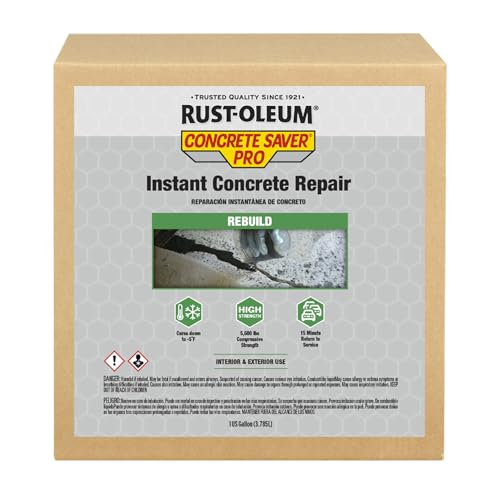
Rapidset Cementall - Best for Fast Cure
Rapidset Cementall is not a dedicated countertop mix, but its ultra-fast cure time of 15 minutes initial set and high final strength make it a valid option for specific countertop applications where demolding speed matters. It achieves over 5,000 PSI within 24 hours and resists shrinkage cracking effectively. The main challenge is the extremely short working window, which requires smaller batch mixing and fast placement. Not recommended for beginners or complex forms, but for experienced casters doing repairs, small patches, or simple slab pours where speed is the priority, Cementall has no real competition.

Custom Building Products Countertop Mix - Best Budget Entry
The Custom Building Products mix is a serviceable entry-level option available at most tile and flooring supply stores. It produces workable concrete with adequate compression strength for countertop use. Finishing quality requires more post-pour work than the premium options, including more aggressive sanding and sealing. For buyers who want to test the concrete countertop process before committing to premium materials, it is a reasonable first-pour choice. Not recommended for showcase projects or permanent high-traffic surfaces where the additional investment in a better mix pays for itself.
What to look for
What to consider
Compression strength should exceed 5,000 PSI for residential countertops. Aggregate size is critical: fine aggregates under 3/8 inch produce smoother surfaces that require less finishing work. Fiber reinforcement in the mix reduces shrinkage cracking during cure. Open working time matters for complex projects; look for at least 30 to 40 minutes before initial set. Check whether the mix is formulated for precast work (poured into a form offsite) or cast-in-place (poured directly onto cabinets), as the two applications have different flow and set time requirements. Always pair your mix with a quality penetrating sealer designed for concrete countertops.
What to consider
For related reading, see [best home improvement tools for beginners](/articles/best-home-improvement-tools) and [best compact tile saws](/articles/best-compact-tile-saw). Review our evaluation criteria at [/methodology](/methodology).
FAQs
The standard thickness for a concrete countertop is 1.5 to 2 inches. Thinner pours under 1.25 inches require significant fiber or mesh reinforcement to prevent cracking. Thicker pours above 2.5 inches add substantial weight, which can stress cabinet supports. For most residential kitchen countertops, a 1.5-inch pour hits the right balance between strength, weight, and material cost.
Yes, sealing is essential. Untreated concrete is highly porous and will stain from oils, wine, coffee, and acids like lemon juice within minutes of contact. A penetrating sealer applied after curing protects the surface from within, while a topical sealer adds a surface film for additional stain and scratch resistance. Most concrete countertop projects require sealing every one to three years depending on use and sealer type.
Standard bagged concrete or mortar mixes can be used but require significant modification with plasticizers, fiber reinforcement, and aggregate screening to produce a countertop-quality surface. Specialty countertop mixes pre-blend these components, simplifying the process and improving results for DIYers. For first-time countertop projects, using a dedicated countertop mix substantially reduces the risk of cracking, pinholing, and uneven surfaces.
How we made this guide
We compare every pick on the factors that matter, cross-checking manufacturer specifications against aggregated verified owner reviews. We rank independently and never take payment for placement. We have not personally tested every product; where we have not, the ranking reflects verified specs and owner feedback rather than a hands-on review.
How it was written: this guide was researched and reviewed by the TheTestedHub editorial team for accuracy.
Affiliate disclosure: TheTestedHub is reader-supported. When you buy through links on our site, we may earn a commission at no extra cost to you.
Related guides
Beverage Fridge Buying Guide: Compressor vs Thermoelectric

6 Drink Dispensers That Actually Seal Right (2026)

Skip Cheap Whiskers: Get a Real Chasen

Wondering Which Tea Infuser Is Best? Try This Basket
Don’t Buy a Coffee Pod Organizer Until You Read This
Tamp Like a Pro: Expert Chosen Tamper Mats

Coffee Scales for Every Brew, Tested for Daily Use