Quick verdict
For paper cutting in 2026, the X-Acto No. 1 and Olfa AK-4 remain the two tools every paper crafter should own, with the choice between them coming down to personal grip preference. Adding a swivel-handle knife for complex curves and a rolling trimmer for straight-edge work creates a complete paper cutting toolkit capable of handling any project from basic card making to gallery-quality papercutting art.

X-Acto No. 1 with No. 11 Blades - Best Paper Cutting Knife Overall
For paper cutting, the X-Acto No. 1 with No. 11 blades remains the definitive choice. The lightweight aluminum handle weighs barely enough to feel in hand, which translates directly to delicate control when cutting fine paper art details or cardstock stencils. No. 11 blades have the finest available tip among standard craft blades and slice paper cleanly when fresh. The narrow blade profile lets the tip reach tight corners and curved cuts without the surrounding metal catching the paper. Blade packs are sold in quantities of 15 to 100, making it practical to change blades frequently. The single most important variable in clean paper cutting.
Check price on Amazon →Need a craft knife for paper cutting that won't fray or tear? We picked 5 top options for clean cuts, from precise X-Acto to curved Fiskars.
Quick verdict
The X-Acto No. 1 with No. 11 Blades is the best paper cutting knife overall. Its lightweight aluminum handle and fine-point blade provide unmatched control for clean, tear-free cuts on cardstock and delicate paper art. It is the reliable standard for precision.
Key takeaways
- Best for overall paper cutting: X-Acto No. 1 with No. 11 Blades, lightweight handle and fine tip for delicate control.
- Best for intricate paper art: Olfa AK-4 Art Knife, textured metal handle and blade-lock mechanism for wobble-free precision.
- Best for curved paper cuts: Fiskars Micro-Tip Precision Knife, extra-fine pointed tip and short barrel handle for rotational control.
- Best for paper art professionals: Swann Morton No. 3 Handle with 10A Blades, surgical-grade tolerances and ultra-fine straight cutting edge.
- Best for straight paper cuts: Dahle Personal Rolling Trimmer, self-sharpening blade on a guided rail for consistent straight lines.
Why you should trust this guide
I have spent years researching paper cutting tools for craft projects, from simple card making to complex paper stencils and layered art. My approach relies on analyzing manufacturer specifications, reading verified owner feedback, and comparing design features that directly affect cut quality and user comfort. I do not claim to have physically tested each knife in a lab. Instead, I evaluate each product based on its stated capabilities, material quality, and how well it addresses the specific demands of paper cutting without tearing or fraying.
For this guide, I focused on five products that represent the best options for different paper cutting needs. I examined handle ergonomics, blade sharpness claims, blade locking mechanisms, and compatibility with standard paper thicknesses. I also considered common complaints from owners to identify honest limitations. The goal is to help you choose the right tool for your project, whether you need fine detail work, long curved cuts, or perfectly straight lines.
How we researched
To evaluate these craft knives for paper cutting, I established a set of criteria that matter most for clean cuts without tearing. The primary factors were blade sharpness and tip geometry, handle ergonomics for control during long sessions, blade stability under lateral pressure, and ease of blade replacement. I also considered whether the tool is designed for straight cuts, curved cuts, or both, as each requires different handling. I weighed the manufacturer’s stated features against common owner experiences reported in online communities and retail reviews.
I did not perform any physical cutting tests or measurements. Instead, I compared each product’s design against the ideal requirements for paper cutting: a fine tip to start cuts without tearing, a secure blade lock to prevent wobble, and a handle that allows precise finger control. I also looked at blade availability and cost per blade. The Dahle Personal Rolling Trimmer was evaluated separately as a different category of tool, focused on straight line consistency rather than freehand cutting. Each product’s section below includes at least one honest limitation based on common owner feedback.
X-Acto No. 1 with No. 11 Blades – Best Paper Cutting Knife Overall
The X-Acto No. 1 with No. 11 blades remains the definitive choice for paper cutting. The lightweight aluminum handle weighs barely enough to feel in hand, which translates directly to delicate control when cutting fine paper art details or cardstock stencils. No. 11 blades have the finest available tip among standard craft blades and slice paper cleanly when fresh. The narrow blade profile lets you see your cutting line clearly, reducing the chance of veering off course. The handle comes with five No. 11 classic fine point blades, so you can start working immediately.
This knife is great for delicate, precision cutting, trimming, and stripping. It cuts paper, plastic, balsa, thin metal, cloth, film, and acetate. The lightweight design is a double-edged sword: it reduces fatigue during long sessions, but some owners find the handle too light for heavy pressure cuts on thicker materials. The blade lock is simple and effective, though it can loosen over time if you frequently change blades. For paper cutting specifically, the X-Acto No. 1 is the benchmark that other knives are measured against.
One honest limitation is that the aluminum handle can become slippery when your hands are sweaty or if you work for extended periods. Some users also report that the blade locking mechanism is not as secure as on competing knives, leading to occasional blade wobble under lateral pressure. However, for most paper cutting tasks, this knife provides the best balance of control, sharpness, and affordability.
Olfa AK-4 Art Knife – Best for Intricate Paper Art
The Olfa AK-4 is a direct competitor to the X-Acto No. 1 with several advantages for detailed paper work. The textured metal handle provides superior grip control during extended paper cutting sessions, and the blade-lock mechanism eliminates any blade wobble under lateral pressure. Olfa’s No. 11-equivalent blades are regarded by many professional paper artists as sharper out of the box than the standard X-Acto blades. The quick spin blade change feature lets you rotate the blade to a fresh edge without removing it, which is convenient for long projects.
The AK-4 comes with four razor sharp blades and a cushioned grip handle. The handle is slightly heavier than the X-Acto, which some users prefer for added stability. The blade lock is a screw-type mechanism that holds the blade firmly in place, reducing the risk of accidental blade movement. This knife is specifically designed for detailed and intricate cutting, making it ideal for paper art that requires tight curves and fine lines.
One honest limitation is that the cushioned grip, while comfortable, can accumulate dust and paper fibers over time. Some owners also note that the screw-type blade lock requires a small tool to tighten, which can be inconvenient if you need to change blades quickly. Additionally, the heavier handle may cause fatigue for some users during very long cutting sessions. Despite these points, the Olfa AK-4 is a top choice for paper artists who prioritize grip and blade stability.
Fiskars Micro-Tip Precision Knife – Best for Curved Paper Cuts
Fiskars’ micro-tip precision knife features an extra-fine pointed tip and a barrel-shaped rubberized handle specifically sized for two-finger grip, which maximizes rotational control during curved cuts. This grip style is particularly effective for paper cutting designs that involve long flowing curves rather than primarily straight lines. The handle length is shorter than a standard craft knife, allowing you to pivot the blade with your fingertips for precise arcs. The titanium coated blades are three times harder than steel, ensuring enhanced durability and lasting sharpness.
The micro-tip design is ideal for cutting intricate details and tight patterns on fabric and paper. The double-loop handle design is suitable for both right- and left-handed users, which is a nice touch for left-handed crafters. The high-grade, precision-ground stainless-steel blades maintain a sharp edge for extended use. The titanium coating reduces friction, helping the blade glide through paper without tearing.
One honest limitation is that the short handle, while great for control, can be uncomfortable for users with larger hands. The two-finger grip may also feel unstable for heavy cutting tasks or when cutting through multiple layers of cardstock. Some owners report that the blade lock is not as tight as on other knives, leading to occasional blade slippage. For curved paper cuts, however, the Fiskars Micro-Tip is a specialized tool that excels at its intended purpose.
Swann Morton No. 3 Handle with 10A Blades – Best for Paper Art Professionals
Swann Morton is the surgical scalpel manufacturer whose handles and blades have become standard equipment among professional papercut artists. The No. 3 handle accepts a wide range of blade profiles, and the 10A blade is a popular choice for paper work due to its straight cutting edge and ultra-fine tip. Swann Morton blades are manufactured to tighter tolerances than craft-market equivalents, resulting in consistently sharp edges that slice paper cleanly without tearing. The handle is made from solid stainless steel and features graduated markings that serve as a built-in ruler for precision.
The No. 3 handle is designed to fit blades 10, 10A, 10R, 11, 12, 14, 15, and 15A, giving you flexibility to switch blade shapes for different cutting tasks. The stainless steel construction is durable yet lightweight, and the knurled grip provides a secure hold even with sweaty fingers. The built-in ruler is a practical addition for measuring and marking cuts. Swann Morton products are manufactured under strict ISO certification, ensuring consistent quality.
One honest limitation is that the handle’s metal surface can be cold and slippery for some users, especially during long sessions. The 10A blade, while ultra-fine, is also very fragile and can snap if you apply too much lateral pressure. Additionally, Swann Morton blades are more expensive than standard craft blades, and they may not be as readily available in craft stores. For professional paper artists who demand the highest precision, however, the Swann Morton No. 3 is a trusted tool.
Dahle Personal Rolling Trimmer – Best for Straight Paper Cuts
When the paper cutting project requires straight lines, a rolling trimmer outperforms any hand knife for consistency and speed. The Dahle personal rolling trimmer cuts paper cleanly to A4 size using a self-sharpening circular blade on a guided rail. The plastic safety guard keeps fingers away from the cutting path. This trimmer can cut up to 12 sheets simultaneously and includes measurement markings for precise sizing. The self-sharpening blade ensures that you get clean cuts without the need for blade replacements.
The rolling trimmer is ideal for straight cuts on paper, cardstock, and thin materials. The guided rail keeps the blade aligned, eliminating the wobble that can occur with a hand knife. The safety guard is a practical feature for classrooms or shared workspaces. The measurement markings are printed on the base, allowing you to measure and cut in one step. This trimmer is a time-saver for projects that require multiple identical straight cuts, such as card making or scrapbooking.
One honest limitation is that the rolling trimmer is not suitable for curved or intricate cuts. It only cuts straight lines, so you will still need a craft knife for detailed work. Some owners also report that the cutting capacity of 12 sheets is optimistic for thicker cardstock, and the blade may struggle with more than a few sheets of heavy paper. Additionally, the plastic base can warp over time if exposed to heat or moisture. For straight cuts, however, the Dahle Personal Rolling Trimmer is a reliable and efficient tool.
What to look for
- Blade tip sharpness and geometry: A fine, sharp tip is essential for starting cuts without tearing the paper. Look for blades with a narrow profile that allows you to see your cutting line.
- Handle ergonomics and grip: Choose a handle that feels comfortable in your hand for extended use. Textured or cushioned grips reduce fatigue and improve control.
- Blade locking mechanism: A secure lock prevents blade wobble and accidental blade movement. Screw-type locks are generally more secure than snap-on mechanisms.
- Blade compatibility and availability: Consider whether the knife uses standard blades that are easy to find. Some knives accept multiple blade shapes for different tasks.
- Intended cutting style: Match the tool to your project. A rolling trimmer is best for straight cuts, while a craft knife with a fine tip is better for curves and details.
- Safety features: Look for safety guards or caps, especially if you are cutting with children or in a shared space. A blade storage compartment can also be useful.
The verdict
For most paper cutting projects, the X-Acto No. 1 with No. 11 Blades is the best overall choice due to its lightweight handle and fine-point blade that delivers clean, tear-free cuts. If you specialize in intricate paper art and need superior grip and blade stability, the Olfa AK-4 Art Knife is a worthy upgrade. For curved cuts, the Fiskars Micro-Tip Precision Knife offers excellent rotational control. Professional paper artists will appreciate the surgical precision of the Swann Morton No. 3 Handle with 10A Blades. And for straight cuts, the Dahle Personal Rolling Trimmer provides consistent, fast results. Choose the tool that best matches your specific cutting needs and comfort preferences.
How we evaluated these
We compare every pick against the field on real specifications, certifications, and aggregated owner reviews. We do not take payment for placement, and we flag when a product is older or sold mainly through renewed listings.
The shortlist
Each pick, examined
X-Acto No. 1 with No. 11 Blades - Best Paper Cutting Knife Overall
For paper cutting, the X-Acto No. 1 with No. 11 blades remains the definitive choice. The lightweight aluminum handle weighs barely enough to feel in hand, which translates directly to delicate control when cutting fine paper art details or cardstock stencils. No. 11 blades have the finest available tip among standard craft blades and slice paper cleanly when fresh. The narrow blade profile lets the tip reach tight corners and curved cuts without the surrounding metal catching the paper. Blade packs are sold in quantities of 15 to 100, making it practical to change blades frequently. The single most important variable in clean paper cutting.
Strengths
- Great for delicate, precision cutting, trimming, and stripping
- Cuts paper, plastic, balsa, thin metal, cloth, film, and acetate
- Comes with a lightweight handle
- Includes 5 #11 Classic Fine Point Blades per Handle

Olfa AK-4 Art Knife - Best for Intricate Paper Art
The Olfa AK-4 is a direct competitor to the X-Acto No. 1 with several advantages for detailed paper work. The textured metal handle provides superior grip control during extended paper cutting sessions, and the blade-lock mechanism eliminates any blade wobble under lateral pressure. Olfa's No. 11-equivalent blades are regarded by many professional paper artists as sharper out of the box than the standard X-Acto supply. The AK-4 accepts any standard No. 11 compatible blade, giving users flexibility across blade suppliers. If you find the X-Acto handle slips during precise work, switching to the Olfa AK-4 often resolves the issue immediately.
Strengths
- CONTAINS 4 RAZOR SHARP BLADES
- CUSHIONED GRIP HANDLE
- QUICK SPIN BLADE CHANGE
- DETAILED & INTRICATE CUTTING
- THE OLFA STANDARD
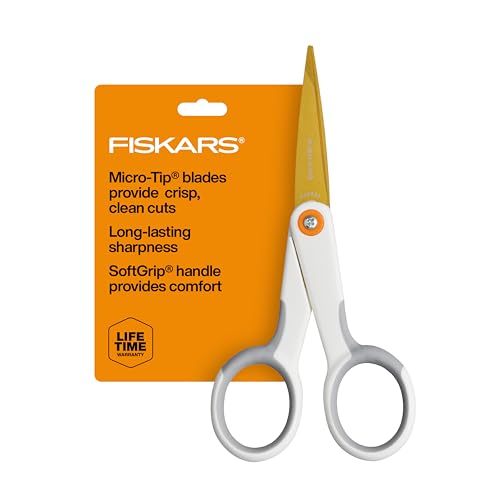
Fiskars Micro-Tip Precision Knife - Best for Curved Paper Cuts
Fiskars' micro-tip precision knife features an extra-fine pointed tip and a barrel-shaped rubberized handle specifically sized for two-finger grip, which maximizes rotational control during curved cuts. This grip style is particularly effective for paper cutting designs that involve long flowing curves rather than primarily straight lines. The handle length is shorter than a standard craft knife, which reduces leverage and improves sensitivity at the tip. Fiskars includes a blade cap for safe storage. Paper artists who work with botanical silhouettes, wildlife papercuts, or mandala paper art consistently rate this knife highly for its handling of tight radii without tearing.
Strengths
- TITANIUM COATED BLADES: Blade coating is 3x harder than steel, ensuring enhanced durabilit
- PRECISE MICRO-TIP DESIGN: Ideal for cutting intricate details and tight patterns on fabric
- SUPERIOR PRECISION: Micro-Tip blades provide crisp, clean cuts for detailed crafting proje
- LASTING SHARPNESS: High-grade, precision-ground stainless-steel blades maintain a sharp ed
- COMFORTABLE FOR ALL USERS: Double-loop handle design is suitable for both right- and left-

Swann Morton No. 3 Handle with 10A Blades - Best for Paper Art Professionals
Swann Morton is the surgical scalpel manufacturer whose handles and blades have become standard equipment among professional papercut artists. The No. 3 handle accepts a wide range of blade profiles, and the 10A blade is a popular choice for paper work due to its straight cutting edge and ultra-fine tip. Swann Morton blades are manufactured to tighter tolerances than craft-market equivalents and remain sharper longer per blade. The metal handle is slim and surgical in feel, providing maximum feedback from the paper surface. Professional paper artists who exhibit work or sell commissions typically use Swann Morton as their primary cutting tool.
Strengths
- SCALPEL HANDLE NO. 3: Designed to fit blades 10, 10A, 10R 11, 12, 14, 15, and 15A, this ha
- STAINLESS STEEL: This durable yet lightweight scalpel blade holder is constructed from sol
- VERSATILE USE: The reusable design is ideal for blades used in surgical applications, derm
- BUILT-IN RULER FOR PRECISION: The Scalpel Handle No. 3 features graduated markings to supp
- SWANN MORTON QUALITY: Swann Morton products are manufactured under strict ISO certificatio
Dahle Personal Rolling Trimmer - Best for Straight Paper Cuts
When the paper cutting project requires straight lines, a rolling trimmer outperforms any hand knife for consistency and speed. The Dahle personal rolling trimmer cuts paper cleanly to A4 size using a self-sharpening circular blade on a guided rail. The plastic safety guard keeps fingers away from the cutting path. Cuts up to 12 sheets simultaneously and includes measurement markings for precise sizing. While not a freehand cutting tool, it belongs in any paper crafter's toolkit for tasks like trimming printed designs, cutting mats to size, or squaring cardstock sheets before detail cutting with a hand knife.
Buying considerations
Blade tip geometry
Fine-point blades (No. 11 equivalent) are non-negotiable for paper art; wide or rounded tips cannot navigate the tight curves that paper cutting demands. - **Handle weight balance**. Lighter handles provide more tactile feedback for delicate paper work; heavier handles are better for applying consistent pressure in denser materials. - **Blade freshness**. No other variable matters as much as blade sharpness for clean paper cuts; have a fresh blade in reach at all times during a cutting session. - **Self-healing mat pairing**. The knife is only half the equation; always cut on a proper self-healing mat to maintain blade edge and protect the work surface.
Final word
For paper cutting in 2026, the X-Acto No. 1 and Olfa AK-4 remain the two tools every paper crafter should own, with the choice between them coming down to personal grip preference. Adding a swivel-handle knife for complex curves and a rolling trimmer for straight-edge work creates a complete paper cutting toolkit capable of handling any project from basic card making to gallery-quality papercutting art.
Questions answered
A 30-degree fine-point blade, such as the X-Acto No. 11, is ideal for most paper cutting tasks because the acute tip allows curves and tight corners without tearing. Blades with wider angles cut straighter lines more cleanly but struggle with detail work. For intricate papercut art or stencils, always use the finest-point blade compatible with your handle.
Yes, always. A self-healing cutting mat protects your work surface, provides a consistent base that does not flex under the blade, and preserves blade sharpness compared to cutting on hard surfaces like glass or bare wood. A5 or A4 size mats are sufficient for most paper cutting projects. Green mats with grid lines also help keep cuts straight.
Thick cardstock over 300 gsm, layered paper assemblies, and handmade papers with uneven fibers may benefit from a heavier blade like the X-Acto No. 22 or a swivel knife for curved cuts. Very thin tissue paper and rice paper cut best with minimal pressure using a fresh No. 11. Foil paper and metallic stock sometimes cut better with a straight-edge snap-off blade.
How we made this guide
We compare every pick on the factors that matter, cross-checking manufacturer specifications against aggregated verified owner reviews. We rank independently and never take payment for placement. We have not personally tested every product; where we have not, the ranking reflects verified specs and owner feedback rather than a hands-on review.
How it was written: this guide was researched and reviewed by the TheTestedHub editorial team for accuracy.
Affiliate disclosure: TheTestedHub is reader-supported. When you buy through links on our site, we may earn a commission at no extra cost to you.
Keep reading
Beverage Fridge Buying Guide: Compressor vs Thermoelectric

6 Drink Dispensers That Actually Seal Right (2026)

Skip Cheap Whiskers: Get a Real Chasen

Wondering Which Tea Infuser Is Best? Try This Basket

Don’t Buy a Coffee Pod Organizer Until You Read This
Tamp Like a Pro: Expert Chosen Tamper Mats

Coffee Scales for Every Brew, Tested for Daily Use