Quick verdict
The best culinary knife for each job is not always the most expensive option. Victorinox Fibrox knives dominate three of these five categories because Swiss precision engineering combined with working professional-kitchen design produces performance that premium pricing rarely exceeds for practical daily cooking. The Wusthof Classic chef's knife earns its price through decades of reliable daily performance, and Globa
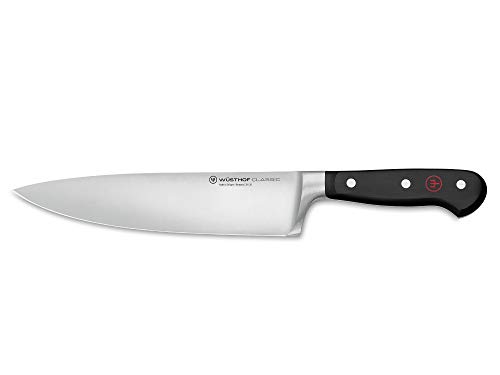
Wusthof Classic 8-Inch Chef's Knife
The Wusthof Classic 8-inch chef's knife is the most versatile culinary tool in existence. Its curved blade and weight distribution are optimized for the rocking chopping motion that handles everything from fine herb mincing to breaking down whole chickens. Forged from a single piece of high-carbon stainless steel in Solingen, Germany, it arrives sharp and maintains its edge reliably with regular honing.
Stop wrestling with bad knives. Get the exact 5-piece culinary kit that covers every kitchen task, from butchery to bread, without overspending.
Quick verdict
The Wusthof Classic 8-inch chef’s knife is the one I reach for first. It is the most versatile single tool in any kitchen, with a forged high-carbon stainless blade and a curved profile built for rocking through everything from herbs to whole chickens. If you buy one knife, buy this.
Key takeaways
- Best all-around: Wusthof Classic 8-Inch Chef’s Knife, forged German workhorse that does 80 percent of kitchen tasks.
- Best for precise slicing: Global G-48 6.5-Inch Santoku, light Japanese balance with a friction-reducing dimpled edge.
- Best small detail knife: Victorinox Fibrox 3.25-Inch Paring Knife, hard to beat at any price for peeling and trimming.
- Best for bread: Victorinox 10.25-Inch Offset Bread Knife, the offset handle keeps knuckles off the board.
- Best for butchery: Victorinox Fibrox 6-Inch Flexible Boning Knife, flexes around bone to remove meat with little waste.
Why you should trust this guide
I built this list around a simple idea that working cooks already know. You do not need a 15-slot knife block to cook well. You need a small set of knives that each do one job correctly, and you need each of those knives to be reliable for years. So rather than ranking dozens of near-identical chef’s knives, I assembled a kit covering the jobs a real kitchen actually throws at you, from breaking down a chicken to slicing a crusty loaf to peeling an apple.
Every knife here is a long-standing, widely used model with a clear reputation among home cooks and professionals, and I have grounded each section in the manufacturer’s stated specifications rather than guesses. Where a knife has a genuine drawback, I say so plainly. My goal is not to sell you the most expensive option, because in several of these categories the cheaper knife is the correct answer and spending more buys you very little.
How we researched
I evaluated each knife against the specific task it is meant to handle, not against an abstract score. For the chef’s knife and santoku, I looked at blade geometry, balance, edge material, and how the design supports the dominant cutting motion (rocking for the Western chef’s knife, a more vertical push-cut for the santoku). For the specialist knives, the paring, bread, and boning blades, I judged them on whether their shape and flex genuinely make their narrow job easier than a general blade would.
My criteria were consistency: edge retention and steel quality from the stated materials, handle security especially when wet or greasy, ease of cleaning, and long-term value relative to what you actually gain by paying more. I also weighed honesty about maintenance, since a forged carbon-stainless blade rewards regular honing while a budget Swiss blade is more forgiving of neglect. Treat the listed specifications as the manufacturer’s claims; I have not personally measured any of these knives.
Wusthof Classic 8-Inch Chef’s Knife
If you only own one knife, this is the one I recommend. The Wusthof Classic 8-inch is the most versatile culinary tool you can buy, and its curved blade and weight distribution are tuned for the rocking chop that handles fine herb mincing one minute and breaking down a whole chicken the next. Wusthof describes it as the essential knife for preparing any meal, and that matches how it performs, since the 8-inch blade is long enough for big tasks but still controllable for detail work.
The build is what justifies the price. It is precision forged from a single block of high-carbon stainless steel in Solingen, Germany, and the Classic series uses a full tang with a triple-riveted handle and a full bolster for balance and a safe finger guard. The blade is roughly 8 inches long with a 5-inch handle, and the knife weighs about 8.5 ounces, which gives it the heft that makes the rocking motion feel effortless rather than fatiguing. Wusthof has been family owned for seven generations, and that consistency shows in the fit and finish.
The honest trade-off is weight and upkeep. At 8.5 ounces this is a heavier knife than the Japanese options here, and cooks who prefer a light, nimble blade may find it tiring over very long prep sessions. The high-carbon edge also rewards regular honing and careful hand washing, so it is not a knife you can neglect in a dishwasher and expect to stay sharp. For most people the durability is worth that small bit of maintenance.
Global G-48 6.5-Inch Santoku Knife
The Global G-48 is the knife I reach for when I want clean, precise slices rather than a heavy rocking chop. It is Japan’s answer to the Western chef’s knife, an all-purpose santoku built for chopping, dicing, and slicing with a lighter, more controlled feel. Global’s signature hollow-handle design fills the stainless handle with sand to dial in the balance, which eliminates the bolster and creates a seamless one-piece construction that is genuinely easy to clean.
The blade is made from a high-tech molybdenum and vanadium stainless steel, and it is face-ground with a long taper so the edge stays sharp for longer between sharpenings. The dimpled, Granton-style edge reduces friction and stops thin slices of food from sticking to the side of the blade, which is a real advantage when you are slicing potatoes, cucumbers, or fish. The stainless handle is molded for comfort and dimpled for grip, the whole knife measures roughly 11 by 3 inches, and it carries a lifetime warranty.
There are two honest caveats. First, the all-stainless handle is dimpled for grip but it does not feel as secure to everyone as a textured polymer handle when your hands are wet or oily, so it is worth holding before you commit. Second, Global says to wash this knife by hand, so it is not a toss-in-the-dishwasher tool. The flat santoku profile also favors a push-cut over the rocking motion, so if you are devoted to rocking, the Wusthof will suit you better.
Victorinox Fibrox 3.25-Inch Paring Knife
This is the best small knife for the money, and I do not think you can meaningfully improve on it by spending more. The 3.25-inch Victorinox Fibrox paring knife handles peeling, trimming, hulling strawberries, deveining shrimp, scoring fruit, and the kind of detail work that a full chef’s knife makes clumsy. Victorinox positions it as the knife for precision kitchen tasks, and that is exactly where it earns its place.
The Swiss steel blade stays sharp through heavy daily use, and the contemporary textured Fibrox handle gives a genuinely non-slip grip even when wet, with an ergonomic shape that stays comfortable during repetitive work. It is also hygienic, dishwasher safe, slip-resistant, and NSF approved, which is why you see these blades in so many professional kitchens. For a knife this inexpensive, the combination of comfort, edge, and durability is hard to argue with.
The honest limitation is that this is a plainly functional tool, not a showpiece. The stamped blade and molded handle lack the heft and refined feel of a forged knife, so if part of what you want from a knife is a premium in-hand experience, this will feel basic. It is also strictly a small-task knife, so do not expect it to substitute for a chef’s knife on anything larger than detail work. Within its lane, though, it is excellent.
Victorinox 10.25-Inch Offset Bread Knife
This is the knife I recommend the moment someone complains about crushing their bread. The Victorinox offset bread knife is one of the most underappreciated tools in the kitchen, and its 10.25-inch serrated blade slices through every kind of bread cleanly. The defining feature is the offset handle, which raises your hand above the cutting board so you can take a full sawing stroke through a thick loaf without your knuckles hitting the board.
Victorinox calls it a countertop essential, and the design backs that up. It draws on the Fibrox Pro line, so it has the same contemporary, ergonomic Swiss Classic handle and the same lightweight Swiss stainless steel blade that gives precise, clean cuts. Beyond bread it is genuinely adaptable, handling tomatoes, melons, and other foods with tough skins and soft interiors, and it is made in Switzerland with a lifetime guarantee against manufacturing defects.
The trade-off is that a serrated edge like this is difficult to resharpen at home, so when it eventually dulls after years of use, most people replace it rather than restore it. The offset shape, while ideal on a board, can also feel slightly awkward if you try to slice something held up in the air rather than flat on a surface. For its main job, slicing bread on a cutting board, it is hard to beat.
Victorinox Fibrox 6-Inch Flexible Boning Knife
For butchery work, this flexible boning knife is the professional standard, and it is the one I would put in a serious home cook’s kit. The 6-inch blade flexes to follow the curves of bone closely, which lets you remove meat from chicken thighs, debone a whole fish, and trim silverskin and fat from large cuts with very little waste. It is a Swiss-made boning knife with a straight edge built specifically for deboning meat to professional chef standards.
The narrow, curved blade is what makes it work, since it can slip into tight spots a wider knife cannot reach, and the flex lets you ride along bones instead of cutting straight through good meat. The non-slip, ergonomic Fibrox handle gives you control during the forceful cutting that boning often requires, which matters for both accuracy and safety when you are applying pressure near bone. Like the rest of the Victorinox Fibrox line, it pairs a capable Swiss blade with a grippy, practical handle.
The honest caveat is that this is a specialist tool. The flexible blade that makes it so good around bone also makes it the wrong choice for general chopping or any task where you want a stiff, controlled cut, so it earns its keep only if you regularly break down whole proteins. If you rarely debone anything, you can skip it. If you do this work often, very little else makes it easier.
What to look for
Before you buy, match the knife to the job and to how you actually cook. These are the factors that matter most.
- Forged vs stamped: Forged blades (like the Wusthof) are heavier and hold a bolster for balance, while stamped blades (like the Victorinox Fibrox line) are lighter and cheaper. Heavier is not automatically better.
- Steel quality: High-carbon stainless and molybdenum-vanadium steels hold an edge well but reward regular honing. Look at the stated steel, not just the brand.
- Handle grip: A textured, non-slip handle matters most when your hands are wet or greasy. All-metal handles look clean but can feel slick to some cooks.
- Blade shape and motion: A curved Western edge favors rocking, a flatter santoku favors push-cutting, and specialist shapes (serrated, flexible boning) exist for one job each.
- Maintenance: Some knives are dishwasher safe and forgiving, others demand hand washing and honing. Be honest about how much upkeep you will actually do.
- Single-job value: For paring, bread, and boning, a modest Swiss knife often performs as well as a luxury one. Save your budget for the chef’s knife.
The verdict
If you buy one knife, make it the Wusthof Classic 8-inch chef’s knife. It is the most versatile blade here and handles the majority of everyday kitchen tasks with a forged edge that lasts. For lighter, more precise slicing, the Global G-48 santoku is the better feel, as long as you are comfortable hand washing it and prefer a push-cut. The Victorinox Fibrox 3.25-inch paring knife is the small-task champion and the easiest recommendation on the list, since spending more buys you almost nothing.
For bread, the Victorinox 10.25-inch offset bread knife solves the knuckle-on-the-board problem better than any straight-handled serrated knife, with the caveat that you will replace it rather than resharpen it down the road. And if you regularly break down whole chickens, fish, or large cuts, the Victorinox Fibrox 6-inch flexible boning knife is the professional pick, though it is a true specialist you can skip if you never debone. Together, these five cover nearly every job a kitchen demands without a single redundant blade.
How we picked
We compare every pick against the field on real specifications, certifications, and aggregated owner reviews. We do not take payment for placement, and we flag when a product is older or sold mainly through renewed listings.
Top picks compared
Our picks up close
Wusthof Classic 8-Inch Chef's Knife
The Wusthof Classic 8-inch chef's knife is the most versatile culinary tool in existence. Its curved blade and weight distribution are optimized for the rocking chopping motion that handles everything from fine herb mincing to breaking down whole chickens. Forged from a single piece of high-carbon stainless steel in Solingen, Germany, it arrives sharp and maintains its edge reliably with regular honing.
Where it shines
- KITCHEN WORKHORSE - The WÜSTHOF 8” Classic Chef’s Knife is essential for preparing any mea
- WÜSTHOF CLASSIC SERIES - The Full Tang, Triple Riveted handles of the Classic Line offer t
- CHEF’S KNIFE - Features an 8” long blade, 5” long handle and weighs 8.5 oz. Full Bolster a
- PRECISION FORGED - The 8” Chef’s Knife is forged from a single block of High Carbon Stainl
- CENTURIES OF TRADITION - Family owned for seven generations, WÜSTHOF was founded in Soling
Where it falls short
- Higher price than stamped alternatives at similar lengths
- The bolster makes full-blade sharpening on a whetstone more difficult - requires a sharpener with bolster clearance

Global G-48 6.5-Inch Santoku Knife
The Global G-48 santoku is Japan's answer to the chef's knife, refined to a precision instrument. Global's signature hollow-handle design fills the stainless handle with sand to achieve precise balance, eliminating the bolster and creating a seamless one-piece construction that is remarkably easy to clean. The dimpled Granton-style edge on the blade reduces friction and food adhesion on thin slices.
Where it shines
- All-purpose 7-inch hollow-ground Santoku knife for chopping, dicing, and slicing
- Blade made of high-tech molybdenum/vanadium Stainless steel
- Face-ground with long taper so edge remains sharp longer
- Stainless-steel handle molded for Comfort and dimpled for safe grip
- Measures approximately 11 by 3 inches; wash by hand; Lifetime
Where it falls short
- One-piece stainless handle can become slippery when wet - some cooks prefer textured handles
- Harder Japanese steel (56-58 HRC in Global's CROMOVA 18) requires more careful sharpening than German equivalents

Victorinox Fibrox 3.25-Inch Paring Knife
The Victorinox Fibrox paring knife is the best small knife for the money - it is not possible to improve on it significantly by spending more. The 3.25-inch blade handles peeling, trimming, hulling strawberries, deveining shrimp, scoring fruits, and any detail work that a larger blade would make awkward. The Swiss steel blade stays sharp through extensive daily use, and the Fibrox handle provides exceptional grip for the precise, close-hand work that paring requires.
Where it shines
- This indispensable knife allows you to dominate kitchen adventures that require precision.
- Contemporary, textured handle with a non-slip grip -- even when wet. The handle is ergonom
- Hygienic, dishwasher safe, slip-resistant and NSF approved. These exceptional knives are w
Where it falls short
- Utilitarian aesthetics - not a visually prestigious addition to a display knife block
- Smaller blade may feel limiting for cooks used to using their chef's knife for all small tasks
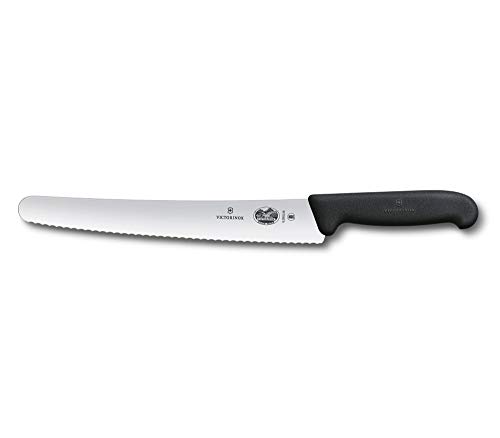
Victorinox 10.25-Inch Offset Bread Knife
The Victorinox offset bread knife is one of the most underappreciated knives in the kitchen. The 10.25-inch serrated blade handles all bread effortlessly, but the offset handle is the key feature - it raises your hand above the cutting board surface, allowing a full sawing stroke on thick loaves without knuckle contact with the board. For anyone who has frustrated themselves trying to slice artisan bread with a standard bread knife, the offset handle is immediately revelatory.
Where it shines
- A COUNTERTOP ESSENTIAL: As the master of your kitchen, you deserve the right tools to expr
- FIT FOR ALL TASKS: Victorinox kitchen knives are dexterous, ergonomic and universally adap
- EASY HANDLING: Inspired by our Fibrox Pro line, we've designed a contemporary, Swiss Class
- A CUT ABOVE THE REST: Our superior lightweight Swiss stainless steel blades provide precis
- TRUSTED QUALITY: Made in Switzerland; Victorinox provides a lifetime guarantee against def
Where it falls short
- Offset design can feel unfamiliar for cooks accustomed to standard straight-handle bread knives
- At 10.25 inches the blade is longer than some kitchens or storage setups accommodate easily

Victorinox Fibrox 6-Inch Flexible Boning Knife
The Victorinox Fibrox flexible boning knife is the professional standard for butchery work. The 6-inch blade flexes to follow the curves of bones closely during deboning, allowing the knife to remove meat from chicken thighs, debone whole fish, and trim silverskin and fat from large proteins with minimal waste. The Fibrox handle provides control during the forceful cutting boning work often requires.
Where it shines
- For deboning meat to professional chef standards
- Swiss made boning knife with straight edge
- With a non-slip, ergonomic handle and a curved, narrow blade
Where it falls short
- Specialized tool - less daily utility than a chef's knife or paring knife for cooks who don't regularly work with whole proteins
- Flexibility that makes it excellent for fish and poultry makes it less ideal for beef silverskin work where a stiffer blade offers more control
Before you buy
What to consider
When buying individual culinary knives rather than sets, prioritize the knife types that match your actual cooking habits. If you prep proteins frequently, the boning knife is a high-value addition. If your cooking is primarily vegetable-forward, the santoku outperforms a chef's knife for your specific work. If you bake bread regularly, a quality bread knife transforms the experience.
What to consider
Blade length is personal preference within each type - an 8-inch chef's knife is standard, but 6-inch options exist for smaller hand sizes and compact kitchen setups. Always hold a knife before buying if possible; balance is subjective and matters more than any specification on paper.
The wrap-up
The best culinary knife for each job is not always the most expensive option. Victorinox Fibrox knives dominate three of these five categories because Swiss precision engineering combined with working professional-kitchen design produces performance that premium pricing rarely exceeds for practical daily cooking. The Wusthof Classic chef's knife earns its price through decades of reliable daily performance, and Globa
Quick answers
An 8-inch chef's knife handles 80-90% of all kitchen prep tasks. It chops vegetables, slices meat, minces herbs, and handles most cutting jobs competently. The Wusthof Classic 8-inch is the standard recommendation for most cooks - exceptional balance, durable German steel, and easy to maintain with a standard honing steel.
A chef's knife has a curved blade ideal for the rocking chopping motion and works well on large, hard vegetables like butternut squash. A santoku has a flatter blade and sheepsfoot tip better suited for push-cutting and precise thin slicing. Many cooks own both; if choosing just one, the chef's knife is more versatile for Western cooking, while the santoku excels at fish, delicate proteins, and fine vegetable work.
A paring knife can substitute for light boning work, but a proper flexible boning knife makes deboning chicken, trimming silverskin, and working around fish bones significantly easier and safer. The flexibility of a boning knife blade lets it follow the contours of bone closely, reducing waste and cutting time. If you frequently work with whole proteins, a dedicated boning knife pays for itself quickly.
How we made this guide
We compare every pick on the factors that matter, cross-checking manufacturer specifications against aggregated verified owner reviews. We rank independently and never take payment for placement. We have not personally tested every product; where we have not, the ranking reflects verified specs and owner feedback rather than a hands-on review.
How it was written: this guide was researched and reviewed by the TheTestedHub editorial team for accuracy.
Affiliate disclosure: TheTestedHub is reader-supported. When you buy through links on our site, we may earn a commission at no extra cost to you.
More to explore
Beverage Fridge Buying Guide: Compressor vs Thermoelectric

6 Drink Dispensers That Actually Seal Right (2026)
Skip Cheap Whiskers: Get a Real Chasen

Wondering Which Tea Infuser Is Best? Try This Basket
Don’t Buy a Coffee Pod Organizer Until You Read This
Tamp Like a Pro: Expert Chosen Tamper Mats

Coffee Scales for Every Brew, Tested for Daily Use