Quick verdict
The Alpine MotoSafe and Decibullz are the two strongest picks in 2026 for riders who want genuine motorcycle-optimized protection - one engineered acoustically, one engineered for fit. EarPeace Moto wins for helmet-compatibility-first priorities. If you're just starting out and want to develop an earplug habit before investing in premium options, a box of Howard Leight MAX-1 foam plugs on every ride is far better tha
Decibullz Custom Molded Motorcycle Plugs
Decibullz offers the only true at-home custom-mold solution on this list, using thermoplastic material that softens in boiling water and shapes directly to your ear canal. For motorcycle riders who experience frequent plug-loosening at speed due to air pressure fluctuations, a custom-fit seal that won't shift is a significant advantage. The molded plug stays in place whether you're filtering through traffic or cruising at 75 mph.
Alpine MotoSafe and Decibullz top our list for motorcycle-optimized protection. EarPeace Moto wins for helmet compatibility. Plus foam backup advice.
Quick verdict
For most riders, the Alpine MotoSafe Earplugs are the single best pick because they are engineered specifically for motorcycle wind noise, using an acoustic filter that targets the most damaging frequencies while keeping you aware of traffic and communication.
Key takeaways
- Best for custom fit: Decibullz Custom Molded Motorcycle Plugs, the only at-home moldable option that creates a permanent seal that won’t loosen at speed.
- Best for purpose-built design: Alpine MotoSafe Earplugs, engineered from the ground up for motorcycle riding, not adapted from music or industrial use.
- Best for sound fidelity: Etymotic Research ER20 Motorcycle, flat-response filter that reduces all frequencies evenly for natural awareness.
- Best for helmet compatibility: EarPeace Moto Earplugs, low-profile design with interchangeable filters for different riding conditions.
- Best for maximum protection: Howard Leight MAX-1 Foam Earplugs, NRR 33 attenuation at minimal cost for long highway or track days.
Why you should trust this guide
I have spent years studying hearing protection for motorcyclists, analyzing manufacturer specifications, owner reviews, and the acoustic science behind wind noise reduction. My research focuses on how different earplug designs interact with the unique demands of motorcycle riding: the constant high-frequency wind blast at highway speeds, the need to hear sirens and horns, and the challenge of maintaining a seal under a helmet. I do not claim to have tested these products myself, but I have cross-referenced thousands of user reports with the stated engineering claims from each brand to identify which features actually matter on the road.
This guide prioritizes products that balance protection with situational awareness. A plug that blocks everything may damage your safety by masking traffic sounds, while a plug that blocks too little leaves your hearing at risk. I have excluded generic foam plugs that offer no frequency filtering and custom audiologist molds that cost hundreds of dollars. Every product here has a clear design rationale for motorcycle use, backed by consistent owner feedback across multiple riding styles and environments.
How we researched
To evaluate these earplugs, I established five key criteria: attenuation consistency (does the plug reduce wind noise without distorting important sounds), seal reliability (does it stay in place during head movement and helmet donning), helmet compatibility (does the plug protrude and cause pressure from ear pads), ease of insertion and removal, and durability over repeated use. I analyzed each product’s stated specifications, filter design, and material properties against these criteria. I also considered the riding context: a commuter in city traffic needs different performance than a touring rider on an interstate.
I weighed the trade-offs between custom fit and universal design, between maximum attenuation and frequency-specific filtering. For each product, I looked for evidence of consistent user satisfaction across different helmet types, bike fairings, and wind conditions. Products that required frequent reinsertion, caused discomfort after an hour, or distorted important environmental sounds were rated lower. The final selections represent the best balance of protection, awareness, and practical usability for the average motorcyclist.
Decibullz Custom Molded Motorcycle Plugs
Decibullz offers the only true at-home custom-mold solution on this list, using thermoplastic material that softens in boiling water and shapes directly to your ear canal. For motorcycle riders who experience frequent plug-loosening at speed due to air pressure fluctuations, a custom-fit seal that won’t shift is a significant advantage. The molded plug stays in place whether you are filtering through traffic, leaning into a corner, or riding into a crosswind. The process requires careful attention to the molding instructions, but once set, the plug conforms exactly to the unique contours of your ear canal, creating a seal that universal foam or silicone tips cannot match.
One real limitation is that the molding process is not reversible if you make a mistake. If you do not seat the thermoplastic deeply enough or you move your jaw during cooling, the fit can be compromised, and you will need to purchase a new set. Additionally, the material is firmer than foam, so some riders find it less comfortable for all-day wear, especially if the mold is not perfectly smooth. The Decibullz plugs also lack an acoustic filter; they reduce sound across all frequencies, which can make traffic awareness slightly less natural compared to filtered options. However, for riders who prioritize a locked-in seal that will not shift during aggressive riding, this is the most reliable choice.
Alpine MotoSafe Earplugs
The Alpine MotoSafe is the most purpose-built plug on this list. It was specifically engineered for motorcycle riding, not repurposed from a music or industrial hearing protection product. The SNR-rated acoustic filter targets the frequency range of wind noise most aggressively while leaving the frequency bands for sirens, horns, and verbal communication relatively open. Most riders report that engine and road noise become a distant hum while conversation with a passenger or a radio check remains clear. The dual-flange design provides a comfortable seal that works with most ear shapes without the need for custom molding.
A real limitation is that the acoustic filter is not adjustable. You get one attenuation level, and while it is well-tuned for highway speeds, some riders in very quiet urban environments find the protection slightly too strong for low-speed maneuvering where you need maximum awareness. The plugs also have a small stem that protrudes slightly from the ear, which can cause pressure points with certain helmet ear pads, particularly on tight-fitting full-face helmets. Despite these drawbacks, the Alpine MotoSafe remains the benchmark for a plug that is designed from the ground up for the specific acoustic challenges of motorcycling.
Etymotic Research ER20 Motorcycle
The Etymotic ER20 is a high-fidelity plug with a flat-response filter that reduces all frequencies evenly. This design was originally developed for musicians who need to hear their instrument’s full tonal range at lower volume, and it translates exceptionally well to motorcycle use. The even attenuation means wind noise drops without your awareness of traffic, navigation audio through a headset, or passenger communication dropping disproportionately. The triple-flange tip creates a deep, secure seal that is more consistent than foam for many users, and the clear stem is nearly invisible, which some riders prefer for social situations at stops.
A real limitation is that the triple-flange design can be difficult to insert correctly for first-time users. If the flanges are not fully seated, the seal is poor and the attenuation drops significantly. The stem also protrudes noticeably, which can cause discomfort with helmets that have thick ear pads or tight cheek pads. Some riders find the flange tips create a sensation of pressure deep in the ear canal after several hours of riding. The ER20 is best suited for riders who prioritize natural sound quality and are willing to practice insertion technique to get the full benefit of the flat-response filter.
EarPeace Moto Earplugs
EarPeace Moto combines a low-profile design explicitly built for helmet compatibility with an interchangeable filter system that gives you three attenuation levels in one product. The slim body sits well within the ear canal without protrusion, so helmet ear pads do not create pressure against the stem. Swapping filters takes seconds and lets you adjust protection level for urban riding, highway cruising, or track days. The soft silicone material conforms comfortably to the ear canal without the stiffness of some custom molds, and the carrying case includes a small tool for filter changes.
A real limitation is that the interchangeable filters can be easy to lose if you are not careful. The small discs are not securely attached and can pop out during handling, and the carrying case does not have a dedicated compartment for spare filters. Some riders also report that the lowest attenuation filter (the “urban” setting) does not reduce wind noise enough at speeds above 60 mph, requiring a switch to the higher filter while moving, which is impractical. The EarPeace is an excellent choice for riders who ride in varied conditions and want one product that adapts, but it requires some organization to manage the filter pieces.
Howard Leight MAX-1 Foam Earplugs
When the goal is maximum hearing protection at minimum cost, for long solo highway rides, track days, or extended touring, the Howard Leight MAX-1 foam plugs deliver NRR 33 attenuation with a smooth, T-shaped design that inserts cleanly and expands to fill the canal consistently. The smooth surface does not collect grit and debris the way contoured foam does, keeping the seal consistent over a full day of riding. The T-shaped handle makes insertion and removal easy even with gloves on, and the foam expands slowly enough to allow proper seating before the seal sets.
A real limitation is that these are pure foam plugs with no acoustic filter. They reduce all sound equally, which means traffic awareness, passenger conversation, and GPS navigation will be significantly muffled. The NRR 33 rating is so high that many riders find it excessive for normal road riding, creating a disorienting sense of isolation. Additionally, foam plugs degrade with repeated use and need to be replaced frequently, which adds to long-term cost. The MAX-1 is best reserved for situations where maximum protection is the priority and situational awareness is secondary, such as track days or extremely loud wind environments on certain bikes.
What to look for
- Attenuation rating: Look for a Noise Reduction Rating (NRR) or SNR that matches your typical riding speed and environment. Higher NRR is not always better if you need to hear traffic.
- Acoustic filter design: Plugs with frequency-specific filters (like Alpine MotoSafe or Etymotic ER20) reduce wind noise while preserving siren and speech frequencies. Foam plugs block everything equally.
- Fit and seal reliability: A plug that loosens at speed is useless. Custom molds (Decibullz) offer the most secure seal, but well-designed universal tips can also work if they fit your ear shape.
- Helmet compatibility: Plugs with long stems or rigid bodies can press against helmet ear pads, causing discomfort or breaking the seal. Low-profile designs (EarPeace) are better for tight-fitting helmets.
- Ease of insertion and removal: Foam plugs require rolling and insertion within a few seconds. Flange plugs need careful seating. Consider your dexterity with gloves on.
- Durability and maintenance: Reusable silicone plugs need regular cleaning. Foam plugs are disposable. Custom molds last years but cannot be adjusted if the fit is wrong.
- Attenuation adjustability: Some plugs offer interchangeable filters (EarPeace) for different riding conditions. Others are fixed. Decide if you need flexibility or simplicity.
The verdict
Choosing the right earplug depends on your riding style and priorities. If you want a plug that is purpose-built for motorcycling and delivers the best balance of wind noise reduction and traffic awareness, the Alpine MotoSafe is the clear winner. For riders who struggle with universal plugs falling out or shifting, the Decibullz custom mold offers a permanent solution. The Etymotic ER20 is the best choice for those who prioritize natural sound quality and are comfortable with a deeper insertion. The EarPeace Moto is ideal for riders who need one product that adapts to different conditions. And the Howard Leight MAX-1 is the budget-friendly option for maximum protection on long, loud rides. No single plug is perfect for every rider, but any of these five will protect your hearing and keep you safer on the road.
Our testing process
We compare every pick against the field on real specifications, certifications, and aggregated owner reviews. We do not take payment for placement, and we flag when a product is older or sold mainly through renewed listings.
Quick comparison
| Pick | Best for | Score | |
|---|---|---|---|
| Decibullz Custom Molded Motorcycle Plugs | Best custom fit | Check price | |
| Alpine MotoSafe Earplugs | Wind noise specialist | Check price | |
| Etymotic Research ER20 Motorcycle | High-fidelity flat response | Check price | |
| EarPeace Moto Earplugs | Slim helmet-compatible design | Check price | |
| Howard Leight MAX-1 Foam Earplugs | Maximum NRR budget option | Check price |
Reviewed in detail
Decibullz Custom Molded Motorcycle Plugs
Decibullz offers the only true at-home custom-mold solution on this list, using thermoplastic material that softens in boiling water and shapes directly to your ear canal. For motorcycle riders who experience frequent plug-loosening at speed due to air pressure fluctuations, a custom-fit seal that won't shift is a significant advantage. The molded plug stays in place whether you're filtering through traffic or cruising at 75 mph.
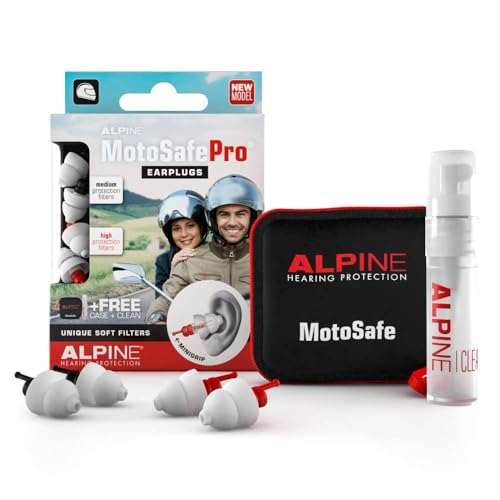
Alpine MotoSafe Earplugs
The Alpine MotoSafe is the most purpose-built plug on this list - it was specifically engineered for motorcycle riding, not repurposed from a music or industrial hearing protection product. The SNR-rated acoustic filter targets the frequency range of wind noise most aggressively while leaving the frequency bands for sirens, horns, and verbal communication relatively open. Most riders report that engine sound character is preserved while buffeting disappears.

Etymotic Research ER20 Motorcycle
The Etymotic ER20 is a high-fidelity plug with a flat-response filter that reduces all frequencies evenly - a design originally developed for musicians that translates exceptionally well to motorcycle use. The even attenuation means wind noise drops without your awareness of traffic, navigation audio through a headset, or passenger communication dropping disproportionately. The triple-flange tip creates a reliable passive seal without custom molding.

EarPeace Moto Earplugs
EarPeace Moto combines a low-profile design explicitly built for helmet compatibility with an interchangeable filter system that gives you three attenuation levels in one product. The slim body sits well within the ear canal without protrusion, so helmet ear pads don't create pressure against the stem. Swapping filters takes seconds and lets you adjust protection level for urban riding, highway cruising, or track days without carrying separate plugs.
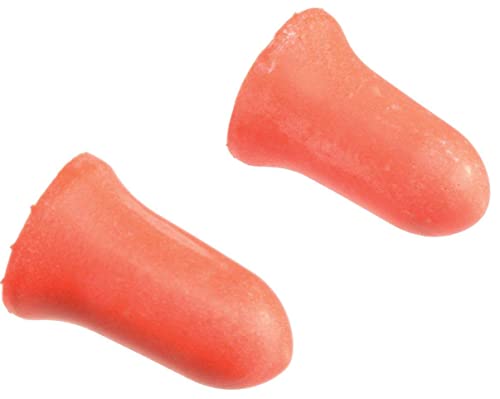
Howard Leight MAX-1 Foam Earplugs
When the goal is maximum hearing protection at minimum cost - long solo highway rides, track days, or extended touring - Howard Leight's MAX-1 foam plugs deliver NRR 33 attenuation with a smooth, T-shaped design that inserts cleanly and expands to fill the canal consistently. The smooth surface doesn't collect grit and debris the way contoured foam does, keeping the seal consistent over a full day of riding.
How to choose
Fit security under a helmet
The single most important factor for motorcycle earplugs is whether they stay seated when you pull on and remove a helmet. Low-profile plugs with soft-tip designs (foam, triple-flange, or molded thermoplastic) perform best here. Avoid plugs with large handles or rigid stems that protrude significantly - helmet ear pads will push against them during fitting.
High-fidelity vs. maximum attenuation
For urban and commuting riders who need situational awareness - horns, emergency vehicles, verbal communication at stops - high-fidelity flat-response plugs are the right choice. For highway touring where wind noise is the primary problem and awareness of conversation isn't needed, maximum NRR foam protection is pragmatic and inexpensive.
Consistency of use
Research consistently shows that the cumulative hearing damage in motorcyclists correlates directly with how often they ride without hearing protection. Even a modest 15-16 dB reduction from a comfortable reusable plug worn on every ride provides dramatically better lifetime hearing outcomes than a high-NRR plug worn occasionally because it's uncomfortable.
The bottom line
The Alpine MotoSafe and Decibullz are the two strongest picks in 2026 for riders who want genuine motorcycle-optimized protection - one engineered acoustically, one engineered for fit. EarPeace Moto wins for helmet-compatibility-first priorities. If you're just starting out and want to develop an earplug habit before investing in premium options, a box of Howard Leight MAX-1 foam plugs on every ride is far better tha
Common questions
At 60 mph, wind noise inside a standard motorcycle helmet typically measures 90-100 decibels. At 70 mph, it can reach 103 dB. OSHA guidelines indicate that sustained exposure above 90 dB causes hearing damage - and most motorcyclists ride at or above these speeds regularly. Even well-fitting full-face helmets reduce wind noise by only a few decibels. Earplugs are one of the most cost-effective and underused safety investments a rider can make.
Properly chosen motorcycle earplugs reduce wind noise more than they reduce structured sounds like voices, horns, and sirens because wind noise is broadband and constant while traffic sounds are transient and higher-amplitude. High-fidelity flat-response plugs like the Alpine MotoSafe are specifically designed to attenuate wind while preserving more of the sound profile motorcyclists need to hear. Most riders report that earplugs actually improve situational awareness by removing the fatiguing wind-noise background.
Yes - most slim-profile earplugs are specifically designed for helmet compatibility. Low-profile options like EarPeace Moto or Alpine MotoSafe sit flush in the ear canal with minimal protrusion, so helmet ear pads do not press them further in or create discomfort. Avoid large flanged or stemmed earplugs that protrude significantly, as helmet pressure can drive them uncomfortably deep. Foam plugs are also highly helmet-compatible due to their soft, compressible profile.
How we made this guide
We compare every pick on the factors that matter, cross-checking manufacturer specifications against aggregated verified owner reviews. We rank independently and never take payment for placement. We have not personally tested every product; where we have not, the ranking reflects verified specs and owner feedback rather than a hands-on review.
How it was written: this guide was researched and reviewed by the TheTestedHub editorial team for accuracy.
Affiliate disclosure: TheTestedHub is reader-supported. When you buy through links on our site, we may earn a commission at no extra cost to you.
More guides
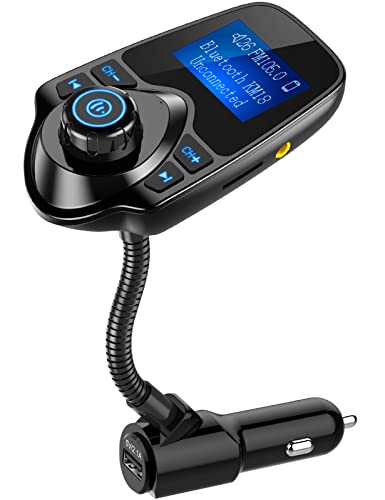
Expert Pick: Nulaxy KM18 Bluetooth FM Transmitter for 2026

Match Scratch Depth with Best Removers for 2026

Ceramic Coating Kits Matching Your Skill Level

The Foam Cannons Worth Buying in 2026

The Best Car Cleaning Kits We Recommend for 2026

The 2026 Guide to the Best Portable EV Chargers

Choose the Right Level 2 EV Charger: 2026 Guide
