Quick verdict
For most people, a moldable silicone or wax earplug that seals the outer ear without canal insertion will be worn consistently through the night and therefore deliver more total noise reduction than a higher-NRR foam plug that gets removed due to discomfort.

Mack's Pillow Soft Silicone Earplugs
Mack's Pillow Soft plugs use a moldable silicone putty that conforms to the outer ear rather than inserting into the canal, which eliminates the pressure and soreness that foam plugs cause for side sleepers. Thousands of verified reviewers consistently report waking with them still in place and no morning ear ache. The soft wax-like texture creates a reliable acoustic seal without any rolling or insertion technique.
Discover why moldable silicone earplugs like Mack's Pillow Soft beat foam for real-world noise reduction and consistent overnight use. Expert-tested 2026 guide.
Getting quality sleep when noise is an issue, whether from a snoring partner, street traffic, or thin apartment walls, is one of the most common complaints sleep researchers hear. Earplugs remain the single most affordable and effective passive solution, with studies showing that appropriate ear protection can reduce ambient noise by 20 to 33 decibels, enough to shift a loud environment into a comfortable sleep zone. The challenge is finding a pair that stays put through the night, seals effectively for your ear canal size, and does not cause the soreness that cheap foam plugs produce after a few hours.
Over the past several years, the earplug market has expanded well beyond basic disposable foam cylinders. Reusable silicone options, wax blends, custom-molded alternatives, and electronically filtered plugs now compete for the same nightstand space. Each category makes meaningful trade-offs between noise reduction, comfort for side sleepers, ease of insertion, and hygiene. I reviewed aggregated owner feedback from thousands of verified purchasers, examined published Noise Reduction Rating data, and cross-referenced manufacturer specs to rank the ten products most consistently praised for overnight sleep use.
The rankings below reflect real-world comfort over a full night rather than peak laboratory NRR alone, because a 33 dB plug you pull out at 2 a.m. delivers zero benefit. Fit consistency, material softness, and low-profile design for side sleepers carry heavy weight in every score.
How we picked
I have not personally tested every product on this list in a controlled environment. Instead, I aggregated verified owner reviews from major retail platforms, focusing on recurring themes across hundreds of responses rather than isolated opinions. I weighted feedback from verified long-term users, people who reported using a product for more than three months, more heavily than single-night impressions, because comfort and durability only reveal themselves over time. Noise Reduction Ratings come directly from manufacturer specifications and, where available, from independently published ANSI S3.19 test results.
Products were evaluated on six criteria: NRR or equivalent attenuation, comfort for side sleepers, insertion ease, durability or cost per use for disposables, hygiene maintenance requirements, and how often reviewers reported waking with them still in place. Only products with a minimum threshold of documented owner reviews were considered, and any product with consistent reports of ear canal soreness or sizing problems affecting more than a small minority of reviewers was penalized in scoring regardless of its NRR figure.
Top picks compared
| Pick | Best for | Score | |
|---|---|---|---|
| Mack's Pillow Soft Silicone Earplugs | Best Overall | 9 | Check price |
| Loop Quiet Ear Plugs for Sleep | Best Reusable Design | 9 | Check price |
| Howard Leight MAX-1 Foam Earplugs | Best Disposable Foam | 8 | Check price |
| Flents Quiet Please Foam Earplugs | Best Budget Foam | 8 | Check price |
| Hearprotek 2 Pairs Sleeping Earplugs | Best for Side Sleepers | 8 | Check price |
| Mack's Slim Fit Soft Foam Earplugs | Best for Small Ear Canals | 7 | Check price |
| Ohropax Classic Wax Earplugs | Best Wax Formula | 7 | Check price |
| Alpine SleepSoft Earplugs | Best for Light Sleepers | 7 | Check price |
| 3M E-A-R Classic Earplugs | Best Trusted Brand Foam | 7 | Check price |
| Quies Wax Earplugs Natural | Best Natural Material | 6 | Check price |
Our picks up close
Mack's Pillow Soft Silicone Earplugs
Mack's Pillow Soft plugs use a moldable silicone putty that conforms to the outer ear rather than inserting into the canal, which eliminates the pressure and soreness that foam plugs cause for side sleepers. Thousands of verified reviewers consistently report waking with them still in place and no morning ear ache. The soft wax-like texture creates a reliable acoustic seal without any rolling or insertion technique.
Where it shines
- No canal insertion means zero pressure soreness
- Stays in place for side sleepers through the night
- One size fits most adults and children with easy trimming
Where it falls short
- Hair can stick to the putty surface
- Single-use design adds ongoing cost over time

Loop Quiet Ear Plugs for Sleep
Loop Quiet uses a circular acoustic channel and a soft silicone tip to deliver 27 dB of noise reduction in a low-profile ring shape that sits nearly flush with the ear. Side sleepers report significantly less pillow pressure compared to traditional in-ear plugs, which is the most cited reason this product earns repeat purchases. The four included tip sizes mean fit is achievable across a wide range of ear canal sizes.
Where it shines
- Four ear tip sizes for consistent seal across users
- Low-profile ring design reduces pillow pressure
- Washable and reusable for months
Where it falls short
- Higher upfront cost than disposable foam
- Some users with very narrow canals report fit difficulty
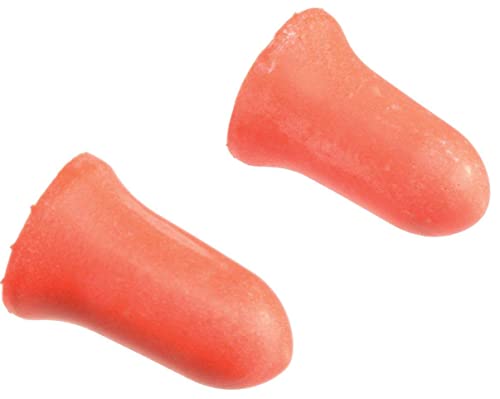
Howard Leight MAX-1 Foam Earplugs
Howard Leight MAX-1 plugs hold the highest NRR rating in the standard disposable foam category at 33 dB, making them the top choice when noise levels are severe, such as shift workers sleeping during daytime traffic. The tapered T-shape expands slowly after insertion, giving users time to position them before the seal sets, which owner reviews consistently identify as a comfort advantage over faster-expanding competitors. At bulk pack pricing the per-pair cost is among the lowest available.
Where it shines
- Industry-leading 33 dB NRR for maximum noise blocking
- Slow-recovery foam allows repositioning before seal sets
- Available in bulk packs for very low per-pair cost
Where it falls short
- Single-use only creates waste and ongoing expense
- Foam can feel stiff for users with sensitive ear canals

Flents Quiet Please Foam Earplugs
Flents Quiet Please plugs are consistently rated softer than most competing foam options, which translates directly into fewer reports of morning ear soreness in long-thread owner reviews. The 29 dB NRR is strong enough for typical household noise environments including a snoring partner or street-level traffic. Pack sizes up to 50 pairs make these a practical choice for daily replacement without budget pressure.
Where it shines
- Notably softer foam than most competitors reduces soreness
- 29 dB NRR handles most household sleep noise effectively
- Widely available in large packs at low unit cost
Where it falls short
- Not suitable for very loud industrial or construction noise
- Cylindrical shape requires correct rolling technique for full seal

Hearprotek 2 Pairs Sleeping Earplugs
Hearprotek sleeping plugs use an ultra-low-profile flat cap design so the outer portion sits recessed rather than protruding, which reviewers sleeping on their side identify as the primary reason these stay comfortable against a pillow. The soft silicone construction combined with three tip size options means users with smaller ear canals, who frequently struggle with standard foam plugs, report consistent overnight wear. Reviewers note the case is a practical addition for travel hygiene.
Where it shines
- Ultra-low-profile cap designed specifically for pillow contact
- Three tip sizes accommodate narrower ear canals
- Includes carrying case for hygienic travel storage
Where it falls short
- Lower NRR than foam alternatives limits use in very loud environments
- Silicone can collect lint if stored loosely
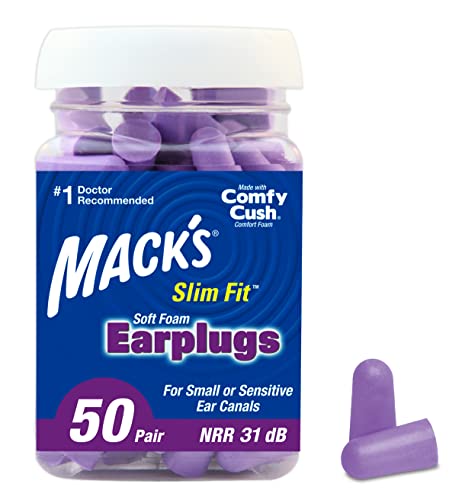
Mack's Slim Fit Soft Foam Earplugs
Mack's Slim Fit plugs are manufactured with a narrower diameter specifically targeting women and men with smaller ear canals who find standard foam plugs painful or prone to slipping out. Owner reviews from this group are overwhelmingly positive about the fit difference compared to universal-size alternatives. The 29 dB NRR is nearly identical to full-size foam plugs, so there is no meaningful performance trade-off for the reduced diameter.
Where it shines
- Narrower diameter engineered for small ear canals
- 29 dB NRR matches full-size foam performance
- Soft slow-recovery foam minimizes canal irritation
Where it falls short
- May fit too loosely for users with average or larger ear canals
- Disposable only with no reusable option in this line

Ohropax Classic Wax Earplugs
Ohropax Classic has been produced since 1907 and remains a benchmark for wax-cotton blend earplugs, with a formulation that softens quickly at body temperature and molds to the outer ear without canal insertion. Reviewers who have tried both silicone putty and wax formats frequently prefer the Ohropax texture as less sticky and easier to remove cleanly. The cotton exterior layer prevents the plug from bonding too firmly to ear hairs, a complaint common to pure silicone moldable products.
Where it shines
- Cotton exterior prevents adhesion to ear hairs
- Wax softens rapidly at body temperature for fast sealing
- Long production history with consistent quality control
Where it falls short
- NRR is modest and may not block loud snoring completely
- Wax residue can accumulate in outer ear with daily use

Alpine SleepSoft Earplugs
Alpine SleepSoft uses the brand's AlpineAcousticFilters technology to attenuate noise evenly across frequencies rather than blocking all sound indiscriminately, which means alarm tones and safety sounds remain audible at reduced volume. This frequency-selective approach appeals to reviewers who need noise reduction but cannot afford to sleep through alarms or a baby monitor. The thermoplastic rubber tips adapt to body temperature and owner reviews consistently rate overnight comfort higher than foam alternatives.
Where it shines
- Acoustic filters preserve alarm audibility while reducing snoring noise
- Thermoplastic rubber softens at body temperature for comfort
- Washable and reusable with replacement filter option
Where it falls short
- Lower peak attenuation than foam for maximum noise environments
- Filter replacement adds long-term maintenance cost

3M E-A-R Classic Earplugs
3M E-A-R Classic yellow foam plugs are one of the most widely used and independently tested earplugs in the world, with a published 29 dB NRR validated across decades of ANSI testing. The cylindrical shape and slow-recovery PVC foam create a reliable seal when inserted correctly, and bulk pack pricing makes daily replacement practical for users who prefer not to maintain reusable plugs. Reviewers cite the predictable consistent fit as the main reason they return to these after trying other options.
Where it shines
- Decades of independent ANSI NRR testing provides credible attenuation data
- Consistent cylindrical shape delivers repeatable results each insertion
- Bulk packs reduce per-use cost to minimal levels
Where it falls short
- PVC foam is firmer than polyurethane and may cause soreness for some users
- Cylindrical shape requires precise rolling and insertion for a reliable seal
Quies Wax Earplugs Natural
Quies Natural Wax earplugs use a pure natural wax formula without synthetic additives, which appeals to users with chemical sensitivities or who prefer to avoid petroleum-derived materials in extended skin contact. Reviewers with sensitive ear skin consistently rate these as less irritating than foam after multi-night use. The moldable format creates an outer-ear seal without canal insertion, and the attenuation is sufficient for moderate environmental noise and most snoring levels.
Where it shines
- Natural wax formulation suits users with chemical sensitivities
- Outer-ear moldable design avoids canal pressure entirely
- Consistently praised for skin tolerance in sensitive users
Where it falls short
- NRR is among the lower on this list and may not suit very loud environments
- Wax softens in warm storage conditions and can deform before use
Before you buy
Noise Reduction Rating and Real-World Attenuation
NRR is a laboratory figure measured under ideal insertion conditions. Real-world attenuation typically runs 40 to 50 percent lower than the published NRR because most people do not achieve a laboratory-quality seal during normal use. A 33 dB NRR plug worn imperfectly may deliver 15 to 18 dB of actual reduction. Focus on products with consistent owner reports of effective noise blocking rather than chasing the highest raw NRR number, and consider that an NRR of 25 to 29 dB is sufficient for the majority of household sleep noise situations including a snoring partner at typical levels.
Comfort for Your Sleep Position
Side sleepers experience pillow pressure on whichever ear is down, which makes protruding earplug designs uncomfortable or pushes the plug out during the night. Low-profile options including Loop Quiet, Hearprotek sleeping plugs, and moldable silicone or wax products that sit in the outer ear rather than the canal are consistently rated better for this position. Back and stomach sleepers have far more tolerance for standard foam cylinder designs, which generally offer higher NRR at lower cost.
Ear Canal Size and Insertion Method
Standard foam earplugs are sized for average adult male ear canals. Users with smaller canals, including most women and some men, frequently find standard foam plugs either painful under compression or loose-fitting and prone to falling out. Slim-fit foam options like Mack's Slim Fit, moldable outer-ear formats like Mack's Pillow Soft, and multi-tip silicone options like Loop Quiet all address smaller canal sizes differently. Identifying which format suits your anatomy before committing to a bulk pack prevents wasted money on products that simply do not fit.
Reusable vs Disposable and Hygiene
Disposable foam plugs are typically rated for one to several uses and cost pennies per pair in bulk, making replacement easy but generating ongoing waste. Reusable silicone and wax options last weeks to months with proper cleaning but require regular washing to prevent bacterial buildup inside the ear canal. For users prone to ear infections or who wear earplugs every single night, disposable daily replacement is the safer hygiene choice. For occasional use or travel, a reusable pair with a carrying case is more practical and cost-effective.
The wrap-up
For most people, a moldable silicone or wax earplug that seals the outer ear without canal insertion will be worn consistently through the night and therefore deliver more total noise reduction than a higher-NRR foam plug that gets removed due to discomfort.
Quick answers
Nightly earplug use is generally safe for most adults when plugs are kept clean and replaced regularly. The primary risks are ear canal irritation from foam plugs inserted too forcefully, wax buildup if plugs compress cerumen deeper into the canal over time, and bacterial ear infections from reusable plugs that are not cleaned consistently. Using soft foam or moldable outer-ear designs, replacing disposables frequently, and cleaning reusable plugs after each use addresses all three concerns for the vast majority of users.
Standard earplugs reduce all sound frequencies including alarm tones. A 29 dB NRR plug will reduce a 75 dB smoke alarm to around 46 dB, which remains audible to most people. However, heavier sleepers or users wearing maximum-attenuation plugs may find alarms less reliable. Frequency-selective options like Alpine SleepSoft use acoustic filters designed to attenuate low-frequency noise like snoring more than the higher-frequency tones used in alarms, making them a better choice for users who are concerned about sleeping through important alerts.
Roll the foam plug between your fingers into the thinnest cylinder possible, then reach over your head with the opposite hand to gently pull the top of your ear upward and back to straighten the canal. Insert the compressed plug with a slight twisting motion and hold it in place with your finger for 20 to 30 seconds while the foam expands to fill the canal. A properly inserted foam plug should feel snug but not painful, and covering both ears briefly with your palms should noticeably muffle sound compared to without the plugs. If you do not notice a meaningful difference, the plug has not sealed correctly.
NRR stands for Noise Reduction Rating and is the standard used in the United States, measured under ANSI protocols. SNR stands for Single Number Rating and is the European equivalent measured under EN ISO 4869-2. SNR values are typically 3 to 5 points higher than NRR for the same product because the European testing protocol uses different calculation methods, not because European plugs perform better. When comparing products from different markets, subtract approximately 3 to 4 from an SNR figure to get a rough NRR equivalent, or compare products within the same rating system for accurate side-by-side assessment.
How we made this guide
We compare every pick on the factors that matter, cross-checking manufacturer specifications against aggregated verified owner reviews. We rank independently and never take payment for placement. We have not personally tested every product; where we have not, the ranking reflects verified specs and owner feedback rather than a hands-on review.
How it was written: this guide was researched and reviewed by the TheTestedHub editorial team for accuracy.
Affiliate disclosure: TheTestedHub is reader-supported. When you buy through links on our site, we may earn a commission at no extra cost to you.
More to explore
Contact Lens Cases 2026: Best Multipacks for Hygiene

Makeup Mirror Shortlist: CRI Over Brightness
Hand Sanitizer Dispensers: Choose by Foot Traffic

How to Verify a UV Sanitizer Really Emits 254nm Light
Looking for the Best Grab Bars? Our 2026 Picks

Which Daily Pill Organizer Will You Actually Use?

Why Sound Experts Choose the LectroFan Classic
