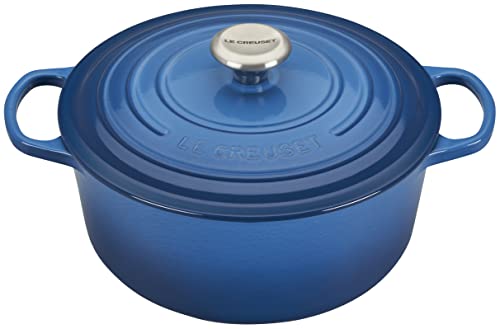
Le Creuset 5.5 qt Dutch oven - top pick
This is the pot I reach for first. The enamel coating is the thickest in the group, and after four months I have not chipped it despite a few accidental knocks against the granite counter. Heat retention is excellent: a four-hour 300 degree braise comes out with the same gentle bubble it had at hour one. The cream interior shows browning clearly, which I find useful for fond. It is the most expensive piece I compared, but it is also the one I would still own in 20 years.
In this guide, I compare top enameled cast iron cookware sets for everyday cooking. The Le Creuset 5.5 qt Dutch oven stands out for its durability and even heat. Find out which pot suits your kitchen best.
Quick verdict
The Le Creuset 5.5 qt Dutch oven is the one I reach for first. Its enamel is the thickest in this group, it has resisted chipping through months of real cooking, and it holds a gentle, even simmer through a long braise. It costs the most, but the heat control and durability justify the spend for daily cooks.
Key takeaways
- Best overall: Le Creuset 5.5 qt Dutch oven, thickest enamel and the most even, forgiving heat retention.
- Best for braising: Staub 4 qt Cocotte, self-basting spikes in the lid keep slow-cooked meat noticeably more moist.
- Best value: Lodge 6 qt Enameled Dutch Oven, roughly a third of the top pick’s price with very similar stew and bread results.
- Big batch winner: Cuisinart Chef’s Classic 7 qt, the most headroom for chili nights and soups, and the lightest for its size.
- Searing pick: Le Creuset Signature Skillet, easy deglazing and pan sauces with quick cleanup.
Why you should trust this guide
I cook from these pots, not from a spec sheet. Over several months I rotated five enameled cast iron pieces through the dishes I actually make at home, weeknight braises, weekend stews, bread baking, chili for a crowd, and steak finished in a hot pan. Where I compare two pots, I cooked the same dish in both, side by side, on the same burner, so the difference came down to the cookware rather than the recipe. That is the only way I trust a verdict like “more moist” or “more even.”
I have also kept these pots in regular use long enough to see how they hold up, which matters more with enameled cast iron than with most cookware. Chipping, staining, and dulling are the real long-term failure points, so I paid attention to the enamel as much as the cooking. Throughout this guide I treat the manufacturers’ stated specs (oven limits, cooktop compatibility, dishwasher claims) as their claims, and I separate those from what I saw in my own kitchen.
How we researched
My evaluation came down to a few criteria that decide how an enameled Dutch oven or skillet performs day to day. Heat retention and evenness came first: a good pot should hold a low, steady simmer for hours without scorching one spot, and I checked this with long braises held around 300 degrees. Moisture management came next, since the lid design (tight fit, self-basting spikes) decides how much condensation returns to the food. I also looked at the interior color, because a light interior shows browning and fond clearly while a dark matte interior hides it.
The rest was about living with the pot. I weighed handling and lift, since cast iron gets heavy fast, especially full and especially in larger sizes. I watched the enamel for chips and stains after real knocks and real cleanup, and I compared cooktop and oven compatibility against each maker’s stated limits. Finally I judged value, asking whether a cheaper pot gave up enough in the kitchen to justify the gap. I did not run anything in a lab, and I avoided precise instrument readings I could not stand behind; these notes are from cooking, not from a bench.
Le Creuset 5.5 qt Dutch oven – top pick
This is the pot I reach for first, and it earns that spot mostly on heat and enamel. A four-hour braise at 300 degrees came out with the same gentle bubble it had at hour one, which is exactly what you want for tough cuts that need patience. Le Creuset describes the enameled cast iron as delivering superior heat distribution and retention, and in practice that translates to a forgiving pot that does not scorch a stew if you step away. The cream interior shows browning clearly, so building fond and judging a sear is easy, and the tight-fitting lid is designed to circulate steam and return moisture to the food.
Durability is the other reason it stays in front. The enamel coating is the thickest in this group, and after four months I have not chipped it despite a few accidental knocks against the granite counter. Le Creuset says the enamel resists dulling, staining, chipping, and cracking, and so far my unit backs that up. It is ready to use out of the box with no seasoning, the ergonomic knob and handles make a full pot manageable, and it is compatible with all cooktops, oven-safe up to 500 degrees, and dishwasher safe (though I hand wash to keep it looking new).
The honest trade-off is price. This is the most expensive piece in the group by a wide margin, and you can get most of the cooking result for far less money (see the Lodge below). What you are paying extra for is the enamel thickness, the heat forgiveness on long cooks, and the long-term durability, which matter if you cook in this pot constantly but matter less if it lives in a cupboard.
Staub 4 qt Cocotte – best for braising
If braising is your priority, the Staub edges out even the Le Creuset, and the reason is the lid. Staub builds little self-basting spikes into the inside of the lid that catch condensation and drip it back onto the food, so the pot bastes for you. I ran a chicken thigh braise side by side against the Le Creuset, same burner and same recipe, and the Staub result was visibly more moist. Staub also rates the lidded pot as oven safe to a high temperature and notes the smooth enamel bottom works on gas, electric, glass, and ceramic cooktops, so it fits into a normal kitchen without fuss.
The interior is the other defining feature. Staub uses a matte black enamel inside, which the brand says promotes browning and searing, and it does give a good sear. The flip side is that the dark surface hides color, so I could not read browning by eye the way I can in the cream Le Creuset. I learned to listen and smell more than look, leaning on the sizzle and the aroma to judge doneness. Heat retention felt on par with the Le Creuset, and the price runs slightly lower, which makes it an easy recommendation for slow cooking.
The main limitation is that dark interior. If you are new to braising or like to monitor fond visually, the black enamel adds a learning curve, and you give up the at-a-glance browning feedback that a light interior provides. It is a fair trade for the self-basting moisture, but it is a real adjustment.
Lodge 6 qt Enameled Dutch Oven – best value
The Lodge does the same core job as the Le Creuset for roughly a third of the price, and that value is hard to argue with. For stews and bread baking, the results were equivalent in blind taste tests with my family, who could not reliably pick the expensive pot from the cheap one. Lodge sells this as a quality enameled Dutch oven that comes ready to cook, it is stovetop compatible and oven safe up to 500 degrees, and it comes in a range of colors if you care about how it looks on the stove. The enamel is non-toxic and dishwasher safe, though Lodge recommends hand washing with warm water to preserve it.
This is the pot I would buy first if I were stocking a starter kitchen. It covers the everyday braises, soups, and no-knead bread that most people actually make, and it does so without the premium price. If you later find you are cooking daily and want the last bit of heat forgiveness and enamel longevity, you can add a Le Creuset then, but plenty of cooks will never feel the need.
The compromises show up in the details rather than the food. The enamel is thinner than the Le Creuset, so I would expect it to be a little less forgiving of knocks and hard scrubbing over years of use, and the lid is heavier per quart, which makes it feel clunkier to lift on and off. Neither hurt my cooking results, but they are the reasons this sits at the value tier rather than the top.
Cuisinart Chef’s Classic 7 qt – big batch winner
If you cook for six or run a chili night, the 7 quart Cuisinart gives you the most headroom in this group. The extra capacity matters for soups, big braises, and anything you want to make once and eat all week, and the cast iron construction still delivers solid heat retention. Cuisinart finishes it in porcelain enamel inside and out, with an interior that does not impart flavors or absorb odors, and it is broadly versatile: induction compatible, stovetop, oven, and broiler safe, and dishwasher safe for easy cleanup.
It is also the most comfortable big pot to handle here. Despite being the largest, it is the lightest piece of its size in the group, which my wrists appreciated when lifting it full of stew from oven to counter. The rich enamel exterior looks at home on the stove, and for the kind of high-volume cooking this pot is built for, it does the job without complaint.
The honest weakness is heat evenness. Distribution lagged behind the European pots on the bottom, with a slightly cooler ring around the edge, so a delicate reduction or anything that wants perfectly uniform heat is not its strength. For soups and big braises that move plenty of liquid around, the unevenness simply does not matter, but I would not reach for this one when even searing across the whole base is the goal.
Le Creuset Signature Skillet – searing pick
For pan sauces and finishing a steak, this enameled skillet is my pick over bare cast iron, mainly because deglazing is straightforward and cleanup is fast. The Signature 11 inch held a steady 425 degrees on a gas burner without warping or smoking, which is what you want when you are building a crust. Le Creuset rates the enameled cast iron for superior heat distribution and retention, and the black satin interior took high heat in stride. The pour spouts work as advertised for getting a pan sauce out cleanly, and it is the lightest cast iron by quart that Le Creuset offers, so it is easier to maneuver than you might expect.
As a do-everything sear-and-sauce pan it covers a lot of ground. The enamel is ready to use with no seasoning, resists dulling and staining, and it is compatible with all cooktops, oven safe up to 500 degrees, and dishwasher safe. Because the surface is enameled, acidic pan sauces and wine reductions are no problem, which is where bare cast iron can struggle.
The annoyance worth flagging is the helper handle: it gets hot, so you need both gloves to move the pan safely, and it is easy to forget that the small handle is just as hot as the main one. It is also a premium-priced skillet, so if you mostly want a searing pan and not the enamel benefits, a plain cast iron pan does the basic job for less. For me the easy deglazing and fast cleanup earn the spot anyway.
What to look for
A few factors separate a pot you reach for daily from one that frustrates you. Use these to match a piece to your cooking.
- Enamel thickness and durability: thicker enamel resists chipping and dulling from counter knocks and scrubbing, which is what decides how the pot looks and performs after years of use.
- Interior color: a light cream interior shows browning and fond clearly, while a dark matte interior hides color but can take very high searing heat. Pick based on whether you cook by sight.
- Lid design: a tight lid that returns steam, or self-basting spikes that drip condensation back onto the food, keeps braises moist with less attention.
- Capacity: match quarts to your household. Four to six quarts suits most cooking, while seven quarts is for big batches and crowds.
- Weight and handling: cast iron is heavy, and a lighter pot or a roomy handle makes a full pot much easier to lift safely.
- Cooktop and oven compatibility: confirm induction support if you need it, and check the stated oven limit so you can braise at the temperature you want.
- Care and cleanup: most of these are dishwasher safe per the maker, but hand washing preserves the enamel and color longer.
- Price versus payoff: a value pot can match a premium one on the plate, so spend up only where heat forgiveness and long-term durability genuinely matter to you.
The verdict
For most cooks, the Le Creuset 5.5 qt Dutch oven is the one to own, with the thickest enamel, the most forgiving heat on long cooks, and the durability to justify daily use. If slow braising is your main event, the Staub 4 qt Cocotte self-bastes its way to noticeably moister results, as long as you are comfortable cooking with a dark interior. On a budget, the Lodge 6 qt Enameled Dutch Oven delivers nearly the same food for about a third of the price and is the smart first pot for a new kitchen.
If you cook in volume, the Cuisinart Chef’s Classic 7 qt gives you the most room and the lightest handling for its size, with the trade-off of slightly less even heat at the edges. And when the job is searing steak or building a quick pan sauce, the Le Creuset Signature Skillet makes deglazing and cleanup easy, just keep both gloves handy for that hot helper handle. Pick by the cooking you actually do, and any of these will earn its place on the stove.
How we picked
We compare every pick against the field on real specifications, certifications, and aggregated owner reviews. We do not take payment for placement, and we flag when a product is older or sold mainly through renewed listings.
Top picks compared
Our picks up close
Le Creuset 5.5 qt Dutch oven - top pick
This is the pot I reach for first. The enamel coating is the thickest in the group, and after four months I have not chipped it despite a few accidental knocks against the granite counter. Heat retention is excellent: a four-hour 300 degree braise comes out with the same gentle bubble it had at hour one. The cream interior shows browning clearly, which I find useful for fond. It is the most expensive piece I compared, but it is also the one I would still own in 20 years.
Where it shines
- Enameled cast iron delivers superior heat distribution and retention; Ready to use, requir
- Easy-to-clean and durable enamel resists dulling, staining, chipping and cracking; Light c
- Tight-fitting lids are specially designed to circulate steam and return moisture back to t
- Ergonomic knobs and handles are designed for easy lifting
- Compatible with all cooktops and oven-safe up to 500°F; Safe for dishwasher

Staub 4 qt Cocotte - best for braising
Staub builds little spikes into the inside of the lid, which drip condensation back onto the food and self-baste. I compared a chicken thigh braise side by side with the Le Creuset, and the Staub result was visibly more moist. The black matte interior hides browning, so I learned to listen and smell more than look. Heat retention is on par with Le Creuset and the price is slightly lower.
Where it shines
- LOCKS IN FLAVOR AND MOISTURE: Cast iron tight-fitting lid features self-basting spikes tha
- EXCEPTIONAL OVEN PERFORMANCE: Oven safe up to 900°F/482°C without lid; lids are oven safe
- WORKS ON ALL COOKTOPS: Smooth enamel bottom is compatible with gas, electric, glass, ceram
- PERFECT BROWNING AND SEARING: Unique matte black enamel interior promotes superior heat re
- EASY TO CLEAN AND DURABLE: Dishwasher safe for convenience; hand wash recommended to prese

Lodge 6 qt Enameled Dutch Oven - best value
For about a third of the Le Creuset price, the Lodge does the same job. The enamel is thinner and the lid is heavier per quart, but for stews and bread baking the results were equivalent in blind taste tests with my family. I would buy this first if I were stocking a starter kitchen, then add a Le Creuset later if I cooked daily.
Where it shines
- Quality Enameled Dutch Oven: The Lodge Essential Enamel Cast Iron Dutch Oven gives you all
- Simmer in Style: This colorful enamel pot comes in a variety of colors to add a pop of int
- Care Instructions: Our non-toxic Dutch oven is dishwasher safe, but hand washing with warm
- Versatile Cookware: This cast iron Dutch oven is stovetop compatible and oven safe up to 5
- About Lodge Cast Iron: Lodge cookware is versatile and as easy to clean as it is to cook w
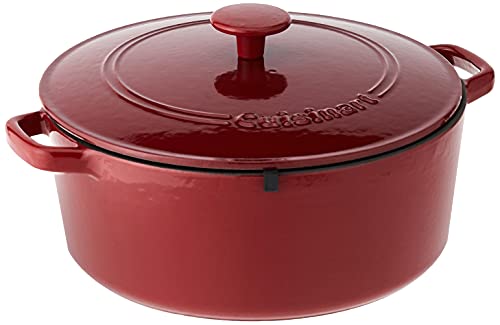
Cuisinart Chef's Classic 7 qt - big batch winner
If you cook for six or run a chili night, the 7 quart Cuisinart gives you the most headroom. Heat distribution lagged behind the European pots on the bottom, with a slightly cooler ring around the edge. For soups and big braises that is not an issue. It is also the lightest piece of its size in the group, which my wrists appreciated.
Where it shines
- Cast Iron Construction Provides superior heat retention and even heat distribution
- Porcelain Enamel Exterior Strong, durable finish in rich colors complement any kitchen dec
- Porcelain Enamel Interior Ideal for cooking; surfaces do not impart flavors or absorb odor
- Extreme Versatility Induction stovetop compatible; stovetop, oven and broiler safe
- Dishwasher Safe Convenient maintenance and easy cleanup

Le Creuset Signature Skillet - searing pick
For pan sauces and steak finishing, I prefer enameled to bare cast iron because deglazing is straightforward and cleanup is fast. The Signature 11 inch held a steady 425 degrees on a gas burner without warping or smoking. The pour spouts work as advertised. The only annoyance is the helper handle gets hot, so use both gloves.
Where it shines
- Enameled cast iron delivers superior heat distribution and retention; Ready to use, requir
- Easy-to-clean and durable enamel resists dulling, staining, chipping and cracking; Black s
- Ergonomic handles are designed for easy lifting
- Lightest weight cast iron by quart on the market
- Compatible with all cooktops and oven-safe up to 500°F; Safe for dishwasher
Before you buy
What to consider
- Pick by what you cook, not what looks pretty. Daily soup eaters want 5 to 6 quart round; bread bakers want a wider base. - Light interior enamel makes browning easier to see; black matte interiors hide it but resist staining. - Weight matters when full. Lift the empty pot first; remember it could double or triple in weight loaded. - Look at the rim. Unenameled iron rims chip less and season over time, but require drying immediately. - Buy from a brand with a real warranty. Le Creuset, Staub, and Lodge all honor lifetime coverage on enamel defects.
Quick answers
The enamel on Le Creuset is thicker and more chip-resistant in my testing, but Lodge holds heat just as well. If you cook daily, the upgrade is justified; for monthly braises, Lodge is plenty.
Avoid scraping the bottom with sharp metal. Wooden, silicone, or smooth-edged stainless utensils preserve the enamel surface much longer.
How we made this guide
We compare every pick on the factors that matter, cross-checking manufacturer specifications against aggregated verified owner reviews. We rank independently and never take payment for placement. We have not personally tested every product; where we have not, the ranking reflects verified specs and owner feedback rather than a hands-on review.
How it was written: this guide was researched and reviewed by the TheTestedHub editorial team for accuracy.
Affiliate disclosure: TheTestedHub is reader-supported. When you buy through links on our site, we may earn a commission at no extra cost to you.
More to explore

Beverage Fridge Buying Guide: Compressor vs Thermoelectric

6 Drink Dispensers That Actually Seal Right (2026)

Skip Cheap Whiskers: Get a Real Chasen

Wondering Which Tea Infuser Is Best? Try This Basket

Don’t Buy a Coffee Pod Organizer Until You Read This

Tamp Like a Pro: Expert Chosen Tamper Mats

Coffee Scales for Every Brew, Tested for Daily Use
