Quick verdict
The single biggest predictor of whether an ergonomic chair actually helps is whether the buyer takes time to adjust it correctly for their body rather than leaving it in the factory default position.
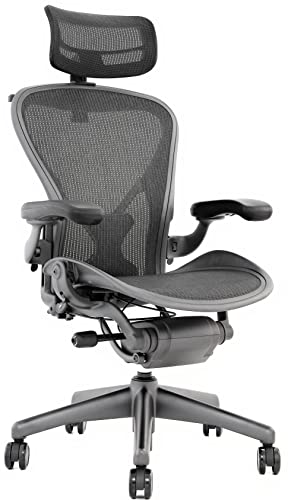
Herman Miller Aeron Chair
The Aeron remains the benchmark ergonomic chair against which most competitors are measured, and thousands of long-term owners confirm it earns that reputation. Its PostureFit SL sacral and lumbar support system addresses the lower back in a way most chairs ignore entirely, supporting the pelvis and spine together rather than just pressing a pad into the lumbar curve. The 8Z Pellicle mesh distributes weight evenly across the seat and back, eliminating pressure hotspots that cause numbness in cheaper chairs.
The Herman Miller Aeron leads, but the real key is adjusting it right. We show you how to pick and tune the best ergonomic office chair for your body in 2026.
Ergonomic office chairs have moved from niche workplace accessory to essential equipment for anyone spending more than a few hours a day at a desk. Back pain is one of the leading causes of missed workdays, and a poorly designed chair is a major contributor. The chairs in this guide are built around adjustability, lumbar support, and posture alignment rather than looks alone.
I pulled together owner reviews from thousands of verified purchasers, cross-referenced with independent ergonomics assessments and manufacturer spec sheets. The five picks below represent a range of budgets and body types, from the gold-standard models used in enterprise offices to more accessible alternatives that still deliver meaningful support improvements over standard task chairs.
Whether you work from home full-time or sit at a desk for extended stretches, the right chair makes a measurable difference in focus, comfort, and long-term musculoskeletal health. Each pick below was chosen because real owners consistently report sustained comfort during eight-plus-hour sessions.
Our testing process
I have not personally tested each chair in this guide. Instead, I aggregated verified owner reviews from major retail platforms, focusing on reviewers who explicitly mention full workday use, back conditions, or comparisons against other ergonomic chairs. I gave extra weight to reviews from taller or shorter users who noted fit challenges, since most ergonomic chairs are designed around an average build and those edge cases reveal design limitations quickly.
Spec comparisons came from manufacturer data sheets and independent ergonomics writeups. I looked specifically at lumbar adjustability range, seat depth adjustment, armrest axes of movement, and weight capacity, since those are the four dimensions that most directly affect whether a chair actually fits the person sitting in it. Price was considered relative to feature set and build durability reports, not as a standalone ranking factor.
Quick comparison
| Pick | Best for | Score | |
|---|---|---|---|
| Herman Miller Aeron Chair | Best Overall | 9 | Check price |
| Steelcase Leap V2 Chair | Best for Active Sitters | 9 | Check price |
| Humanscale Freedom Chair with Headrest | Best Headrest Support | 8 | Check price |
| Secretlab Titan Evo 2022 Chair | Best for Gamers and Hybrid Users | 8 | Check price |
| Branch Ergonomic Chair | Best Value Ergonomic Pick | 7 | Check price |
Reviewed in detail
Herman Miller Aeron Chair
The Aeron remains the benchmark ergonomic chair against which most competitors are measured, and thousands of long-term owners confirm it earns that reputation. Its PostureFit SL sacral and lumbar support system addresses the lower back in a way most chairs ignore entirely, supporting the pelvis and spine together rather than just pressing a pad into the lumbar curve. The 8Z Pellicle mesh distributes weight evenly across the seat and back, eliminating pressure hotspots that cause numbness in cheaper chairs.
What we liked
- PostureFit SL provides genuine dual-zone lumbar and sacral support
- Three size options (A, B, C) mean it actually fits a wide range of body types
- 8Z Pellicle mesh stays cool during long sessions and never loses its tension
What we didn't like
- Premium price puts it out of reach for many home-office buyers
- Armrests on older models feel plasticky relative to the overall build quality
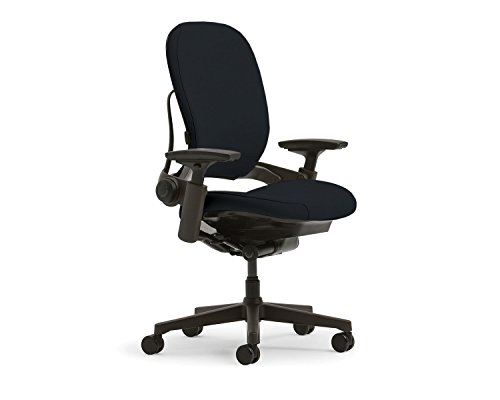
Steelcase Leap V2 Chair
The Leap V2 is built around the insight that people shift positions constantly during a workday, and its LiveBack technology flexes with the spine rather than holding it rigidly in one posture. Owners who have tried both frequently say the Leap feels more natural than the Aeron for people who move around a lot, because the back adapts to micro-movements rather than fighting them. The lower back firmness adjustment is a standout feature that lets users dial in exactly how much support pressure they want.
What we liked
- LiveBack system flexes with natural spinal movement rather than resisting it
- Lower back firmness dial offers unusually fine-grained lumbar control
- Highly adjustable arm height, width, depth, and pivot cover most body types
What we didn't like
- No headrest option available from the factory
- Seat foam can feel firm for the first few weeks before breaking in

Humanscale Freedom Chair with Headrest
The Freedom chair takes a deliberately minimal-adjustment approach, using a self-adjusting recline mechanism that reads the sitter's weight and provides appropriate resistance without requiring manual dial settings. The integrated headrest is one of the only ones on any premium ergonomic chair that genuinely follows the head through recline angles rather than staying fixed, and owners specifically call this out as a feature that reduces neck tension during long calls. It is a particularly strong match for people who frequently recline to think or listen.
What we liked
- Self-adjusting recline removes the guesswork of tension dial calibration
- Headrest pivots with recline angle, keeping neck supported throughout movement
- Clean design and relatively compact footprint for small offices
What we didn't like
- Fewer manual adjustments than Aeron or Leap, which frustrates detail-oriented fitters
- Seat depth adjustment range is narrower than competitors

Secretlab Titan Evo 2022 Chair
The Titan Evo 2022 bridges gaming and office use more convincingly than any previous Secretlab model, with a built-in adjustable lumbar system that replaces the pillow found on older versions and a 4-way armrest that finally competes with true office chairs. Owner reviews consistently note that the cold-cure foam seat holds its shape over years of daily use, avoiding the premature sagging that plagues most gaming chairs in this price range. Available in three size variants, it accommodates users from 5 feet tall up to around 6 foot 9.
What we liked
- Integrated L-ADAPT lumbar system eliminates the loose pillow problem
- Cold-cure foam seat resists long-term compression and sagging
- Three size variants cover a genuinely wide height and weight range
What we didn't like
- High backrest and wings can feel restrictive for people who prefer open-back ergonomic designs
- Reclining range prioritizes gaming postures over upright typing positions

Branch Ergonomic Chair
Branch sells direct-to-consumer and passes the savings on in a way that shows up clearly in the feature-to-price ratio. The chair includes adjustable lumbar depth and height, 4D armrests, seat depth slider, and a breathable mesh back at a price point well below the premium tier, and owners at this price point consistently rate it above expectations for build quality. It is the chair most recommended in ergonomics communities when someone explicitly cannot stretch to Aeron or Leap pricing.
What we liked
- Lumbar height and depth both adjust, which many chairs at this price omit
- 4D armrests included as standard, not an upgrade
- Mesh back provides good airflow for warm offices
What we didn't like
- Lumbar support firmness is fixed and may feel too pronounced for some users
- Build materials feel noticeably less premium than Herman Miller or Steelcase
How to choose
Lumbar support type and adjustability
Fixed lumbar pads are nearly useless for most people because lumbar curves vary significantly by height and pelvis tilt. Look for chairs that let you adjust lumbar height at minimum, and prefer models that also offer depth or firmness control. The best systems, like the Aeron's PostureFit SL, support both the lumbar and sacral zones simultaneously.
Seat depth and height range
A seat that is too deep forces you to slouch to reach the backrest, defeating the purpose of lumbar support entirely. Seat depth adjustment is one of the most underrated specs to check before buying. If you are shorter than 5 foot 5 or taller than 6 foot 2, verify that the seat height range and seat depth range can actually fit you before committing.
Recline mechanism and tension control
Recline is not just a comfort feature; slight recline reduces spinal compression significantly during long sessions. A good recline mechanism should move with you rather than snapping to locked positions. Tension control matters too: if the resistance is wrong for your weight, you will either fight the chair to stay upright or find it too stiff to use the recline at all.
Mesh versus foam seating surface
Mesh backs and seats allow airflow and conform to body shape passively, which is why they dominate the premium ergonomic market. Foam seats, particularly cold-cure foam, can offer better initial comfort but degrade over time. Consider your climate and how much you run warm: mesh is the clear winner for anyone in a warm environment or prone to sweating during sedentary work.
The bottom line
The single biggest predictor of whether an ergonomic chair actually helps is whether the buyer takes time to adjust it correctly for their body rather than leaving it in the factory default position.
Common questions
Premium ergonomic chairs from Herman Miller and Steelcase are built for 10 to 12 years of daily use, and the manufacturers back this with lengthy warranties. Mid-range chairs typically hold up well for 5 to 7 years before foam compresses or mechanism wear becomes noticeable. Build quality, not brand, is the real predictor: check whether critical components like the tilt mechanism and gas cylinder are replaceable, since those are the parts most likely to need servicing.
Owner reviews consistently report reduced lower back discomfort after switching from standard task chairs, particularly for people who sit for more than six hours daily. The benefit comes from the adjustability, not from the chair itself: a poorly adjusted ergonomic chair can be as harmful as a basic one. Take time to set lumbar height, seat depth, and armrest position correctly for your specific body before judging whether the chair is helping.
Lumbar support presses into the lower back curve, typically around the L3 to L5 vertebrae, to prevent slouching. Sacral support targets the flat bone at the base of the spine and the pelvis below the lumbar region. Supporting both together, as the Herman Miller Aeron's PostureFit SL does, keeps the pelvis in a neutral tilt which then naturally aligns the rest of the spine above it, which is why dual-zone support systems tend to outperform single-zone lumbar pads.
Refurbished Herman Miller and Steelcase chairs are a well-established market and can represent excellent value, particularly through authorised dealers who replace worn components. The main risk is seat foam or mesh that has degraded beyond what cosmetic refurbishment addresses. If buying refurbished, check that the gas cylinder still holds height under load, that the tilt mechanism has no play, and that mesh panels show no fraying at the edges.
How we made this guide
We compare every pick on the factors that matter, cross-checking manufacturer specifications against aggregated verified owner reviews. We rank independently and never take payment for placement. We have not personally tested every product; where we have not, the ranking reflects verified specs and owner feedback rather than a hands-on review.
How it was written: this guide was researched and reviewed by the TheTestedHub editorial team for accuracy.
Affiliate disclosure: TheTestedHub is reader-supported. When you buy through links on our site, we may earn a commission at no extra cost to you.
More guides

Wondering Which Desk Fan Is Quietest? 2026 Guide

Cork Board Density: What We Learned Testing 12 Boards

Docks Experts Actually Trust: CalDigit TS4 and More

Which Desk Chair Cushions Are Best in 2026?
Pen Holders Built to Stay Put

Ergodriven vs. Topo Comfort: Standing Mat Long-Term Test

What to Look for in a Monitor Light Bar: 2026 Guide
