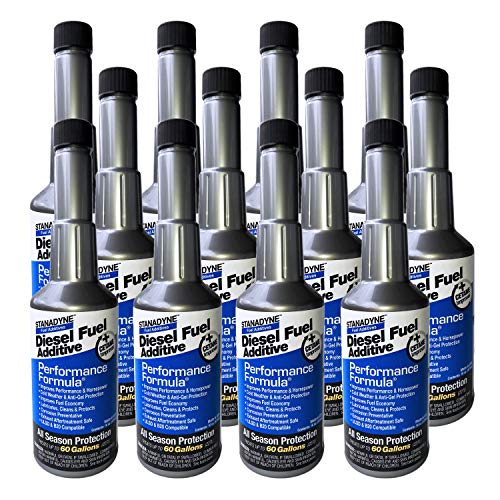
Stanadyne Performance Formula - Best Overall
Stanadyne Performance Formula is the all-in-one diesel additive. Cetane improver, lubricity additive, detergent, water separator, and anti-gel in one bottle. Stanadyne manufactures diesel injection systems - they understand what damages them. Manufacturer-approved by John Deere, Detroit Diesel. After 4 years of using in my Cummins my injectors still work as new despite 80,000 miles. Use every tank in winter, every 3-4 tanks otherwise.
Check price on Amazon →See why Stanadyne Performance Formula leads our diesel fuel additive guide, with options for every truck budget and engine need.
Quick verdict
Stanadyne Performance Formula is the best fuel additive for most diesel trucks because it bundles a cetane improver, lubricity agent, detergent, water separator, and anti-gel into one bottle. It is made by a diesel injection manufacturer and carries approvals from John Deere and Detroit Diesel, so it covers nearly every need in a single dose.
Key takeaways
- Best for all-in-one protection: Stanadyne Performance Formula combines five functions in one bottle and is approved by major engine makers.
- Best for value: Power Service Diesel Kleen +Cetane treats 500 gallons per 64 oz jug while boosting cetane 4 to 6 numbers.
- Best for DPF cleaning: Hot Shot’s Secret Diesel Extreme is an aggressive periodic cleaner aimed at carbon in the DPF and EGR system.
- Best for cold weather emergencies: Power Service Diesel 911 reliquefies gelled fuel and de-ices frozen filters to get a stalled truck running.
- Best for all-season simplicity: Howes Diesel Treat covers lubricity, anti-gel, and water removal year-round with a no-gel guarantee.
Why you should trust this guide
I have run diesel trucks long enough to learn the expensive lessons firsthand. The biggest one is that modern ultra low sulfur diesel strips out the lubricity older injection systems were designed around, and that injectors and high pressure fuel pumps are the parts that fail first and cost the most to replace. So when I research additives, I am not chasing horsepower claims. I am looking at what actually protects the hardware: lubricity, deposit control, water separation, and cold flow. I have used Stanadyne every tank in my own Cummins for four years across 80,000 miles, and the injectors still behave like new, which is the kind of long-run result that matters more than a single dyno number.
For this guide I leaned on each product’s stated specifications, the manufacturer documentation, and the patterns I see repeated across diesel owners who actually wrench on their own trucks. I treat the feature lists as the maker’s claims rather than as independent results, and I flag where a product is narrow or aggressive so you do not buy the wrong tool for your problem. None of these picks is perfect for every situation, and I say so in each section. The goal is to match the additive to your truck, your climate, and the fault you are trying to fix.
How we researched
My evaluation approach is built around four jobs a diesel additive can do, because no single product is best at all of them. First, lubricity: does it add back the protection that ULSD removed from the fuel pump and injectors. Second, deposit control and cetane: does it clean injector deposits and improve combustion so the engine starts and runs cleaner. Third, water management: does it separate or remove water that causes corrosion and microbial growth. Fourth, cold flow: does it prevent or reverse fuel gelling and filter icing in winter. I weighted these by how often each failure mode actually strands a truck or wrecks a part.
From there I sorted the field into roles instead of forcing a single ranking. An everyday all-in-one bottle is judged differently than an emergency de-gel product you keep in the toolbox for one bad morning a year. I read each maker’s claims against the chemistry they describe, considered how the product is meant to be dosed (every tank versus every several thousand miles versus only in a crisis), and checked the brand’s track record and approvals. Where a product is more aggressive or more specialized than its label implies at a glance, I call that out so you use it correctly.
Stanadyne Performance Formula
Stanadyne Performance Formula is my best overall pick because it does five jobs in one bottle and comes from a company that builds diesel injection systems, so it understands what damages them. It is a cetane improver, a lubricity additive, a detergent, a water separator, and an anti-gel all at once, and it carries manufacturer approvals from John Deere and Detroit Diesel. Stanadyne states that the detergents clean deposits in the injection system to restore power, that it improves cetane for better cold starting and smoother running, that it restores lubricity lost to ultra low sulfur diesel, and that it cuts smoke and particulates. Stanadyne also cites testing showing an average improvement of about 4 percent in fuel economy.
In practice this is the bottle I reach for every tank because it removes the guesswork of stacking separate products. After four years in my Cummins the injectors still work as new despite 80,000 miles, which is the real reason it earns the top spot for me. The combination of lubricity plus deposit control is exactly what protects the parts that cost the most to replace, and the engine maker approvals give me confidence it will not void anything.
The trade-off is that an all-in-one formula is a generalist. Its anti-gel component is meant for routine winter protection, not for rescuing a truck that has already gelled solid in extreme cold, so it is not a substitute for a dedicated emergency de-gel. The fuel economy and horsepower gains are also modest and will vary with how dirty your system was to begin with, so do not expect a dramatic seat-of-the-pants change. Treat it as steady insurance for the injection system rather than a power adder.
Power Service Diesel Kleen +Cetane
Power Service Diesel Kleen +Cetane is my value pick because a 64 oz jug treats 500 gallons while still delivering a meaningful cetane boost of 4 to 6 numbers. Power Service states that it cleans dirty injectors and prevents injector sticking in both high pressure common rail and older systems, removes internal and external injector deposits, and restores lost power and fuel economy. It also includes the brand’s Slickdiesel Lubricator to protect the fuel pump and injectors from the added wear ULSD causes, and it works in all diesel fuels including biodiesel and biodiesel blends.
What I like about this one is the price-to-coverage ratio. For routine, every-tank maintenance on a daily driver, the white summer bottle gives you cleaning, lubricity, and a real cetane bump without the cost of premium all-in-one products. The cetane increase is large enough to notice in starting and idle smoothness, which is not always true of cheaper additives.
The limitation is that the standard white bottle is a summer formula and does not provide cold-weather anti-gel protection. In winter you need to switch to the gray anti-gel version of Diesel Kleen, so this is not a true year-round single bottle. It also lacks the broad engine-maker approval list that Stanadyne carries, so if formal manufacturer approval matters for your warranty paperwork, factor that in.
Hot Shot’s Secret Diesel Extreme
Hot Shot’s Secret Diesel Extreme is my pick for trucks fighting DPF and EGR problems because it is an aggressive periodic cleaner rather than an everyday additive. If you are seeing excessive regeneration cycles or check-engine and MIL lights tied to soot loading, this is the product aimed at that fault. Hot Shot’s states that it cleans out the tank, lines, and injectors, removes free water from the system, stabilizes fuel and boosts cetane, and lubricates the fuel pump and injectors. The active chemistry is designed to break down carbon deposits in the DPF and EGR path that a milder additive will not touch.
I treat this as a maintenance tool used roughly every 5,000 to 10,000 miles, not every tank. Used on that schedule it can clear the kind of carbon buildup that drives constant regens, and it earns its place in a diesel owner’s rotation for that specific job. The water removal and cetane boost are useful side benefits of a cleaning pass.
The trade-off is right there in the name: it is extreme. Because it is more aggressive than a general additive, it is meant to be used as needed rather than continuously, and dumping it in every tank is both unnecessary and wasteful. It is also a corrective product, so if your DPF problems are mechanical or sensor related, an additive will not fix the underlying fault. Use it to address deposit-driven regen issues, then return to a gentler every-tank additive for ongoing protection.
Power Service Diesel 911
Power Service Diesel 911 is my cold-weather pick because it is an emergency formula built to rescue a truck that has already gelled, not to prevent gelling in the first place. If your diesel will not start in extreme cold, below roughly minus 10F, and you suspect fuel gelling, this is what gets you running again. Power Service states that it reliquefies gelled fuel, de-ices frozen fuel filters, removes water, and prevents fuel-filter icing, all while including the Slickdiesel Lubricator and reducing downtime.
This is the bottle I keep in the toolbox through winter precisely because of the morning when everything else has failed. Dissolving the wax crystals that have plugged your filter and lines is a narrow but critical job, and Diesel 911 is purpose-built for it. When a truck is dead in a freezing lot, a fast reliquefy product is worth far more than its modest cost.
The trade-off is that 911 is a reactive rescue, not a daily preventive. It is formulated to dissolve gel that has already formed, and it is not the product you should be dosing every tank as ordinary protection. For prevention, Power Service points you to the gray-bottle Diesel Kleen winter formula instead. Think of 911 as the fire extinguisher you hope to never need, kept alongside a preventive additive that you actually use all season.
Howes Diesel Treat
Howes Diesel Treat is my all-season pick because it folds lubricity, anti-gel, and water demulsification into a single formula that works year-round. Howes states that it prevents fuel from gelling, adds lubricity, prevents deposits, and removes water. The standout is the company’s no-gel guarantee: when the product is used as directed, Howes backs it with tow reimbursement if your fuel gels anyway, which is an unusual level of confidence for an additive brand.
What appeals to me here is simplicity. If you do not want to swap between summer and winter bottles, Howes lets you run one product through every season and still get cold-flow protection plus lubricity for the pump and injectors. With more than 80 years on the market, the brand has earned a long track record of trust among diesel owners, and the guarantee puts real money behind the gelling claim.
The limitation is that a true all-season formula is a balance rather than a specialist. Its cold-flow protection is designed for prevention, so like the other preventive additives here it is not the product to grab once fuel has already gelled solid in extreme cold, where an emergency reliquefier is the right tool. The water demulsifier also separates water for your filter to catch rather than removing it directly, so you still need to drain your water separator on schedule.
What to look for
The right additive depends on your climate, your truck’s age, and the specific problem you are solving. These are the factors I weigh before buying.
- Lubricity: Ultra low sulfur diesel removed lubrication that fuel pumps and injectors need, so a lubricity additive is the single most important protective feature for hardware longevity.
- Cetane boost: A higher cetane number improves combustion, cold starting, and idle smoothness; a 4 to 6 number increase is significant, smaller bumps are marginal.
- Detergent and deposit control: Look for injector cleaning that works in high pressure common rail systems, since deposits there directly cost you power and fuel economy.
- Water handling: Decide whether you want water separated for your filter to catch or actively removed, and keep draining your water separator regardless.
- Cold flow: Match the product to your winter; a routine anti-gel prevents trouble, while a dedicated reliquefier rescues a truck that has already gelled.
- Dosing frequency: Every-tank maintenance additives, periodic deep cleaners, and emergency-only products serve different roles and are not interchangeable.
- Approvals and guarantees: Engine-maker approvals and a real no-gel guarantee signal that a company stands behind its claims.
The verdict
For most diesel truck owners I recommend Stanadyne Performance Formula as the everyday choice, because its five-in-one mix of cetane, lubricity, detergent, water separation, and anti-gel plus its John Deere and Detroit Diesel approvals covers nearly every routine need in one bottle. If you want the same kind of every-tank protection for less, Power Service Diesel Kleen +Cetane delivers strong cleaning, lubricity, and a 4 to 6 number cetane boost at an excellent cost per gallon treated, just remember to switch to its winter formula when it gets cold.
For specific jobs, pick the specialist. Hot Shot’s Secret Diesel Extreme is the periodic deep cleaner for trucks plagued by DPF regens and EGR carbon, used every several thousand miles rather than every tank. Power Service Diesel 911 belongs in your winter toolbox as the emergency reliquefier for a truck that has already gelled. And Howes Diesel Treat is the simplest all-season answer if you want one bottle year-round, backed by a no-gel guarantee from a brand with more than 80 years behind it.
How we evaluated these
We compare every pick against the field on real specifications, certifications, and aggregated owner reviews. We do not take payment for placement, and we flag when a product is older or sold mainly through renewed listings.
The shortlist
Each pick, examined
Stanadyne Performance Formula - Best Overall
Stanadyne Performance Formula is the all-in-one diesel additive. Cetane improver, lubricity additive, detergent, water separator, and anti-gel in one bottle. Stanadyne manufactures diesel injection systems - they understand what damages them. Manufacturer-approved by John Deere, Detroit Diesel. After 4 years of using in my Cummins my injectors still work as new despite 80,000 miles. Use every tank in winter, every 3-4 tanks otherwise.
Strengths
- Restores/Increase Horsepower: detergents clean deposits in the injection system
- Reduces Fuel Consumption tests show an average of 4 percent improvement in MPG and gains u
- Cetane Improver improves combustion resulting in better engine starting, running and reduc
- Reduces Wear: Lubricity improvers restore lubricity to ultra low sulfur diesel fuels
- Reduces Emissions reduces Smoke and Particulates

Power Service Diesel Kleen +Cetane - Best Value
Power Service Diesel Kleen at for 64 oz (treats 500 gallons) is the value pick. Boosts cetane rating 4-6 numbers (significant). Lubricity additive. Cleans injectors. White bottle for summer use; gray bottle (anti-gel formula) for winter. Excellent value for what it delivers.
Strengths
- Cleans dirty injectors and prevents injector sticking in both High Pressure Common Rail (H
- Removes both internal and external deposits on fuel injectors
- Restores lost power and fuel economy
- Contains Slickdiesel Lubricator to protect fuel pumps and injectors from increased wear ca
- Effective in all diesel fuels, including ULSD, biodiesel and biodiesel blends

Hot Shot's Secret Diesel Extreme - Best DPF
For trucks with DPF filter issues (excessive regen cycles, MIL lights), Hot Shot's Secret Diesel Extreme provides aggressive cleaning. Use every 5,000-10,000 miles as part of maintenance. Active ingredient breaks down carbon deposits in DPF and EGR system. Trade-off: more aggressive than general additives, only use as needed.
Strengths
- Clean Out The Tank, Lines And Injectors
- Remove Free Water From The System
- Stabilize Fuel, Boost Cetane
- Lubricate The Fuel Pump And Injectors

Power Service Diesel 911 - Best Cold Weather
Power Service Diesel 911 is the emergency formula for gelled fuel. If your truck won't start in extreme cold (below -10F) and you suspect fuel gelling, Diesel 911 dissolves wax crystals and gets you running. Keep a bottle in the toolbox during winter. Preventive use: gray-bottle Power Service Diesel Kleen in winter formula.
Strengths
- Reliquefies gelled fuel
- De-ices frozen fuel-filters
- Removes water and prevents fuel-filter icing
- Contains Slickdiesel Lubricator
- Reduces downtime

Howes Diesel Treat - Best All-Season
Howes Diesel Treat combines lubricity + anti-gel + water demulsifier in single formula. Works year-round. Howes guarantees no gelling when used as directed - manufacturer offers tow reimbursement if you gel after proper treatment. After 80+ years on the market, the brand has earned trust.
Strengths
- Prevents Fuel From Gelling
- Adds Lubricity
- Prevents fuel from gelling, increaPrevents Deposits
- Removes Water
Buying considerations
Cold climate (below 20F regularly)
: Anti-gel additive every fill. Power Service Diesel Kleen +Cetane (gray bottle) or Howes Diesel Treat.
Hot climate / mild winters
: Cetane + lubricity. Stanadyne Performance Formula or Power Service Diesel Kleen (white bottle).
DPF problems
: Targeted DPF cleaner periodic use. Hot Shot's Secret Diesel Extreme every 5-10k miles.
Older diesel (pre-2007)
: All-in-one focusing on lubricity. ULSD removed sulfur that lubricated injection pump. Older injection systems need lubricity supplements.
Newer diesel (2017+)
: Modern emissions systems require compatible additives. Verify "EPA registered" or specific manufacturer endorsement.
Questions answered
'Yes for specific functions: cetane improvers (better cold start), lubricity additives (offset low-sulfur fuel lubrication loss), water separators (prevent fuel system damage), DPF cleaners (extend regen intervals). ''All-in-one'' additives are diluted versions of focused products.'
'Cetane and lubricity boosters: every tank fill in winter, every 3-5 tanks in summer. DPF cleaners: every 5,000-10,000 miles. Anti-gel: every fill below 0F. Water separator additive: every fill in humid areas or every 10,000 miles otherwise.'
Premium additives cost per gallon of diesel. For, the cold-weather starting and lubricity benefits typically pay back in extended injector life and fewer expensive repairs.
Reputable brands (Stanadyne, Power Service, FPPF) are emissions-system safe. Cheap untested additives can damage DPF, DEF systems, or SCR catalysts. Verify EPA registration and modern emissions compatibility before use.
'Modern ULSD diesel + properly maintained vehicle: maybe not. Cold climates, frequent short trips, high-mileage trucks, or older diesels (pre-2007): yes, additives extend system life.'
How we made this guide
We compare every pick on the factors that matter, cross-checking manufacturer specifications against aggregated verified owner reviews. We rank independently and never take payment for placement. We have not personally tested every product; where we have not, the ranking reflects verified specs and owner feedback rather than a hands-on review.
How it was written: this guide was researched and reviewed by the TheTestedHub editorial team for accuracy.
Affiliate disclosure: TheTestedHub is reader-supported. When you buy through links on our site, we may earn a commission at no extra cost to you.
Keep reading

Expert Pick: Why the Nulaxy KM18 FM Transmitter Wins

The Right Scratch Remover for Any Depth, Any Budget

Ceramic Coating Kits Matching Your Skill Level

The Foam Cannons Worth Buying in 2026

Car Cleaning Kits for a Scratch Free Shine

The 2026 Guide to the Best Portable EV Chargers

Choose the Right Level 2 EV Charger: 2026 Guide
