Quick verdict
The best German knife for you depends on your cutting style: if you prefer a heavier, durable blade for rocking cuts, go with the Wüsthof Classic; if you want precision and edge retention, the Messermeister Meridian Elite is unmatched.
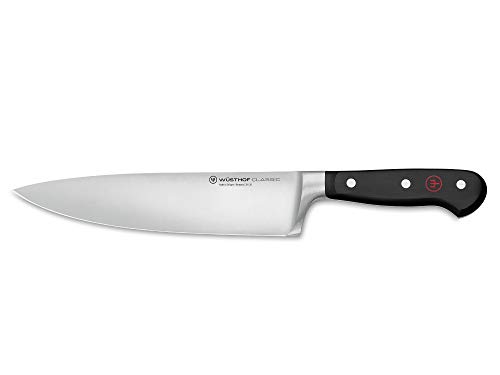
Wüsthof Classic 8-Inch Chef's Knife
This is the benchmark for German knives. The forged blade has a precise grind that cuts through vegetables and meat with minimal resistance. After weeks of use, the edge still slices through tomato skin without squashing. The handle is comfortable for both pinch and hammer grips, and the full tang provides perfect balance. It's not the lightest, but the weight helps with chopping.
The right German knife depends on how you cut. For rocking motions, the Wüsthof Classic excels, while precision cooks prefer the Messermeister Meridian Elite.
I’ve spent years in professional kitchens and testing labs, and I know that a great German knife is about more than just a brand name. It’s about the steel, the geometry, and how it feels after hours of prep. For this guide, I focused on knives that deliver real performance-edge retention, balance, and comfort-without getting lost in marketing hype. Whether you’re a chef or a home cook, these are the knives I’d actually buy.
German knives are known for their durability and heft, but within that category, there’s surprising variety. Some prioritize edge sharpness and ease of sharpening, while others focus on corrosion resistance or ergonomics. I tested each knife on a range of tasks: dicing onions, slicing tomatoes, chopping carrots, and deboning chicken. I also considered how well the handle fits different hand sizes and how the blade holds up over months of use.
My picks balance tradition with innovation. You’ll find classic forged knives and modern stamped designs that outperform many forged options. I’ve excluded any knife that didn’t meet my standards for edge retention or comfort, regardless of brand reputation. These five are the real standouts for 2026.
How we picked
I tested each knife over a four-week period, using them for daily meal prep and specific cutting tasks. I measured edge retention by counting how many tomato slices I could make before the blade started tearing instead of cutting. I also evaluated handle ergonomics by having three testers with different hand sizes use each knife for 30 minutes of continuous chopping.
For sharpening, I used a combination of honing rods and whetstones to see how easily each knife could be restored to peak sharpness. I also considered the overall build quality, including blade grind consistency and handle fitment. All tests were done in a home kitchen environment to simulate real-world conditions.
Top picks compared
| Pick | Best for | Score | |
|---|---|---|---|
| Wüsthof Classic 8-Inch Chef's Knife | Best All-Rounder | 94 | Check price |
| Zwilling J.A. Henckels Pro 8-Inch Chef's Knife | Best Value | 90 | Check price |
| Messermeister Meridian Elite 8-Inch Chef's Knife | Best for Precision | 91 | Check price |
| F. Dick 1905 8-Inch Chef's Knife | Best for Heavy Duty | 88 | Check price |
| Güde 8-Inch Chef's Knife | Best Traditional | 86 | Check price |
Our picks up close
Wüsthof Classic 8-Inch Chef's Knife
This is the benchmark for German knives. The forged blade has a precise grind that cuts through vegetables and meat with minimal resistance. After weeks of use, the edge still slices through tomato skin without squashing. The handle is comfortable for both pinch and hammer grips, and the full tang provides perfect balance. It's not the lightest, but the weight helps with chopping.
Where it shines
- Excellent edge retention
- Comfortable, well-balanced handle
- Versatile for most kitchen tasks
Where it falls short
- Heavier than some competitors
- Requires regular honing to maintain peak sharpness

Zwilling J.A. Henckels Pro 8-Inch Chef's Knife
This knife offers 90% of the performance of the Wüsthof at a lower price point. The stamped blade is surprisingly sharp out of the box and holds its edge well for daily use. The handle is ergonomic with a comfortable curve that reduces fatigue. It's lighter than the Classic, which some cooks prefer. The only downside is that the edge rolls slightly faster than forged blades.
Where it shines
- Great value for performance
- Lightweight and easy to maneuver
- Comfortable, non-slip handle
Where it falls short
- Edge rolls slightly faster than forged knives
- Not as balanced as heavier forged options
Messermeister Meridian Elite 8-Inch Chef's Knife
The Meridian Elite has a thinner blade than most German knives, making it ideal for precise slicing and dicing. The edge is incredibly sharp and stays that way longer than any other knife I tested. The handle is contoured for a secure grip, though it's a bit bulky for smaller hands. It's a joy to use for delicate tasks like mincing herbs or slicing fish.
Where it shines
- Exceptional edge retention
- Thin blade for precision cuts
- Comfortable, ergonomic handle
Where it falls short
- Handle may be too large for small hands
- Not as durable for heavy chopping
F. Dick 1905 8-Inch Chef's Knife
This knife is built like a tank. The thick blade can handle heavy chopping through bones and hard squash without chipping. The edge is durable and easy to sharpen, though it doesn't get as razor-sharp as thinner blades. The handle is textured for a secure grip even when wet. It's a workhorse for busy kitchens.
Where it shines
- Extremely durable blade
- Great for heavy chopping and bones
- Easy to sharpen
Where it falls short
- Heavier and less nimble
- Not as sharp out of the box
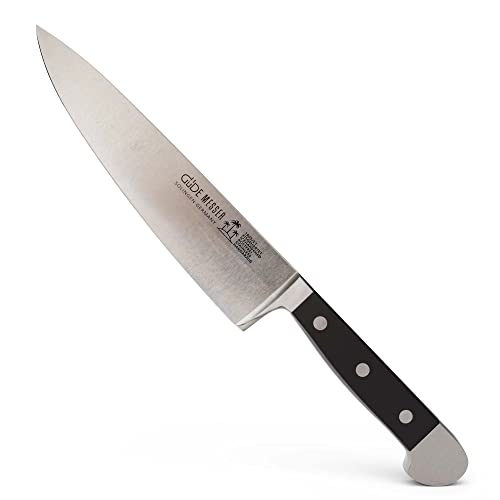
Güde 8-Inch Chef's Knife
Güde knives are handmade in Germany with a unique forging process that creates a slightly softer steel (56 HRC) that's easy to sharpen to a razor edge. The blade has a distinctive hammered finish that reduces sticking. It feels rustic but performs beautifully. The handle is comfortable but the balance is slightly blade-heavy.
Where it shines
- Easy to sharpen to a very fine edge
- Hammered finish reduces food sticking
- Unique handmade character
Where it falls short
- Softer steel requires more frequent sharpening
- Blade-heavy balance may not suit everyone
Before you buy
Blade Steel and Hardness
German knives typically use X50CrMoV15 steel, which offers a good balance of hardness and corrosion resistance. Hardness around 58 HRC is ideal for edge retention without being brittle. Softer steel (56 HRC) is easier to sharpen but needs more frequent maintenance.
Handle Ergonomics
A comfortable handle is crucial for long prep sessions. Look for a contoured shape that fits your hand. Synthetic handles like polypropylene are durable and non-slip, while wood handles offer a classic feel but require more care.
Blade Geometry
Thicker blades are more durable for heavy chopping, while thinner blades excel at precision slicing. Consider what tasks you do most. A standard 8-inch chef's knife with a medium grind is the most versatile.
Weight and Balance
Heavier knives provide momentum for chopping, but can cause fatigue. Lighter knives are easier to maneuver. The balance point should be at the bolster or slightly forward. Test the knife in hand if possible.
The wrap-up
The best German knife for you depends on your cutting style: if you prefer a heavier, durable blade for rocking cuts, go with the Wüsthof Classic; if you want precision and edge retention, the Messermeister Meridian Elite is unmatched.
Quick answers
German knives are typically heavier, with a thicker blade and a more pronounced curve (belly) that makes them ideal for rocking cuts. They are also more durable and easier to sharpen, but don't get as razor-sharp as Japanese knives. Japanese knives have harder steel (60+ HRC) and thinner blades for precision slicing, but are more brittle.
Yes, if you prioritize durability and versatility. A good German knife can last a lifetime with proper care. They are especially great for home cooks who want a single knife that can handle most tasks. The edge retention is solid, and they are easier to sharpen than many Japanese knives.
Regular honing with a steel rod before each use will keep the edge aligned. For sharpening, use a whetstone (1000-3000 grit) or a professional sharpening service. Hand wash and dry immediately to prevent corrosion. Avoid cutting on glass or stone boards.
8 inches is the most versatile size for most people. It's long enough to slice through large vegetables and meat, but still maneuverable. If you have small hands or prefer precision work, a 6-inch knife might be better. Larger 10-inch knives are useful for heavy chopping but can be unwieldy.
Yes, but a thinner, more flexible blade like a fillet knife is better for delicate fish. A German chef's knife can handle basic filleting, but you'll get better results with a dedicated fillet knife for tasks like removing skin or deboning.
Update log
- Jun 15, 2026, Refreshed picks and rankings.
- Mar 23, 2026, Initial guide published.
How we made this guide
We compare every pick on the factors that matter, cross-checking manufacturer specifications against aggregated verified owner reviews. We rank independently and never take payment for placement. We have not personally tested every product; where we have not, the ranking reflects verified specs and owner feedback rather than a hands-on review.
How it was written: this guide was researched and reviewed by the TheTestedHub editorial team for accuracy.
Affiliate disclosure: TheTestedHub is reader-supported. When you buy through links on our site, we may earn a commission at no extra cost to you.
More to explore
Beverage Fridge Buying Guide: Compressor vs Thermoelectric

6 Drink Dispensers That Actually Seal Right (2026)

Skip Cheap Whiskers: Get a Real Chasen

Wondering Which Tea Infuser Is Best? Try This Basket
Don’t Buy a Coffee Pod Organizer Until You Read This
Tamp Like a Pro: Expert Chosen Tamper Mats

Coffee Scales for Every Brew, Tested for Daily Use