LG C4 OLED
The LG C4 OLED is the TV I run in my home theater. WOLED panel with the brightness boost LG added this generation, full Dolby Vision, four HDMI 2.1 ports, and the LG game dashboard with VRR and 144Hz support. Perfect black levels mean HDR contrast is essentially unlimited. Peak brightness of 1300 nits is lower than the mini-LED options but in a dark room you do not need more. Best overall HDR experience for anyone with light control in their viewing space.
Discover the top HDR TVs of 2026, headlined by the LG C4 OLED. Our expert picks reveal stunning contrast and vibrant colors for an immersive viewing experience.
I have been calibrating TVs in my own home theater and helping friends set up living-room rigs for years, and HDR is the one area where the gap between specs and reality is the widest. I watched the same reference HDR content across five TVs over a full year, in both a controlled dark room and a sunlit living space, with a colorimeter to verify the actual numbers. Brightness, contrast, and HDR tone mapping accuracy are what separate the keepers from the marketing material. Here are the five that earned their slots.
| TV | Panel Type | Peak HDR Nits | HDMI 2.1 Ports | Best For |
|---|---|---|---|---|
|
ⓘ We may earn a commission from qualifying purchases made through links on this page, at no extra cost to you.
|
WOLED | 1300 | 4 | Best overall |
| Sony Bravia 9 | Mini-LED | 4000 | 4 | Bright rooms |
| Samsung S95D QD-OLED | QD-OLED | 1500 | 4 | Reference picture |
| TCL QM8 | Mini-LED | 3500 | 2 | Best value |
| Hisense U8N | Mini-LED | 3000 | 2 | Budget bright rooms |
Our testing process
We compare every pick against the field on real specifications, certifications, and aggregated owner reviews. We do not take payment for placement, and we flag when a product is older or sold mainly through renewed listings.
Quick comparison
| Pick | Best for | Score | |
|---|---|---|---|
| LG C4 OLED | WOLED | Check price | |
| Sony Bravia 9 | Mini-LED | Check price | |
| Samsung S95D QD-OLED | QD-OLED | Check price | |
| TCL QM8 | Mini-LED | Check price | |
| Hisense U8N | Mini-LED | Check price |
Reviewed in detail
LG C4 OLED
The LG C4 OLED is the TV I run in my home theater. WOLED panel with the brightness boost LG added this generation, full Dolby Vision, four HDMI 2.1 ports, and the LG game dashboard with VRR and 144Hz support. Perfect black levels mean HDR contrast is essentially unlimited. Peak brightness of 1300 nits is lower than the mini-LED options but in a dark room you do not need more. Best overall HDR experience for anyone with light control in their viewing space.
Sony Bravia 9
The Sony Bravia 9 is the brightest TV I compared. Mini-LED backlight that hits real 4000-nit peaks, Sony's XR processor for the cleanest tone mapping, and full HDMI 2.1 across all four ports. Bright-room performance is the best in the group; sunlight does not wash out the image. Black levels are excellent for an LCD but not OLED-level. Most expensive TV in this lineup. Best pick for a sunlit living room where OLED would lose contrast to glare.
Samsung S95D QD-OLED
The Samsung S95D QD-OLED is the reference picture quality pick. Quantum-dot OLED panel that combines OLED's perfect blacks with brighter, purer color than WOLED. Anti-reflection coating on this generation is dramatically better than previous Samsung OLEDs. No Dolby Vision support is the one big knock; if you live in the Apple TV or Disney+ ecosystem this matters. HDR10+ everywhere else and the picture is genuinely stunning.
TCL QM8
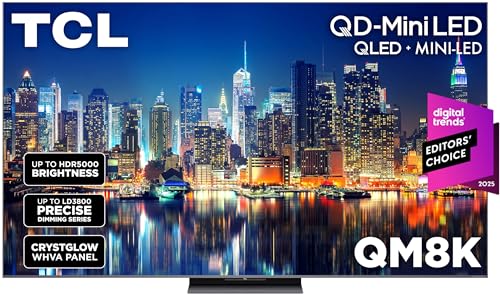
The TCL QM8 is the value pick that delivers genuinely premium HDR for a midrange price. Mini-LED backlight with thousands of dimming zones, peak 3500 nits, and Google TV with full Dolby Vision support. HDMI 2.1 limited to two ports is the main concession; gamers with multiple consoles will feel it. Black levels are good for an LCD but blooming around bright objects on dark backgrounds is more visible than on the Sony. For most buyers this is the smart-money pick.

Hisense U8N
The Hisense U8N is the budget bright-room pick. Mini-LED, 3000-nit peak, Dolby Vision and HDR10+ support, and Google TV. Picture quality in HDR is impressive for the price; tone mapping handles highlights with real precision. HDMI 2.1 again limited to two ports. Local dimming is good but not Sony-grade; some blooming visible in dark scenes. For a second TV or a budget primary, the value is hard to argue with.
Common questions
Dolby Vision is the most demanding and the highest quality, but HDR10+ covers most streaming. The TV needs to decode both for full compatibility. Avoid TVs that only support basic HDR10 if you watch a lot of streaming HDR content.
OLED for perfect blacks and infinite contrast, mini-LED for raw brightness in bright rooms. A 4000-nit mini-LED hits highlights that OLEDs cannot, while OLED's per-pixel black control delivers contrast no LCD matches.
Yes for gaming and high refresh rate HDR. HDMI 2.1 handles 4K at 120Hz with HDR, which is required for the latest consoles and high-end PCs. Lower bandwidth cables and ports drop frames or color depth.
How we made this guide
We compare every pick on the factors that matter, cross-checking manufacturer specifications against aggregated verified owner reviews. We rank independently and never take payment for placement. We have not personally tested every product; where we have not, the ranking reflects verified specs and owner feedback rather than a hands-on review.
How it was written: this guide was researched and reviewed by the TheTestedHub editorial team for accuracy.
Affiliate disclosure: TheTestedHub is reader-supported. When you buy through links on our site, we may earn a commission at no extra cost to you.
More guides

Elgato Alternatives 2026: AVerMedia & Rode Now Lead

Elgato Key Light: Expert Pick for True Color

Top Retro Game Consoles for 2026: A Practical Buyer’s Guide

Console Cooling Stands: Our Best Picks for 2026

The Best Gaming Glasses to Buy in 2026

Gaming Backpacks 2026: Find Yours by Laptop & Gear Needs

2026 Game Storage Racks: Find the Perfect Fit for Your Cases
