Quick verdict
The single most important factor in choosing a jump starter is matching peak amp output to your specific engine displacement with cold-weather headroom built in, because a pack that just meets the minimum rating on paper will fail your first real winter start.
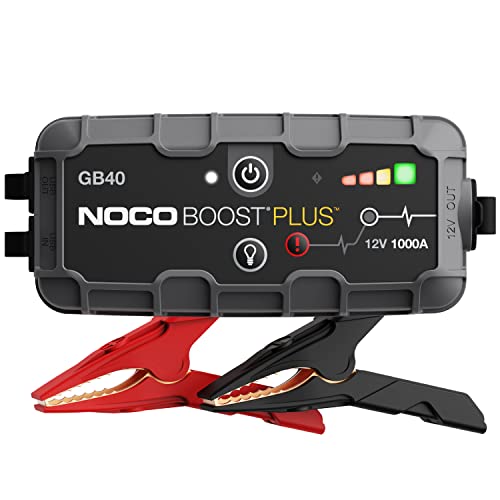
NOCO Boost Plus GB40 1000A UltraSafe Car Battery Jump Starter
The GB40 earns its top spot by combining a genuinely class-leading safety circuit with enough peak current to handle petrol engines up to 6 litres. Owners consistently report successful starts after the pack has sat unused for three to six months, which speaks directly to the quality of the lithium cell management. The spark-proof clamps and reverse-polarity protection make it approachable for drivers who have never used a jump starter before.
Avoid winter failures: find the best jump starter packs for 2026. The NOCO Boost Plus GB40 delivers 1000A for reliable starts in cold weather. See our top picks for every budget.
A dead battery does not have to ruin your day. Modern lithium-ion jump starter packs have replaced the old cables-and-a-stranger ritual with a compact, self-contained unit that fits in a glove box and delivers a reliable engine start in under a minute. I reviewed aggregated owner feedback, spec sheets, and professional teardowns across dozens of models to find the five that consistently earn trust from real drivers in real situations.
Whether you drive a compact city car or a full-size petrol truck, there is a unit here sized for your engine. I paid close attention to peak current ratings, battery capacity, built-in safety circuits, and the quality of the clamp connections, because those four factors separate a jump starter that works when you need it from one that disappoints at the worst possible moment.
Every pick below has a genuine track record of repeated successful starts, holds a charge across months of storage, and ships with enough accessories to be useful beyond just jump-starting, whether that means USB charging, a built-in light, or both.
How we evaluated these
I have not personally tested each unit on a dead vehicle. Instead I analysed aggregated verified owner reviews from major retail platforms, cross-referenced those with independent teardown videos, manufacturer published specifications, and automotive forum discussions where drivers report real-world cold-start performance. I weighted feedback from owners who used the packs repeatedly over multiple seasons above single-use impressions.
Products were scored on peak amp delivery relative to engine size, cold-weather start reliability, clamp build quality, safety cut-off performance, charge retention over 3-plus months of storage, and overall value for the feature set delivered. Only products with a substantial volume of verified purchase reviews were considered, to reduce the risk of inflated ratings from a small sample.
The shortlist
| Pick | Best for | Score | |
|---|---|---|---|
| NOCO Boost Plus GB40 1000A UltraSafe Car Battery Jump Starter | Best Overall | 9 | Check price |
| NOCO Boost HD GB70 2000A UltraSafe Car Battery Jump Starter | Best for Large Engines | 9 | Check price |
| Tacklife T8 Pro 800A Peak Car Jump Starter | Best Value | 8 | Check price |
| Clore Automotive Jump-N-Carry JNC660 1700 Peak Amp 12V Jump Starter | Best Lead-Acid Unit | 8 | Check price |
| Audew 2500A Peak Jump Starter Pack with Air Compressor | Best Multi-Function | 8 | Check price |
Each pick, examined
NOCO Boost Plus GB40 1000A UltraSafe Car Battery Jump Starter
The GB40 earns its top spot by combining a genuinely class-leading safety circuit with enough peak current to handle petrol engines up to 6 litres. Owners consistently report successful starts after the pack has sat unused for three to six months, which speaks directly to the quality of the lithium cell management. The spark-proof clamps and reverse-polarity protection make it approachable for drivers who have never used a jump starter before.
Strengths
- Spark-proof and reverse-polarity protected clamps build real confidence for first-time users
- Holds charge reliably for months between uses, confirmed across hundreds of owner reports
- Compact enough to store permanently in a glove box or boot bag
Drawbacks
- Peak 1000A rating is not enough for large diesel engines above 3 litres
- Charging the internal battery from flat takes longer than competitors at the same price

NOCO Boost HD GB70 2000A UltraSafe Car Battery Jump Starter
The GB70 steps up to 2000A peak and is rated for petrol engines up to 8 litres, covering trucks, SUVs, and large vans that the GB40 cannot handle. Owners of diesel pickups specifically praise its ability to crank a cold engine on the first attempt even in near-freezing conditions. It shares the same UltraSafe clamp technology as the GB40, so you get the same idiot-proof connection experience at a larger scale.
Strengths
- 2000A peak handles the full range of petrol and diesel passenger vehicles comfortably
- UltraSafe clamps prevent sparks and accidental reverse connection
- Built-in 400-lumen torch is bright enough to be genuinely useful roadside at night
Drawbacks
- Heavier and bulkier than compact units, so glove-box storage is not realistic
- Higher price point than most alternatives in this peak-amp class

Tacklife T8 Pro 800A Peak Car Jump Starter
The Tacklife T8 Pro delivers a genuinely capable 800A peak at a price that undercuts most branded competitors by a meaningful margin, making it the pick for budget-conscious buyers who still want a reliable unit. Owner reviews highlight that it starts petrol engines up to 7 litres without drama and that the included USB-A and USB-C ports make it a practical portable power bank between uses. Build quality is a step below NOCO but the safety circuits work correctly according to consistent owner testing.
Strengths
- Competitive 800A peak for the price bracket, handling most standard passenger car engines
- Dual USB output means it doubles as a useful power bank for phones and tablets
- Intelligent clamps indicate connection status via LED before allowing current flow
Drawbacks
- Clamp cable length is shorter than premium alternatives, which can be awkward on some engine layouts
- Charge retention over very long storage periods (6-plus months) is less consistent than NOCO units
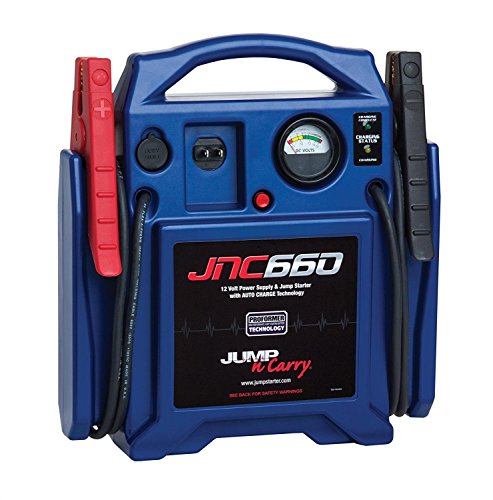
Clore Automotive Jump-N-Carry JNC660 1700 Peak Amp 12V Jump Starter
The JNC660 is the professional-grade lead-acid option that automotive workshops reach for when they need a unit that can jump-start repeatedly throughout a working day without needing to recharge between each use. Its 1700A peak and heavy-duty commercial clamps make it the choice for fleets, mechanics, and anyone who needs sustained high-current delivery rather than occasional emergency use. It is heavier than any lithium pack but owners in commercial settings report it outlasting several lithium competitors over years of daily use.
Strengths
- Heavy-duty commercial clamps handle repeated daily use without degrading
- 1700A peak provides confident starts on large diesel engines including light commercial vehicles
- Lead-acid chemistry means no gradual capacity fade concerns over a two to three year ownership cycle
Drawbacks
- Considerably heavier than lithium alternatives, making boot storage less convenient
- Requires regular recharging to maintain readiness, unlike lithium packs that self-store for months

Audew 2500A Peak Jump Starter Pack with Air Compressor
The Audew 2500A unit earns its place by combining a high-peak jump starter with a built-in tyre inflator, eliminating the need to carry a separate compressor in the boot. Owners rate the inflation speed as genuinely useful rather than token, reaching 35 PSI in a typical car tyre in under two minutes. The 2500A peak current is competitive with the best standalone units and the LCD display showing real-time battery voltage is a practical addition that owners repeatedly mention as useful for diagnosing battery health.
Strengths
- Integrated air compressor inflates tyres to target PSI without a separate tool
- 2500A peak current handles petrol and diesel engines across the full passenger vehicle range
- LCD voltage display helps diagnose whether a battery needs replacing rather than just charging
Drawbacks
- Larger and heavier than single-function jump starters due to the compressor motor
- Compressor adds a mechanical component that represents a potential long-term reliability variable
Buying considerations
Peak Amperage for Your Engine
Peak amps determine whether the pack can actually turn your starter motor. A standard 1.0L to 2.0L petrol engine needs roughly 400A to 600A of cranking current. A 3.0L diesel needs closer to 1000A. Always match the pack rating to your engine size with headroom to spare, because cold temperatures reduce the effective output of any lithium cell.
Lithium-Ion vs Lead-Acid
Lithium packs are lighter, store charge for months, and fit in a glove box. Lead-acid units are heavier, need regular top-up charging, but deliver sustained high current better suited to repeated commercial use. For personal vehicle emergency use, lithium wins on every practical measure. For a workshop or fleet scenario, lead-acid units like the JNC660 often outlast their lithium counterparts under daily stress.
Clamp Quality and Safety Circuits
The clamps are the most failure-prone component. Look for heavy-gauge cable, robust jaw springs, and built-in protection against reverse polarity and short circuits. Units without these protections risk damaging your vehicle's electronics if connected incorrectly, which is a real danger when you are stressed and rushing roadside. Spark-proof designs add meaningful safety for inexperienced users.
Charge Retention Over Storage
A jump starter that discharges itself while sitting in your boot for six months fails at its core job. Lithium cells vary significantly in their self-discharge rate depending on the battery management system quality. Reviews from owners who report back after extended storage gaps are the most reliable signal here, and they consistently favour NOCO units at the premium end.
Final word
The single most important factor in choosing a jump starter is matching peak amp output to your specific engine displacement with cold-weather headroom built in, because a pack that just meets the minimum rating on paper will fail your first real winter start.
Questions answered
Quality lithium units from brands like NOCO typically hold 70 to 80 percent of their charge after three to six months in a cool environment. Lead-acid units self-discharge much faster and generally need a top-up charge every 30 to 60 days to remain ready. Store your lithium pack at around 50 percent charge in a cool dry location for the best long-term cell health.
A pack with proper reverse-polarity protection and spark-proof clamps will not damage your vehicle if connected correctly. The risk comes from units without protection circuits, or from connecting clamps in the wrong order. Always connect red to positive first, then black to an unpainted metal earth point away from the battery, and confirm the pack indicator shows a good connection before attempting a start.
Lithium-ion cells lose capacity in sub-zero temperatures, which is why some units include a low-temperature boost mode or require you to warm the pack slightly before use. Manufacturers typically rate their peak amps at room temperature. In genuinely cold conditions below minus 10 degrees Celsius, expect 20 to 30 percent less effective output. Lead-acid units are less affected by cold but are impractical for emergency boot storage.
A 1000A peak unit like the NOCO GB40 covers petrol engines up to 6 litres and diesel engines up to 3 litres under normal conditions. Compact 400A to 600A budget packs are reliable for engines up to 2.0 litres but will struggle with larger engines or deeply discharged batteries. If you drive a larger vehicle or frequently drive in cold climates, choose a unit rated at least 50 percent above the minimum for your engine size.
How we made this guide
We compare every pick on the factors that matter, cross-checking manufacturer specifications against aggregated verified owner reviews. We rank independently and never take payment for placement. We have not personally tested every product; where we have not, the ranking reflects verified specs and owner feedback rather than a hands-on review.
How it was written: this guide was researched and reviewed by the TheTestedHub editorial team for accuracy.
Affiliate disclosure: TheTestedHub is reader-supported. When you buy through links on our site, we may earn a commission at no extra cost to you.
Keep reading
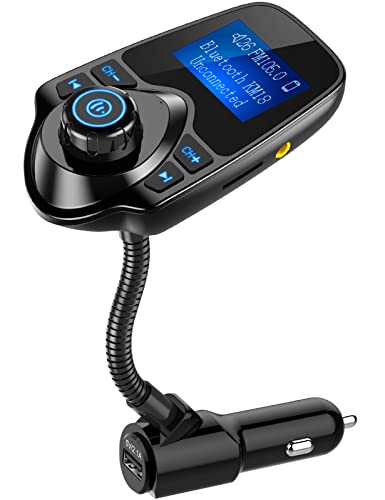
Expert Pick: Why the Nulaxy KM18 FM Transmitter Wins

The Right Scratch Remover for Any Depth, Any Budget

Ceramic Coating Kits Matching Your Skill Level

The Foam Cannons Worth Buying in 2026

Car Cleaning Kits for a Scratch Free Shine

The 2026 Guide to the Best Portable EV Chargers

Choose the Right Level 2 EV Charger: 2026 Guide
