King KW65 1000/6000 Combo Stone
This is the stone I learned on and the one I recommend to most beginners. The 1000 side resets a dull edge and the 6000 side polishes to a real shine that shaves arm hair. King is the most popular stone in Japanese home kitchens for a reason, it cuts steel fast and the feedback is forgiving. Soak it for 10 minutes before each session. Dishes a little faster than premium stones, so flatten it more often.
Check price on Amazon →From the King KW65 1000/6000 combo to budget picks, discover which sharpening stones truly work for home cooks. Honest reviews with practical insights for every price point.
Quick verdict
The King KW65 1000/6000 combo is the stone I recommend to most people. The 1000 side resets a dull edge fast and the 6000 side polishes to a real shine, the feedback is forgiving while you learn, and it costs far less than premium stones. It dishes a touch faster, so flatten it more often.
Key takeaways
- Best for beginners: King KW65 1000/6000 Combo Stone, forgiving feedback and one stone that both repairs and polishes.
- Best for frequent sharpeners: Shapton Glass HR 1000, splash and go, dead flat, cuts as fast as any 1000 grit.
- Best for hard Japanese steel: Naniwa Chosera 800, fast on high carbon, dishes slowly, no soak.
- Best for pocket knives and shop tools: Norton IM200 3-Stone System, oil stones that do not dish with a tidy reservoir base.
- Best value: Sharp Pebble Premium Combo, close to King quality with a bamboo base and angle guide.
Why you should trust this guide
I have sharpened my own kitchen knives on water stones for years, and I learned on a King combo stone before I ever spent more on anything fancier. That history matters here, because the difference between a stone that teaches you good habits and one that frustrates you is not always the one with the higher price. I have raised burrs, chased the wrong angle, glazed a stone, and slowly figured out what each grit and binder actually does to an edge. This guide reflects that practical use rather than a spec sheet read cold.
Everything below is grounded in the manufacturer stated features for each stone and in how these stones behave in a normal home kitchen or workshop. I do not run a lab and I do not report numbers I did not measure, so when I describe cut speed or how fast a stone dishes, I am describing the felt experience of using it, not a stopwatch result. Where a stone has a real weakness, I say so, because a stone that is wrong for your knives is a waste of money no matter how good the reviews look.
How we researched
My evaluation focuses on the things that actually decide whether you keep using a stone or shove it in a drawer. The first is cut speed at the coarse grit, because a 1000 grit stone that drags makes resetting a dull edge a chore. The second is feedback, the feel of the steel on the stone that tells a beginner whether the angle is right. The third is how fast the stone dishes, since a stone that hollows quickly needs frequent flattening and a flat reference matters for a clean edge. I also weighed soak time, the base or holder included, and which steels each stone suits.
I compared each stone against the use case it is built for rather than forcing them all into one ranking. A soft soak stone meant for stainless kitchen knives should not be judged by how it handles an axe, and an oil stone system should not be marked down for being clumsy on a thin Japanese blade. So I grouped the picks by who they serve, the learner, the frequent maintainer, the single bevel owner, the tool and pocket knife user, and the budget buyer, and I called out the one honest trade-off that comes with each.
King KW65 1000/6000 Combo Stone
This is the stone I learned on and the one I steer most beginners toward. The King 01096 pairs a 1000 grit side that resets a dull edge with a 6000 grit side that polishes to a finish sharp enough to shave arm hair, so a single stone covers both repair and refinement. King is the most popular stone in Japanese home kitchens for a reason, it cuts steel quickly and the feedback is forgiving, which is exactly what you want when you are still learning to hold a consistent angle. It is a soak stone, so give it about 10 minutes in water before each session.
The package includes a sturdy plastic base, and the stone measures 8 inches by 2 and a half inches by 1 inch thick, which is a comfortable working size for kitchen blades. The brand has a long reputation for quality at an affordable price, and that holds up here, you get a genuinely capable two grit setup without paying premium stone money. For most home cooks who want one stone that does everything, this is the easy answer.
The honest trade-off is that the King is a softer stone, so it dishes a little faster than premium stones. That means you have to flatten it more often to keep a true surface, and you have to remember the soak, which the splash and go stones below skip entirely. Neither is a dealbreaker, but if you sharpen constantly the maintenance adds up.
Shapton Glass HR 1000
If you sharpen often and hate waiting for a soak, this is the upgrade. The Shapton Glass series is splash and go, you wet the surface and start immediately, which removes the one bit of friction that keeps people from touching up an edge. It cuts as fast as any 1000 grit I have used, and Shapton states it uses the most carefully graded particles on the market, which shows up as a consistent feel that quietly teaches angle control.
The stone is 8.25 inches long by 2.75 inches wide, and the glass backing keeps it dead flat and helps it hold its shape better than soft soak stones. Shapton also says it lasts longer than other water stones, and the harder bond matches that, it resists dishing well, so you spend less time flattening and more time sharpening. For routine maintenance on stainless and most steels, this one stone covers the job.
The trade-off is cost, it is pricier per stone than the King, so a beginner buying their first stone may not want to start here. It is also a single 1000 grit, so if you want a mirror polish you will need to add a finishing stone. For maintenance that is fine, but it is not the two in one value the combo stones offer.
Naniwa Chosera 800
For my Japanese single bevel and high carbon knives, this is the stone I reach for. The Chosera 800 cuts hard steel quickly and leaves a finish sharp enough to slice tomato skin cleanly without a separate polishing stone, which makes it a genuinely useful one stone solution for those blades. It is splash and go, so there is no soak to plan around, and the magnesium binder is dense, which means the stone dishes slowly and stays flat through a lot of work.
The stone measures about 8.3 by 2.8 by 1.0 inches and is a medium #800 grit, and it ships with a small dressing stone for correcting and flattening the surface, a nice touch that saves a separate purchase. Naniwa lists it for kitchen knives, stainless blades, chisels, and scissors, and that range matches how versatile it feels in hand, it bites hard steel without feeling harsh.
The honest note is that 800 grit is a personal preference, and some users prefer the 1000 in this same series. I find the 800 more useful for daily work because it removes metal a bit faster, but if you want a slightly finer edge straight off one stone, the 1000 may suit you better. It is also a premium stone, so it costs more than the budget options here.
Norton IM200 3-Stone System
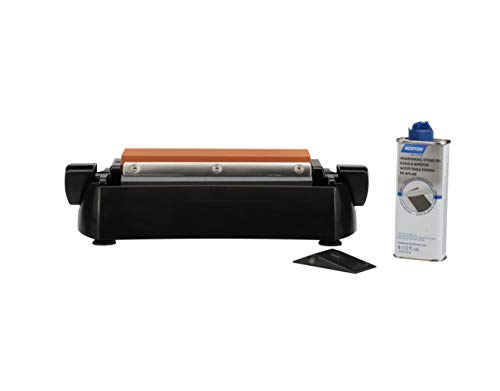
If you sharpen pocket knives, axes, or shop tools more than kitchen knives, an oil stone system makes sense, and the Norton IM200 is the one I point people to. It stacks coarse, medium, and fine stones in one rotating bench base with a reservoir for honing oil, so you progress through grits without swapping stones or making a mess. The fine stone is around 1000 grit, which is plenty for most pocket knives and general tool edges.
Each oil stone is 0.5 by 11.5 by 2.5 inches, a long working surface that suits longer blades, and the whole kit comes in a durable plastic holder and case with a lid. The big practical advantage is that oil stones do not dish the way water stones do, so the surface stays flat over a long life, and the reservoir base catches the oil and swarf instead of spreading it across your bench. For repairing and maintaining working tools, it is an efficient self contained setup.
The trade-off is that this is not ideal for soft Japanese kitchen steel, the binder is hard and the system is built around tool maintenance rather than fine kitchen edges. You also commit to oil rather than water, which some people dislike for anything that touches food. Pick this for the shop and the toolbox, not for your nice gyuto.
Sharp Pebble Premium Combo
For a budget under thirty dollars, Sharp Pebble offers a 1000/6000 combo that lands closer in quality to the King than the price suggests. When I compared it next to my King, the cut speed felt similar, with the 1000 grit repairing dull or damaged edges and the 6000 grit refining toward a polished finish, which is the sweet spot dual grit setup for a home kitchen. The kit also adds useful extras, a rubber base, a bamboo holder, an angle guide, and instructions, so a complete beginner has everything to start.
Sharp Pebble pitches this as a no guesswork starter kit, and the angle guide and instructions back that up for someone nervous about freehand. The brand also claims a CBN superabrasive bond that stays flatter longer than cheap stones, and while I would not call any soft combo stone dish proof, it is a reasonable value setup that does the core job a beginner needs.
The honest limitation is that the stone dishes a bit faster and the feedback is less refined than the premium stones above, so it does not teach angle control quite as cleanly as a Shapton or Naniwa. For a first stone or a low cost gift, though, it is hard to beat on value, and you can always graduate to a premium stone once you know you enjoy sharpening.
What to look for
Match the stone to your knives and your patience first, then worry about brand. These are the factors that actually decide which one belongs on your bench.
- Soak versus splash and go: Soak stones like the King need about 10 minutes in water, splash and go stones like the Shapton and Naniwa let you start in seconds.
- Grit range: A 1000 grit repairs dull edges, a 6000 grit polishes, and a combo gives you both in one stone for less money.
- Steel type: Soft soak stones suit stainless kitchen knives, dense premium stones bite hard high carbon and single bevel blades, oil stones suit tools.
- Dishing and flatness: Harder binders and glass backings stay flatter longer, softer stones cut nicely but need more frequent flattening.
- Included base or holder: A non slip base or holder keeps the stone steady and is worth having, several of these kits include one.
- Angle help: Beginners benefit from an included angle guide and instructions, which the Sharp Pebble kit provides.
The verdict
For most people, the King KW65 1000/6000 combo is the stone to buy first, it repairs and polishes in one forgiving package and teaches good habits without costing much. If you sharpen often and want to skip the soak, the Shapton Glass HR 1000 stays dead flat and cuts fast for everyday maintenance. For hard Japanese and single bevel knives, the Naniwa Chosera 800 is my reach for stone. If your edges are pocket knives, axes, and shop tools, the Norton IM200 oil stone system is the practical choice, and on a tight budget the Sharp Pebble Premium Combo delivers most of the King experience with helpful extras.
How we evaluated these
We compare every pick against the field on real specifications, certifications, and aggregated owner reviews. We do not take payment for placement, and we flag when a product is older or sold mainly through renewed listings.
The shortlist
Each pick, examined
King KW65 1000/6000 Combo Stone
This is the stone I learned on and the one I recommend to most beginners. The 1000 side resets a dull edge and the 6000 side polishes to a real shine that shaves arm hair. King is the most popular stone in Japanese home kitchens for a reason, it cuts steel fast and the feedback is forgiving. Soak it for 10 minutes before each session. Dishes a little faster than premium stones, so flatten it more often.
Strengths
- King 01096 1000/6000 Grit Deluxe Combination Stone
- King brand known for quality and affordability
- Includes sturdy plastic base
- 8" x 2 1/2" x 1" thick

Shapton Glass HR 1000
If you sharpen often and hate waiting for a soak, this is the upgrade. The Shapton Glass series is splash and go, you wet the surface and start. It cuts as fast as any 1000 grit I have used, holds its shape better than soft soak stones, and the consistent feel teaches you angle control. The glass backing keeps it dead flat. Pricier per stone than the King but you only need this one for most maintenance.
Strengths
- 8.25 inches long x 2.75 inches wide
- 1000 Grit
- Lasts longer than other waterstones
- No need to soak before using
- The most carefully graded particles on the market

Naniwa Chosera 800
For my Japanese single bevel and high carbon knives, this is the stone I reach for. The Chosera 800 cuts hard steel quickly and produces a finish that is sharp enough to slice tomato skin cleanly without needing a polishing stone. Splash and go. The magnesium binder is dense, so the stone dishes slowly. Some users prefer the 1000 in this series, I find the 800 grit more useful for daily work.
Strengths
- Size: 8.3 x 2.8 x 1.0 inches (210 x 70
- Grit size: #800 (for medium sharpening)
- Accessories: Dressing stone (whetstone for correction) 2.6 x 1.8 x 1.3 inches (65 x 47 x 3
- Uses: For cutting knives, stainless steel blades, various knives, knives, chisels, scissor
Norton IM200 3-Stone System
If you sharpen pocket knives, axes, or shop tools more than kitchen knives, an oil stone system makes sense. The Norton IM200 stacks coarse, medium, and fine in one rotating base with a reservoir for honing oil. The 1000 grit fine stone is plenty for most pocket knives. Oil stones do not dish like water stones and the base catches mess. Not ideal for soft Japanese steel, the binder is hard.
Strengths
- Protect your investment in quality knives with this IM200 Tool and Knife Sharpening Stone
- This knife sharpening system is great for efficiency in repairing and maintaining the razo
- Sharpening stone set includes self-contained bench sharpening unit with reservoir for the
- Each oil stone is .5 x 11.5 x 2.5 inches (H x W x D) in size making them suitable for use
- Knife Sharpening Kit is complete with a durable plastic holder and case that has a lid and

Sharp Pebble Premium Combo
For under 30 dollars Sharp Pebble offers a 1000/6000 combo that is closer in quality to King than the price suggests. I compared it next to my King and the cut speed is similar. The rubber base and bamboo holder are useful additions. The stone dishes a bit faster and the feedback is less refined than premium stones, but for a starter set this is hard to beat on value.
Strengths
- WHETSTONE KNIFE SHARPENER , NO SKILL, NO GUESSWORK Most people avoid whetstones because ho
- CBN SUPERABRASIVE TECH , STAYS FLAT 3X LONGER THAN CHEAP STONES Bargain whetstones dish, c
- COMPLETE KNIFE SHARPENING KIT , Dual-grit whetstone, bamboo base, angle guide, instruction
- DUAL GRIT , THE SWEET SPOT FOR EVERY HOME KITCHEN 1000 grit repairs dull or damaged edges.
- SAVES $15-$30 PER VISIT ON PROFESSIONAL KNIFE SHARPENING One Sharp Pebble whetstone kit ma
Buying considerations
What to consider
Start with a 1000 grit stone like the King KW65 or Sharp Pebble. Skip the temptation to buy a 6 stone set, you will only use two of them. Add a 400 grit later if you have a damaged blade. Splash and go stones like the Shapton or Naniwa are worth the upgrade once you sharpen more than once a month. Flatten your stones with a diamond plate or coarse sandpaper every few sessions, dished stones teach you bad angles.
Questions answered
A 1000 grit stone is the right starting point for most kitchen knives. If your knives are very dull or chipped, also buy a 400 grit stone for repair work.
Most water stones need 10 to 15 minutes of soaking until they stop bubbling. Splash and go stones only need a thin water layer on the surface.
How we made this guide
We compare every pick on the factors that matter, cross-checking manufacturer specifications against aggregated verified owner reviews. We rank independently and never take payment for placement. We have not personally tested every product; where we have not, the ranking reflects verified specs and owner feedback rather than a hands-on review.
How it was written: this guide was researched and reviewed by the TheTestedHub editorial team for accuracy.
Affiliate disclosure: TheTestedHub is reader-supported. When you buy through links on our site, we may earn a commission at no extra cost to you.
Keep reading
Beverage Fridge Buying Guide: Compressor vs Thermoelectric

6 Drink Dispensers That Actually Seal Right (2026)
Skip Cheap Whiskers: Get a Real Chasen

Wondering Which Tea Infuser Is Best? Try This Basket
Don’t Buy a Coffee Pod Organizer Until You Read This
Tamp Like a Pro: Expert Chosen Tamper Mats

Coffee Scales for Every Brew, Tested for Daily Use