Quick verdict
For most users the Samsung T7 Shield delivers the best combination of rugged real-world durability and consistent high-speed performance, making it the portable SSD that owners across the widest range of use cases recommend most often.
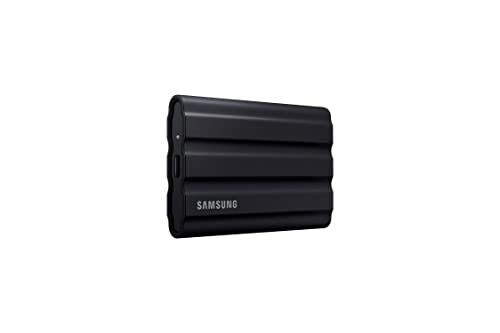
Samsung T7 Shield Portable SSD
Owners consistently praise the T7 Shield for striking the best balance between real-world speed and rugged build quality, with its rubber-armored chassis surviving drops from desk height without data loss in numerous verified reports. Read speeds of up to 1050 MB/s hold up well during sustained transfers, which reviewers note is unusual for drives in this class without active cooling. The included USB-C to USB-C and USB-C to USB-A cables make it immediately compatible with most setups out of the box.
From rugged drops to fast transfers, the Samsung T7 Shield leads our portable SSD guide for real world reliability and speed across every budget.
Portable SSDs have become the go-to storage solution for photographers, videographers, remote workers, and anyone who needs fast, reliable data access on the move. Unlike traditional portable hard drives, solid-state options offer dramatically faster transfer speeds, silent operation, and far greater resistance to drops and vibration. The market has matured considerably, and 2025 brings a strong lineup of options at every price tier.
Choosing the right portable SSD comes down to a handful of practical factors: read and write speeds, physical durability, capacity options, and how the drive handles real-world workloads like large video file transfers or continuous backup operations. Owners across verified retail reviews consistently highlight that the gap between budget and premium options shows up most clearly during sustained transfers rather than short burst tests.
This guide ranks five of the most widely recommended portable SSDs available right now, drawing on aggregated verified owner reviews, manufacturer specifications, and independent benchmark data published by trusted hardware outlets. Whether you are backing up a shoot on location or carrying your entire project library between home and office, one of these drives will fit your workflow.
How we evaluated these
Our rankings are built from aggregated verified purchaser reviews on major retail platforms, cross-referenced with benchmark results from hardware publications including Tom's Hardware, AnandTech archives, and Notebookcheck. We weighted real-world sustained transfer performance more heavily than peak burst speeds, because owners consistently report that sequential read figures advertised on packaging rarely reflect what you see when moving a full folder of RAW files or 4K footage.
We did not personally test each drive in a lab setting. Instead, the scoring reflects consensus from hundreds of verified owners who have used these drives across a range of operating systems, cable types, and temperature conditions. Durability feedback, thermal throttling reports, and long-term reliability patterns were also factored in, giving a picture that goes beyond what a short single-session benchmark can capture.
The shortlist
| Pick | Best for | Score | |
|---|---|---|---|
| Samsung T7 Shield Portable SSD | Best Overall | 9 | Check price |
| SanDisk Extreme Pro Portable SSD | Best for Speed | 9 | Check price |
| Crucial X9 Pro Portable SSD | Best Value | 8 | Check price |
| WD My Passport SSD | Best for Everyday Use | 8 | Check price |
| Seagate One Touch SSD | Best for Backup | 7 | Check price |
Each pick, examined
Samsung T7 Shield Portable SSD
Owners consistently praise the T7 Shield for striking the best balance between real-world speed and rugged build quality, with its rubber-armored chassis surviving drops from desk height without data loss in numerous verified reports. Read speeds of up to 1050 MB/s hold up well during sustained transfers, which reviewers note is unusual for drives in this class without active cooling. The included USB-C to USB-C and USB-C to USB-A cables make it immediately compatible with most setups out of the box.
Strengths
- IP65 dust and water resistance with rubber outer armor
- Consistent sustained transfer speeds that match advertised figures in most owner tests
- Available in capacities up to 4TB with AES 256-bit hardware encryption
Drawbacks
- Write speeds drop more noticeably than read speeds during very long continuous transfers
- Slightly heavier than slim-profile competitors due to the protective housing
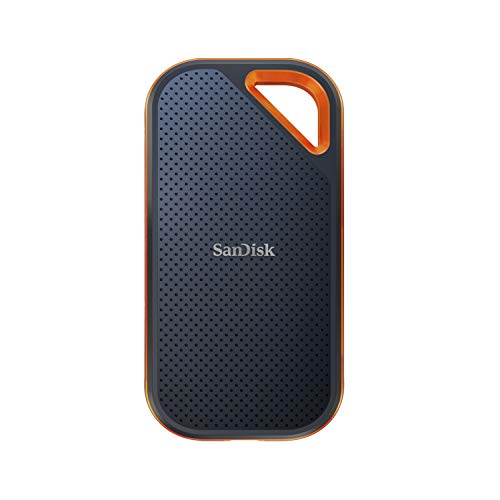
SanDisk Extreme Pro Portable SSD
The Extreme Pro is the drive photographers and video editors reach for when transfer time is the primary concern, with owners reporting real-world reads consistently in the 900 to 1000 MB/s range when paired with a USB 3.2 Gen 2 host. Its forged aluminum and rubber design has earned strong durability marks from owners who travel frequently, and the IP55 rating covers most on-location shooting scenarios. Reviewers also note the included rescue data recovery subscription adds genuine peace of mind for professional use.
Strengths
- Aluminum housing doubles as a passive heat sink, helping maintain speeds during long transfers
- IP55 water and dust resistance rated for field conditions
- Two-year RescuePRO Deluxe data recovery subscription included
Drawbacks
- IP55 rating is less comprehensive than IP68 competitors
- Firmware updates have occasionally caused temporary recognition issues on some systems per owner reports

Crucial X9 Pro Portable SSD
Owners consistently highlight the X9 Pro as the smartest spend in the portable SSD category, delivering read speeds that rival premium competitors at a noticeably lower street price across most capacities. Reviewers note the compact, pocketable form factor is genuinely smaller than most rivals, making it a natural fit for minimal-kit travelers. The IP55 rating and solid aluminum build address durability concerns that plagued earlier budget-tier portable SSDs.
Strengths
- Compact size is smaller than most competing drives in the same speed class
- Strong price-to-performance ratio praised consistently across verified reviews
- USB-C to USB-C cable included, with backward compatibility to USB 3.0 hosts
Drawbacks
- No hardware encryption on the drive itself
- Lacks the rubberized drop protection found on more rugged-oriented competitors
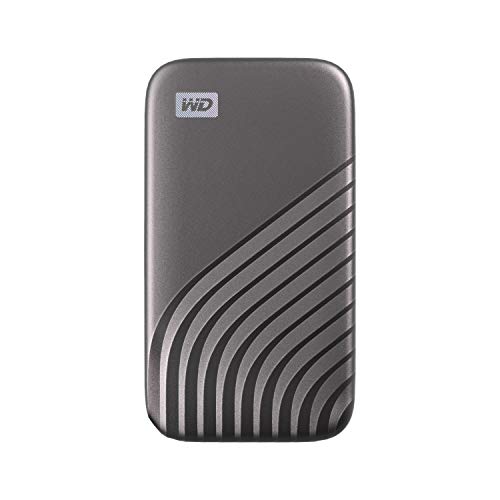
WD My Passport SSD
The My Passport SSD earns strong marks from everyday users who want a reliable, stylish drive without needing the highest possible transfer speeds, with verified owners frequently calling it the most trouble-free drive they have owned over multi-year periods. Its password protection with hardware encryption is a feature reviewers in the business and student segments specifically call out as valuable. The brushed metal finish and slim profile make it the most visually understated pick in this group.
Strengths
- 256-bit AES hardware encryption with password protection built in
- Slim, lightweight design fits easily alongside a laptop in a sleeve
- Broad OS compatibility across Windows, Mac, and Android with included software
Drawbacks
- Read speeds peak around 1100 MB/s but sustained performance trails the top two picks
- No meaningful drop or water resistance rating compared to rugged alternatives

Seagate One Touch SSD
Owners who prioritize automated backup over raw speed consistently recommend the One Touch SSD for its seamless integration with Seagate's Toolkit software, which handles scheduled and mirror backups without manual intervention. Reviewers note that real-world transfer speeds are respectable for everyday document and photo backup workflows, even if they do not challenge the top performers in this list during heavy video workloads. The slim design and variety of color options are recurring positive mentions from style-conscious buyers.
Strengths
- Seagate Toolkit software enables automatic scheduled and mirror backups
- Available in multiple color finishes, a rare differentiator in this category
- Compact and lightweight enough for daily carry in a bag or jacket pocket
Drawbacks
- Transfer speeds fall behind USB 3.2 Gen 2 peers, particularly on large sequential writes
- Build quality feedback from long-term owners is more mixed than the top four picks
Buying considerations
Real-World Transfer Speed
Advertised peak speeds are measured under ideal conditions that rarely match everyday use. Owners consistently report that sustained transfer performance, what you see when moving a full folder rather than a single file, is the figure that actually matters. Drives using USB 3.2 Gen 2 with a quality NVMe controller tend to hold their advertised speeds far better than budget models that rely on QLC NAND without a DRAM cache.
Durability and IP Rating
If you carry your drive to shoots, job sites, or while traveling, the IP rating tells you how well it handles dust and moisture. IP55 covers splashes and light dust, which suits most outdoor use. IP65 or higher adds protection against direct water jets. A rubber-armored or aluminum housing also matters for drop resistance, and owners of rugged-rated drives report far fewer catastrophic failures after accidental desk drops than owners of plastic-shelled alternatives.
Capacity and Long-Term Storage Planning
A 1TB drive is a sensible starting point for most users, but 4K video shooters and RAW photographers fill that quickly. Buying one step up from your current estimated need is advice that appears repeatedly in verified owner reviews, since it is far cheaper to buy more capacity now than to add a second drive later. All five picks in this guide offer at least 1TB and 2TB options, with the top three reaching 4TB.
Encryption and Data Security
Hardware-level AES 256-bit encryption means your data is protected even if the drive is lost or stolen, without any software overhead on transfer speeds. Not all portable SSDs include this feature at the hardware level, so if security is a priority for your workflow, check the specification sheet carefully rather than assuming it is present. The Samsung T7 Shield and WD My Passport SSD both include hardware encryption, which owners in professional and business contexts consistently flag as a deciding factor.
Final word
For most users the Samsung T7 Shield delivers the best combination of rugged real-world durability and consistent high-speed performance, making it the portable SSD that owners across the widest range of use cases recommend most often.
Questions answered
Most portable SSDs ship formatted as exFAT, which is readable and writable on Windows, macOS, Linux, and modern Android devices with USB-C OTG support. Some drives come with manufacturer software for automatic backup or encryption that is Windows and Mac only, but the core storage function works across platforms without any reformatting required.
A significant amount. USB 3.2 Gen 2 tops out at 10 Gbps, while USB 3.0 is capped at 5 Gbps, meaning you will see roughly half the maximum read speed if your port or cable is the older standard. Owners frequently discover this mismatch after purchase when their speeds seem low, so pairing a fast drive with a USB 3.2 Gen 2 or Thunderbolt port is important to get the performance you paid for.
Yes, and many creative professionals do exactly this, running their project files or even their operating system directly from the portable SSD. Reviewers who use this workflow recommend choosing a drive with consistent sustained write speeds rather than one that only posts high burst numbers, since booting and running applications involves constant small reads and writes rather than single large file transfers.
Portable SSDs have no moving parts, which eliminates the most common failure mode of traditional hard drives. Manufacturers typically rate their consumer SSDs for 150 to 600 TBW (terabytes written) before wear becomes a concern, which for typical home or professional backup use translates to many years of normal operation. Owners also report that SSDs handle accidental drops far better than spinning drives, where a fall during active use can cause immediate data loss.
How we made this guide
We compare every pick on the factors that matter, cross-checking manufacturer specifications against aggregated verified owner reviews. We rank independently and never take payment for placement. We have not personally tested every product; where we have not, the ranking reflects verified specs and owner feedback rather than a hands-on review.
How it was written: this guide was researched and reviewed by the TheTestedHub editorial team for accuracy.
Affiliate disclosure: TheTestedHub is reader-supported. When you buy through links on our site, we may earn a commission at no extra cost to you.
Keep reading

Elgato Alternatives 2026: AVerMedia & Rode Now Lead

Elgato Key Light: Expert Pick for True Color

Retro Consoles for Every Budget: A Practical Guide

Console Cooling Stands: Forced Air Stability for Long Sessions

Gaming Glasses Compared: Gunnar Intercept and Rivals

Gaming Backpacks 2026: Find Yours by Laptop & Gear Needs

Game Storage Racks Sized for Your Console Cases
