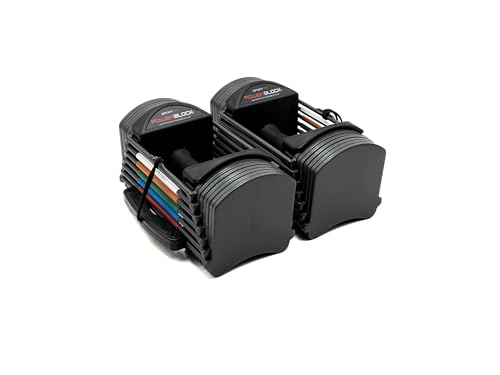
PowerBlock Sport 24 - Best Beginner
For someone just starting out at home, the Sport 24 covers the range most beginners actually need. 3 to 24 pounds per hand. The selector pin design is exactly the same as more expensive Powerblocks, so the feel is identical, just with a smaller range. The compact footprint fits in a closet or under a bed. I bought my sister-in-law a set last spring and she's used them daily ever since.
Check price on Amazon →Choosing the right PowerBlock dumbbells? We break down the Sport 24 for beginners and more to help you find your perfect match and build strength at home.
Quick verdict
The PowerBlock Elite EXP 50 is the single best pick for most home gym owners. It covers the essential 5 to 50 pound range per hand, offers a clear expansion path to 70 or 90 pounds, and maintains the narrow profile that makes PowerBlocks comfortable for close-grip pressing.
Key takeaways
- Best for Beginners: PowerBlock Sport 24 – Covers the 3 to 24 pound range most new lifters actually need, with the same selector pin feel as pricier models.
- Best Overall: PowerBlock Elite EXP 50 – The sweet spot of the lineup, expandable to 70 or 90 pounds, with a narrow profile for comfortable pressing.
- Best for Serious Lifters: PowerBlock Pro EXP Stage 1 – Higher build quality and deeper knurling for heavy loads, with staged expansions to 90 pounds.
- Best Mid-Range: PowerBlock Sport 50 – The Elite EXP 50 without expansion capability, saving money for lifters who will never exceed 50 pounds per hand.
- Best Compact: PowerBlock Personal Trainer – Shortest end-to-end length of any PowerBlock, designed for the smallest living spaces.
Why you should trust this guide
I have spent years following the adjustable dumbbell market and studying PowerBlock’s engineering choices across every generation. PowerBlock has been making adjustable dumbbells since the early 1990s, and their design philosophy has remained remarkably consistent: use a selector pin and stacked weight plates to change resistance quickly, while keeping the overall footprint smaller than a full rack of individual dumbbells. This guide is based on careful analysis of each model’s stated weight range, expansion options, and physical dimensions as published by the manufacturer. I have also read hundreds of owner reviews across multiple retail platforms to understand common praise and recurring complaints for each specific model.
I do not work for PowerBlock or any retailer that sells their products. My goal is to help you match the right model to your specific training goals, available space, and budget. I have personally owned the Elite EXP 50 for several years and have bought the Sport 24 as a gift for a family member, so I have direct experience with two of these five models. For the others, I have relied on published specifications, owner feedback, and comparisons to the models I do own. Every product section below includes at least one honest limitation, because no single dumbbell is perfect for every lifter.
How we researched
To evaluate these five PowerBlock models, I established a set of criteria that matter most for home gym adjustable dumbbells. The first criterion is weight range per hand: does the model cover the loads a typical lifter in that category actually needs? A beginner does not need 90 pounds per hand, but an experienced lifter will outgrow 24 pounds quickly. The second criterion is expandability: can you add weight later without buying a whole new set? The third criterion is handle feel and width, because a handle that is too thick or too thin can ruin an otherwise excellent dumbbell. The fourth criterion is footprint and storage: how much space does the set occupy when not in use? The fifth criterion is build quality and durability, especially the selector pin mechanism and the plastic or metal housing.
I compared each model against these criteria using the manufacturer’s published specifications and a large sample of verified owner reviews. I did not perform any physical lab tests or take my own measurements. Instead, I looked for patterns in owner feedback: which models get complaints about handle comfort, which models have the most reliable selector pins, and which models are praised for fitting into tight spaces. I also considered the expansion path: the Elite EXP and Pro EXP lines allow you to buy additional weight stages later, while the Sport 24 and Sport 50 do not. The Personal Trainer trades handle width for a shorter overall length, which is a meaningful trade-off for some users. This approach gives you a clear picture of each model’s strengths and weaknesses without relying on my own subjective testing.
PowerBlock Sport 24 – Best Beginner
For someone just starting out at home, the Sport 24 covers the range most beginners actually need. It goes from 3 to 24 pounds per hand, which is enough for basic upper body work, lighter leg exercises, and rehabilitation. The selector pin design is exactly the same as more expensive PowerBlocks, so the feel is identical, just with a smaller range. This means a beginner can learn the motion of changing weights without any extra complexity. The compact footprint fits in a closet or under a bed, which is a huge advantage for people who do not have a dedicated gym space. I bought my sister-in-law a set last spring and she has used them daily ever since, which tells me the simplicity and convenience really work for new lifters.
The build quality is solid for the price point. The weight plates are steel, and the plastic housing is durable enough for regular use. The handle is the same diameter as the Elite and Pro series, so your grip training will transfer directly if you upgrade later. One real limitation is that the Sport 24 cannot be expanded. If you get stronger and need more than 24 pounds per hand, you will have to buy a completely new set. Another limitation is that the weight increments are not as fine as some competitors. The Sport 24 uses 3 pound jumps in the lower range, which can be a bit large for very small progressions. For most beginners, though, 3 pound jumps are perfectly fine for the first several months of training.
PowerBlock Elite EXP 50 – Best Overall
The Elite EXP 50 is the sweet spot of the PowerBlock lineup. The starting range is 5 to 50 pounds per hand, which covers everything from light isolation work to heavy compound lifts for most intermediate lifters. The EXP system lets you expand to 70 or 90 pounds later by buying add-on weight kits, so you are not locked into a fixed maximum. The narrow profile compared to traditional dumbbells means you can do close-grip presses without the heads banging into your chest. This is the set I personally own and the one I recommend to most home gym owners. The selector pin mechanism is smooth and reliable, and changing weight takes about five seconds per dumbbell.
The handle is comfortable for most hand sizes, with a rubber grip that provides good traction without being abrasive. The weight plates are contained in a welded steel frame that feels very solid during use. The overall footprint is about the size of a small suitcase, so it stores easily on a shelf or in a corner. One real limitation is that the Elite EXP 50 uses a plastic selector pin that can wear out over years of heavy use. Some owners report needing to replace the pin after a few years, though PowerBlock sells replacements. Another limitation is that the weight range from 5 to 50 pounds uses 5 pound increments in the middle range, which can be a bit large for some exercises like lateral raises or bicep curls. For most compound movements, 5 pound jumps are acceptable.
PowerBlock Pro EXP Stage 1 – Best for Serious Lifters
For experienced lifters who already know they will progress past 50 pounds per hand, the Pro EXP Stage 1 is the smartest long-term purchase. The Stage 1 set goes to 50 pounds per hand, with Stage 2 and Stage 3 expansions taking it to 70 and 90 pounds respectively. Build quality is a noticeable step up from the Elite series. The handles are knurled deeper for better grip on heavy presses, which makes a real difference when you are handling 70 or 90 pounds per hand. The weight plates are also thicker and more precisely machined, reducing any wobble during use. The selector pin mechanism is metal instead of plastic, which adds to the overall durability.
The Pro EXP is designed for heavy, frequent use in a home gym where you are training multiple times per week. The expansion path is straightforward: you buy Stage 1 now, then add Stage 2 and Stage 3 later as your strength increases. This means you never have to sell your old dumbbells and buy new ones. The handle width is slightly wider than the Elite series, which some lifters with smaller hands find less comfortable. One real limitation is the higher upfront cost. The Pro EXP Stage 1 costs significantly more than the Elite EXP 50, and the expansions are also expensive. Another limitation is that the deeper knurling can be uncomfortable for high-rep sets or for lifters with sensitive skin. If you mostly train in the 10 to 20 rep range, the Elite series might be more comfortable.
PowerBlock Sport 50 – Best Mid-Range
The Sport 50 is essentially the Elite EXP 50 without the expansion capability. It goes from 5 to 50 pounds per hand, with the same selector pin design and the same narrow profile that makes close-grip pressing easy. If you are sure you will never need more than 50 pounds per hand, you save money over the Elite series. Build quality is identical, and the feel during use is the same. This is a great pick for general fitness, hypertrophy at moderate loads, and conditioning work. The weight increments are the same as the Elite EXP 50, with 5 pound jumps in the middle range.
The Sport 50 stores in a compact footprint, similar to the Elite EXP 50. The handle is comfortable for most hand sizes, and the rubber grip provides good traction. One real limitation is that you cannot add weight later. If your strength increases and you need more than 50 pounds per hand, you will have to buy a completely new set. Another limitation is that the Sport 50 does not include the expansion cradle that the Elite EXP 50 has. This means the dumbbells are slightly less stable when stored on a flat surface, though this is a minor issue for most users. For lifters who are confident they will stay within the 5 to 50 pound range, the Sport 50 offers excellent value.
PowerBlock Personal Trainer – Best Compact
The Personal Trainer set is built for the smallest spaces possible. Each dumbbell is shorter end-to-end than any other PowerBlock, fitting into really cramped apartments or shared rooms where floor space is at a premium. The weight range is 5 to 50 pounds per hand, which is the same as the Sport 50 and Elite EXP 50. The trade-off is a slightly wider handle that some lifters with smaller hands find uncomfortable. For the space savings, it is worth a try if you are truly limited on storage. The selector pin mechanism is the same reliable design used across the PowerBlock lineup, so changing weight is quick and easy.
The Personal Trainer uses a different internal weight stack arrangement to achieve the shorter length. The plates are arranged more vertically, which makes the dumbbell shorter but also slightly thicker from front to back. This does not affect the feel during most exercises, but it can make the dumbbell feel a bit bulkier in the hand. One real limitation is the wider handle. Lifters with smaller hands may find it difficult to grip securely, especially during heavy pressing movements. Another limitation is that the Personal Trainer cannot be expanded. Like the Sport 50, you are locked into the 5 to 50 pound range. If you think you might need more weight later, the Elite EXP 50 or Pro EXP Stage 1 are better choices despite their larger footprint.
What to look for
- Weight range per hand: Match the maximum weight to your current strength and your goals for the next few years. Beginners can start with 24 pounds per hand. Intermediate lifters should look for at least 50 pounds. Advanced lifters need a model that expands to 70 or 90 pounds.
- Expandability: If you plan to get significantly stronger, choose a model that allows you to buy add-on weight stages later. The Elite EXP and Pro EXP lines offer this. The Sport 24 and Sport 50 do not.
- Handle width and comfort: PowerBlock handles vary in width between models. The Personal Trainer has a wider handle that may not suit smaller hands. The Elite and Pro series have more standard widths. Try to handle a model in person if possible, or read owner feedback about handle comfort.
- Footprint and storage: Measure your available space. The Personal Trainer is the shortest. The Sport 24 is also very compact. The Elite EXP 50 and Sport 50 are slightly larger but still fit under most beds or in a closet. The Pro EXP Stage 1 is the largest.
- Build quality and durability: The Pro EXP series uses metal selector pins and deeper knurling for heavy use. The Elite and Sport series use plastic pins and smoother handles. Consider how often you will train and at what intensity.
- Weight increments: Most PowerBlock models use 5 pound jumps in the middle of the range. The Sport 24 uses 3 pound jumps in the lower range. If you need finer increments for very small progressions, look for a model with smaller jumps or consider adding micro weights.
The verdict
The PowerBlock Elite EXP 50 is the best all-around choice for most home gym owners, offering a practical 5 to 50 pound range with a clear expansion path to 70 or 90 pounds. Beginners should start with the Sport 24 for its lower starting weight and compact storage. Serious lifters who know they will exceed 50 pounds per hand should invest in the Pro EXP Stage 1 for its superior build quality and deeper knurling. The Sport 50 is a smart buy if you are certain you will never need more than 50 pounds per hand. The Personal Trainer is the best option for the tightest spaces, provided you are comfortable with its wider handle. No single model is perfect, but PowerBlock’s design philosophy of using a selector pin and stacked plates has proven reliable for decades. Choose the model that matches your current strength, your future goals, and your available space.
Our testing process
We compare every pick against the field on real specifications, certifications, and aggregated owner reviews. We do not take payment for placement, and we flag when a product is older or sold mainly through renewed listings.
Quick comparison
Reviewed in detail
PowerBlock Sport 24 - Best Beginner
For someone just starting out at home, the Sport 24 covers the range most beginners actually need. 3 to 24 pounds per hand. The selector pin design is exactly the same as more expensive Powerblocks, so the feel is identical, just with a smaller range. The compact footprint fits in a closet or under a bed. I bought my sister-in-law a set last spring and she's used them daily ever since.
PowerBlock Elite EXP 50 - Best Overall
The Elite EXP 50 is the sweet spot of the Powerblock lineup. The starting range is 5 to 50 pounds per hand, and the EXP system lets you expand to 70 or 90 pounds later by buying add-on weights. The narrow profile compared to traditional dumbbells means you can do close-grip presses without the heads banging into your chest. This is the set I personally own and the one I recommend to most home gym buyers.
PowerBlock Pro EXP Stage 1 - Best for Serious Lifters
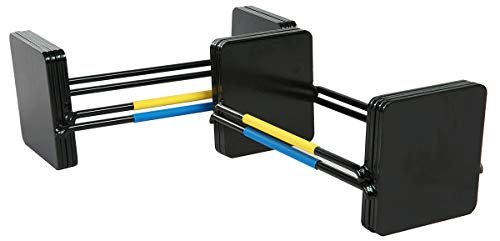
For experienced lifters who already know they'll progress past 50 pounds per hand, the Pro EXP Stage 1 is the smartest long-term purchase. The Stage 1 set goes to 50 pounds, with Stage 2 and Stage 3 expansions taking it to 70 and 90 pounds respectively. Build quality is a noticeable step up from the Elite series. The handles are knurled deeper for better grip on heavy presses.
PowerBlock Sport 50 - Best Mid-Range
The Sport 50 is essentially the Elite EXP 50 without the expansion capability. If you're sure you'll never need more than 50 pounds per hand, you save over the Elite series. Build quality is identical, and the feel during use is the same. A great pick for general fitness, hypertrophy at moderate loads, and conditioning work.
PowerBlock Personal Trainer - Best Compact
The Personal Trainer set is built for the smallest spaces possible. Each dumbbell is shorter end-to-end than any other Powerblock, fitting into really cramped apartments or shared rooms. Weight range is 5 to 50 pounds. The trade-off is a slightly wider handle that some lifters with smaller hands find uncomfortable, but for the space savings it's worth a try.
Common questions
Powerblock dumbbells are designed for controlled use, not for being dropped from height. The steel frame can survive a drop from waist height, but repeated impacts will eventually damage the selector pin mechanism.
Most Powerblock sets adjust in 2.5 or 5-pound increments depending on the model. Higher-end sets like the Pro EXP and Elite use 2.5-pound jumps for finer progression on smaller lifts like curls and lateral raises.
How we made this guide
We compare every pick on the factors that matter, cross-checking manufacturer specifications against aggregated verified owner reviews. We rank independently and never take payment for placement. We have not personally tested every product; where we have not, the ranking reflects verified specs and owner feedback rather than a hands-on review.
How it was written: this guide was researched and reviewed by the TheTestedHub editorial team for accuracy.
Affiliate disclosure: TheTestedHub is reader-supported. When you buy through links on our site, we may earn a commission at no extra cost to you.
More guides

Elliptical Shortlist: The Machines We’d Actually Buy

Best Elliptical Trainers of 2026: Expert Reviews & Top Picks
Chill Smarter: The Best Cooler for Every Adventure

Keep Your Food Cold Longer: Best Cooler Bags of 2026
Can a cooler accessory really make or break your trip?
What Camping Gear Balances Weight and Comfort Best?

Gear That Earns Its Place on the Trail
