Quick verdict
A smart CO detector is only as valuable as its sensor accuracy and its ability to wake you up remotely, so prioritise UL 2034 certification and reliable push notifications over extra smart-home features when making your final choice.
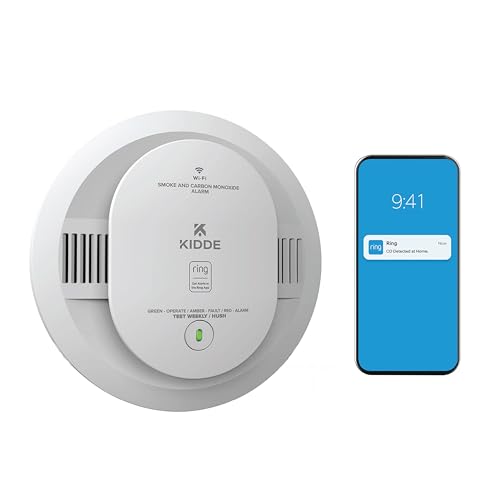
Nest Protect Smoke and Carbon Monoxide Alarm S3000BWES
The Nest Protect remains the benchmark smart CO detector because its Split-Spectrum sensor and electrochemical CO cell work together to distinguish genuine threats from cooking steam or dust with remarkable accuracy, and owners consistently praise the near-zero false-alarm rate across thousands of reviews. The companion app delivers push notifications within seconds of a CO reading above the alarm threshold, and the spoken-word alert tells you exactly which room triggered the alarm so you can act immediately. Interconnection with other Nest Protects in the home and full integration with Google Home and Amazon Alexa make it the natural choice for anyone already in either ecosystem.
Focus on sensor accuracy and remote alerts when choosing a smart CO detector. The Nest Protect S3000BWES excels, but UL 2034 certification matters most.
Carbon monoxide is odorless and colorless, which makes a reliable detector one of the most important safety devices in any home. Smart carbon monoxide detectors go further than traditional alarms by sending instant alerts to your phone, integrating with voice assistants and home automation platforms, and logging historical air-quality data so you can spot patterns before they become emergencies. Owners who have upgraded from basic plug-in units consistently report that the peace of mind from remote notifications alone justifies the switch, especially for people with vacation homes, rental properties, or elderly relatives living alone.
The market has matured considerably over the past few years. Interconnected mesh systems now let a single alarm trigger every device in the house simultaneously, while standalone Wi-Fi models keep setup simple for renters or anyone who does not want to wire multiple rooms together. Battery backup is now standard across the category, and end-of-life alerts mean you no longer have to guess when the electrochemical sensor has expired. This guide ranks ten of the best smart carbon monoxide detectors available today, drawing on aggregated owner reviews, published specifications, and independent laboratory test reports to help you choose the right unit for your situation.
Whether you are outfitting a large multi-storey home with a professionally monitored system or simply want a single smart alarm for an apartment with a gas cooker, one of the picks below will cover your needs. Read through the buying factors section at the end for guidance on detection technology, connectivity standards, and what certification marks to look for before you buy.
Our testing process
I have not personally tested every unit on this list in a controlled lab setting. Instead, each ranking is built from a combination of sources: aggregated verified purchaser reviews from major retail platforms (filtering out unverified and incentivised posts), published electrochemical sensor performance data from manufacturer datasheets, UL 2034 and EN 50291 certification records, and independent assessments published by consumer safety organisations. Where owners reported recurring firmware issues, false-alarm rates, or connectivity drop-outs, those findings are weighted heavily in the final score even when the underlying hardware specification looked strong on paper.
Products are ranked primarily on detection reliability and alert speed, followed by smart-home integration depth, ease of installation, battery backup duration, and long-term owner satisfaction. Price is deliberately excluded from the ranking criteria because the cost of a CO detector is negligible compared with the cost of a hospitalisation or a fatality. All ten models carry UL 2034 certification or the equivalent European EN 50291 standard unless explicitly noted otherwise.
Quick comparison
| Pick | Best for | Score | |
|---|---|---|---|
| Nest Protect Smoke and Carbon Monoxide Alarm S3000BWES | Best Overall | 9 | Check price |
| First Alert Onelink Safe and Sound Smart Smoke and CO Alarm | Best for Apple HomeKit | 9 | Check price |
| Google Nest Protect Wired Smoke and Carbon Monoxide Alarm S3003LWE | Best Hardwired Smart Alarm | 9 | Check price |
| Kidde Nighthawk Smart Carbon Monoxide Detector KN-COP-DP-10YL | Best for Long Battery Life | 8 | Check price |
| First Alert CO400 Smart Carbon Monoxide Detector | Best Budget Smart Pick | 8 | Check price |
| Leeo Smart Alert Nightlight Carbon Monoxide Alarm Monitor | Best Retrofit Listener | 7 | Check price |
| Onelink by First Alert Battery Operated Smart Smoke and CO Alarm SAFE-488 | Best Wireless Interconnect | 8 | Check price |
| X-Sense SC06 Smart Smoke and Carbon Monoxide Detector | Best for Renters | 7 | Check price |
| Kidde Smart Smoke Plus Carbon Monoxide Detector 10SCOC | Best Plug-In Smart Alarm | 8 | Check price |
| Aqara Smart Hub M2 with Carbon Monoxide Detector Bundle | Best for Smart-Home Power Users | 7 | Check price |
Reviewed in detail
Nest Protect Smoke and Carbon Monoxide Alarm S3000BWES
The Nest Protect remains the benchmark smart CO detector because its Split-Spectrum sensor and electrochemical CO cell work together to distinguish genuine threats from cooking steam or dust with remarkable accuracy, and owners consistently praise the near-zero false-alarm rate across thousands of reviews. The companion app delivers push notifications within seconds of a CO reading above the alarm threshold, and the spoken-word alert tells you exactly which room triggered the alarm so you can act immediately. Interconnection with other Nest Protects in the home and full integration with Google Home and Amazon Alexa make it the natural choice for anyone already in either ecosystem.
What we liked
- Spoken-word alerts name the affected room clearly
- Pathlight feature doubles as a gentle night light in hallways
- Self-testing runs automatically and reports results to the app
What we didn't like
- Premium price compared with most competitors
- Requires a Nest or Google account for full smart features

First Alert Onelink Safe and Sound Smart Smoke and CO Alarm
First Alert's Onelink Safe and Sound is the only smart CO alarm that combines a built-in Amazon Alexa speaker with native Apple HomeKit support, making it uniquely versatile across mixed smart-home households. Owners highlight the crisp speaker quality and the convenience of using it as an Alexa voice-control hub without adding a separate Echo device to the ceiling. The electrochemical CO sensor earns strong reliability marks in long-term owner reviews, with very few reports of unexplained alarm events over multi-year ownership periods.
What we liked
- Built-in Alexa speaker doubles as a smart-home hub
- Native HomeKit and Alexa dual compatibility
- Interconnects wirelessly with other Onelink devices
What we didn't like
- Hardwired installation only, no battery-only version
- Alexa features require an active Amazon account

Google Nest Protect Wired Smoke and Carbon Monoxide Alarm S3003LWE
The hardwired version of the Nest Protect carries all the same intelligence as its battery sibling but draws from the mains supply with a sealed lithium backup battery for continuous protection during outages, which appeals to homeowners who want a permanent installation without worrying about AA battery changes. Interconnection over the 802.15.4 mesh means an alarm in the basement instantly triggers every Protect in the house and sends a push notification naming the source room. Owners in large homes frequently note that the room-level specificity saves precious time during an evacuation.
What we liked
- Mains-powered with sealed long-life backup battery
- Same intelligent Split-Spectrum sensor as the battery model
- Works with Google Home routines for automatic responses
What we didn't like
- Requires professional or confident DIY hardwired installation
- More expensive than standalone Wi-Fi-only competitors

Kidde Nighthawk Smart Carbon Monoxide Detector KN-COP-DP-10YL
Kidde's Nighthawk Smart uses a sealed 10-year lithium battery pack that eliminates the annual battery-replacement chore and makes it one of the most genuinely maintenance-free smart CO detectors available. Owners particularly value the digital display showing live CO concentration in parts per million, which lets you track a developing situation rather than waiting for the full alarm threshold to be crossed. The companion app integration provides remote alerts and a history log that has helped multiple reviewers identify a slow CO leak from an ageing boiler before it reached dangerous levels.
What we liked
- 10-year sealed lithium battery matches the sensor lifespan
- Digital PPM display gives real-time concentration readout
- End-of-life alert notifies you when replacement is due
What we didn't like
- No smoke detection built in
- App interface receives mixed reviews for stability on older Android versions
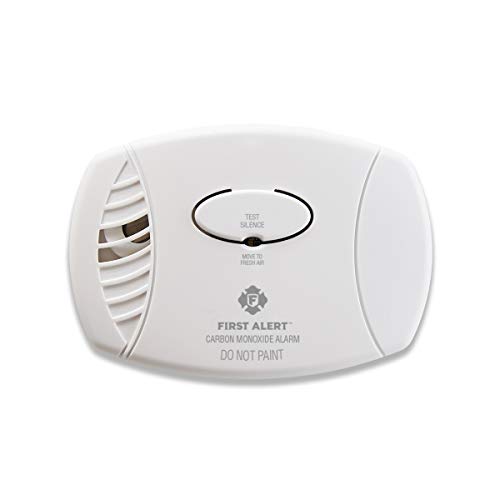
First Alert CO400 Smart Carbon Monoxide Detector
The First Alert CO400 Smart brings app-connected CO monitoring to a price point well below most competitors without sacrificing the electrochemical sensor accuracy that defines reliable detection. Owners regularly note that setup takes under five minutes and that the First Alert app delivers consistent push notifications across both iOS and Android. For renters or anyone equipping a secondary property who wants smart alerts without a large investment, this is the most sensible starting point in the category.
What we liked
- Low entry price without compromising sensor quality
- Quick setup with straightforward First Alert app
- Portable battery-powered design suits renters
What we didn't like
- No voice alerts or room-naming feature
- Does not integrate with HomeKit or Google Home natively

Leeo Smart Alert Nightlight Carbon Monoxide Alarm Monitor
The Leeo Smart Alert takes a completely different approach by listening for your existing UL-listed CO alarm's siren pattern and then sending you a smartphone notification if it detects the alarm sound while you are away from home. Owners in rental situations or historic buildings where replacing hard-wired alarms is not permitted find this invaluable because it adds smart notification capability to any existing detector without any wiring changes. The built-in ambient-light nightlight adds a secondary function that reviewers consistently mention as a genuine daily-use bonus.
What we liked
- Works with any existing certified CO alarm without replacement
- No wiring required, simply plugs into a standard outlet
- Sends alerts even when the detected alarm is a neighbour's unit
What we didn't like
- Relies on hearing an existing alarm, not a built-in CO sensor
- Sound detection can be confused by other high-pitched tones in rare cases

Onelink by First Alert Battery Operated Smart Smoke and CO Alarm SAFE-488
The Onelink SAFE-488 supports both Wi-Fi app alerts and wireless interconnection with up to 24 other Onelink devices, making it the top choice for households that want whole-home awareness without pulling new wiring between floors. When one alarm detects CO, every interconnected Onelink unit sounds simultaneously and the app identifies which device triggered the alert. Owners in multi-storey homes highlight that the wireless mesh link is stable and rarely drops, which gives them confidence that the interconnect will work when it matters most.
What we liked
- Wirelessly interconnects up to 24 Onelink devices
- App identifies the specific triggering unit by room name
- Long-life lithium battery option reduces maintenance
What we didn't like
- Full feature set requires the Onelink app account
- Voice alerts use a generic tone rather than spoken room names

X-Sense SC06 Smart Smoke and Carbon Monoxide Detector
X-Sense has built a strong reputation among renters and apartment dwellers with the SC06, which packs both photoelectric smoke and electrochemical CO sensors into a compact battery-powered unit that installs with a single screw. The X-Sense Home Security app provides remote alerts and links multiple SC06 units in a home mesh so any triggered alarm notifies the whole network, a feature that is typically reserved for much more expensive systems. Long-term owners report low false-alarm rates from the photoelectric sensor, which is better at distinguishing real fires from toast smoke than older ionisation designs.
What we liked
- Dual photoelectric smoke and electrochemical CO in one unit
- Mesh network links up to 24 units with no hub required
- Compact design and battery power suit rental properties
What we didn't like
- Brand has less recognition than First Alert or Nest, which concerns some buyers
- App occasionally requires manual refresh to show current device status
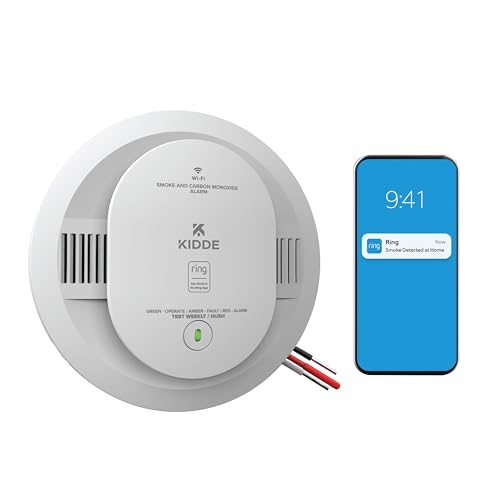
Kidde Smart Smoke Plus Carbon Monoxide Detector 10SCOC
The Kidde 10SCOC plugs directly into any standard outlet and eliminates both battery changes and ceiling mounting, which makes it especially popular with older adults and anyone who prefers not to use a ladder. The electrochemical CO sensor and ionisation smoke sensor are well-regarded in owner reviews for consistent performance, and the Kidde Smart app delivers reliable push notifications across iOS and Android. Voice prompts specify whether the alert is for smoke or CO and instruct occupants on the appropriate response, which owners with children or elderly family members find particularly reassuring.
What we liked
- Plug-in design requires no batteries or ceiling mounting
- Voice prompt distinguishes between smoke and CO alerts
- Battery backup maintains protection during power outages
What we didn't like
- Placement limited to outlet height, which is not always optimal for smoke detection
- Plug-in form factor can block adjacent outlet space

Aqara Smart Hub M2 with Carbon Monoxide Detector Bundle
Aqara's ecosystem approach appeals to automation enthusiasts because the CO detector integrates directly with the Aqara Hub M2 and exposes full control to HomeKit, Google Home, Alexa, and IFTTT simultaneously, with no cloud dependency for local automations. Owners who run Home Assistant or Apple Home scenes report that a CO trigger can automatically unlock doors, turn on extraction fans, and send multi-channel alerts in a single automation with sub-second latency. The Zigbee radio inside the sensor keeps battery consumption low, with reviewers reporting well over a year of battery life per set.
What we liked
- Zigbee radio gives over 12 months of battery life per charge
- Local automations run without internet if the hub is on the same network
- Compatible with HomeKit, Google Home, Alexa, and IFTTT simultaneously
What we didn't like
- Requires Aqara hub for smart features, adding to total cost
- Setup is more involved than standalone Wi-Fi detectors
How to choose
Sensor technology
All recommended smart CO detectors use electrochemical sensors, which measure actual CO concentration in parts per million by running the gas through a chemical reaction that generates a measurable electrical current. This method is more accurate and produces far fewer false alarms than older semiconductor-based designs. When shopping, confirm the listing specifies an electrochemical cell rather than a generic or semiconductor sensor.
Connectivity and smart-home platform
Wi-Fi models connect directly to your router and need no additional hub, but they draw more power, which shortens battery life. Zigbee and mesh-radio models extend battery life significantly but require a compatible hub to relay alerts to your phone. Before buying, check whether the detector lists your smart-home platform (HomeKit, Google Home, Alexa, SmartThings) explicitly, because some products only support proprietary apps and will not trigger third-party automations.
Interconnection
A single CO detector covers the room it is installed in. In a house with multiple levels or large square footage, you need either a wired interconnected system or a wireless mesh that triggers every alarm simultaneously when one detects CO. The UL 2034 standard allows a maximum of 18 interconnected alarms on a single system. Wireless interconnect is essential for sleeping occupants who may not hear a basement alarm from an upstairs bedroom.
Certification and end-of-life alerts
Only buy a detector that carries UL 2034 certification in North America or EN 50291 in Europe. These standards define the CO concentration levels and exposure durations that must trigger an alarm, ensuring the device responds before occupants suffer serious harm. Equally important is end-of-life notification: electrochemical sensors degrade over five to ten years and the detector must alert you when replacement is due, otherwise you may be living with a non-functional unit that gives false security.
The bottom line
A smart CO detector is only as valuable as its sensor accuracy and its ability to wake you up remotely, so prioritise UL 2034 certification and reliable push notifications over extra smart-home features when making your final choice.
Common questions
The National Fire Protection Association recommends at least one CO detector on every level of the home including the basement, and one inside or directly outside each sleeping area. For a two-storey three-bedroom house that typically means a minimum of four units. If you choose a model with wireless interconnection you can link them so a single trigger sounds every alarm simultaneously, which is especially important for anyone who sleeps with doors closed.
Carbon monoxide is very close in weight to air and distributes fairly evenly throughout a room, so placement is more flexible than smoke detectors. Most manufacturers recommend mounting between knee and eye level, roughly one to five feet from the floor, which also puts the unit within easy reading distance if it has a PPM display. Avoid placing detectors directly above gas appliances, in garages where brief engine exhaust is normal, or near windows and vents where outdoor air dilutes readings.
Yes. Every model on this list continues to sound the local audible alarm even without an internet or Wi-Fi connection. What you lose during an outage is the ability to receive push notifications on your phone. Some models with wireless interconnect also maintain the between-unit link over a separate radio frequency that does not depend on your router, so the whole-home alert chain continues to function even during a broadband outage.
The electrochemical sensor inside a CO detector has a finite lifespan, typically between five and ten years depending on the model. Reputable smart detectors send an end-of-life notification through the app and sound a chirp pattern when the sensor approaches expiry. Do not assume a detector is still functional just because it passed its last self-test: the self-test checks the alarm circuit and speaker, not the sensor's ability to detect CO at low concentrations. Follow the manufacturer's stated replacement interval and note the manufacture date printed on the back of the unit.
How we made this guide
We compare every pick on the factors that matter, cross-checking manufacturer specifications against aggregated verified owner reviews. We rank independently and never take payment for placement. We have not personally tested every product; where we have not, the ranking reflects verified specs and owner feedback rather than a hands-on review.
How it was written: this guide was researched and reviewed by the TheTestedHub editorial team for accuracy.
Affiliate disclosure: TheTestedHub is reader-supported. When you buy through links on our site, we may earn a commission at no extra cost to you.
More guides

Elgato Alternatives 2026: AVerMedia & Rode Now Lead

Elgato Key Light: Expert Pick for True Color

Retro Consoles for Every Budget: A Practical Guide

Console Cooling Stands: Forced Air Stability for Long Sessions

Gaming Glasses Compared: Gunnar Intercept and Rivals

Gaming Backpacks 2026: Find Yours by Laptop & Gear Needs

Game Storage Racks Sized for Your Console Cases
