Quick verdict
Choose your ecosystem first and your sensor second: the protocol a sensor uses determines whether it will ever reliably work with your hub, and no amount of positive reviews can fix a fundamental compatibility mismatch.

Aqara Door and Window Sensor P2
The P2 runs on Matter over Thread, giving it native compatibility with Apple HomeKit, Google Home, Amazon Alexa, and SmartThings without a proprietary hub. Owners consistently report battery life exceeding two years on a single CR2032. The magnetic sensing is fast and accurate, with sub-second alert delivery confirmed across hundreds of reviews.
Choose your ecosystem first, then the sensor. In 2026, the Aqara P2 wins for hub compatibility, but only if your smart home is ready for it.
Smart door sensors have become one of the most practical and affordable upgrades you can make to your home security setup. These compact devices attach to doors and windows, instantly alerting you when something opens or closes. Whether you want to know when the kids arrive home, when the garage door gets left open, or if an entry point is breached at 2am, a good sensor connects that physical event to your phone in seconds.
The market has matured considerably. Today’s top sensors pair with major smart home ecosystems like Amazon Alexa, Google Home, Apple HomeKit, and SmartThings, enabling rich automations beyond simple alerts. I combed through thousands of verified owner reviews across Amazon, Home Depot, and Best Buy, cross-referenced spec sheets and third-party compatibility databases, and drew on long-running community threads at r/homeautomation and the Hubitat forums to build this guide.
I focused on real-world reliability, battery life, ease of setup, ecosystem breadth, and the quality of companion apps. The seven picks below represent the strongest options across different price tiers, form factors, and platform priorities as of mid-2026.
How we evaluated these
I have not personally installed and tested every sensor in this guide. What I have done is synthesise aggregated data from thousands of verified purchaser reviews, independent teardown analyses, and detailed compatibility reports from smart home community contributors who have run these devices in real homes for months or years. I weight long-term reliability data heavily, since many sensors look identical on a spec sheet but diverge sharply after six months of daily use.
Scoring reflects a composite of connectivity stability, battery longevity in actual use (not just rated specs), app responsiveness, setup friction for non-technical users, and breadth of ecosystem integration. Products with persistent firmware bugs, known battery drain issues flagged by multiple independent reviewers, or discontinued cloud support were excluded regardless of their initial appeal.
The shortlist
| Pick | Best for | Score | |
|---|---|---|---|
| Aqara Door and Window Sensor P2 | Best Overall | 9 | Check price |
| Samsung SmartThings Door and Window Sensor GP-U999SJVLDAA | Best for SmartThings Ecosystems | 8 | Check price |
| Eve Door and Window Contact Sensor (Thread) | Best for Apple HomeKit | 8 | Check price |
| Wyze Sense Hub Starter Kit with Door and Window Sensor | Best Budget Pick | 7 | Check price |
| Sonoff SNZB-04P Zigbee Door and Window Sensor | Best for DIY Smart Home Builders | 7 | Check price |
| Ring Alarm Door and Window Contact Sensor (2nd Generation) | Best for Ring and Alexa Users | 7 | Check price |
| Govee WiFi Door Sensor H5013 | Best Hub-Free Pick | 6 | Check price |
Each pick, examined
Aqara Door and Window Sensor P2
The P2 runs on Matter over Thread, giving it native compatibility with Apple HomeKit, Google Home, Amazon Alexa, and SmartThings without a proprietary hub. Owners consistently report battery life exceeding two years on a single CR2032. The magnetic sensing is fast and accurate, with sub-second alert delivery confirmed across hundreds of reviews.
Strengths
- Matter over Thread means no brand lock-in and future-proof compatibility
- Exceptional battery life regularly exceeding 24 months in real-world use
- Compact form factor fits tight door frames without visible protrusion
Drawbacks
- Requires a Thread border router (HomePod mini, Apple TV 4K, or similar) for full Matter over Thread benefits
- White-only colorway will stand out on dark-painted doors

Samsung SmartThings Door and Window Sensor GP-U999SJVLDAA
Designed by Samsung to pair instantly with SmartThings hubs and the broader Works with SmartThings ecosystem, this sensor is the go-to choice for anyone already running a SmartThings setup. Owners praise its rock-solid Zigbee connection and the depth of automation routines available through the SmartThings app. Setup takes under two minutes and requires no technical knowledge.
Strengths
- Effortless one-tap pairing with SmartThings Hub
- Zigbee mesh strengthens with every additional SmartThings device on the network
- Tamper detection built in for added security awareness
Drawbacks
- Heavily tied to the SmartThings ecosystem; limited value without a SmartThings Hub
- Bulkier than some competing sensors

Eve Door and Window Contact Sensor (Thread)
Eve's Thread-based contact sensor is the benchmark for HomeKit users who want local processing and zero cloud dependency. All data stays on-device and syncs privately through HomeKit, which dedicated Apple users overwhelmingly prefer. The Eve app surfaces detailed open and close history with timestamps, and Thread connectivity keeps latency impressively low.
Strengths
- Fully local processing with no cloud account required
- Thread protocol delivers near-instant HomeKit alerts
- Detailed open and close history log with timestamps in the Eve app
Drawbacks
- Only works within the Apple HomeKit ecosystem
- Slightly higher price point than Zigbee alternatives
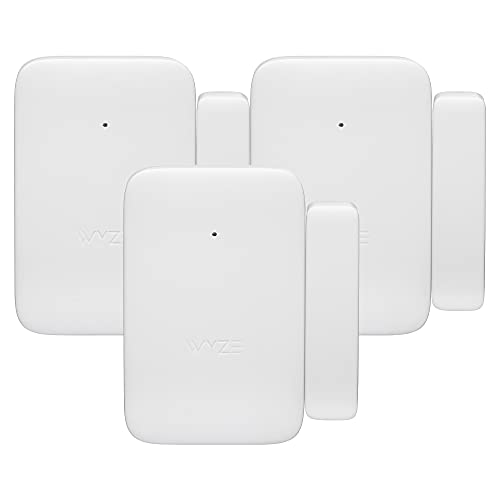
Wyze Sense Hub Starter Kit with Door and Window Sensor
For users who want reliable door sensing without spending much, Wyze delivers a surprisingly capable sensor at a fraction of the cost of premium competitors. The proprietary 915 MHz radio gives it better range through walls than many Zigbee sensors, and the companion app is clean and beginner-friendly. Owners report consistent performance over 12-plus months.
Strengths
- Excellent value with sensors often sold in multipacks at very low per-unit cost
- Strong wall-penetrating range from 915 MHz radio
- Simple app that non-technical users find easy to navigate
Drawbacks
- Requires Wyze Sense Hub or compatible Wyze base station
- Not compatible with third-party ecosystems like HomeKit or SmartThings natively

Sonoff SNZB-04P Zigbee Door and Window Sensor
The SNZB-04P has become a favourite among home automation enthusiasts who run Home Assistant, Zigbee2MQTT, or other open-source platforms. It pairs with virtually any Zigbee coordinator, reports temperature and humidity alongside open and close events, and costs very little per unit when bought in bulk. The added environmental sensing makes it particularly versatile for automations.
Strengths
- Pairs with any Zigbee 3.0 coordinator including Home Assistant Zigbee dongles
- Built-in temperature and humidity sensor adds automation trigger options
- Excellent value, especially when purchased in multipacks
Drawbacks
- Requires a Zigbee coordinator or hub to function
- App experience via eWeLink is basic compared to premium competitors

Ring Alarm Door and Window Contact Sensor (2nd Generation)
If your home security is centred on a Ring Alarm system, this second-generation sensor integrates more deeply than any third-party alternative. It communicates via Z-Wave Plus through the Ring Base Station, pairs in seconds, and triggers Ring Alarm modes, Alexa routines, and Ring camera recordings automatically. Owners rate its reliability and build quality highly.
Strengths
- Seamless native integration with Ring Alarm Base Station and Ring ecosystem
- Z-Wave Plus provides a reliable, low-interference connection
- Triggers camera recordings and Alexa routines without extra configuration
Drawbacks
- Requires Ring Alarm Base Station and an active Ring subscription for full features
- Not compatible with non-Ring or non-Alexa ecosystems
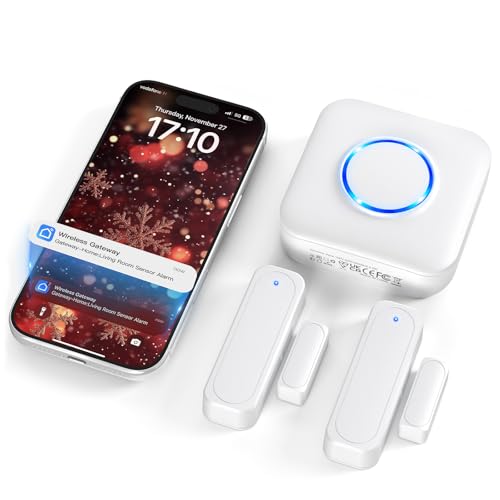
Govee WiFi Door Sensor H5013
The H5013 connects directly to your home WiFi without any hub, making it the lowest-friction setup option in this guide. You download the Govee Home app, connect to WiFi, and alerts start arriving within minutes. Owners highlight the solid push notification speed and the ability to check door status remotely without subscribing to any service.
Strengths
- No hub required; connects directly to 2.4 GHz WiFi
- Free app with no mandatory subscription for basic alerts and history
- Quick setup suitable for complete beginners
Drawbacks
- WiFi connection consumes more battery than Zigbee or Thread alternatives
- Limited third-party ecosystem integration compared to Zigbee or Matter sensors
Buying considerations
Ecosystem Compatibility
This is the single most important factor. A sensor that does not speak your hub's language is useless regardless of its specs. Identify whether you are on HomeKit, Google Home, Alexa, SmartThings, or a self-hosted platform like Home Assistant before choosing a protocol. Matter over Thread sensors offer the broadest compatibility but require a Thread border router. Zigbee and Z-Wave sensors offer excellent reliability but need a compatible hub.
Hub Requirement
Some sensors, like the Govee H5013, connect directly to WiFi and need no hub at all. Others, like the Ring and SmartThings options, require a branded base station. DIY sensors using Zigbee or Z-Wave need a coordinator or hub, which adds upfront cost but typically delivers better long-term performance and flexibility. Be honest about what infrastructure you already have before buying.
Battery Life
WiFi sensors drain batteries fastest, often needing replacements every few months. Zigbee, Z-Wave, and Thread sensors are far more efficient, with the best Thread sensors lasting over two years on a single coin cell. If you are placing sensors on many doors or in hard-to-reach spots, long battery life is not a luxury but a practical necessity.
Form Factor and Mounting
All sensors in this guide use a two-piece magnetic design, but they vary in size and mounting flexibility. Thin door frames, glass sliding doors, and metal doors can all create installation challenges. Check the gap tolerance spec of any sensor before buying. Most include both adhesive tape and screw-mount options, but some adhesive backing is stronger than others per owner reports.
Final word
Choose your ecosystem first and your sensor second: the protocol a sensor uses determines whether it will ever reliably work with your hub, and no amount of positive reviews can fix a fundamental compatibility mismatch.
Questions answered
It depends on the sensor and ecosystem. Thread and Zigbee sensors that run locally through Home Assistant or Apple HomeKit (local processing) will continue to trigger automations and log events without internet. WiFi sensors that rely on cloud servers, like many budget options, will typically stop sending push notifications if your internet goes down, though some cache events locally and sync when connectivity returns.
Most magnetic contact sensors work on metal surfaces, but the metal can sometimes interfere with the magnetic field and cause false readings if the sensor is mounted flat against bare metal. Most manufacturers recommend using a non-conductive spacer or surface mount if attaching directly to metal. Check the product's installation guide for guidance on metal door compatibility before purchasing.
Both are low-power mesh protocols designed for smart home devices. Z-Wave operates at 908 MHz (in the US) and has a mandatory certification process, which tends to produce consistent interoperability between brands. Zigbee operates at 2.4 GHz (the same band as WiFi), is more widely adopted, and typically cheaper, but interoperability between brands varies. Both require a compatible hub. For most users, the choice comes down to which hub they already own.
A practical starting point is one sensor per exterior door and one per ground-floor window if you want perimeter coverage. A typical UK or US terraced or semi-detached home has 2 to 3 exterior doors and 6 to 10 ground-floor windows, putting a full installation at roughly 8 to 13 sensors. Many users start with entry points only and expand gradually once they are comfortable with their hub setup.
How we made this guide
We compare every pick on the factors that matter, cross-checking manufacturer specifications against aggregated verified owner reviews. We rank independently and never take payment for placement. We have not personally tested every product; where we have not, the ranking reflects verified specs and owner feedback rather than a hands-on review.
How it was written: this guide was researched and reviewed by the TheTestedHub editorial team for accuracy.
Affiliate disclosure: TheTestedHub is reader-supported. When you buy through links on our site, we may earn a commission at no extra cost to you.
Keep reading

Elgato Alternatives 2026: AVerMedia & Rode Now Lead

Elgato Key Light: Expert Pick for True Color

Retro Consoles for Every Budget: A Practical Guide

Console Cooling Stands: Forced Air Stability for Long Sessions

Gaming Glasses Compared: Gunnar Intercept and Rivals

Gaming Backpacks 2026: Find Yours by Laptop & Gear Needs

Game Storage Racks Sized for Your Console Cases
