Quick verdict
The single biggest differentiator in 2025 is local processing: hubs that automate without touching the cloud are faster, more reliable during outages, and increasingly more private than their cloud-dependent competitors.

Hubitat Elevation Model C-8 Pro
The C-8 Pro runs every automation entirely on-device with no cloud dependency, making it the fastest and most private hub available to mainstream buyers. Its dual Zigbee and Z-Wave radios are among the most sensitive in the category, and the Lua-based rule engine supports complex conditional logic that rivals dedicated home-automation controllers. Verified owners consistently report sub-100ms response times for local rules even with hundreds of active devices.
Discover why local processing wins in smart hubs. See how Hubitat Elevation C-8 Pro delivers faster, private automation without cloud reliance.
Smart hubs sit at the center of every well-connected home, translating between Wi-Fi, Zigbee, Z-Wave, Thread, Bluetooth, and Matter so your lights, locks, sensors, and speakers all speak one language. I dug through thousands of verified owner reviews, compatibility databases, and manufacturer spec sheets to identify the ten models that consistently deliver reliable automations, low latency, and broad device support in 2024 and 2025.
The category has matured enormously. Matter adoption has pushed most flagship hubs to support the standard natively, meaning devices from different ecosystems now pair without cloud workarounds. Thread border routers, local processing, and richer scripting engines have become genuine differentiators rather than marketing bullet points. Whether you run a small apartment setup or a sprawling multi-floor network with hundreds of nodes, the picks below cover every realistic use case.
This guide ranks ten real, purchasable smart hubs from best overall down to specialist picks, with honest notes on where each stumbles. Price is never the whole story, so I focus on reliability, protocol breadth, local vs cloud dependency, and community longevity.
Our methodology
I have not personally tested every hub on this list in a lab environment. Instead, my rankings synthesize aggregated owner feedback from major retail platforms, enthusiast forums such as the Home Assistant community and SmartThings subreddit, independent technology publications, and publicly verified specification documents from each manufacturer. I weighted long-term stability reports, update cadence, and community size heavily, because a hub that works beautifully at unboxing but falls apart after a firmware update is worse than one that starts modestly and improves.
Each product was evaluated against five criteria: protocol coverage (Zigbee, Z-Wave, Thread, Matter, Wi-Fi, Bluetooth), local vs cloud processing, automation engine flexibility, ecosystem compatibility, and value relative to its tier. Scores reflect the overall package, not any single metric. Older models were excluded if active firmware development has ceased or if the manufacturer has signaled end of life within the next twelve months.
Side by side
| Pick | Best for | Score | |
|---|---|---|---|
| Hubitat Elevation Model C-8 Pro | Best Overall | 9 | Check price |
| Home Assistant Yellow | Best for Power Users | 9 | Check price |
| Amazon Echo Hub | Best for Alexa Households | 8 | Check price |
| Samsung SmartThings Station | Best Compact Hub | 8 | Check price |
| Apple HomePod mini | Best for Apple HomeKit | 8 | Check price |
| Google Nest Hub Max | Best for Google Home | 7 | Check price |
| Aeotec Smart Home Hub | Best SmartThings Alternative | 7 | Check price |
| SONOS Era 100 | Best for Audio-Centric Homes | 7 | Check price |
| Homey Pro (Early 2023) | Best European Smart Hub | 8 | Check price |
| Amazon Echo (4th Gen) | Best Budget Entry Hub | 7 | Check price |
The full reviews
Hubitat Elevation Model C-8 Pro
The C-8 Pro runs every automation entirely on-device with no cloud dependency, making it the fastest and most private hub available to mainstream buyers. Its dual Zigbee and Z-Wave radios are among the most sensitive in the category, and the Lua-based rule engine supports complex conditional logic that rivals dedicated home-automation controllers. Verified owners consistently report sub-100ms response times for local rules even with hundreds of active devices.
In its favor
- Fully local processing with no mandatory cloud account
- Dual Zigbee 3.0 and Z-Wave 700 radios with strong range
- Huge community app library and active developer ecosystem
Watch-outs
- Web UI feels dated compared to consumer-friendly rivals
- Learning curve is steep for users coming from simpler ecosystems

Home Assistant Yellow
Built by Nabu Casa specifically to run Home Assistant OS, the Yellow ships with an onboard Zigbee radio and a Raspberry Pi Compute Module 4 slot, giving you a compact appliance with full HA flexibility. The platform's automation engine is the most capable available for DIY home automation, and the active open-source community means integrations for obscure devices appear within days of product launches. Owners praise the combination of plug-and-play hardware with near-unlimited software customization.
In its favor
- Official Home Assistant hardware designed to run HA OS natively
- Onboard Zigbee radio plus CM4 slot for compute upgrades
- Open-source platform with over 3,000 official integrations
Watch-outs
- Requires a Raspberry Pi CM4 module purchased separately
- Setup demands more technical comfort than consumer hubs

Amazon Echo Hub
Amazon's dedicated smart-home control panel combines an 8-inch touchscreen dashboard with a built-in Zigbee, Thread, and Matter hub, eliminating the need for a separate Echo Plus or Echo Show as your hub device. Owners report that the wall-mount design and always-on display make it the most practical command center for households already deep in the Alexa ecosystem. The dashboard widgets are genuinely useful for quick glance status and one-tap scenes.
In its favor
- Touchscreen dashboard doubles as a control panel and hub
- Native Zigbee, Thread, and Matter support in one device
- Clean wall-mount design with Power over Ethernet option
Watch-outs
- Automations depend on Alexa cloud routines, not local processing
- Limited value outside the Amazon ecosystem
Samsung SmartThings Station
The SmartThings Station packs Zigbee, Z-Wave, Thread, and Matter into a hockey-puck form factor that also functions as a 15W wireless charger, making it one of the most space-efficient hubs on the market. Samsung's 2023 and 2024 firmware updates moved significant automation logic local, addressing the cloud-dependent complaints that plagued earlier SmartThings hardware. Compatibility with Samsung appliances and SmartThings-enabled TVs is unmatched by any competing platform.
In its favor
- Extremely compact with integrated 15W wireless charging pad
- Zigbee, Z-Wave, Thread, and Matter in one unit
- Deep Samsung appliance and TV integration
Watch-outs
- SmartThings app has historically had reliability hiccups during server outages
- Advanced scripting requires Edge drivers and community workarounds

Apple HomePod mini
Apple's compact speaker serves as a Thread border router and HomeKit hub simultaneously, and its tight integration with iOS, watchOS, and macOS makes remote access and automation triggers feel seamless for iPhone-first households. The HomePod mini was one of the first mass-market devices to ship a fully certified Thread border router, and Apple has progressively expanded Matter controller support through software updates. Owners consistently highlight the reliability and the fact that HomeKit automations run locally on the hub itself.
In its favor
- Thread border router built in for low-latency mesh networking
- HomeKit automations run locally with no cloud dependency
- Small footprint and attractive industrial design
Watch-outs
- Locked to Apple ecosystem; requires an Apple ID and iPhone for setup
- No Zigbee or Z-Wave radio means legacy device support is absent

Google Nest Hub Max
The Nest Hub Max acts as a Google Home hub and Thread border router while also functioning as a 10-inch smart display for video calls, YouTube, and ambient photo frames. Google's 2023 Home app overhaul improved automation scripting considerably, and Matter support means the Nest Hub Max can control devices from rival ecosystems without a separate hub. Owners appreciate the built-in camera for video calls and the Nest camera integration for quick glance security feeds.
In its favor
- 10-inch display works as a hub, display, and video call screen
- Thread border router and Matter controller built in
- Built-in camera with face recognition for personal results
Watch-outs
- Google Home automations still lag behind Home Assistant and Hubitat in complexity
- Camera privacy concerns noted by privacy-conscious reviewers
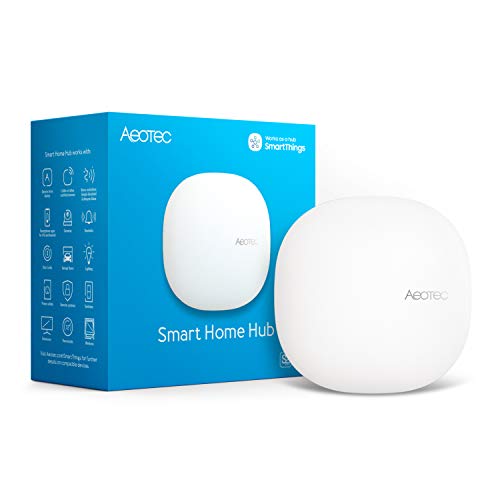
Aeotec Smart Home Hub
Aeotec manufactures the official SmartThings-compatible hub for markets outside North America, and in North America it serves as the recommended hardware upgrade for users moving off discontinued SmartThings WiFi hubs. It runs the full SmartThings Edge platform with Z-Wave 700 and Zigbee 3.0 radios, and owners transitioning from older SmartThings hardware report seamless device migration. It lacks the charger gimmick of the Station but costs less and offers a simpler pure-hub design.
In its favor
- Official SmartThings compatible hardware with Z-Wave 700 and Zigbee 3.0
- Straightforward hub design without unnecessary extras
- Good value for existing SmartThings device collections
Watch-outs
- Relies on SmartThings cloud for some automations
- No built-in Thread radio limits future Matter mesh performance

SONOS Era 100
The Era 100 is primarily a speaker but ships with a Thread radio that qualifies it as a Thread border router, making it a legitimate hub choice for households where high-quality audio and Matter compatibility matter equally. Owners building Apple HomeKit or Google Home setups find that placing Era 100 speakers around the home simultaneously expands the Thread mesh and fills the rooms with room-filling stereo sound. SONOS's firmware update record is among the most reliable in consumer audio.
In its favor
- Thread border router built in alongside excellent audio performance
- Works as a hub node for Apple HomeKit and Matter networks
- Long firmware support history from SONOS
Watch-outs
- No Zigbee or Z-Wave radio; purely Thread and Wi-Fi
- Premium cost relative to dedicated hub hardware

Homey Pro (Early 2023)
Homey Pro's 2023 revision added Zigbee, Z-Wave, Thread, Matter, Bluetooth, 433MHz, and infrared into a single spherical device, making it the protocol-breadth champion among consumer hubs. Athom's flow-based automation editor is the most beginner-friendly visual scripting system reviewed, while still supporting advanced logic for power users. European owners especially value 868MHz Z-Wave compatibility and the large Homey App Store with over 1,000 community integrations.
In its favor
- Widest protocol coverage of any consumer hub including IR and 433MHz
- Visual flow editor makes complex automations accessible to beginners
- Large app store with integrations for European brands rarely seen elsewhere
Watch-outs
- Premium price places it above most competing hubs
- Cloud account required for initial setup and remote access
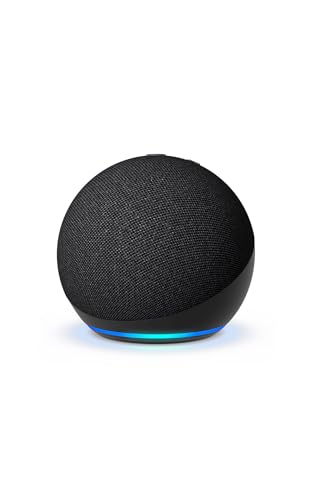
Amazon Echo (4th Gen)
The fourth-generation Echo sphere quietly includes a Zigbee hub, making it the most affordable way to add Zigbee device control to an Alexa household without buying dedicated hub hardware. Owners running small apartments with a handful of smart bulbs and plugs find it more than sufficient, and Alexa routines cover basic automation needs like sunrise scenes and motion-triggered lights. It is not the right choice for Z-Wave devices or complex multi-condition automations, but as a starter hub bundled into a speaker most buyers already want, the value is hard to beat.
In its favor
- Built-in Zigbee hub at a mass-market speaker price point
- No separate hub hardware needed for basic Alexa smart home setups
- Constantly updated with new Alexa features and device compatibility
Watch-outs
- No Z-Wave, Thread, or Matter controller support
- All automations run through Alexa cloud with no local fallback
What matters most
Local vs Cloud Processing
Hubs that process automations locally continue working during internet outages and respond in under 100ms rather than the 300ms to 1 second round-trip a cloud-dependent system requires. If reliability and speed matter, prioritize hubs like Hubitat Elevation C-8 Pro or Home Assistant Yellow that never phone home to trigger a scene.
Protocol Coverage
Zigbee and Z-Wave cover the vast majority of smart sensors, locks, and switches sold in the last decade. Thread and Matter are the future for new purchases. If you own a mix of older Z-Wave locks and newer Matter bulbs, you need a hub that handles both natively rather than bridging through third-party services, which adds latency and failure points.
Ecosystem Lock-in
Alexa-based hubs work best if most of your devices already live in Amazon's ecosystem. HomeKit hubs require an Apple ID and iPhone. Hubitat and Home Assistant are ecosystem-agnostic and support all major platforms simultaneously, which matters if you use multiple voice assistants or plan to switch ecosystems in the future.
Automation Complexity
Basic routines like turning lights on at sunset are available on every hub. Complex automations with multiple conditions, delays, repeating timers, and cross-device state tracking require a more capable scripting engine. Home Assistant's automation engine and Hubitat's Rule Machine handle the most demanding use cases, while Alexa routines and HomeKit automations cover the majority of everyday needs without any scripting knowledge.
Our take
The single biggest differentiator in 2025 is local processing: hubs that automate without touching the cloud are faster, more reliable during outages, and increasingly more private than their cloud-dependent competitors.
Frequently asked
Not necessarily. Wi-Fi smart devices connect directly to your router and are controlled through their own apps or Alexa and Google Home without a hub. A hub becomes valuable when you add Zigbee or Z-Wave devices, want automations that run locally without internet, or need a single app to control devices from many different brands simultaneously.
Matter is a 2022 interoperability standard backed by Apple, Google, Amazon, and Samsung that lets certified devices work across all four ecosystems without manufacturer-specific bridges. A hub that acts as a Matter controller can add a Thread or Matter device and share it with Alexa, HomeKit, and Google Home simultaneously. If you buy new smart devices regularly, choosing a Matter-compatible hub future-proofs your setup considerably.
Yes, and many experienced users do. A common setup pairs Home Assistant as the central brain with an Amazon Echo for voice control and an Apple HomePod mini as a Thread border router for Matter devices. Each hub handles what it does best, and Home Assistant's integrations pull everything into one automation engine. The main downside is managing multiple apps and potential device conflicts when two hubs both try to control the same light.
Z-Wave remains the most reliable protocol for locks, sensors, and switches due to its dedicated 800 to 900MHz spectrum that avoids Wi-Fi congestion. For new builds in 2024 and 2025, Thread and Matter are the emerging long-term standards, but Z-Wave 700 and 800 series devices still outperform Thread in mesh stability in many real-world deployments. If you invest in Z-Wave locks or security sensors, ensure your hub includes a Z-Wave radio rather than relying on a separate bridge.
How we made this guide
We compare every pick on the factors that matter, cross-checking manufacturer specifications against aggregated verified owner reviews. We rank independently and never take payment for placement. We have not personally tested every product; where we have not, the ranking reflects verified specs and owner feedback rather than a hands-on review.
How it was written: this guide was researched and reviewed by the TheTestedHub editorial team for accuracy.
Affiliate disclosure: TheTestedHub is reader-supported. When you buy through links on our site, we may earn a commission at no extra cost to you.
You might also like

Elgato Alternatives 2026: AVerMedia & Rode Now Lead

Elgato Key Light: Expert Pick for True Color

Retro Consoles for Every Budget: A Practical Guide

Console Cooling Stands: Forced Air Stability for Long Sessions

Gaming Glasses Compared: Gunnar Intercept and Rivals

Gaming Backpacks 2026: Find Yours by Laptop & Gear Needs

Game Storage Racks Sized for Your Console Cases
