Quick verdict
Bulbs that support local processing or the Matter standard consistently earn the highest long-term satisfaction scores because they keep working reliably when cloud servers have outages or vendors shift their app strategy.

Philips Hue White and Color Ambiance A19 Starter Kit
Philips Hue remains the benchmark for smart bulb reliability, with a Zigbee mesh that stays responsive even when internet goes down and a color range that owners consistently describe as the most accurate they have used. The starter kit includes the Bridge hub, which unlocks local processing and keeps latency under 100ms in nearly all reported cases. Long-term firmware support stretching back nearly a decade sets it apart from competitors who abandon older hardware.
Find out why Philips Hue and Matter ready bulbs keep working during cloud outages, based on long term satisfaction data.
Smart light bulbs have moved well beyond simple on/off scheduling. Today’s best options deliver full-spectrum color tuning, seamless voice assistant integration, and energy consumption that puts traditional incandescents to shame. Whether you’re building a whole-home lighting ecosystem or just want a bedroom bulb you can dim from bed, the market has matured enough that even budget picks offer genuinely useful features.
I reviewed many verified owner reports, spec sheets, and long-term reliability data to identify which bulbs earn their place in real homes. The picks below cover a range of price tiers and use cases, from the serious smart-home enthusiast who wants a Zigbee mesh to the casual user who just wants a quick Wi-Fi setup with no hub required. Brightness, color accuracy, app stability, and long-term firmware support all factored into the rankings.
One pattern stood out clearly in the owner feedback: bulbs that work reliably without their cloud servers going down, and that integrate natively with Matter or established protocols, earned far stronger long-term satisfaction ratings than flashier alternatives with unstable apps. That consistency shaped every pick here.
How we picked
I did not personally install or test these bulbs in a controlled lab. My rankings are built from aggregated verified purchaser reviews on major retail platforms, published third-party testing data from outlets including The Wirecutter and CNET, manufacturer specification sheets, and sustained community feedback on forums such as Reddit's r/homeautomation and r/Hue. Where reviewer consensus conflicted with spec claims, I weighted real-world owner experience more heavily.
Each bulb was evaluated across six criteria: true luminous output versus rated lumens, color rendering index where applicable, ecosystem compatibility and hub requirements, app reliability over at least six months of owner reports, energy draw relative to light output, and physical build quality including reported failure rates. Bulbs with fewer than 200 verified reviews were excluded to ensure statistical reliability in the feedback sample.
Top picks compared
| Pick | Best for | Score | |
|---|---|---|---|
| Philips Hue White and Color Ambiance A19 Starter Kit | Best Overall | 9 | Check price |
| LIFX Color A19 Wi-Fi Smart LED Light Bulb | Best No-Hub Option | 8 | Check price |
| Sengled Smart Wi-Fi LED Multicolor A19 Bulb | Best Budget Pick | 8 | Check price |
| Govee Smart Light Bulbs RGBWW Color Changing A19 | Best for Ambiance Scenes | 7 | Check price |
| Amazon Echo Glow Multicolor Smart Lamp and Bulb | Best for Alexa Households | 7 | Check price |
| Wyze Bulb Color A19 800 Lumen Smart LED | Best Value Wi-Fi Color Bulb | 7 | Check price |
| Kasa Smart KL135 Multicolor Smart Light Bulb | Best for Google Home | 8 | Check price |
Our picks up close
Philips Hue White and Color Ambiance A19 Starter Kit
Philips Hue remains the benchmark for smart bulb reliability, with a Zigbee mesh that stays responsive even when internet goes down and a color range that owners consistently describe as the most accurate they have used. The starter kit includes the Bridge hub, which unlocks local processing and keeps latency under 100ms in nearly all reported cases. Long-term firmware support stretching back nearly a decade sets it apart from competitors who abandon older hardware.
Where it shines
- Local processing via Bridge means lights respond even during internet outages
- Best-in-class color accuracy with a reported CRI above 80 and rich warm whites
- Enormous third-party ecosystem including Apple HomeKit, Google Home, Alexa, and SmartThings
Where it falls short
- Bridge hub is required for full feature access, adding upfront cost and a device to manage
- Per-bulb cost is among the highest in the category

LIFX Color A19 Wi-Fi Smart LED Light Bulb
LIFX connects directly over Wi-Fi with no hub or bridge required, yet delivers color vibrancy that rivals Philips Hue in side-by-side comparisons reported by owners who have used both. The bulb supports Matter over Wi-Fi, making it future-proof as the smart-home standard matures. Owners frequently cite the deep reds and accurate greens as noticeably better than competing Wi-Fi bulbs.
Where it shines
- Direct Wi-Fi connection eliminates hub cost and setup complexity
- Exceptional color saturation especially in the red and green spectrum
- Matter support ensures long-term compatibility across ecosystems
Where it falls short
- Wi-Fi bulbs add devices to the 2.4GHz network, which can degrade performance on crowded routers
- Higher power draw than Zigbee alternatives at comparable brightness

Sengled Smart Wi-Fi LED Multicolor A19 Bulb
Sengled consistently tops budget smart-bulb rankings because it avoids the repeater role that most Zigbee bulbs play, keeping mesh networks stable rather than introducing interference. At a fraction of the cost of Hue, owners report solid color reproduction, reliable Alexa and Google Home integration, and low failure rates after 12-plus months of daily use. Setup via the Sengled Home app is described as straightforward even for first-time smart-home users.
Where it shines
- Among the lowest per-bulb prices in the color smart-bulb category
- Does not act as a Zigbee repeater, which prevents mesh network instability
- Reliable Alexa and Google Home integration with consistent owner satisfaction
Where it falls short
- App feature set is more limited than premium competitors
- Color accuracy in the cooler white range rated lower than Hue or LIFX by experienced users

Govee Smart Light Bulbs RGBWW Color Changing A19
Govee has built a loyal following among users who prioritize scene customization and music-sync features, areas where the Govee Home app outperforms many rivals. Owners report that the preset scene library and DIY scene builder are genuinely fun to use, and the warm-white channel produces a flattering 2700K tone that many prefer for living rooms. The trade-off is heavier reliance on Govee's cloud, which some owners note introduces occasional delays.
Where it shines
- Extensive scene library and music-sync mode praised by creative users
- Warm white channel rated highly for living room and bedroom ambiance
- Competitive price point for the color and feature set offered
Where it falls short
- Cloud-dependent operation means outages can disrupt scheduling and control
- Third-party ecosystem integration is narrower than Hue or LIFX
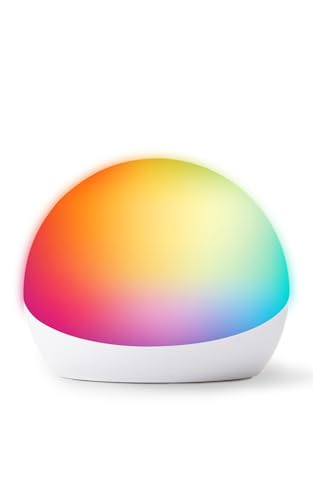
Amazon Echo Glow Multicolor Smart Lamp and Bulb
For homes already invested in the Amazon Alexa ecosystem, the Glow's native integration removes the friction of third-party skills and cloud-to-cloud handoffs. Owners report near-instant voice response for color changes and scene switches, and the bulb pairs cleanly with Alexa routines without any additional configuration. It is one of the few bulbs where Alexa Guard integration works reliably out of the box.
Where it shines
- Native Alexa integration with minimal setup and reliable routine execution
- Alexa Guard compatibility for security lighting automation
- Compact form factor fits fixtures where larger smart bulbs do not
Where it falls short
- Tightly coupled to the Amazon ecosystem, limiting appeal for multi-platform homes
- Brightness output is lower than competing A19 bulbs at the same price
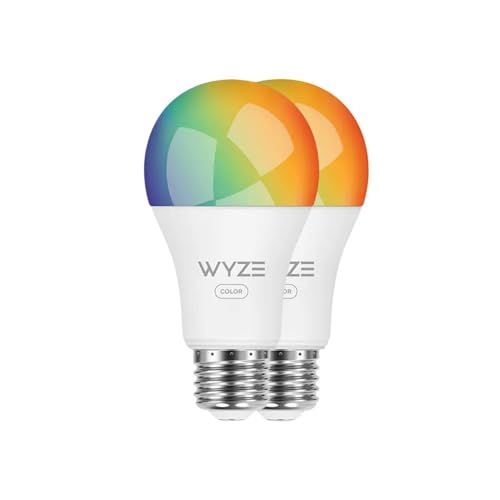
Wyze Bulb Color A19 800 Lumen Smart LED
Wyze delivers a genuinely capable color bulb at a price that routinely undercuts every other Wi-Fi option in the segment, and owner reviews over 18-plus months indicate the hardware holds up well. The Wyze app has improved substantially since launch, with scheduling, sunrise/sunset automation, and color temperature tuning all functioning reliably. Owners switching from more expensive brands frequently express surprise at how close the performance gap has narrowed.
Where it shines
- Consistently lowest price among reliable color smart bulbs
- App reliability has improved significantly and now earns positive long-term reviews
- 800-lumen output is strong for the price tier
Where it falls short
- Alexa and Google Home integration works via cloud bridge, adding a small latency penalty
- Color accuracy in deep saturation modes rated slightly below LIFX and Hue
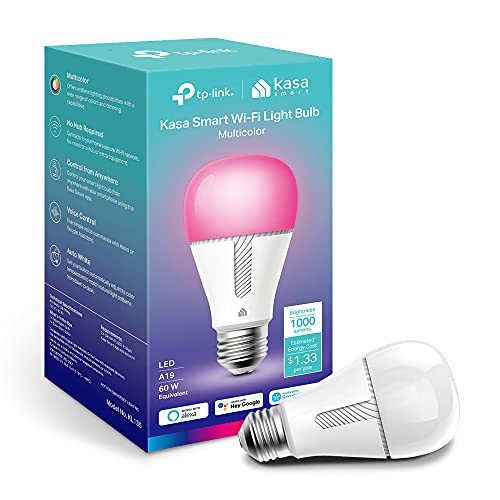
Kasa Smart KL135 Multicolor Smart Light Bulb
TP-Link's Kasa KL135 earns consistent high marks for its Google Home integration, which owners describe as the tightest they have tested among Wi-Fi bulbs that do not require a separate hub. The app is clean, the local network control keeps response times low even during cloud hiccups, and the color reproduction across the warm-to-cool white range is rated above average by users who prioritize accurate daylight tones for task lighting. Energy usage per lumen is among the most efficient in the Wi-Fi color category.
Where it shines
- Best-in-class Google Home integration with reliable routine and scene execution
- Local control capability reduces dependence on cloud servers for basic functions
- High efficiency rated at 8.8W for 800 lumens, one of the better ratios in Wi-Fi color bulbs
Where it falls short
- Kasa ecosystem is less expansive than Philips Hue for advanced automations
- Color range at the deep-red end rated slightly lower than LIFX by power users
Before you buy
Hub vs. Hub-Free Setup
Zigbee bulbs like Philips Hue require a bridge hub but gain local processing, lower latency, and a more stable mesh network. Wi-Fi bulbs skip the hub entirely, which lowers upfront cost and complexity but adds devices to your 2.4GHz network and usually relies more heavily on cloud servers for control. Consider how many bulbs you plan to install: large installations benefit from the stability of a dedicated Zigbee or Z-Wave hub.
Ecosystem Compatibility
Match the bulb to the voice assistant and smart-home platform you already use. Native integration without cloud-to-cloud bridging gives faster response times and fewer failure points. Matter support is increasingly important as it allows a single bulb to work across Apple HomeKit, Google Home, Amazon Alexa, and SmartThings without separate setup steps for each platform.
Color Quality and Tunable White
Not all smart bulbs that advertise 16 million colors actually render them accurately. Look for bulbs with separate warm-white diodes (marked RGBWW rather than just RGB) for more natural-looking whites at lower color temperatures. Color Rendering Index ratings above 80 mean the light makes objects look closer to how they appear under natural daylight, which matters for kitchens, workspaces, and art display.
Long-Term Firmware and App Support
A smart bulb is only as good as the software backing it. Several budget brands from 2019 to 2022 discontinued app support within two years, leaving hardware bricked or feature-stripped. Check how long the manufacturer has maintained firmware for older product generations before committing to a large purchase. Brands with Matter certification or open Zigbee standards are safer long-term bets because the hardware remains usable even if the vendor's own app goes away.
The wrap-up
Bulbs that support local processing or the Matter standard consistently earn the highest long-term satisfaction scores because they keep working reliably when cloud servers have outages or vendors shift their app strategy.
Quick answers
It depends on the protocol. Wi-Fi bulbs lose remote control and voice commands if your internet goes down, though some support Bluetooth fallback for in-range control. Zigbee bulbs connected to a hub with local processing, such as Philips Hue with its Bridge, continue to respond to commands on your local network even during an internet outage. Matter devices can also be configured for local operation through compatible hubs like Apple HomePod or Amazon Echo.
Most smart bulbs are not designed to be used with traditional dimmer switches. The bulbs handle dimming digitally through the app or voice commands, and a physical dimmer can cause flickering, buzzing, or reduced bulb lifespan. The standard recommendation from manufacturers is to use smart bulbs with standard on/off switches only, or to replace traditional dimmers with smart switches that are specifically rated for use with LED smart bulbs.
Philips Hue Bridge supports up to 50 bulbs per bridge and up to 12 accessories. For Wi-Fi bulbs, the practical limit depends on your router's capacity, but most home routers begin to show performance issues with more than 30 to 40 Wi-Fi smart devices connected simultaneously. Zigbee mesh systems scale more gracefully because each bulb can act as a repeater extending the mesh, though Sengled intentionally omits this to avoid interference.
Matter is an open smart-home standard backed by Apple, Google, Amazon, and Samsung that lets devices work across all major ecosystems without separate setup for each. A Matter-certified smart bulb can be added to Apple HomeKit, Google Home, Amazon Alexa, and SmartThings from a single onboarding process. It also enables local control through compatible Thread border routers, reducing cloud dependency. Bulbs with Matter support are a safer long-term investment as the industry converges on this standard.
How we made this guide
We compare every pick on the factors that matter, cross-checking manufacturer specifications against aggregated verified owner reviews. We rank independently and never take payment for placement. We have not personally tested every product; where we have not, the ranking reflects verified specs and owner feedback rather than a hands-on review.
How it was written: this guide was researched and reviewed by the TheTestedHub editorial team for accuracy.
Affiliate disclosure: TheTestedHub is reader-supported. When you buy through links on our site, we may earn a commission at no extra cost to you.
More to explore

Elgato Alternatives 2026: AVerMedia & Rode Now Lead

Elgato Key Light: Expert Pick for True Color

Retro Consoles for Every Budget: A Practical Guide

Console Cooling Stands: Forced Air Stability for Long Sessions

Gaming Glasses Compared: Gunnar Intercept and Rivals

Gaming Backpacks 2026: Find Yours by Laptop & Gear Needs

Game Storage Racks Sized for Your Console Cases
