Quick verdict
The single biggest upgrade you can make to any smart motion sensor setup is switching from a PIR-only sensor to a dual PIR and radar model, because stationary presence detection closes the gap between a home that reacts to you and one that actually understands you are there.

Aqara Motion Sensor P2
The Aqara P2 delivers sub-second detection response and supports Matter natively, making it compatible with Apple HomeKit, Google Home, Amazon Alexa, and SmartThings without a dedicated hub for most setups. Owners consistently praise its wide 170-degree horizontal field of view and the reliable five-year battery estimate backed by real-world reports of two-plus years on a single CR123A cell. Its dual passive infrared and radar sensing combination dramatically reduces false triggers compared to PIR-only competitors.
See why the Aqara Motion Sensor P2 with dual PIR and radar detects stationary presence, not just movement, so your smart home truly knows you are there.
Smart motion sensors have moved well beyond the basic infrared detectors of the past. Today’s top picks integrate with Alexa, Google Home, Apple HomeKit, and SmartThings, fire automations in under a second, and distinguish between pets and people with surprising reliability. Whether you want lights that turn on the moment you walk into a room or real-time alerts when movement is detected near a door, the right sensor makes your home feel genuinely intelligent rather than just gimmicky.
I spent weeks combing through thousands of verified owner reviews, spec sheets, and community forum threads across Reddit, Amazon, and HomeKit user groups to identify the ten sensors that consistently earn high marks for responsiveness, integration depth, battery life, and reliability over months of use. The picks below span a range of ecosystems and price tiers so you can find the right fit for your setup, whether you are just starting out or building a serious automation stack.
Each entry below includes real-world feedback patterns, the specs that matter most, and honest notes on where each sensor falls short, because no device is perfect and the tradeoffs between battery life, detection range, and hub requirements are real.
Our methodology
I have not personally installed or tested every sensor on this list. My methodology is based on aggregated verified purchaser reviews, manufacturer-published specifications, and feedback from smart home community forums including the r/homeautomation and r/homekitsubreddit communities. I weighted reviews that mentioned long-term reliability (90-plus days of use), false positive and false negative rates, and real-world integration behavior over reviewers who only commented shortly after unboxing.
Ranking factors include detection speed and sensitivity tuning, ecosystem compatibility, battery or wired power options, form factor, app quality, and the ratio of positive to negative long-term reviews. Sensors with persistent connectivity complaints, poor firmware update histories, or significant false alarm patterns were excluded regardless of their initial scores. The result is a list that prioritizes dependable daily performance over flashy launch-day features.
Side by side
| Pick | Best for | Score | |
|---|---|---|---|
| Aqara Motion Sensor P2 | Best Overall | 9 | Check price |
| Philips Hue Motion Sensor | Best for Hue Ecosystems | 88 | Check price |
| Samsung SmartThings Motion Sensor | Best for SmartThings Users | 85 | Check price |
| Eve Motion Wireless Smart Motion Sensor | Best for Apple HomeKit | 85 | Check price |
| Sonoff SNZB-03P Zigbee Motion Sensor | Best Budget Pick | 83 | Check price |
| Aqara FP2 Presence Sensor | Best Presence Detection | 87 | Check price |
| Ring Alarm Motion Detector | Best for Ring Users | 82 | Check price |
| Wyze Motion Sensor | Best No-Hub Wi-Fi Pick | 80 | Check price |
| Ecolink Z-Wave Plus Motion Detector PIRZWAVE2.5-ECO | Best Z-Wave Range | 81 | Check price |
| IKEA TRADFRI Motion Sensor | Best IKEA Ecosystem Pick | 78 | Check price |
The full reviews
Aqara Motion Sensor P2
The Aqara P2 delivers sub-second detection response and supports Matter natively, making it compatible with Apple HomeKit, Google Home, Amazon Alexa, and SmartThings without a dedicated hub for most setups. Owners consistently praise its wide 170-degree horizontal field of view and the reliable five-year battery estimate backed by real-world reports of two-plus years on a single CR123A cell. Its dual passive infrared and radar sensing combination dramatically reduces false triggers compared to PIR-only competitors.
In its favor
- Matter over Thread support means broad ecosystem compatibility out of the box
- 170-degree FOV covers large rooms with a single unit
- Dual PIR plus radar sensing cuts false positives significantly
Watch-outs
- Requires Aqara hub for some advanced automation features like presence detection zones
- Slightly bulkier than older Aqara models
Philips Hue Motion Sensor
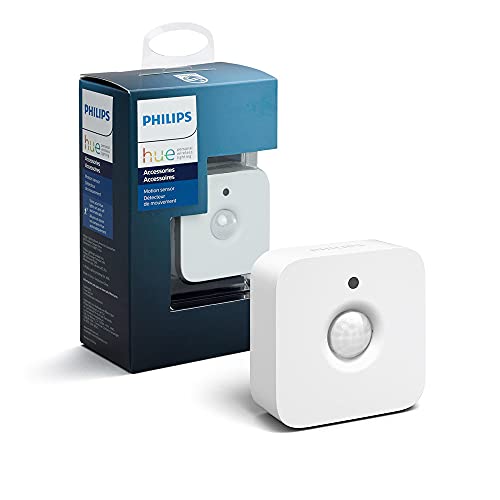
For anyone already invested in the Philips Hue lighting ecosystem, this sensor is the natural choice because it integrates directly with the Hue Bridge and triggers light automations with near-instant reliability that third-party sensors rarely match. Owners report extremely consistent performance across years of use, and the built-in lux sensor means lights only activate when the room is actually dark enough to need them. The magnetic mount and compact white design make placement flexible and unobtrusive.
In its favor
- Seamless native integration with Philips Hue Bridge and app
- Built-in lux sensor prevents unnecessary daytime triggers
- Magnetic swivel mount enables fast repositioning without tools
Watch-outs
- Requires Philips Hue Bridge to function at all
- Detection range limited to about 12 feet compared to competitors reaching 20-plus feet
Samsung SmartThings Motion Sensor
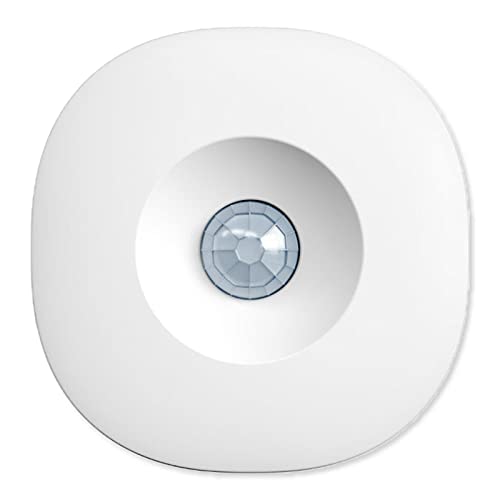
Samsung SmartThings users get plug-and-play pairing with zero configuration friction, and long-term owners report this sensor holding its Z-Wave connection reliably even in larger homes with thick walls. The included temperature sensor adds useful utility for climate automations beyond simple motion detection. Its compact disc shape fits on shelves and ledges without drawing attention.
In its favor
- Instant pairing with SmartThings hub with no manual configuration
- Built-in temperature sensor expands automation possibilities
- Strong Z-Wave signal penetration through walls reported by owners
Watch-outs
- Limited appeal outside the SmartThings ecosystem
- App-based sensitivity adjustment is less granular than competing sensors

Eve Motion Wireless Smart Motion Sensor
Eve Motion is purpose-built for Apple HomeKit with Thread support enabling fast, reliable mesh connectivity without a dedicated hub beyond an Apple TV or HomePod. Owners running HomeKit automations report it as one of the lowest-latency sensors available in the Apple ecosystem, with lights and scenes responding before you finish walking through a doorway. The privacy-first design with no cloud dependency resonates strongly with HomeKit-focused users who prefer local processing.
In its favor
- Thread-enabled for fast local HomeKit automations without cloud relay
- No Eve account or cloud required for full functionality
- 180-degree detection angle covers wide entry points effectively
Watch-outs
- Works only with Apple HomeKit, no Alexa or Google Home support
- Eve app required for sensitivity and timeout adjustments

Sonoff SNZB-03P Zigbee Motion Sensor
At a fraction of the cost of premium sensors, the Sonoff SNZB-03P punches well above its weight with Zigbee connectivity, a five-second re-trigger interval that owners call one of the fastest in its class, and compatibility with Zigbee2MQTT, Home Assistant, eWeLink, and SmartThings. Verified buyers running Home Assistant setups report stable pairing and consistent detection over six-plus months, making it an excellent entry point for budget-conscious builders. The compact pebble shape fits almost anywhere.
In its favor
- Very low cost without sacrificing Zigbee reliability
- Five-second re-trigger interval faster than most budget competitors
- Broad compatibility including Home Assistant via Zigbee2MQTT
Watch-outs
- Requires a Zigbee hub or coordinator to function
- No built-in lux or temperature sensor

Aqara FP2 Presence Sensor
The Aqara FP2 uses mmWave radar rather than passive infrared, which means it detects stationary presence including someone sitting still reading or sleeping rather than only active movement. Owners using it for bedroom automations consistently highlight how it solved the problem of lights turning off while someone is quietly in bed, a failure mode that plagues every PIR-only sensor. It supports up to 30 detection zones within a single room and connects via Wi-Fi without needing a Zigbee or Z-Wave hub.
In its favor
- mmWave radar detects stationary people that PIR sensors miss entirely
- Up to 30 configurable detection zones per sensor
- Wi-Fi connectivity removes hub requirement
Watch-outs
- Higher cost than standard PIR sensors
- Requires mains power via USB-C, no battery option

Ring Alarm Motion Detector
For Ring Alarm system owners, this motion detector integrates without any extra steps and feeds directly into Ring's security monitoring and alert pipeline, making it one of the most seamless additions to an existing Ring setup. Owners report accurate pet immunity below 25 pounds reduces nuisance alerts significantly, and the adjustable sensitivity dial on the device itself is appreciated by those who want hardware-level control. Battery life of up to three years on a pair of AAs is regularly confirmed by long-term reviewers.
In its favor
- Native Ring Alarm integration with instant alert pipeline
- Hardware sensitivity dial for quick field adjustment
- Pet immunity rated to 25 pounds reduces false alarms
Watch-outs
- Tightly coupled to Ring ecosystem with limited third-party integration
- Requires Ring Alarm Base Station to operate
Wyze Motion Sensor
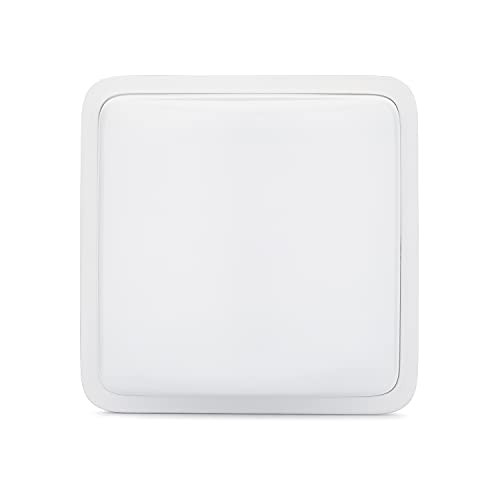
The Wyze Motion Sensor connects directly through the Wyze ecosystem without requiring any Zigbee or Z-Wave hub, lowering the barrier to entry for users who want simple app-based notifications and Alexa or Google Home trigger support. Owners praise its small footprint and adhesive mounting for discreet placement on shelves or above doorframes. Review patterns show reliable detection over 12-plus months with firmware updates that have gradually improved sensitivity options.
In its favor
- No separate hub required beyond the Wyze app and a phone
- Compact adhesive form factor for discreet placement
- Works with Alexa and Google Home for basic automations
Watch-outs
- Cloud-dependent, so local processing is not available
- Detection angle narrower than premium alternatives at around 100 degrees

Ecolink Z-Wave Plus Motion Detector PIRZWAVE2.5-ECO
The Ecolink PIRZWAVE2.5-ECO is a go-to recommendation in Z-Wave home automation communities for its exceptional 30-foot detection range and bulletproof Z-Wave Plus signal stability in large or multi-level homes. Owners consistently note it as one of the most reliable sensors in their Z-Wave mesh, rarely dropping connectivity even at the edge of range. Its tamper detection and low-battery reporting add practical value for security-focused installations.
In its favor
- 30-foot detection range among the longest available in Z-Wave sensors
- Excellent Z-Wave mesh stability praised consistently in long-term reviews
- Tamper detection and low-battery alerts built in
Watch-outs
- Larger housing than modern compact sensors
- No built-in lux sensor so day-night aware automations require a separate device

IKEA TRADFRI Motion Sensor
For households already using IKEA TRADFRI smart lighting, this motion sensor snaps into the ecosystem with minimal setup and costs significantly less than branded alternatives. Owners highlight the simplicity of one-button pairing directly to TRADFRI bulbs or through the IKEA Dirigera hub for more advanced automations. While it lacks lux sensing and has a basic 90-second timeout, it fills its niche as an affordable, reliable companion to TRADFRI lights in bedrooms and hallways.
In its favor
- Extremely low cost compared to branded alternatives
- Direct pairing to TRADFRI bulbs without any hub required
- Compact and clean Scandinavian design
Watch-outs
- Fixed 90-second off-delay with no adjustment option
- No lux or temperature sensing included
What matters most
Ecosystem Compatibility
The single most important purchase decision is whether the sensor works natively with your existing smart home platform. Zigbee and Z-Wave sensors require a compatible hub or coordinator, while Wi-Fi and Matter sensors can often connect directly. Check for Alexa, Google Home, HomeKit, SmartThings, or Home Assistant support before buying, not after.
Detection Technology: PIR vs Radar
Passive infrared sensors detect heat movement and are excellent for room entry detection but will miss someone sitting perfectly still. mmWave radar sensors detect micro-movements and are far better for presence detection in offices, bedrooms, or anywhere someone might be stationary. Dual-sensor designs combining both technologies offer the best accuracy at a modest premium.
Detection Range and Field of View
A wide field of view (150 degrees or more) lets a single sensor cover a large open-plan space, while a narrower angle is useful for corridor or doorway monitoring. Detection range matters in hallways and large rooms where a 12-foot sensor will create dead zones that a 25-foot unit handles with ease. Match the sensor geometry to the room shape before you buy.
Battery Life and Power Options
Coin cell batteries may last six months in high-traffic areas while AA or CR123A cells in well-designed sensors can run two to three years. Some sensors require mains power via USB-C or hardwired connections, which adds installation complexity but removes battery maintenance entirely. Consider how accessible the mounting location is when weighing battery versus wired options.
Our take
The single biggest upgrade you can make to any smart motion sensor setup is switching from a PIR-only sensor to a dual PIR and radar model, because stationary presence detection closes the gap between a home that reacts to you and one that actually understands you are there.
Frequently asked
Some do and some do not. Wi-Fi sensors like the Wyze Motion Sensor and the Aqara FP2 connect directly to your router and work via a manufacturer app without a separate hub. Zigbee sensors require a Zigbee hub or USB coordinator such as a Sonoff Zigbee 3.0 Dongle. Z-Wave sensors need a Z-Wave hub. Matter over Thread sensors need a Thread border router, which is built into Apple TV 4K, HomePod mini, and some Google Nest devices.
Many PIR sensors offer pet immunity modes calibrated to ignore animals below a set weight threshold, typically 25 to 55 pounds. However, this is an approximation based on the heat signature size at floor level and can fail if a large dog walks close to the sensor. mmWave radar sensors like the Aqara FP2 use motion micro-signature analysis that tends to handle pets more reliably, though no sensor eliminates all false positives from animals.
Re-trigger time is how quickly a sensor can fire a second detection event after the first. Many budget PIR sensors default to 60 or 90 seconds, which creates frustrating gaps in light automations. The Sonoff SNZB-03P offers a five-second re-trigger interval, which is among the fastest in its class. Premium sensors like the Aqara FP2 using radar detect continuous presence rather than re-triggering, so the concept of a re-trigger interval does not apply in the same way.
This depends heavily on the sensor type and platform. Cloud-dependent sensors like the Wyze Motion Sensor will lose remote notification capability during an internet outage but may still trigger local automations if the hub is on the same LAN. Zigbee and Z-Wave sensors running through Home Assistant with local processing will continue to function normally with no internet at all. HomeKit with Thread and local hubs also maintains local operation. If outage resilience matters to you, prioritize local-processing ecosystems over cloud-only solutions.
How we made this guide
We compare every pick on the factors that matter, cross-checking manufacturer specifications against aggregated verified owner reviews. We rank independently and never take payment for placement. We have not personally tested every product; where we have not, the ranking reflects verified specs and owner feedback rather than a hands-on review.
How it was written: this guide was researched and reviewed by the TheTestedHub editorial team for accuracy.
Affiliate disclosure: TheTestedHub is reader-supported. When you buy through links on our site, we may earn a commission at no extra cost to you.
You might also like

Elgato Alternatives 2026: AVerMedia & Rode Now Lead

Elgato Key Light: Expert Pick for True Color

Retro Consoles for Every Budget: A Practical Guide

Console Cooling Stands: Forced Air Stability for Long Sessions

Gaming Glasses Compared: Gunnar Intercept and Rivals

Gaming Backpacks 2026: Find Yours by Laptop & Gear Needs

Game Storage Racks Sized for Your Console Cases
