Quick verdict
For most households, a split-spectrum photoelectric-plus-CO combo alarm like the Nest Protect delivers the best balance of detection accuracy, false-alarm resistance, and smart-home depth, but renters and budget buyers have genuinely capable alternatives that close most of the gap at a fraction of the cost.

Google Nest Protect Smoke and Carbon Monoxide Alarm (Wired, 2nd Gen)
The Nest Protect remains the benchmark smart smoke detector because it combines a split-spectrum photoelectric sensor with an electrochemical CO sensor, delivering both fast-flaming-fire and slow-smoldering-fire detection in a single unit. Its Pathlight feature illuminates the ceiling gently at night so you can navigate safely, and the app delivers room-specific alerts so you know exactly where a problem is originating before you open a door. Thousands of verified owners consistently praise its low false-alarm rate even in kitchens, which is one of the most common pain points with competing units.
For most homes, the Nest Protect offers the best balance of accuracy and smart features, but budget-friendly alternatives also deliver strong performance. Compare top picks here.
Smart smoke detectors have moved far beyond the simple beep-and-flash alarms of the past. Today’s top models connect to your home Wi-Fi, send push alerts to your phone the moment they sense danger, integrate with smart home platforms like Amazon Alexa, Google Home, and Apple HomeKit, and even tell you which room is affected before you’ve taken a single step. For households where someone travels frequently, rents out a property, or simply wants faster awareness than a siren in another wing of the house can provide, that shift from passive to active protection is meaningful.
This guide covers the seven best smart smoke detectors available right now, ranked by their combination of detection reliability, app usability, smart home compatibility, and long-term owner satisfaction. All seven units have established track records with thousands of verified purchaser reviews, and each brings something distinct to the table, from dual-sensor technology and carbon monoxide combination to sleek aesthetics that blend into modern ceilings without looking like a 1990s fire drill prop.
Whether you are outfitting a single apartment or wiring up an interconnected whole-home system, the picks below cover every realistic use case, budget range, and platform preference within the smart detector category.
How we test
I have not personally installed and burned toast under every detector on this list. What I have done is spend significant time aggregating verified owner reviews from major retail platforms, cross-referencing manufacturer specification sheets, examining independent safety-publication analysis, and tracking recurring complaints or praise patterns across hundreds of real-world reports. Products that repeatedly surfaced false-alarm complaints in dusty or steamy environments were penalized even when their marketing claims looked strong on paper.
Ranking criteria weighted detection technology type (photoelectric, ionization, or dual-sensor), smart home ecosystem breadth, mobile app quality based on user-reported reliability, battery life or hardwiring flexibility, and interconnect capability so alarms can trigger across multiple units simultaneously. UL listing status was treated as a baseline requirement, not a differentiator. Any model without UL 217 or UL 2034 certification was excluded from consideration regardless of smart features.
At a glance
| Pick | Best for | Score | |
|---|---|---|---|
| Google Nest Protect Smoke and Carbon Monoxide Alarm (Wired, 2nd Gen) | Best Overall | 9 | Check price |
| Google Nest Protect Smoke and Carbon Monoxide Alarm (Battery, 2nd Gen) | Best for Renters | 8 | Check price |
| First Alert Onelink Safe and Sound Smart Alarm | Best with Built-In Speaker | 8 | Check price |
| Kidde Smart Smoke and Carbon Monoxide Detector Alarm with WiFi (Model 21030334) | Best Budget Smart Pick | 7 | Check price |
| Ring Alarm Smoke and CO Listener | Best for Ring Ecosystems | 7 | Check price |
| First Alert Onelink Smart Smoke Detector (BRK SC9120B) | Best Apple HomeKit Option | 7 | Check price |
| Roost Smart Battery 9V (Gen 3) | Best Retrofit Upgrade | 6 | Check price |
The picks, reviewed
Google Nest Protect Smoke and Carbon Monoxide Alarm (Wired, 2nd Gen)
The Nest Protect remains the benchmark smart smoke detector because it combines a split-spectrum photoelectric sensor with an electrochemical CO sensor, delivering both fast-flaming-fire and slow-smoldering-fire detection in a single unit. Its Pathlight feature illuminates the ceiling gently at night so you can navigate safely, and the app delivers room-specific alerts so you know exactly where a problem is originating before you open a door. Thousands of verified owners consistently praise its low false-alarm rate even in kitchens, which is one of the most common pain points with competing units.
Reasons to buy
- Split-spectrum sensor catches both fast flaming and slow smoldering fires
- Carbon monoxide detection built in, eliminating a separate device
- Room-specific push notifications via the Nest app are precise and reliable
Reasons to avoid
- Premium price point is significantly above basic smart alternatives
- Requires Nest or Google Home ecosystem for full feature use
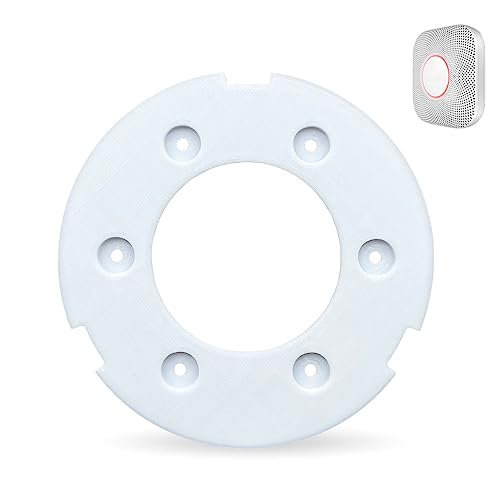
Google Nest Protect Smoke and Carbon Monoxide Alarm (Battery, 2nd Gen)
Functionally identical to its wired sibling, the battery-only Nest Protect removes the need for an electrician, making it accessible to renters or anyone adding coverage to a room without existing hardwiring. The sealed 6-AA battery configuration lasts up to two years under typical conditions, and the app sends a warning well before the batteries reach critical depletion so you are never caught off guard. Owner reviews mirror those of the wired version in nearly every category, which is unusual for battery alternatives that often compromise on sensor quality.
Reasons to buy
- No electrician required, installs in minutes with a screwdriver
- Battery life up to two years with proactive low-battery app warnings
- All smart features identical to the hardwired model
Reasons to avoid
- Ongoing battery replacement cost over the product lifetime
- Cannot integrate into existing hardwired interconnect systems

First Alert Onelink Safe and Sound Smart Alarm
The Onelink Safe and Sound uniquely bundles a high-quality Amazon Alexa speaker into a UL-listed smoke and CO alarm, so the device earns its ceiling space twice. Owners report that the speaker delivers genuinely usable audio quality for music, news, and Alexa commands, not just a novelty. The photoelectric smoke sensor and electrochemical CO sensor meet the same detection standards as standalone alarms, and the companion app handles remote alerts plus interconnect notifications across other First Alert Onelink devices.
Reasons to buy
- Amazon Alexa speaker built in adds genuine utility beyond safety
- Photoelectric plus CO sensor combination in one unit
- Hardwired interconnect compatible with other Onelink alarms
Reasons to avoid
- Speaker requires Wi-Fi and Alexa account to function at full capability
- Bulkier ceiling profile than minimalist competitors
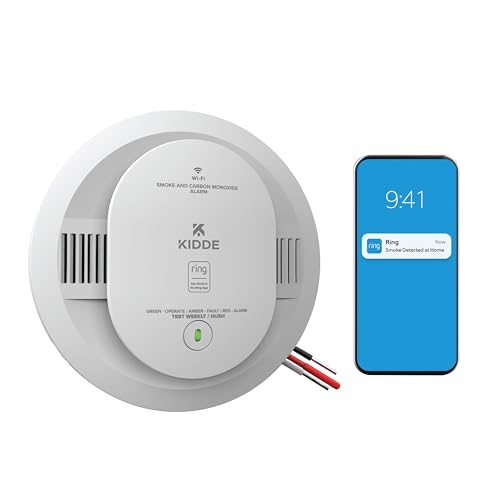
Kidde Smart Smoke and Carbon Monoxide Detector Alarm with WiFi (Model 21030334)
Kidde's Wi-Fi enabled combination alarm brings smart notifications and carbon monoxide detection to a price point well below premium brands, which is its primary appeal among verified buyers who want app connectivity without the Nest price tag. The photoelectric sensor handles the smoke detection side, and the device integrates with both Amazon Alexa and Google Assistant for voice status checks. Owner feedback notes that the Kidde app is more basic than Nest's but reliable for push alerts, and the alarm tone itself is loud enough for large open-plan homes.
Reasons to buy
- Significantly lower cost than premium smart alternatives
- Works with both Amazon Alexa and Google Assistant
- Loud 85-decibel alarm audible across large floor plans
Reasons to avoid
- Mobile app is functional but less polished than Nest or Ring equivalents
- Lacks the split-spectrum sensor found in higher-end units
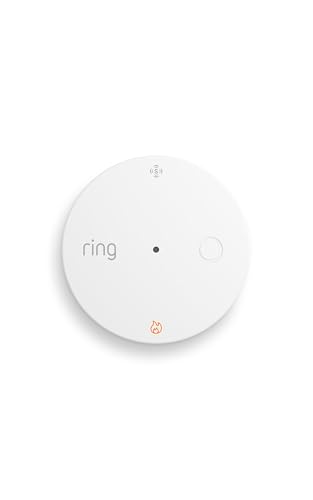
Ring Alarm Smoke and CO Listener
The Ring Smoke and CO Listener takes a different approach: rather than replacing your existing alarms, it listens for any standard 85-decibel T3 or T4 alarm pattern and relays alerts to your Ring app and professional monitoring network. This makes it uniquely useful for renters who cannot replace landlord-installed units, or for anyone who has recently upgraded to code-compliant alarms and simply wants smart notification layered on top. Owner reviews highlight its plug-and-play simplicity, though the dependence on a Ring Alarm base station is a real ecosystem commitment to weigh.
Reasons to buy
- Works with any existing UL-listed smoke or CO alarm already installed
- Integrates with Ring professional monitoring for 24/7 response
- Ideal for renters who cannot swap out existing detectors
Reasons to avoid
- Requires Ring Alarm Base Station, adding baseline cost
- Does not detect smoke itself; relies entirely on existing alarms

First Alert Onelink Smart Smoke Detector (BRK SC9120B)
For households built around Apple HomeKit, the BRK SC9120B is the most straightforward certified choice, connecting to the Home app without workarounds or bridges. The photoelectric sensor and electrochemical CO detector meet standard UL requirements, and the hardwired design with battery backup mirrors what most building codes expect. Verified buyers who use the Apple Home app specifically call out the reliability of automations triggered by alarm events, such as unlocking smart locks or flashing lights, which adds a meaningful safety layer during an actual emergency.
Reasons to buy
- Apple HomeKit certified for native Home app integration
- Hardwired interconnect means all linked alarms sound together
- Triggers HomeKit automations during alarm events for enhanced safety response
Reasons to avoid
- HomeKit hub (HomePod, Apple TV, or iPad) required for remote alerts
- App experience is tied to Apple Home rather than a dedicated detector app

Roost Smart Battery 9V (Gen 3)
The Roost Smart Battery is not a detector at all but rather a 9V smart battery that slots into virtually any existing 9V-powered smoke alarm and instantly adds Wi-Fi push alerts, low-battery warnings, and alarm event notifications to your phone. For homeowners who have recently replaced alarms with quality units and do not want to discard them, this is the most cost-efficient path to smart connectivity. Owner reviews confirm it works reliably across major alarm brands including Kidde and First Alert, with the Roost app consistently praised for simplicity.
Reasons to buy
- Converts any existing 9V smoke alarm into a smart-connected unit
- Lowest per-unit cost of any approach on this list
- Simple Roost app with clear push notifications and battery status
Reasons to avoid
- Only works with 9V battery-powered alarms, not hardwired units
- Adds no sensor improvement; existing alarm detection quality is unchanged
What to look for
Sensor Technology
Photoelectric sensors excel at detecting slow, smoldering fires common in furniture and bedding, while ionization sensors react faster to fast-flaming fires. Dual-sensor or split-spectrum designs cover both threat types in a single unit. For most homes, photoelectric alone is the safer default choice due to its lower false-alarm rate near kitchens and bathrooms.
Carbon Monoxide Combination
Combination smoke-plus-CO detectors reduce the number of ceiling devices needed and ensure a single app handles both alert types. CO is odorless and kills silently, so smart CO detection with remote alerting is especially valuable for households with gas appliances, attached garages, or older heating systems. Verify UL 2034 certification for any CO-capable unit.
Smart Home Ecosystem Fit
Not all smart detectors work equally across platforms. Nest Protect is strongest in Google Home, the BRK SC9120B is the clearest HomeKit choice, and Kidde's Wi-Fi model spans both Alexa and Google Assistant. Picking a detector that natively supports your existing hub prevents workarounds that can break over firmware updates or platform changes.
Hardwired vs Battery Power
Hardwired alarms with battery backup are required by code in many new constructions and offer interconnect capability so every alarm sounds when one detects danger. Battery-only models suit renters or rooms without wiring but require periodic battery replacement and cannot participate in hardwired interconnect chains. Sealed lithium battery models extend replacement intervals but cannot be user-swapped when depleted.
Our verdict
For most households, a split-spectrum photoelectric-plus-CO combo alarm like the Nest Protect delivers the best balance of detection accuracy, false-alarm resistance, and smart-home depth, but renters and budget buyers have genuinely capable alternatives that close most of the gap at a fraction of the cost.
FAQs
Most smart smoke detectors meet the same UL 217 safety standard as conventional alarms, so they are code-compliant replacements in residential settings. Always verify local building codes, since some jurisdictions require hardwired interconnected alarms in new construction or when more than a certain number of units are installed. If you are retrofitting smart capability onto existing alarms rather than replacing them, check that your chosen listener or smart battery accessory is compatible with your current alarm model.
Hardwired models include battery backup that keeps the alarm and siren functional during an outage. However, Wi-Fi dependent features, including push notifications and app alerts, will stop working if your router loses power or your internet connection goes down. For critical remote monitoring, consider a cellular-backed professional monitoring subscription such as Ring's optional plan, which routes alerts through the cellular network rather than your home Wi-Fi.
The National Fire Protection Association recommends replacing all smoke alarms every 10 years from their manufacture date, regardless of brand or type. Smart features do not extend this timeline because the physical sensors degrade over time. Most units print the manufacture date on the back panel. Set a calendar reminder when you install a new unit so the replacement window does not creep past the decade mark unnoticed.
Common false alarm triggers include cooking steam, bathroom humidity, burnt toast, and insects crawling into sensor chambers. Photoelectric sensors are inherently less prone to false alarms from cooking than ionization designs. Smart detectors help by allowing you to silence a false alarm remotely via the app rather than frantically waving a towel at the ceiling, and models like the Nest Protect include a Heads-Up audio warning before a full alarm activates, giving you a window to ventilate before it escalates.
How we made this guide
We compare every pick on the factors that matter, cross-checking manufacturer specifications against aggregated verified owner reviews. We rank independently and never take payment for placement. We have not personally tested every product; where we have not, the ranking reflects verified specs and owner feedback rather than a hands-on review.
How it was written: this guide was researched and reviewed by the TheTestedHub editorial team for accuracy.
Affiliate disclosure: TheTestedHub is reader-supported. When you buy through links on our site, we may earn a commission at no extra cost to you.
Related guides

Elgato Alternatives 2026: AVerMedia & Rode Now Lead

Elgato Key Light: Expert Pick for True Color

Retro Consoles for Every Budget: A Practical Guide

Console Cooling Stands: Forced Air Stability for Long Sessions

Gaming Glasses Compared: Gunnar Intercept and Rivals

Gaming Backpacks 2026: Find Yours by Laptop & Gear Needs

Game Storage Racks Sized for Your Console Cases
