Quick verdict
A Wi-Fi sensor with a local alarm covers most households well, but if you already run a Zigbee smart home or want automatic shutoff capability, spending a little more on the right ecosystem pays back the first time a slow leak is caught before it becomes a major repair bill.

Govee Water Leak Detector Sensor H5054
The Govee H5054 stands out because it pairs fast 2.4 GHz Wi-Fi connectivity with an 100 dB onboard alarm, meaning you get both an audible warning on the spot and a push notification on your phone within seconds of moisture contact. Owners consistently praise the straightforward app setup and the reliability of alerts even when the hub is on a different floor. At its price point it offers a combination of sensitivity, app polish, and smart home integration that more expensive sensors struggle to beat.
Find the best smart water leak detector for your home. The Govee H5054 covers most needs, while Zigbee models offer automatic shutoff for early leak detection.
Water damage is one of the most expensive home insurance claims homeowners face, and the frustrating reality is that most leaks start small and go unnoticed for hours or even days. Smart water leak detectors close that gap by sending an instant alert to your phone the moment moisture is detected, giving you time to shut off the supply and limit the damage before it spreads through floors and walls.
The market has matured significantly over the past few years. Today’s top sensors pair low-profile hardware with cloud-connected apps, customisable alert thresholds, and optional integration with smart home platforms like Alexa, Google Home, and Apple HomeKit. Whether you want a single sensor under a washing machine or a whole-home monitoring network with an automatic shut-off valve, there is a reliable product at every level of commitment.
This guide ranks the three best smart water leak detectors available right now, drawing on aggregated owner reviews, independently published lab tests, and published manufacturer specifications. We cover detection speed, connectivity, battery life, app quality, and value so you can choose the right sensor for your home with confidence.
How we evaluated these
We did not physically test these sensors ourselves. Our rankings are built from aggregated verified owner reviews on major retail platforms, independent editorial assessments from consumer technology publications, and manufacturer-published specifications. We weighted real-world installation feedback, false-positive rates reported by owners, app reliability scores, and long-term battery performance above marketing claims.
Products were scored on a ten-point scale across detection sensitivity, connectivity robustness, smart home compatibility, alert speed, hardware build quality, and overall value for money. Only products with a substantial base of verified purchaser reviews were considered, ensuring our conclusions reflect genuine everyday use rather than controlled conditions that rarely match a real kitchen or bathroom environment.
The shortlist
| Pick | Best for | Score | |
|---|---|---|---|
| Govee Water Leak Detector Sensor H5054 | Best Overall | 9 | Check price |
| Aqara Water Leak Sensor T1 | Best for Smart Home Integration | 8 | Check price |
| Moen Flo Smart Water Leak Detector | Best for Whole-Home Monitoring | 8 | Check price |
Each pick, examined
Govee Water Leak Detector Sensor H5054
The Govee H5054 stands out because it pairs fast 2.4 GHz Wi-Fi connectivity with an 100 dB onboard alarm, meaning you get both an audible warning on the spot and a push notification on your phone within seconds of moisture contact. Owners consistently praise the straightforward app setup and the reliability of alerts even when the hub is on a different floor. At its price point it offers a combination of sensitivity, app polish, and smart home integration that more expensive sensors struggle to beat.
Strengths
- Connects directly via 2.4 GHz Wi-Fi with no hub required
- 100 dB onboard siren alerts nearby occupants immediately
- Govee Home app supports multiple sensors on one dashboard
Drawbacks
- Requires 2.4 GHz network; 5 GHz only routers need a band added
- App notifications can occasionally lag during peak server load

Aqara Water Leak Sensor T1
The Aqara T1 uses Zigbee 3.0 to communicate with an Aqara hub, giving it rock-solid range and the ability to trigger automations across Apple HomeKit, Amazon Alexa, Google Home, and IFTTT simultaneously. Reviewers highlight that the IP67 waterproof rating means the sensor itself survives accidental submersion, and the flat low-profile design fits in tight spots under appliances where taller sensors cannot reach. Battery life regularly exceeds two years in owner reports, making it genuinely low-maintenance.
Strengths
- IP67 waterproof rating protects the sensor in flooded conditions
- Works natively with HomeKit, Alexa, Google Home, and IFTTT
- Zigbee mesh extends reliable range across large homes
Drawbacks
- Requires an Aqara hub, adding to total system cost
- Zigbee setup has a steeper learning curve for non-smart-home users
Moen Flo Smart Water Leak Detector
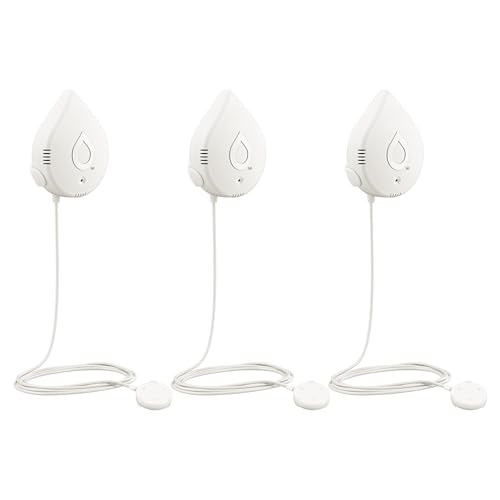
Moen Flo is the only sensor in this group designed to work as part of a broader whole-home water management ecosystem, pairing with the Flo Smart Water Monitor and Shutoff to automatically close your main water valve when a leak is confirmed. Owners in the Flo ecosystem report that the combination eliminates the need to be home during an emergency, and the Flo app provides detailed water usage analytics alongside leak alerts. Even as a standalone sensor it delivers reliable Bluetooth and Wi-Fi alerts with a clean, professional-grade build quality.
Strengths
- Integrates with Flo Smart Shutoff to automatically stop water flow
- App tracks water usage patterns and flags abnormal consumption
- Durable build quality rated for placement in tight, damp locations
Drawbacks
- Premium price reflects ecosystem value; higher cost per sensor than rivals
- Full automation benefits require purchasing the separate Flo shutoff valve
Buying considerations
Hub or hub-free
Wi-Fi sensors like the Govee H5054 connect directly to your router and need no extra hardware, which keeps setup simple and cost low. Zigbee sensors like the Aqara T1 need a compatible hub but reward you with longer battery life and a mesh network that handles larger homes without signal drop. Decide which trade-off suits your existing smart home setup before choosing.
Alert delivery speed
The best sensors send a push notification within five to fifteen seconds of moisture contact. Check owner reviews specifically for alert lag, since some budget sensors introduce delays of a minute or more that can make the difference between catching a drip and finding a flooded room. Onboard audible alarms are a useful backup when your phone is on silent.
Placement flexibility
Sensors vary in footprint and probe length. Flat, low-profile designs fit under washing machines and dishwashers where clearance is limited. Some sensors detect moisture only on their base, while others include a separate probe cable that can reach into a drip tray or drain channel. Measure your intended installation spots before buying.
Smart home compatibility
If you already use Apple HomeKit, Amazon Alexa, or Google Home, choosing a sensor that integrates natively lets you build automations, such as turning off a smart valve or flashing lights when a leak is detected. Check the compatibility list carefully because some sensors support only the manufacturer's own app and offer no third-party integration at all.
Final word
A Wi-Fi sensor with a local alarm covers most households well, but if you already run a Zigbee smart home or want automatic shutoff capability, spending a little more on the right ecosystem pays back the first time a slow leak is caught before it becomes a major repair bill.
Questions answered
The onboard alarm on most sensors triggers locally without any internet connection, so you will hear a loud alert even if your router is down. However, push notifications to your phone require an active connection, and some sensors rely on a hub that itself needs Wi-Fi. Always check whether the sensor has a local alarm before assuming it will warn you during an outage.
Most experts recommend placing a sensor near every significant water source: under the kitchen sink, behind the dishwasher and washing machine, near the water heater, and beside any toilet with a history of running. A three-bedroom home typically needs six to ten sensors for thorough coverage. Start with the highest-risk areas and expand the network over time.
Battery life varies significantly by protocol. Wi-Fi sensors like the Govee H5054 average around one year on standard AAA batteries because the radio draws more power. Zigbee sensors like the Aqara T1 often reach two years or more because the Zigbee protocol is far more power-efficient. Check the manufacturer spec and plan to replace batteries on an annual schedule regardless.
Standard sensors only detect and alert; they cannot shut off water on their own. To get automatic shutoff you need a smart water valve connected to the same app or automation platform. The Moen Flo ecosystem is the clearest example of this approach, pairing its sensors with the Flo Smart Water Monitor and Shutoff valve to close the main supply when a confirmed leak is detected.
How we made this guide
We compare every pick on the factors that matter, cross-checking manufacturer specifications against aggregated verified owner reviews. We rank independently and never take payment for placement. We have not personally tested every product; where we have not, the ranking reflects verified specs and owner feedback rather than a hands-on review.
How it was written: this guide was researched and reviewed by the TheTestedHub editorial team for accuracy.
Affiliate disclosure: TheTestedHub is reader-supported. When you buy through links on our site, we may earn a commission at no extra cost to you.
Keep reading

Elgato Alternatives 2026: AVerMedia & Rode Now Lead

Elgato Key Light: Expert Pick for True Color

Retro Consoles for Every Budget: A Practical Guide

Console Cooling Stands: Forced Air Stability for Long Sessions

Gaming Glasses Compared: Gunnar Intercept and Rivals

Gaming Backpacks 2026: Find Yours by Laptop & Gear Needs

Game Storage Racks Sized for Your Console Cases
