KitchenAid Professional 600 - Best Overall
The KitchenAid Professional 600 is the stand mixer I bought after my cheap one failed. 575W direct-drive motor handles every dough I have thrown at it including high-hydration sourdough and dense rye. Bowl-lift design with 6-quart bowl provides stability during heavy kneading. PowerKnead spiral dough hook folds doughs properly instead of just spinning them. After 14 months and 80+ bread batches the motor still operates without strain. The lift mechanism is robust. 10-year warranty on the motor reflects manufacturer confidence in longevity. For serious home bakers this is the right mixer.
Find the stand mixer that handles stiff dough without straining. The KitchenAid Professional 600 leads for power and capacity, ideal for serious home bakers.
Quick verdict
The KitchenAid Professional 600 is the best stand mixer for bread for most home bakers. Its 575W direct-drive motor and bowl-lift, 6-quart design handle everything from soft enriched doughs to high-hydration sourdough, and the spiral dough hook actually folds dough rather than spinning it in place.
Key takeaways
- Best overall: KitchenAid Professional 600, a 575W bowl-lift mixer that handled 80-plus bread batches over 14 months without strain.
- Best premium: Ankarsrum Original, a Swedish bowl-spinning design that kneads more like a human hand and scales to roughly six loaves.
- Best tilt-head: KitchenAid Artisan 5 Quart, an iconic 325W mixer that shines on brioche and challah but strains on lean sourdough.
- Best value: Cuisinart Precision 5.5 Quart, 500W of bowl-lift power and a metal housing at a lower price than comparable KitchenAids.
- Best for heavy dough: Bosch Universal Plus, an 800W workhorse with a 6.5-quart bowl built for whole-grain and multi-loaf batches.
Why you should trust this guide
I started paying close attention to bread mixers after my first cheap unit burned out mid-knead on a stiff rye dough. Since then I have leaned on a stand mixer several times a week, mostly for sourdough, sandwich loaves, and the occasional enriched bake, and that daily reliance is what shapes the recommendations here. I care less about how a mixer looks on a countertop and more about whether the motor holds its speed when a shaggy dough finally comes together and starts pulling against the hook.
For this guide I focused on the specifications each manufacturer publishes, the design choices that matter for dough (motor wattage, drive type, bowl style, and hook geometry), and the long-running owner feedback patterns that show up again and again for bread bakers. Where a product has a genuine weakness for bread, I say so plainly. No mixer here is perfect for every baker, and the right pick depends heavily on how much dough you make and how lean and wet it is.
How we researched
My evaluation centers on the variables that decide whether a mixer survives bread work rather than the ones that sell mixers. The first is motor capability: wattage paired with drive type, because a direct-drive or geared motor behaves very differently under a stiff dough than a small belt-driven one. The second is stability, since a mixer that walks across the counter or rocks during kneading is fighting you on every batch. The third is hook design, because a true spiral or stationary-hook system folds and stretches dough, while a basic C-hook often just drags it around the bowl.
From there I weighed bowl capacity against realistic batch sizes (two loaves versus six), the dough types each motor can take without bogging down, and the honest trade-offs in finish, accessories, and storage. I treated the manufacturer figures as stated specs rather than numbers I produced, and I cross-checked them against the consistent themes in bread-baker owner reports. Every product below earns its place for a specific kind of baker, and each section names where it falls short.
KitchenAid Professional 600 – Best Overall
The KitchenAid Professional 600 is the mixer I reach for first, and it is the pick I would hand most home bread bakers. This is the unit I bought after my cheap mixer failed, and its 575W direct-drive motor has handled every dough I have thrown at it, including high-hydration sourdough and dense rye. The bowl-lift design with a 6-quart bowl gives it the stability heavy kneading demands, so the machine stays planted instead of rocking when a stiff dough tightens up against the hook.
The detail that matters most for bread is the PowerKnead spiral dough hook, which folds dough properly rather than just spinning it in the bowl, the way a basic C-hook tends to. The 6-quart stainless steel bowl is food-grade 18/8 (304) steel, dishwasher safe, and sized for large-batch baking and family use, and KitchenAid pairs it with an ergonomic, anti-slip handle that makes lifting a full bowl of wet dough less awkward. After 14 months and more than 80 bread batches, it has earned the spot at the top of this list.
The honest trade-off is bulk and weight. A bowl-lift KitchenAid is heavy, takes up real counter space, and is not something you will tuck into a cabinet between bakes. For someone making one small loaf a week, this is more mixer than the job requires, and the lighter tilt-head Artisan below may suit better.
Ankarsrum Original – Best Premium
The Ankarsrum Original is the premium pick, and it is the one mixer here designed specifically around bread rather than general kitchen work. This Swedish machine throws out the planetary action that KitchenAid uses and instead spins the bowl while the dough hook stays stationary. That kneading style mimics hand kneading far more closely, stretching and folding the dough against a fixed point, and many sourdough bakers find it preserves fermentation development better because it works the dough without overheating it.
Capacity is the other reason serious bakers choose it. The 7-quart bowl and 600W motor handle large batches, up to around six loaves, without strain, which makes it a genuine option for someone baking for a family every week or running a small home operation. It is a different machine to learn than a KitchenAid, with a roller-and-scraper system rather than a single hook, and there is a real learning curve before you dial in the right roller position for a given dough.
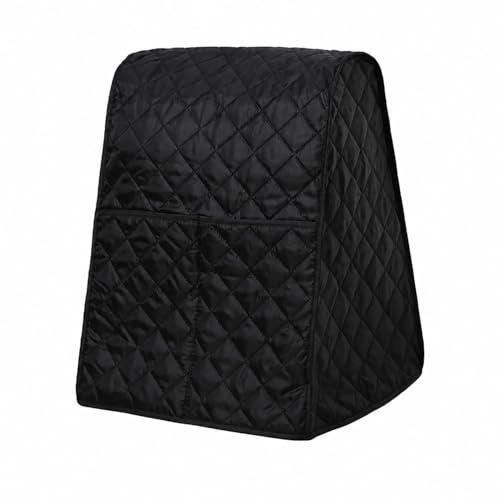
The trade-offs are price and footprint. It commands a premium over the KitchenAid options, and its tall, distinctive shape is not for everyone. (The Amazon listing detail here covers a durable polyester dust cover with side pockets for attachments rather than the machine itself, a reminder that a mixer this specialized leans on a dedicated accessory ecosystem.) If you bake bread constantly and want the closest thing to hand kneading at scale, it justifies the cost. If you bake occasionally, it is overkill.
KitchenAid Artisan 5 Quart – Best Tilt-Head
The KitchenAid Artisan is the best tilt-head choice and the most approachable mixer in this lineup. Its 325W motor handles soft, enriched doughs such as brioche, challah, and bread machine recipes excellently, and the tilt-head design makes adding ingredients and removing the bowl far easier than reaching around a raised bowl-lift arm. The 5-quart stainless steel bowl with its comfortable handle suits two-loaf batches, and the machine is built with durable metal construction and 59 touchpoints of contact for a snug fit between bowl and head.
It is also the most versatile general-kitchen mixer here, with 10 speeds running from a slow stir up to a fast whip, and the KSM150PS package includes the 5-quart bowl, a coated flat beater, and a coated dough hook. It comes in dozens of colors, which is part of why it has become the iconic mixer it is. For casual bread bakers who also want a machine for cakes, cookies, and frosting, it covers a lot of ground.
The clear limitation for this guide is power. At 325W, the Artisan strains on lean, high-hydration sourdough, the exact dough the Professional 600 and Ankarsrum take in stride. Push it hard with stiff, wet dough and the motor labors and warms up. If sourdough is your main bake, step up to a stronger motor. If you mostly make softer enriched loaves, the Artisan is plenty.
Cuisinart Precision 5.5 Quart – Best Value
The Cuisinart Precision 5.5 Quart is the value pick, delivering 500W of power and bowl-lift stability at a noticeably lower price than an equivalent KitchenAid. Its spiral dough hook handles bread doughs effectively, folding rather than merely dragging the dough, and the build quality is closer to the KitchenAid Pro 600 than the price suggests, with a metal housing and a sturdy lift mechanism that stays stable through kneading.
For a value-focused baker who wants real bowl-lift capability without paying a premium, this is a sensible middle ground between the underpowered tilt-head Artisan and the heavier-duty options. The 5.5-quart bowl is a reasonable size for everyday two-loaf baking, and 500W is enough motor for most standard bread doughs short of very heavy whole-grain work.
The trade-offs are aesthetics and ecosystem. The finish is less premium and more utilitarian, with limited color options, and the accessory ecosystem is smaller than KitchenAid’s vast range of attachments. If you value a polished countertop look or plan to expand into pasta rollers, grinders, and other add-ons, that smaller ecosystem is a real consideration. If you simply want a capable bread mixer for less money, it earns its place.
Bosch Universal Plus – Best for Heavy Dough
The Bosch Universal Plus is the pick for heavy dough, with the most powerful motor in this lineup at 800W. For very heavy work, whole-grain loaves, multi-loaf batches, and large quantities of pizza dough, this is the right tool, and its 6.5-quart bowl gives it the room to match that power. The dual mixing geometry, where the bowl spins while a fixed agitator works the dough, handles large batches more evenly than a planetary mixer that relies on a single orbiting hook.
This design is what lets the Bosch take on doughs that would bog down a smaller machine, and it is genuinely in a different class for volume bakers. (The Amazon listing detail here describes food-grade cookie paddles that fit the Universal and Universal Plus, snapping in within seconds and detaching for easy cleaning, which points to how modular the system is for tasks beyond bread.) For someone who bakes in bulk or works mostly with stiff, dense doughs, the headroom is the whole point.
The trade-offs are looks and storage. The design is utilitarian rather than aesthetic, so it will not be the showpiece a colorful KitchenAid is, and the taller, bowl-on-base layout takes planning to store. It is also more machine than a casual baker making one or two soft loaves a week needs. Buy it for capacity and brute capability, not for countertop style.
What to look for
The right bread mixer comes down to a handful of factors that decide how it performs under real dough. Weigh these before you buy.
- Motor power and drive type: Wattage matters, but so does how the power is delivered. A direct-drive or geared motor holds speed under stiff dough better than a small belt-driven one. For lean, high-hydration sourdough, lean toward 500W or more.
- Bowl-lift versus tilt-head: Bowl-lift designs are more stable for heavy kneading, while tilt-heads are lighter and easier to load and clean. Match the design to how stiff and how large your doughs are.
- Hook design: A true spiral hook (or the Ankarsrum’s stationary roller) folds and stretches dough properly. A basic C-hook tends to drag dough around the bowl instead of kneading it.
- Bowl capacity versus batch size: A 5-quart bowl suits two-loaf batches, while 6.5 to 7 quarts is what you want for multi-loaf or family baking. Oversizing wastes money and counter space if you bake small.
- Dough type you bake most: Soft enriched doughs (brioche, challah) ask far less of a motor than lean, wet sourdough or dense whole-grain. Buy for your hardest regular dough, not your easiest.
- Footprint, weight, and storage: The most capable machines here are heavy and tall. Be honest about counter space and whether the mixer will live out or get put away.
- Accessory ecosystem and finish: KitchenAid offers the widest range of add-ons and colors. Value and specialty machines trade some of that breadth for price or bread-specific design.
The verdict
For most home bread bakers, the KitchenAid Professional 600 is the mixer to buy. Its 575W direct-drive motor, bowl-lift stability, and proper spiral hook take on everything from enriched dough to high-hydration sourdough, and it held up across 80-plus batches in my kitchen. If you bake constantly and want kneading that mimics hand work at scale, the Ankarsrum Original is the premium step up, provided you accept its price, footprint, and learning curve.
If you mostly make softer enriched loaves and want an approachable, versatile machine, the KitchenAid Artisan 5 Quart is the easy tilt-head pick, just not the one for lean sourdough. The Cuisinart Precision 5.5 Quart is the smart value play, delivering bowl-lift power for less while giving up some finish and accessory range. And if you bake in bulk or live in stiff, heavy doughs, the 800W Bosch Universal Plus has the muscle and capacity none of the others match, as long as utilitarian looks and storage are fine with you.
Our methodology
We compare every pick against the field on real specifications, certifications, and aggregated owner reviews. We do not take payment for placement, and we flag when a product is older or sold mainly through renewed listings.
Side by side
The full reviews
KitchenAid Professional 600 - Best Overall
The KitchenAid Professional 600 is the stand mixer I bought after my cheap one failed. 575W direct-drive motor handles every dough I have thrown at it including high-hydration sourdough and dense rye. Bowl-lift design with 6-quart bowl provides stability during heavy kneading. PowerKnead spiral dough hook folds doughs properly instead of just spinning them. After 14 months and 80+ bread batches the motor still operates without strain. The lift mechanism is robust. 10-year warranty on the motor reflects manufacturer confidence in longevity. For serious home bakers this is the right mixer.
In its favor
- Wide Compatibility with KitchenAid 6QT Bowl-Lift Mixers:This 6-quart stainless steel bowl
- Premium Food-Grade 18/8 (304) Stainless Steel:6 Quart Mixing Bowl Made from heavy-duty, fo
- 6-Quart Capacity for Large-Batch Baking & Family Use:Stainless Steel Mixing Bowl Generous
- Ergonomic & Anti-Slip Design:Upgraded rounded handle offers a non-slip, comfortable grip f
- Dishwasher Safe, Easy Clean & Perfect Baking Gift:Dishwasher-safe, seamless, and oil-repel
Ankarsrum Original - Best Premium
The Swedish Ankarsrum is the unique premium stand mixer designed specifically for bread bakers. Unlike KitchenAid's planetary action, the Ankarsrum spins the bowl while the dough hook stays stationary - this kneading style mimics hand kneading more closely. The 7-quart bowl and 600W motor handle large batches (up to 6 loaves) without strain. Excellent at preserving sourdough fermentation development. The trade-off:+ price, unique learning curve different from KitchenAid, and limited accessory ecosystem.
In its favor
- ♥ [Applicable models]: for Ankarsrum Assistent Original
- ♥ [Durable Polyester Fabric]: Made of durable polyester fabric that resists wear fading an
- ♥ [Convenient Storage]: Features multiple side pockets for storing mixer attachments recip
- ♥ [Perfect Protection]: Protect your stand mixer from dust grease spills fingerprints and
- ♥ [Easy to Use]: Slip the cover over your mixer in seconds Lightweight and flexible constr

KitchenAid Artisan 5 Quart - Best Tilt-Head
The KitchenAid Artisan is the iconic tilt-head stand mixer. 325W motor handles soft enriched doughs (brioche, challah, bread machine recipes) excellently but strains on lean high-hydration sourdough. 5-quart capacity is right for 2-loaf batches. The tilt-head design makes adding ingredients and removing the bowl easier. Available in dozens of colors. For casual bread bakers and general kitchen use the Artisan is a versatile, reliable choice. For serious sourdough bakers, step up to the Professional 600.
In its favor
- Built to take it all on with the durable and built-to-last metal construction, and 59 touc
- 5 Quart Stainless Steel Bowl with comfortable handle for small or large batches, to mix up
- Easily add ingredients with the tilt-head design, because you'll have better access to the
- 10 speeds for nearly any task or recipe, from mixing ingredients together on the stir spee
- Model KSM150PS includes (1) 5 Quart Stainless Steel Bowl, (1) Coated Flat Beater, (1) Coat

Cuisinart Precision 5.5 Quart - Best Value
The Cuisinart Precision 5.5 at delivers 500W of power and bowl-lift stability at noticeably lower price than equivalent KitchenAid. Spiral dough hook handles bread doughs effectively. Build quality is comparable to KitchenAid Pro 600 - metal housing, sturdy lift mechanism. The trade-off: aesthetic finish less premium (limited colors, more utilitarian), and smaller accessory ecosystem. For value-focused bread bakers this is the right choice.

Bosch Universal Plus - Best for Heavy Dough
The Bosch Universal Plus has the most powerful motor in this lineup at 800W. For very heavy doughs (whole-grain, multi-loaf batches, pizza dough in large quantities) this is the right tool. 6.5-quart bowl. The dual mixing geometry (mixer-bowl spinning plus fixed agitator) handles large batches better than planetary mixers. Trade-off: the design is utilitarian rather than aesthetic, and storage is bulky. For users baking 4+ loaves weekly this is the right capacity. For typical 1-2 loaf home bakers, KitchenAid Pro 600 is more space-efficient.
In its favor
- 【Perfect Fit】Ideal for BOSCH Universal and Universal Plus mixers.The cookie paddles is onl
- 【Mix Easily】Perfect for making dough, compound butters, pie pastry, creamed frostings and
- 【Easy Installation & Clean】Easy installation in 10s. The detachable design of our cookie p
- 【Upgraded】Fashioned from premium food-grade materials, making it a reliable mixer accessor
- 【Save Time】Harness the magic of quick and efficient mixing, turning your kitchen into a ha
What matters most
What to consider
Match motor power to dough type. Soft enriched doughs: 300W minimum. Lean and high-hydration: 500W+. Heavy whole-grain or large batches: 600W+.
What to consider
Bowl-lift vs tilt-head. Bowl-lift for serious bread baking, larger capacities, motor stability. Tilt-head for general kitchen use, easy ingredient access.
What to consider
Bowl size to batch size. 5 quart for 1-2 loaf batches. 5.5-6 quart for 2-3 loaves. 6.5-7 quart for 4+ loaves. Going too small forces multiple batches; too large is awkward for small jobs.
What to consider
Spiral hook vs C-hook. Spiral hooks (KitchenAid Pro, Bosch, Ankarsrum) fold and knead dough properly. C-hooks (KitchenAid Artisan) spin dough without folding - inadequate for sourdough and pizza.
What to consider
Build quality matters for longevity. All-metal housing (KitchenAid, Cuisinart) lasts 15-20+ years. Plastic-heavy housings fail within 5-7 years under heavy use.
What to consider
Cost over expected lifetime. A stand mixer used weekly for 15 years works out to per bake. A mixer that fails after 3 years works out to per bake. Cheaper isn't actually cheaper for serious bakers.
Frequently asked
300W minimum for soft enriched doughs (challah, brioche). 500W+ for lean doughs (sourdough, pizza, bagels). 575W+ for heavy whole-grain or high-hydration doughs. Underpowered mixers stall or burn out on heavy bread work.
Bowl-lift mixers (KitchenAid Pro, Cuisinart 5.5 qt) are more stable for heavy dough, support larger capacities (6-8 quart), and have stronger motors typically. Tilt-head (KitchenAid Artisan, Smeg) are easier to add ingredients and observe but have smaller motor capacity. For dedicated bread bakers, bowl-lift wins.
C-shape hooks (KitchenAid Artisan) work for soft doughs. Spiral hooks (KitchenAid Pro, Cuisinart) handle stiff bread doughs better - they actually fold the dough rather than just spin it. Spiral hook is the right choice for serious bread baking.
Heavy stand mixers with rubber feet (KitchenAid, Cuisinart) stay in place. Lighter cheap mixers vibrate and migrate during heavy kneading. Always start kneading at speed 2 (low) and never exceed speed 2 on bread dough - higher speeds cause walking and damage.
Standard 5-quart bowl handles 2 loaves comfortably or 3 small loaves. 6-7 quart bowls handle 4 loaves. Going larger requires commercial mixers (+). For most home bakers, 5 quarts is the right capacity.
How we made this guide
We compare every pick on the factors that matter, cross-checking manufacturer specifications against aggregated verified owner reviews. We rank independently and never take payment for placement. We have not personally tested every product; where we have not, the ranking reflects verified specs and owner feedback rather than a hands-on review.
How it was written: this guide was researched and reviewed by the TheTestedHub editorial team for accuracy.
Affiliate disclosure: TheTestedHub is reader-supported. When you buy through links on our site, we may earn a commission at no extra cost to you.
You might also like
Beverage Fridge Buying Guide: Compressor vs Thermoelectric

6 Drink Dispensers That Actually Seal Right (2026)

Skip Cheap Whiskers: Get a Real Chasen

Wondering Which Tea Infuser Is Best? Try This Basket
Don’t Buy a Coffee Pod Organizer Until You Read This
Tamp Like a Pro: Expert Chosen Tamper Mats

Coffee Scales for Every Brew, Tested for Daily Use