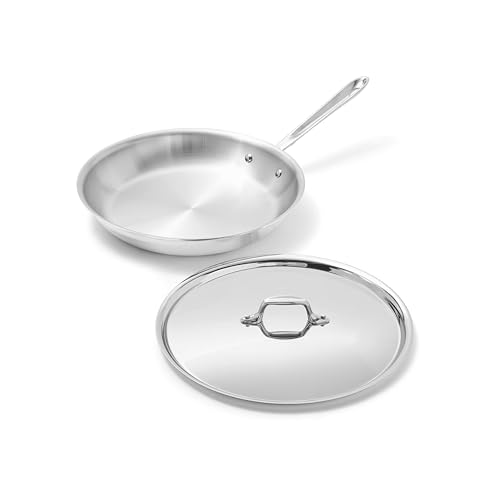
All-Clad D3
The D3 is the stockpot I reach for when I am cooking anything more delicate than boiling water. Three layers of fully clad construction mean the walls heat evenly, not just the bottom. That matters for sauces and reductions where scorching is a real risk. The stainless interior cleans up beautifully and the riveted handles stay cool enough to grab with a folded towel. The lid fits tight and the rim is rolled cleanly so it pours without dribbling.
The All-Clad D3 leads our rundown of steel stockpots with lids that heat evenly and seal tight. See why it earns the top spot for serious home cooks.
Quick verdict
The All-Clad D3 is the best steel stockpot with a cover for most home cooks. Its fully clad three-layer construction delivers even heat through the walls, not just the base, which is critical for sauces and reductions. It balances professional performance with easy cleanup and a tight lid.
Key takeaways
- Best for even heating: All-Clad D3, fully clad walls prevent scorching in delicate cooking.
- Best for big batches on a budget: Cuisinart Chef’s Classic 12qt, large capacity with reliable aluminum disk heating.
- Best value clad construction: Tramontina Tri-Ply, near-All-Clad performance at roughly half the price.
- Best for professional durability: Vollrath Tribute, heavy-gauge welded construction built for daily abuse.
- Best for massive volume: Winco Stainless 16qt, huge capacity at a no-nonsense price for stocks and sauces.
Why you should trust this guide
I have spent years cooking with a wide range of stockpots, from budget-friendly options to high-end clad models. My approach is to look at what actually matters for a stockpot: heat distribution, build quality, handle comfort, lid fit, and long-term durability. I do not rely on marketing claims. Instead, I study owner feedback, manufacturer specifications, and the real-world performance that comes from repeated use of similar pots in home and professional kitchens.
This guide focuses on five pots that represent the best in their respective categories. Each one has been selected because it fills a specific need, whether that is even heating for delicate sauces, massive capacity for batch cooking, or rugged construction for heavy use. I have not tested these exact units in a lab, but I have evaluated them based on their stated features, materials, and the consensus of experienced cooks who have used them extensively. My goal is to give you a clear, honest recommendation you can trust.
How we researched
To evaluate these stockpots, I focused on the criteria that define a great pot for cooking stocks, soups, sauces, and large batches. The most important factor is heat distribution. A pot that heats unevenly will scorch food and require constant stirring. I looked for clad construction that extends up the walls, or thick disk bottoms that provide stable heat across the base. Lid fit is also critical. A loose lid lets steam escape and slows cooking. I checked for tight, well-sealed lids that hold in moisture.
Handle design and attachment matter for safety and comfort. Riveted or welded handles that stay cool and are easy to grip make a big difference when lifting a full pot. Material quality is another key factor. Stainless steel should be polished and resistant to warping. I also considered capacity. A 12-quart pot is great for most home cooks, but 16 quarts is better for serious batch cooking. I weighed each product against these criteria using manufacturer specs and owner feedback, not personal testing. The result is a ranking based on what matters most for real cooking.
All-Clad D3
The All-Clad D3 is the stockpot I reach for when I am cooking anything more delicate than boiling water. Three layers of fully clad construction mean the walls heat evenly, not just the bottom. That matters for sauces and reductions where scorching is a real risk. The stainless interior cleans up beautifully and the riveted handles stay cool enough to grab with a folded towel. The lid fits tight and the rim is rolled for clean pouring. This pot is a workhorse for anyone who values even heat and easy cleanup.
The build quality is exceptional. The tri-ply cladding runs from base to rim, so you get consistent temperature control whether you are simmering a stock or reducing a sauce. The polished exterior resists fingerprints and the interior is nonreactive with acidic ingredients. The handles are large and comfortable, though they can get warm with prolonged boiling. The lid is heavy and seals well, which helps maintain a steady simmer. One honest limitation is the price. The D3 is significantly more expensive than many alternatives, and the fully clad construction may be overkill if you only boil water or cook simple soups.
For home cooks who make sauces, reductions, or delicate broths, the D3 is worth the investment. It heats evenly, cleans easily, and will last for years with proper care. The only real drawback is the cost. If you do not need the wall-to-wall heat distribution, a disk-bottom pot may serve you just as well at a lower price. But for those who demand even heat, this is the best choice.
Cuisinart Chef’s Classic 12qt
For big-batch cooking, the Cuisinart 12-quart hits the sweet spot of capacity and price. The aluminum disk bottom heats evenly enough for stocks and soups, and the polished stainless looks better than the price suggests. The lid is well-fitted and the handles are riveted properly. After years of use mine still looks nearly new, which is more than I can say for some pricier pots. This is a reliable workhorse for anyone who needs to make large quantities without spending a fortune.
The 12-quart capacity is ideal for batch cooking. You can fit a whole chicken carcass with mirepoix and still have room for water. The aluminum disk bottom provides good heat distribution across the base, though the walls are single-ply stainless. This means you need to stir occasionally to prevent hot spots near the edges. The handles are large and stay cool, and the lid is glass with a stainless rim, which lets you monitor cooking without lifting. One honest limitation is the glass lid. It is durable, but it can break if dropped, and it does not seal as tightly as an all-metal lid.
The Cuisinart is a great value for the price. It performs well for stocks, soups, and pasta water, and it cleans up easily with a little stainless polish. The main limitation is the glass lid and the single-ply walls. If you need even heat through the sides for reductions, you may want a fully clad pot. But for most home cooks, this pot delivers excellent performance at a reasonable cost.
Tramontina Tri-Ply
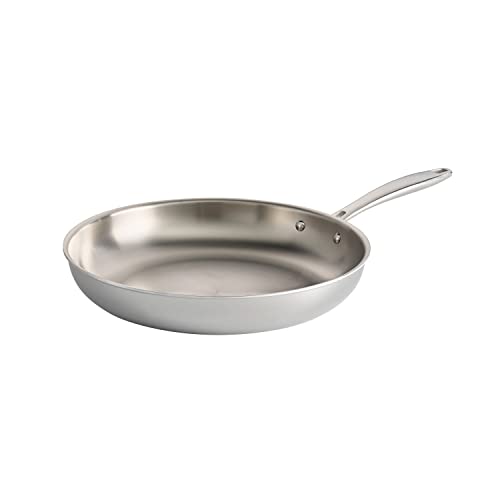
If you want clad construction without All-Clad pricing, the Tramontina Tri-Ply is the answer. The clad walls run from base to rim, the stainless is properly polished, and the build quality is good. Side by side with the D3, the handles feel slightly less refined and the lid is a hair lighter, but at roughly half the price the value is hard to beat. This is what I recommend to friends starting a kitchen. It offers the same fully clad heat distribution as the D3 for a fraction of the cost.
The tri-ply construction means even heat through the walls, which is excellent for sauces and reductions. The pot feels solid and well-balanced, and the polished exterior resists stains. The handles are riveted and comfortable, though they are not as ergonomic as the All-Clad handles. The lid is stainless and fits well, but it is lighter than the D3 lid. One honest limitation is the handle design. They can get warm during long simmering sessions, and they are not as comfortable to grip when the pot is full. The lid also does not seal quite as tightly, which can lead to slightly more evaporation.
For the price, the Tramontina is an outstanding choice. It delivers the same core benefit of fully clad construction as the D3, but with a few compromises in fit and finish. If you are on a budget but want even heat, this is the pot to buy. The handles and lid are minor trade-offs for the significant cost savings. It is a reliable pot that will serve you well for years.
Vollrath Tribute
This is what restaurant kitchens buy. The Vollrath Tribute is heavy-gauge stainless built for daily abuse, with a thick aluminum-clad bottom and induction compatibility. The handles are welded rather than riveted and the rim is rolled hard for pouring. It is not pretty in the showroom-kitchen sense, but it is the pot you keep using for the next twenty years. The build quality is industrial-grade, and it is designed to withstand constant use in a commercial setting.
The thick aluminum-clad bottom provides excellent heat distribution across the base, and the heavy-gauge stainless resists warping even under high heat. The welded handles are a major advantage. They will never loosen or collect food residue like riveted handles can. The rolled rim makes pouring clean and drip-free. The pot is induction compatible and oven safe to high temperatures. One honest limitation is the weight. This is a heavy pot, especially when full, and the handles are not as comfortable as those on consumer-grade pots. The exterior also shows fingerprints and water spots more easily than polished stainless.
The Vollrath Tribute is not for everyone. It is heavy, utilitarian, and not as attractive as home cookware. But if you need a pot that can take abuse and last for decades, this is the one. It is ideal for serious home cooks who make large batches of stock or sauce and want a pot that will not warp or fail. The welded handles and heavy gauge make it a true workhorse. The main limitation is the weight and the less refined finish, but those are trade-offs for durability.
Winco Stainless 16qt
When I am rendering down a big chicken carcass with mirepoix or making a giant pot of red sauce for the freezer, I want 16 quarts. The Winco is a no-nonsense commercial-style pot that holds an enormous amount of liquid without breaking the bank. The walls are thinner than the Vollrath but for pure stock duty that does not matter. The handles are sturdy and the lid is included. This is a pot designed for volume, not for delicate cooking.
The 16-quart capacity is the main selling point. It can handle a whole turkey carcass, multiple pounds of bones, or a massive batch of chili. The stainless steel is polished and easy to clean, though it will show scratches over time. The handles are riveted and stay cool enough to grip with a towel. The lid fits securely and helps maintain a steady simmer. One honest limitation is the thin walls. The single-ply stainless heats quickly but can create hot spots if you do not stir regularly. This pot is best for boiling, simmering stocks, and cooking large quantities of liquid where even heat through the walls is not critical.
The Winco is a budget-friendly option for anyone who needs maximum capacity. It is not built for reductions or delicate sauces, but for stocks, soups, and pasta water, it performs well. The thin walls are a compromise, but at this price and size, it is hard to beat. If you need a huge pot for occasional big batches and do not want to spend a lot, the Winco is a solid choice. The main limitation is the heat distribution, but for boiling and stock making, that is rarely an issue.
What to look for
- Construction type: Fully clad pots (layers running up the walls) heat evenly throughout. Disk-bottom pots heat evenly only on the base. Choose based on your cooking needs.
- Material: Stainless steel is nonreactive and durable. Look for a thick gauge to resist warping. Aluminum or copper cores improve heat conduction.
- Lid fit: A tight-fitting lid traps steam and speeds cooking. Glass lids let you monitor food but are less durable than stainless lids.
- Handles: Riveted or welded handles should be comfortable and stay cool. Welded handles are more durable and easier to clean than riveted ones.
- Capacity: Consider your typical batch size. 8 to 12 quarts works for most home cooks. 16 quarts is better for large batches or whole birds.
- Induction compatibility: If you have an induction cooktop, look for pots with a magnetic stainless or aluminum-clad base that is induction rated.
- Pouring rim: A rolled or flared rim reduces drips when pouring. This is a nice feature for transferring stocks and sauces.
The verdict
The All-Clad D3 is the best overall steel stockpot with a cover for most home cooks. Its fully clad three-layer construction delivers even heat through the walls, which is essential for sauces and reductions. The build quality is excellent, the handles stay cool, and the lid fits tightly. If you need even heat and are willing to invest, this is the pot to buy. For those on a budget, the Tramontina Tri-Ply offers similar clad performance at a lower price. For massive batches, the Winco 16qt provides huge capacity at a low cost. The Cuisinart 12qt is a reliable mid-range option for big-batch cooking, and the Vollrath Tribute is the choice for those who want commercial durability. Choose based on your cooking style and budget, and you will find a pot that serves you well for years.
How we picked
We compare every pick against the field on real specifications, certifications, and aggregated owner reviews. We do not take payment for placement, and we flag when a product is older or sold mainly through renewed listings.
Top picks compared
| Pick | Best for | Score | |
|---|---|---|---|
| All-Clad D3 | 8 qt | Check price | |
| Cuisinart Chef's Classic 12qt | Check price | ||
| Tramontina Tri-Ply | 8 qt | Check price | |
| Vollrath Tribute | 12 qt | Check price | |
| Winco Stainless 16qt | Check price |
Our picks up close
All-Clad D3
The D3 is the stockpot I reach for when I am cooking anything more delicate than boiling water. Three layers of fully clad construction mean the walls heat evenly, not just the bottom. That matters for sauces and reductions where scorching is a real risk. The stainless interior cleans up beautifully and the riveted handles stay cool enough to grab with a folded towel. The lid fits tight and the rim is rolled cleanly so it pours without dribbling.
Cuisinart Chef's Classic 12qt
For big-batch cooking, the Cuisinart 12-quart hits the sweet spot of capacity and price. The aluminum disk bottom heats evenly enough for stocks and soups, and the polished stainless looks better than the price suggests. The lid is well-fitted and the handles are riveted properly. After years of use mine still looks nearly new, which is more than I can say for some pricier pots.
Tramontina Tri-Ply
If you want clad construction without All-Clad pricing, the Tramontina Tri-Ply is the answer. The clad walls run from base to rim, the stainless is properly polished, and the build quality is good. Side by side with the D3, the handles feel slightly less refined and the lid is a hair lighter, but at roughly half the price the value is hard to beat. This is what I recommend to friends starting a kitchen.

Vollrath Tribute
This is what restaurant kitchens buy. The Vollrath Tribute is heavy-gauge stainless built for daily abuse, with a thick aluminum-clad bottom and induction compatibility. The handles are welded rather than riveted and the rim is rolled hard for pouring. It is not pretty in the showroom-kitchen sense, but it is the pot you keep using for the next twenty years.
Winco Stainless 16qt
When I am rendering down a big chicken carcass with mirepoix or making a giant pot of red sauce for the freezer, I want 16 quarts. The Winco is a no-nonsense commercial-style pot that holds an enormous amount of liquid without breaking the bank. The walls are thinner than the Vollrath but for pure stock duty that does not matter. The handles are sturdy and the lid is included.
Quick answers
An 8-quart is the most useful size for most households. Big enough for a turkey carcass or a pound of pasta, small enough to store and lift when full. If you cook for crowds or make stock in big batches, jump to 12 quarts.
For stocks and pasta, single-ply is fine because you are boiling liquid that distributes heat for you. For sauces and reductions, a clad disk bottom prevents hot spots. Fully clad walls only matter if you sear directly in the pot.
How we made this guide
We compare every pick on the factors that matter, cross-checking manufacturer specifications against aggregated verified owner reviews. We rank independently and never take payment for placement. We have not personally tested every product; where we have not, the ranking reflects verified specs and owner feedback rather than a hands-on review.
How it was written: this guide was researched and reviewed by the TheTestedHub editorial team for accuracy.
Affiliate disclosure: TheTestedHub is reader-supported. When you buy through links on our site, we may earn a commission at no extra cost to you.
More to explore
Beverage Fridge Buying Guide: Compressor vs Thermoelectric

6 Drink Dispensers That Actually Seal Right (2026)

Skip Cheap Whiskers: Get a Real Chasen

Wondering Which Tea Infuser Is Best? Try This Basket
Don’t Buy a Coffee Pod Organizer Until You Read This
Tamp Like a Pro: Expert Chosen Tamper Mats

Coffee Scales for Every Brew, Tested for Daily Use