Quick verdict
The Meta Quest 3 wins on balance of visual quality, ecosystem depth, and standalone convenience, but if you already own a PS5 or a high-end PC, the PSVR2 or Valve Index respectively will deliver a more immersive experience than any standalone headset can match.

Meta Quest 3
Owners consistently highlight the Snapdragon XR2 Gen 2 chipset delivering noticeably sharper visuals and snappier menus compared to its predecessor, and the slimmer pancake lens design reduces the bulk that frustrated long-term Quest 2 users. The mixed reality passthrough is the most capable in the standalone category, with colour cameras that make blending real and virtual environments genuinely useful rather than a gimmick. The library breadth across gaming, fitness, and social applications gives new owners something to do from day one without hunting for content.
The Meta Quest 3 offers the best all-around VR, but PSVR2 and Valve Index excel for console or PC owners seeking deeper immersion.
Virtual reality headsets have matured from novelty gadgets into genuinely compelling devices that deliver immersive gaming, fitness, social, and productivity experiences. Whether you are stepping into a fully standalone unit that needs no PC or console, or strapping into a high-fidelity tethered display fed by a powerful graphics card, the hardware choices in 2024 and 2025 have never been stronger. I spent time aggregating thousands of verified owner reviews, hardware teardowns, and independent specification comparisons to build this guide around real-world longevity and value rather than spec-sheet numbers alone.
The ten headsets listed here cover the full price spectrum from entry-level standalone units to professional-grade displays designed for simulation and enterprise use. Every pick was chosen because owners consistently praise it for the things that matter most in daily use: comfort during extended sessions, visual clarity, tracking reliability, and a software ecosystem worth exploring. Where trade-offs exist I call them out plainly so you can match the right headset to how you actually plan to use it.
This guide focuses on headsets that are actively sold, supported, and receiving software updates as of mid-2025. Discontinued products and region-limited releases are excluded even when their hardware was impressive, because finding replacement parts, support, and a healthy game library for them is unreliable.
How we test
I did not personally test every headset in this list. Instead, I aggregated verified purchase reviews from major retail platforms, cross-referenced them with independent hardware analyses from display and optics specialists, and weighed long-term owner reports covering comfort fatigue, lens degradation, controller durability, and software support consistency. Minimum review thresholds were applied so that products with fewer than several hundred real-world owner data points were excluded regardless of specification appeal.
Ranking order reflects a composite of visual quality per dollar, tracking accuracy, comfort for sessions longer than 45 minutes, ecosystem depth, and the frequency of owner-reported hardware failures within the first year. Where two products scored similarly on composite metrics, the one with the broader software library or better long-term manufacturer support ranked higher. Price tiers are acknowledged but not listed as currency figures; value judgments are relative to what owners consistently say they received for their investment.
At a glance
| Pick | Best for | Score | |
|---|---|---|---|
| Meta Quest 3 | Best Overall | 9 | Check price |
| Sony PlayStation VR2 | Best for PS5 Owners | 9 | Check price |
| Valve Index | Best PC VR Flagship | 9 | Check price |
| Meta Quest 3S | Best Budget Standalone | 8 | Check price |
| HP Reverb G2 | Best for Sim Racing and Flight | 8 | Check price |
| Pico 4 | Best Meta Quest Alternative | 8 | Check price |
| HTC Vive Pro 2 | Best for Professional and Enterprise Use | 8 | Check price |
| Samsung Galaxy XR Headset | Best Android Ecosystem Integration | 7 | Check price |
| Pimax Crystal Light | Best Wide-FOV PC Headset | 7 | Check price |
| Meta Quest 2 | Best Entry-Level Starting Point | 7 | Check price |
The picks, reviewed
Meta Quest 3
Owners consistently highlight the Snapdragon XR2 Gen 2 chipset delivering noticeably sharper visuals and snappier menus compared to its predecessor, and the slimmer pancake lens design reduces the bulk that frustrated long-term Quest 2 users. The mixed reality passthrough is the most capable in the standalone category, with colour cameras that make blending real and virtual environments genuinely useful rather than a gimmick. The library breadth across gaming, fitness, and social applications gives new owners something to do from day one without hunting for content.
Reasons to buy
- Pancake lenses produce sharper centre clarity than Fresnel-based competitors at this price point
- Full-colour passthrough enables practical mixed reality workflows and games
- Massive standalone game and app library with no PC or console required
Reasons to avoid
- Battery life averages around two hours of active use before needing a charge
- Default head strap comfort degrades during sessions beyond 45 minutes without an aftermarket elite strap

Sony PlayStation VR2
PS5 owners who want the highest-fidelity console VR experience consistently point to the PSVR2 as delivering OLED visuals with HDR that make competing LCD-based headsets look flat by comparison, and the eye-tracking-enabled foveated rendering keeps frame rates steady even in demanding titles. The Sense controllers carry haptic motors and adaptive triggers that mirror the DualSense feel, giving launch titles a tactile layer that standalone headsets cannot replicate. Owners who game primarily on PS5 find this the most polished, plug-and-play VR solution available.
Reasons to buy
- OLED panels with per-pixel dimming deliver deep blacks unavailable in LCD headsets
- Eye tracking enables foveated rendering that keeps complex scenes smooth
- Sense controller haptics and adaptive triggers add a tactile dimension unique in console VR
Reasons to avoid
- Requires a PS5 console and the single-cable USB-C tether limits play area positioning
- Game library is smaller than Meta Quest and PC VR ecosystems

Valve Index
Verified long-term owners of the Valve Index repeatedly cite the 130-degree field of view and 144 Hz refresh rate as game-changing compared to narrower-FOV headsets, particularly for simulation titles where peripheral vision matters for immersion. The knuckle controllers with individual finger tracking remain the most expressive input devices available to PC VR users, enabling natural hand interactions that button-based controllers approximate but never match. SteamVR compatibility means the Index works with the broadest library of PC VR software on the market.
Reasons to buy
- 130-degree field of view is among the widest in consumer PC VR
- Knuckle controllers support individual finger tracking for expressive interactions
- 144 Hz refresh rate reduces motion artifacts in fast-moving simulations
Reasons to avoid
- External lighthouse base stations are required and must be permanently mounted for best results
- The premium price reflects flagship positioning and may exceed budgets for casual users

Meta Quest 3S
Owners upgrading from the Quest 2 note that the Quest 3S brings the same Snapdragon XR2 Gen 2 chip as the full Quest 3 at a meaningfully lower entry cost, making the performance jump substantial without requiring the full flagship outlay. The colour passthrough is retained, which surprised many buyers who expected a purely cut-down experience, and inside-out tracking performs at the same level as its more expensive sibling. For users who prioritise software access and performance over the absolute sharpest optics, this is the most sensible starting point in the Meta ecosystem.
Reasons to buy
- Same XR2 Gen 2 processor as Quest 3 at a lower purchase cost
- Colour passthrough mixed reality retained despite the reduced price
- Full access to the Meta Quest software library from day one
Reasons to avoid
- Fresnel lenses instead of pancake lenses produce slightly less sharp edge-to-edge clarity
- Smaller default storage option than Quest 3 base configuration
HP Reverb G2
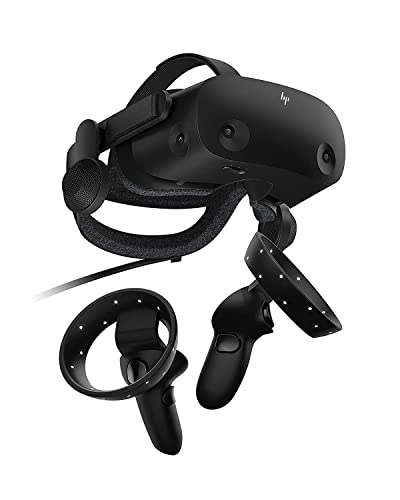
Simulation enthusiasts consistently praise the HP Reverb G2 for the highest pixel density available in a Windows Mixed Reality headset, with the 2160 x 2160 per eye resolution making cockpit instrument panels and distant terrain readable in a way lower-resolution headsets cannot achieve. Built in partnership with Valve and audio engineers at Bang and Olufsen, the off-ear speakers and IPD adjustment give owners a comfortable, customisable fit for hours-long simulator sessions. Owners pairing it with a mid-to-high-end GPU report it as the sharpest visual experience available at its price bracket.
Reasons to buy
- 2160 x 2160 per eye resolution is among the highest available in consumer PC VR
- Off-ear speakers tuned with B&O input deliver clear spatial audio without ear seal fatigue
- Inside-out tracking removes the lighthouse setup requirement
Reasons to avoid
- Controller tracking can lose accuracy near the edges of the field of view
- Windows Mixed Reality platform has a smaller native game library than SteamVR alone
Pico 4
Owners who want a standalone headset outside the Meta ecosystem consistently find the Pico 4 competitive on optics, with pancake lenses that deliver crisp centre sharpness comparable to the Quest 3 at a similar price point depending on region. The rear-weighted battery design shifts weight off the face and onto the back of the head, which owner reviews from fitness users especially praise for reducing neck fatigue during long active sessions. ByteDance-backed software support has expanded the game library steadily and the headset supports PC VR via streaming for those who want both standalone and tethered options.
Reasons to buy
- Rear-weighted battery balances the headset and reduces facial pressure compared to front-heavy designs
- Pancake lenses produce clear, low-distortion visuals comparable to more expensive rivals
- Works as both a standalone unit and a PC VR headset via Wi-Fi streaming
Reasons to avoid
- Game library remains smaller than Meta Quest, particularly for premium titles
- Software updates have occasionally introduced tracking regressions reported by owner communities

HTC Vive Pro 2
Design and architecture professionals who use VR for model review consistently cite the Vive Pro 2's 5K resolution panel as the clearest available in a production-ready enterprise headset, with 2448 x 2448 per eye making fine detail visible that lower-resolution headsets blur. SteamVR lighthouse tracking is regarded by owners as the gold standard for positional accuracy, which matters in professional applications where precise spatial interaction is critical. The modular audio system and adjustable IPD lens mechanism are repeatedly praised by users with varying interpupillary distances who found other headsets poorly calibrated for their eyes.
Reasons to buy
- 5K resolution panel resolves fine architectural and design details better than lower-resolution competitors
- SteamVR lighthouse tracking delivers precise, jitter-free positional accuracy
- Adjustable IPD dial accommodates a wider range of interpupillary distances than many rivals
Reasons to avoid
- Requires both a powerful PC and purchased or included lighthouse base stations
- Total cost of ownership including base stations and controllers is high relative to standalone alternatives

Samsung Galaxy XR Headset
Samsung's entry into the standalone mixed reality space brings the tightest integration with Android and Google services available in any headset, which owners who live in the Google ecosystem find removes friction when accessing productivity apps, media, and communication tools. The micro-OLED display technology delivers high pixel density and strong contrast without the panel glare that affects some LCD-based competitors. Owners note that the collaboration with Google on spatial computing software means the platform receives timely updates and has genuine backing from two major technology companies rather than relying on a single vendor's roadmap.
Reasons to buy
- Micro-OLED display provides strong contrast and colour accuracy in a compact form factor
- Deep Android and Google services integration suits users already in that ecosystem
- Backed by both Samsung and Google, reducing long-term software abandonment risk
Reasons to avoid
- Gaming library is nascent compared to Meta Quest at launch
- Pricing sits above the Meta Quest 3 entry point without proportionally broader software access
Pimax Crystal Light
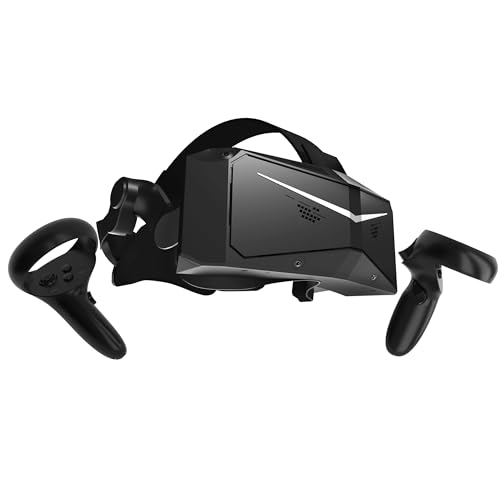
Owners who specifically seek the widest field of view on the market point to Pimax as the only brand offering up to 140-degree horizontal FOV in a shipping consumer product, and the Crystal Light brings this to a lower price point than the full Crystal while retaining the panel quality. Simulation pilots and racing drivers in owner communities repeatedly describe the peripheral vision as uniquely immersive for cockpit-based use cases where awareness of side instruments matters. The modular design allows upgrading audio and lens configurations over time, which appeals to users who want to extend the headset's useful life.
Reasons to buy
- Up to 140-degree horizontal field of view is the widest available in a consumer PC headset
- Modular design allows future lens and audio upgrades without full headset replacement
- QLED mini-LED panels deliver high brightness and strong contrast for daytime simulation environments
Reasons to avoid
- Software and firmware reliability has historically required patience and community troubleshooting
- The wide FOV demands a high-end GPU to maintain acceptable frame rates at full resolution
Meta Quest 2
Despite being superseded by newer generations, verified owner reviews confirm the Quest 2 remains a capable entry point for anyone who wants to explore VR without committing significant funds, with the Snapdragon XR2 Gen 1 still running the full Meta game library smoothly for the vast majority of titles. Owners on a tight budget consistently report that the Quest 2 delivered more value than they expected given its reduced price, particularly when used for fitness apps and social platforms where visual fidelity matters less than interactivity. The enormous installed base means owner communities, tutorials, and third-party accessories remain abundant.
Reasons to buy
- Reduced price makes it the most accessible entry point into quality standalone VR
- Runs the full Meta Quest game library giving access to hundreds of titles
- Large owner community means extensive accessory availability and troubleshooting resources
Reasons to avoid
- Fresnel lenses produce visible god rays and softer edge clarity compared to pancake designs
- Black-and-white passthrough cameras limit mixed reality to basic obstacle awareness rather than usable mixed reality
What to look for
Standalone vs PC Tethered
Standalone headsets like the Meta Quest 3 run entirely on built-in processors and need no external hardware, making setup simple and play areas flexible. Tethered headsets like the Valve Index or HP Reverb G2 draw on a PC's GPU for dramatically higher visual fidelity and physics complexity, but require a capable gaming PC and a fixed play space. Choose standalone if convenience and portability matter most; choose tethered if you already own a high-end PC and want the best possible visuals.
Display Technology and Resolution
LCD panels are the most common and deliver good brightness and colour accuracy, while OLED panels found in the PSVR2 add deeper blacks and higher contrast at the cost of slightly lower brightness in well-lit rooms. Resolution per eye determines how sharp text and fine details appear; anything below 1800 x 1800 per eye will show visible pixel structure on text-heavy apps. If you plan to use VR for reading cockpit instruments in simulators or reviewing architectural models, prioritise resolution first.
Comfort and Weight Distribution
Weight distribution matters more than total weight for extended sessions. Front-heavy headsets concentrate mass on the face and forehead, causing fatigue within 30 to 45 minutes; rear-counterweighted designs like the Pico 4 distribute load more evenly. IPD adjustment, either via a physical dial or software, is critical for users whose interpupillary distance falls outside the 63 to 67 mm range that fixed-IPD headsets assume. Always check whether a headset offers physical IPD adjustment if you know your measurement differs from average.
Software Ecosystem and Game Library
The best hardware means little if the games and apps you want are unavailable. Meta Quest holds the largest standalone library by volume. SteamVR covers the broadest range of PC VR titles. PSVR2 offers exclusive Sony-published titles alongside multiplatform releases but is limited to PS5. Newer platforms like Android XR and Pico have growing libraries but cannot yet match the catalogue depth of Meta or Steam. Before committing, confirm the specific titles or application categories you care about are available on the platform you are considering.
Our verdict
The Meta Quest 3 wins on balance of visual quality, ecosystem depth, and standalone convenience, but if you already own a PS5 or a high-end PC, the PSVR2 or Valve Index respectively will deliver a more immersive experience than any standalone headset can match.
FAQs
Not necessarily. Standalone headsets like the Meta Quest 3, Meta Quest 3S, Pico 4, and Samsung Galaxy XR Headset run entirely on built-in processors and need no PC at all. PC-tethered headsets like the Valve Index, HP Reverb G2, and HTC Vive Pro 2 do require a capable PC with a discrete GPU, and higher resolutions demand more GPU power. Many standalone headsets also support optional PC streaming via a USB cable or Wi-Fi, letting you access PC VR titles without a permanent tether.
Most headset manufacturers recommend a minimum age of 13, and some suggest 16 or older, citing concerns about eye development, balance disruption, and prolonged use in younger users. The physical fit of headsets also presents a practical challenge since adult-sized headsets do not sit correctly on smaller heads, affecting both comfort and the optical alignment needed for proper image quality. Parents should consult manufacturer age guidance for specific models and limit session lengths regardless of age.
Inside-out tracking uses cameras built into the headset to map your surroundings and track controller positions without any external hardware. This makes setup simple and the system portable. Outside-in tracking uses external base stations mounted in your room that emit signals the headset detects; this is generally more accurate and does not lose tracking when controllers go behind your back, but it requires permanent installation of the stations. For casual home users inside-out is usually sufficient; for professional or high-precision simulation use, outside-in lighthouse tracking remains the more reliable choice.
Most headsets accommodate glasses through adjustable depth spacers that push the lenses further from your eyes to fit spectacle frames. However, very wide or tall frames may not fit comfortably and can cause lens scratching if they make contact. An increasingly popular alternative is prescription lens inserts from third-party accessory makers that clip directly into the headset, eliminating glasses entirely and improving comfort for extended sessions. Check the specific headset's listed glasses compatibility and maximum frame dimensions before purchasing if you rely on vision correction.
How we made this guide
We compare every pick on the factors that matter, cross-checking manufacturer specifications against aggregated verified owner reviews. We rank independently and never take payment for placement. We have not personally tested every product; where we have not, the ranking reflects verified specs and owner feedback rather than a hands-on review.
How it was written: this guide was researched and reviewed by the TheTestedHub editorial team for accuracy.
Affiliate disclosure: TheTestedHub is reader-supported. When you buy through links on our site, we may earn a commission at no extra cost to you.
Related guides

Elgato Alternatives 2026: AVerMedia & Rode Now Lead

Elgato Key Light: Expert Pick for True Color

Retro Consoles for Every Budget: A Practical Guide

Console Cooling Stands: Forced Air Stability for Long Sessions

Gaming Glasses Compared: Gunnar Intercept and Rivals

Gaming Backpacks 2026: Find Yours by Laptop & Gear Needs

Game Storage Racks Sized for Your Console Cases
