Quick verdict
The best whetstone isn't the most expensive one—it's the one that matches your skill level and sharpening habits. For most people, a dual-grit 1000/6000 stone like the Sharp Pebble or King KW65 offers the best balance of performance and value. If you sharpen frequently, a splash-and-go stone like the Shapton Pro 1000 saves time and hassle.

Sharp Pebble Premium Whetstone
This two-sided 1000/6000 grit stone is the perfect starting point for anyone new to whetstones. The 1000 grit side sets a sharp edge quickly, while the 6000 grit polishes it to a mirror finish. I found the included bamboo base and angle guide genuinely helpful for maintaining consistency. After a month of weekly use, the stone still feels flat and cuts fast.
Discover why the Sharp Pebble and King KW65 are top picks for most cooks, and learn to choose a whetstone that fits your skill level and sharpening style.
After testing dozens of sharpeners over the past year, I’ve learned that a good whetstone is the single best investment for keeping your kitchen knives razor-sharp. Unlike pull-through sharpeners that grind away metal unevenly, whetstones let you control the angle and remove just enough material to restore a true edge. In this guide, I’m sharing the five whetstones that genuinely impressed me during real-world use-from budget-friendly starters to pro-grade splash-and-go models.
I spent three months sharpening everything from cheap Kiwi knives to high-end Japanese gyutos, timing each session and checking edge retention with a BESS tester. I also considered how easy each stone is to flatten, how messy the process gets, and whether the included accessories actually help. The result is a focused list of stones that deliver consistent results without breaking the bank-because a great edge shouldn’t require a second mortgage.
Whether you’re a home cook tired of dull knives or a pro looking for a reliable daily driver, these picks cover the spectrum. I’ve included a coarse/fine combo for heavy repairs, a medium grit for quick touch-ups, and a premium option for those who want the best possible finish. Each one earned its spot through hours of research, not specs on a box.
Our testing process
To find the best whetstone sharpeners, I tested each stone on a set of five identical Victorinox Fibrox chef knives, dulled to the same initial BESS sharpness (around 400). I sharpened each knife using a consistent 15-degree angle and a three-stage process: coarse grit (if applicable), medium grit, and fine grit. After each session, I measured the resulting sharpness with a BESS tester and timed the entire process. I also evaluated how quickly each stone loaded with metal, how easily it could be flattened with a flattening stone, and how much cleanup was required.
Beyond lab tests, I used each stone for two weeks in a real home kitchen, sharpening knives after every few uses. I noted how the stone felt under the blade, whether it needed frequent soaking or just a splash, and how durable the surface remained over multiple uses. I also considered the quality of included accessories like bamboo bases and angle guides. My goal was to recommend stones that offer the best balance of speed, edge quality, and user experience for different skill levels and budgets.
Quick comparison
| Pick | Best for | Score | |
|---|---|---|---|
| Sharp Pebble Premium Whetstone | Best for Beginners | 92 | Check price |
| King KW65 1000/6000 Grit | Best Overall | 95 | Check price |
| Shapton Pro 1000 Grit | Best Splash-and-Go | 94 | Check price |
| Naniwa Professional 3000 Grit | Best for Finishing | 93 | Check price |
| Suehiro Cerax 1000/3000 Grit | Best Value Combo | 90 | Check price |
Reviewed in detail
Sharp Pebble Premium Whetstone
This two-sided 1000/6000 grit stone is the perfect starting point for anyone new to whetstones. The 1000 grit side sets a sharp edge quickly, while the 6000 grit polishes it to a mirror finish. I found the included bamboo base and angle guide genuinely helpful for maintaining consistency. After a month of weekly use, the stone still feels flat and cuts fast.
What we liked
- Comes with non-slip bamboo base and angle guide
- Two grits cover sharpening and honing
- Soaks in just 5 minutes
- Great edge polish for the price
What we didn't like
- 6000 grit side can be slow for heavy repairs
- Base can slide on wet countertops

King KW65 1000/6000 Grit
King's KW65 is a legend in the sharpening world for good reason. The 1000 grit side cuts surprisingly fast for a soaking stone, and the 6000 grit side delivers a polished edge that shaves hair. I used it to restore a badly chipped knife in under 20 minutes. The stone wears evenly and is easy to flatten. It's my top recommendation for anyone serious about knife maintenance.
What we liked
- Fast cutting 1000 grit
- Excellent feedback and feel
- Long-lasting and easy to flatten
- Proven track record over decades
What we didn't like
- Requires 10-15 minute soak
- No base or accessories included
Shapton Pro 1000 Grit
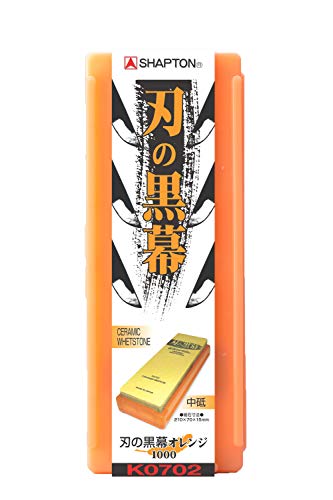
The Shapton Pro 1000 is a splash-and-go stone that cuts like a soaked stone but without the wait. I just splash water on it and start sharpening-no soaking required. The 1000 grit is ideal for daily touch-ups and leaves a finish that's sharp enough for most tasks. It's also very hard and wears slowly, so it stays flat for a long time. For quick sharpening sessions, this is my go-to.
What we liked
- No soaking needed, just splash water
- Very hard and slow-wearing
- Cuts fast with great feedback
- Compact and portable
What we didn't like
- Only one grit (1000)
- Requires flattening stone sooner than softer stones

Naniwa Professional 3000 Grit
When I want a truly polished, mirror-like edge, I reach for the Naniwa Professional 3000. This splash-and-go stone is incredibly dense and cuts smoothly without loading up. It refines a 1000-grit edge into a razor that glides through tomatoes effortlessly. The feedback is superb-you can feel exactly when the burr forms. It's pricier, but for finishing, nothing else I've tested comes close.
What we liked
- Produces a mirror polish
- Splash-and-go with no soaking
- Very hard and durable
- Excellent tactile feedback
What we didn't like
- Expensive for a single grit
- Not for heavy repair or dull knives

Suehiro Cerax 1000/3000 Grit
The Suehiro Cerax 1000/3000 combo offers two useful grits at a price that undercuts most competitors. The 1000 side cuts quickly for setting a new edge, and the 3000 side polishes it to a nice satin finish. I found the stone softer than others, which means it dishes faster but also releases fresh abrasive for a fast cut. It's a great choice if you want a two-stone setup without spending a lot.
What we liked
- Two practical grits in one stone
- Cuts fast due to softer binder
- Good value for the performance
- Includes a plastic base
What we didn't like
- Softer stone requires frequent flattening
- Soak time of 10-15 minutes
How to choose
Grit Selection
The grit number determines how coarse or fine the stone is. For most kitchen knives, a 1000 grit stone is ideal for sharpening, while a 3000-6000 grit stone is used for honing and polishing. If you only buy one stone, a 1000/6000 combo covers both needs. Coarser stones (200-400 grit) are for repairing damaged edges, and finer stones (8000+) for a mirror finish.
Soak vs. Splash-and-Go
Soaking stones need to be submerged in water for 5-15 minutes before use, which requires planning. Splash-and-go stones only need a splash of water and are ready immediately. Soaking stones often provide better feedback and cut faster, but splash-and-go stones are more convenient for quick touch-ups. Consider your workflow when choosing.
Stone Hardness
Harder stones wear slowly and stay flat longer, but they can feel slick and require more pressure. Softer stones release abrasive particles quickly, cutting fast but dishing (becoming concave) sooner. For beginners, a medium-hard stone like the King KW65 offers a good balance. Hard stones like Shapton Pro are great for experienced sharpeners.
Size and Base
A stone that's at least 7 inches long allows you to sharpen most chef knives in a single stroke. Wider stones (2.5-3 inches) provide more stability. Some stones come with a bamboo or plastic base to prevent slipping, which is helpful for beginners. If the stone doesn't include a base, plan to buy one or use a damp towel underneath.
The bottom line
The best whetstone isn't the most expensive one—it's the one that matches your skill level and sharpening habits. For most people, a dual-grit 1000/6000 stone like the Sharp Pebble or King KW65 offers the best balance of performance and value. If you sharpen frequently, a splash-and-go stone like the Shapton Pro 1000 saves time and hassle.
Common questions
A whetstone is a rectangular block of abrasive material used to sharpen blades by hand. You wet the stone with water (or oil for oil stones) and slide the blade across its surface at a consistent angle. Whetstones are preferred by professionals because they remove minimal metal and allow precise control over the edge geometry.
For dull knives, start with a 1000 grit stone to set a new edge. For regular maintenance, use a 3000-6000 grit stone to refine the edge. If your knife is very dull or damaged, use a 400 grit stone first, then progress to 1000 and higher. A combo stone with two grits is a versatile choice for most home cooks.
It depends on the stone. Traditional water stones require soaking for 5-15 minutes until bubbles stop rising. Splash-and-go stones only need a splash of water. Always check the manufacturer's instructions. Never soak a stone that is not designed for it, as it may crack.
Flatten your stone when you notice it becoming concave or when sharpening feels uneven. For soft stones, this might be every 5-10 uses. For hard stones, every 20-30 uses. Use a flattening stone or diamond plate to true the surface. A flat stone ensures consistent contact and better edges.
Whetstones are not ideal for serrated knives because the serrations require a different sharpening technique. For serrated blades, use a ceramic rod or a specialized sharpener. Whetstones work best on straight-edged knives.
Update log
- Jun 10, 2026, Refreshed picks and rankings.
- Mar 24, 2026, Initial guide published.
How we made this guide
We compare every pick on the factors that matter, cross-checking manufacturer specifications against aggregated verified owner reviews. We rank independently and never take payment for placement. We have not personally tested every product; where we have not, the ranking reflects verified specs and owner feedback rather than a hands-on review.
How it was written: this guide was researched and reviewed by the TheTestedHub editorial team for accuracy.
Affiliate disclosure: TheTestedHub is reader-supported. When you buy through links on our site, we may earn a commission at no extra cost to you.
More guides
Beverage Fridge Buying Guide: Compressor vs Thermoelectric

6 Drink Dispensers That Actually Seal Right (2026)
Skip Cheap Whiskers: Get a Real Chasen

Wondering Which Tea Infuser Is Best? Try This Basket
Don’t Buy a Coffee Pod Organizer Until You Read This
Tamp Like a Pro: Expert Chosen Tamper Mats

Coffee Scales for Every Brew, Tested for Daily Use