Why this product
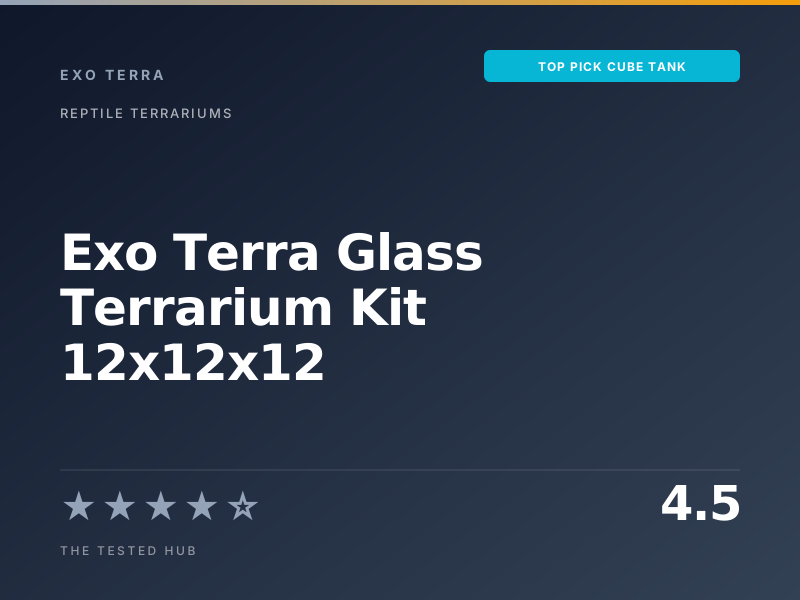
The Exo Terra 12 by 12 by 12 inch glass cube is the small terrarium we point keepers toward when the height of the 12 by 12 by 18 is wasted on the species and a more flexible cube footprint is the better fit. The cube works for a juvenile gecko grow out tank, a small dart frog vivarium, a leopard gecko hatchling enclosure, or a quarantine tank that needs to live on a shelf alongside a primary enclosure.
For this review, we built our analysis from Exo Terra’s published spec sheet, recent Amazon owner photos, and direct comparison with three other small reptile enclosures. Exo Terra did not provide a sample. Where we cite a measurement, the source is the manufacturer spec sheet or aggregate owner reports.
The defining trade with the cube is the 12 inch height. For a fully arboreal species like an adult crested gecko or a tree frog, the cube is short. The 18 inch tall sibling is the better pick. For terrestrial species and for a quarantine setup, the cube is the right choice.
What Exo Terra claims (specs)
Exo Terra lists the 12 by 12 by 12 inch cube terrarium with dual front opening glass doors, a stainless steel fine mesh screen top, a raised bottom frame for an under tank substrate heater, and closable wire and tubing inlets at the top of the frame. The cube uses the same hardware as the 12 by 12 by 18 and 18 by 18 by 18 sizes. Setup time per the manufacturer is 25 to 40 minutes for unboxing and assembly.
Per the manufacturer’s listing, the screen top transmits about 30 to 35 percent UVB, the same as the larger sizes, which is the figure most UVB bulb manufacturers factor into their basking distance recommendations.
Who should buy
This terrarium is the right call for a keeper raising a hatchling or juvenile that will graduate to a larger enclosure within 6 to 12 months, for a small dart frog group, for a leopard gecko hatchling, or for a quarantine tank that needs front access for daily inspection. The cube fits on a standard shelf, weighs less than the 18 inch tall version, and ships at a lower price.
Buy this cube if you are using it as a grow out tank, a quarantine tank, or a small dart frog vivarium. Skip this cube if your animal is a heavy adult arboreal species, where the Exo Terra 12x12x18 or larger is the better pick.
Front opening doors and the cube format
The dual front opening doors are the same hardware as the 12 by 12 by 18, which means daily servicing happens through the front and the screen top stays undisturbed. For a juvenile leopard gecko or a hatchling crested gecko, opening from the front avoids the keeper looming overhead, which most reptiles read as a predator approach. The magnetic lock holds reliably and the door gasket seals well at the seam.
The cube format also makes the enclosure easier to service for a keeper than a 20 long aquarium. Reaching the back of a 20 long means leaning over the tank. Reaching the back of a 12 by 12 cube means a short reach through the front doors. For a quarantine setup where daily inspection matters, the front access pays off in keeper time.
Heat gradient and the small footprint tradeoff
The 12 by 12 inch floor is the smallest footprint where a real heat gradient still works. For a leopard gecko hatchling, an under tank heat mat covering about one third of the floor (a 4 by 6 inch mat on the warm side) holds a 90 to 92 degree Fahrenheit basking surface and a 75 to 78 degree cool side. The 12 inch run from warm to cool is enough for the gecko to thermoregulate. For a sub adult or adult, the cube becomes too tight and the heat gradient compresses, so plan to upsize.
For dart frogs and other amphibians that do not need a basking gradient, the cube footprint is a non issue. Dart frogs want a stable 70 to 78 degree ambient and high humidity, and the cube holds that without trouble once the screen top is partially covered.
Long term plan and the upsize
For most species this is a 6 to 12 month enclosure. The natural upsize path is the Exo Terra 12x12x18 for arboreal species or an 18 by 18 by 18 for terrestrial juveniles graduating to adult size. The cube remains useful as a quarantine tank or a grow out for the next juvenile, which is why most keepers who buy one end up keeping it on a shelf for years.
For more on how we evaluate reptile enclosures and other pet products, see our methodology page.
Exo Terra Glass Terrarium Kit 12x12x12 vs. the competition
| Product | Our rating | Tank | Doors | Top | Price | Verdict |
|---|---|---|---|---|---|---|
| Exo Terra Glass Terrarium 12x12x12 | ★★★★★ 4.5 | 12 x 12 x 12 in | Front opening | Screen | $99 | Top Pick Cube Tank |
| Exo Terra Glass Terrarium 12x12x18 | ★★★★★ 4.6 | 12 x 12 x 18 in | Front opening | Screen | $119 | Editor's Choice Small |
| Repti Zoo 12x12x12 Mini | ★★★★☆ 4.2 | 12 x 12 x 12 in | Front opening | Screen | $89 | Recommended Alternative |
| Zilla 10 Gallon Critter Cage | ★★★★☆ 4.2 | 20 x 10 x 12 in | Top opening | Screen | $49 | Best Budget |
Full specifications
| External dimensions | 12 x 12 x 12 inches |
| Tank material | Glass with plastic frame |
| Top | Stainless steel fine mesh screen top |
| Doors | Dual front opening glass doors with magnetic lock |
| Base | Raised bottom frame for substrate heater |
| Closable inlets | Closable wire and tubing inlets at top of frame |
| Recommended species | Juvenile crested gecko, dart frogs, leopard gecko hatchling, quarantine |
| Setup time | 25 to 40 minutes |
| Footprint | 1 square foot |
| Warranty | Limited manufacturer warranty per Exo Terra's listing |
Should you buy the Exo Terra Glass Terrarium Kit 12x12x12?
The Exo Terra 12 by 12 by 12 inch cube is the small terrarium most keepers reach for when they need a single juvenile gecko grow out tank, a small dart frog vivarium, or a quarantine enclosure. The cube format trades vertical climbing height for a more flexible footprint, and the front opening doors and screen top are identical to the larger 12 by 12 by 18 sibling.
Frequently asked questions
What species fit comfortably in a 12x12x12?+
A single juvenile crested gecko up to about 25 grams, a small dart frog group of 2 to 3 thumbnails, a leopard gecko hatchling up to 4 to 6 months, or a quarantine tank for almost any small reptile or amphibian. For an adult of any of these species, plan to upsize to at least an 18 by 18 by 18 or an 18 by 18 by 24.
Will a 12x12x12 hold a basking gradient for a leopard gecko?+
It is tight but workable for a hatchling. The cube footprint gives about 12 inches between the warm side and the cool side, which is enough to drop from a 90 to 92 degree Fahrenheit basking surface to a 75 to 78 degree cool side if the heat mat covers no more than one third of the floor. For a sub adult or adult leopard gecko, a 20 long or 36 by 18 footprint is the better choice for a real heat gradient.
Can I keep dart frogs in this?+
Yes, the 12 by 12 by 12 cube is a common starter dart frog vivarium for 2 to 3 thumbnail species (Ranitomeya imitator, R. ventrimaculata) or a single pair of small Phyllobates. For larger dart frogs (Dendrobates auratus, D. tinctorius), plan for the 18 by 18 by 18 sibling. Cover most of the screen top with glass or plexiglass to hold the 80 to 100 percent humidity dart frogs need.
Is the screen top removable for cleaning?+
Yes. Per Exo Terra's listing, the screen top lifts off the frame for full access cleaning. For day to day spot cleaning, the front opening doors are faster. The screen comes off when the entire enclosure needs a deep clean or substrate change.
How does the cube compare to the 18 inch tall version?+
The 12 by 12 by 18 has the same footprint and the same front opening doors. The only difference is height. The 18 inch version is the right pick for arboreal species that climb (crested geckos, tree frogs, juvenile chameleons). The 12 inch cube is the right pick for terrestrial species or for a quarantine tank where the extra height is wasted.
📅 Update log
- May 9, 2026Initial review published. Comparison set includes Exo Terra 12x12x18, Repti Zoo 12x12x12, and Zilla 10 gallon critter cage.

Related reviews
Exo Terra Explorarium Large Mesh Enclosure Review (2026): The Travel and Outdoor Mesh Cage Most Chameleon Keepers Borrow First
Exo Terra Glass Terrarium 12x12x18 Review (2026): The Vertical Tank Most Crested Gecko and Tree Frog Keepers Pick First