Why this product
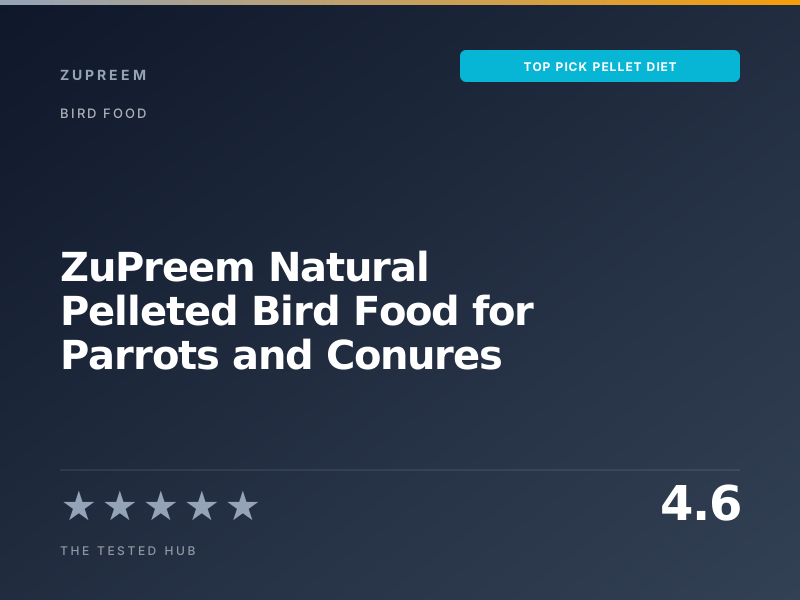
ZuPreem Natural Pelleted Bird Food is the pellet base most avian veterinarians recommend as the primary diet for Conures, Quakers, Senegals, Pionus, Caiques, and small Amazons. The argument for pellets over seed mixes is straightforward. Birds picking through seed in a bowl select favorites and skip the rest, which produces nutritional gaps over months and years. A complete pellet captures the full vitamin, mineral, and protein balance in every bite, which closes the gap. ZuPreem Natural is the no artificial color version of the line, which removes the bright red and green dyes some owners would rather avoid without changing the underlying nutritional formulation.
For this review, we built our analysis from ZuPreem’s published ingredient list and feeding guide, recent Amazon owner reviews and long form feeding notes, and direct comparison with three other parrot diets in the same product range. ZuPreem did not provide a sample. Where we cite a number, the source is the manufacturer label or aggregate owner reports.
The defining trade is transition difficulty. A bird raised on seed mix takes time to accept pellets, and some birds resist for weeks. That is the trade you make for a complete diet. The owners who push through the transition usually report a healthier bird at one year out compared with the seed only baseline.
What ZuPreem claims
ZuPreem lists Natural as a complete pelleted diet for medium parrots and conures. Primary ingredients on the label include ground corn, soybean meal, ground wheat, vegetable oil, and a vitamin and mineral premix. The product has no artificial colors, no artificial flavors, and no preservatives in the formulation. ZuPreem positions Natural as the daily diet base for the named species, with fresh fruits and vegetables added for variety.
ZuPreem also publishes a feeding guide on the bag listing daily serving amounts by species and weight. For a 100 gram Sun Conure, the guide lists roughly 1 to 2 tablespoons of pellets daily depending on activity level. For a 300 gram Quaker, the guide lists roughly 2 to 4 tablespoons. The guide is reasonable starting math, with daily weight monitoring to fine tune from there.
Who should buy
This product is the right call for an owner who has decided to run a pellet base diet for their medium parrot or conure and wants a no artificial color formulation. New parrot owners coming home from a breeder who already weaned the bird onto pellets, owners transitioning from seed mixes after avian veterinary advice, and multi bird households running pellets across multiple species all benefit.
Buy this product if you have a Conure, Quaker, Senegal, Caique, Pionus, or small Amazon and want a sourcable, widely available, vet recommended pellet base. Buy this product if you prefer no artificial colors. Buy this product if your bird has accepted pellets in the past and you are looking to standardize on one brand.
Skip this product if your bird is in a different size class. ZuPreem makes Small, Medium, and Large versions of the Natural line. Pick the size that matches the bird’s beak, not the wrong size at a discount. Skip this product if your bird has been diagnosed with a specific dietary condition that requires a prescription diet.
For a larger species in the African Grey or Amazon range, ZuPreem makes a Medium pellet size in the same Natural line. For a treat layer alongside ZuPreem Natural, the Kaytee Fiesta Parakeet Food covers the foraging layer for parakeet sized birds.
Pellet base versus seed mix in real diets
The argument for a pellet base over a seed only diet is consistent across the avian veterinary literature and across long form parrot owner reports. Birds eating only seed pick favorites, which produces deficiencies in vitamin A, calcium, and several trace minerals over years. The visible symptoms can include feather quality changes, brittle beak growth, and reduced reproductive health in breeding pairs. The fix is straightforward: add a complete pellet as the base of the diet and reserve seed mixes for foraging and treats.
ZuPreem Natural sits at the middle of the pellet market on price. Roudybush is more expensive and slightly more recommended in some avian veterinary circles. Harrison’s Bird Foods is more expensive again and recommended for specific dietary cases. ZuPreem covers the practical baseline for most owners at a price that supports daily feeding without strain.
Natural versus FruitBlend and the color question
The choice between ZuPreem Natural and FruitBlend is largely about artificial colors. FruitBlend uses red, orange, yellow, and green dyes to color the pellets and to add fruit flavoring. Natural uses no artificial colors. The underlying nutritional formulations are similar.
Owners who notice bright droppings on FruitBlend often switch to Natural to remove the dye source. Owners whose birds eat FruitBlend readily and reject Natural sometimes stay with FruitBlend because food acceptance is the bigger question. Both are valid. Pick the version that the bird eats consistently.
Transition strategy and food refusal
A bird raised on seed mix will not accept a pellet bowl on day one. The standard transition strategy is to mix a small amount of pellet into the existing seed bowl, increase the pellet ratio over two to four weeks, and watch the bird’s weight daily. Some birds switch in two days. Others refuse pellets for two weeks and then accept them suddenly. Some refuse entirely.
If a bird stops eating during a pellet transition, the right answer is to back up the transition or to contact an avian veterinarian. Do not let a bird go hungry. Crashes in body weight in seed only birds attempting a forced pellet transition are a real risk, and the fix is a slower transition with avian veterinary support, not a stricter one.
For more on how we evaluate bird food and other pet products, see our methodology page. If you are looking for a treat layer to use alongside the ZuPreem Natural pellet base, the Kaytee Fiesta Parakeet Food is the right product for parakeet sized foraging.
ZuPreem Natural Pelleted Bird Food for Parrots and Conures vs. the competition
| Product | Our rating | Type | Colors | Primary diet | Price | Verdict |
|---|---|---|---|---|---|---|
| ZuPreem Natural Parrot and Conure | ★★★★★ 4.6 | Pellet | Natural | Yes | $28 | Top Pick Pellet Diet |
| ZuPreem FruitBlend Medium | ★★★★★ 4.6 | Pellet | Artificial fruit colors | Yes | $26 | Colorful Alternative |
| Roudybush Daily Maintenance Medium | ★★★★★ 4.7 | Pellet | Natural | Yes | $39 | Premium Pick |
| Kaytee Fiesta Parakeet Mix | ★★★★☆ 4.4 | Mixed seed | Natural | No | $14 | Treat Layer Only |
Full specifications
| Format | Uniform pelleted complete diet |
| Recommended for | Conures, Quakers, Senegals, Caiques, Pionus, small Amazons |
| Artificial colors | None |
| Primary ingredients | Ground corn, soybean meal, ground wheat, vegetable oil, vitamin and mineral premix |
| Recommended use | Primary daily diet for medium parrots and conures |
| Pellet size | Sized for medium parrots, smaller and larger versions available in the line |
| Storage | Cool dry place, resealable bag |
| Daily serving | Per ZuPreem feeding guide on the bag, varies by species |
| Manufacturer | ZuPreem |
| Country of manufacture | United States, per ZuPreem |
Should you buy the ZuPreem Natural Pelleted Bird Food for Parrots and Conures?
ZuPreem Natural is the pellet base we recommend most often as the primary diet for Conures, Quakers, Senegals, Pionus, Caiques, and small Amazons. The pellet is a uniform formulation that captures the nutritional balance birds skip when picking through seed mixes, and the no artificial color version reduces the bright red and green dyes some owners would rather avoid. ZuPreem Natural lands in the middle of the pellet market on price, with strong avian veterinary recommendation and consistent palatability across a wide species range.
Frequently asked questions
Is ZuPreem Natural a complete diet on its own?+
ZuPreem positions Natural as a complete pellet diet for medium parrots and conures. Most avian veterinarians treat pellets as the nutritional base of a healthy parrot diet, with fresh vegetables and fruits added two or three times a week for variety, and a small treat seed layer for enrichment. ZuPreem Natural plus a fresh produce rotation is a widely recommended setup. ZuPreem Natural alone with no fresh food is workable but less varied than the recommended approach.
What is the difference between ZuPreem Natural and FruitBlend?+
FruitBlend uses fruit flavors and bright artificial colors. Natural uses no artificial colors and no fruit flavoring. The pellets in Natural are a uniform tan color. The pellets in FruitBlend are red, orange, yellow, and green. Some owners prefer FruitBlend because the colors look like food and birds eat them readily. Some owners prefer Natural because the artificial colors are unnecessary and some birds with sensitivities tolerate Natural better.
How do I transition a seed only bird to pellets?+
Slowly. The standard avian veterinary protocol is to mix a small amount of pellet into the existing seed bowl, increase the pellet ratio over two to four weeks, and watch the bird's weight daily. Some birds switch easily. Others refuse pellets entirely for days, which is when a slower transition with multiple food formats works better. If your bird stops eating, contact an avian veterinarian. Do not let a bird go hungry trying to force a pellet conversion.
What species does this size pellet fit?+
ZuPreem sells the Natural line in multiple pellet sizes. The Parrot and Conure size is for Conures, Quakers, Senegals, Caiques, Pionus, and small Amazons. The Medium and Large pellet sizes serve African Greys, Amazons, and larger species. The Small pellet size serves cockatiels, parakeets, and lovebirds. Pick the size that matches the bird's beak.
How long does a bag last?+
Depends on bag size and bird. The 3 pound parrot bag lasts roughly six to eight weeks for one Sun Conure on a pellet base diet with fresh produce supplements. For two Conures, three to four weeks. The 12 pound bag is the better value for multi bird households or single owners who do not want to reorder monthly. Larger bags need a sealed storage container in humid climates.
📅 Update log
- May 9, 2026Initial review published. Comparison set covers ZuPreem FruitBlend Medium, Roudybush Daily Maintenance Medium, and Kaytee Fiesta.

Related reviews
Harrison's Bird Foods Adult Lifetime Coarse 5lb Review (2026): The Pellet Diet Avian Vets Recommend Most Often
Kaytee Fiesta Parakeet Food 4.5lb Review (2026): The Mixed Seed Diet Most Parakeet Owners Use As A Treat Layer