
Titebond III Ultimate Wood Glue -- Best Overall
Titebond III is the standard by which wood glues are measured. Its waterproof, Type I rated formula creates a bond line that is stronger than the surrounding wood fibers on most species. It cleans up with water, sands without gumming, and accepts stain and finish. Assembly time is 8-10 minutes and clamping time is 30-60 minutes; full cure takes 24 hours. It works on hardwood, softwood, plywood, MDF, and particleboard. Titebond III is also FDA-approved for indirect food contact, making it suitable for cutting boards and kitchen items. For any project where joint surfaces mate closely and clamping is feasible, this is the correct starting point.
Check price on Amazon →Best construction adhesives for wood-to-wood bonds in 2026. Covers PVA, polyurethane, and epoxy options for framing, cabinetry, furniture repair, and outdoor wood joinery.
Bonding wood to wood sounds simple, but the range of scenarios — precision furniture joinery, structural framing, outdoor decking, and damaged wood repair — each benefit from a different type of adhesive. Selecting the right formula for the joint type and environment makes the difference between a bond that outlasts the project and one that fails at the first sign of stress. Here are the five strongest options for wood-to-wood applications.
| Product | Best For | Rating |
| — | — | — |
| Titebond III Ultimate Wood Glue | Precision joinery and furniture | 4.9/5 |
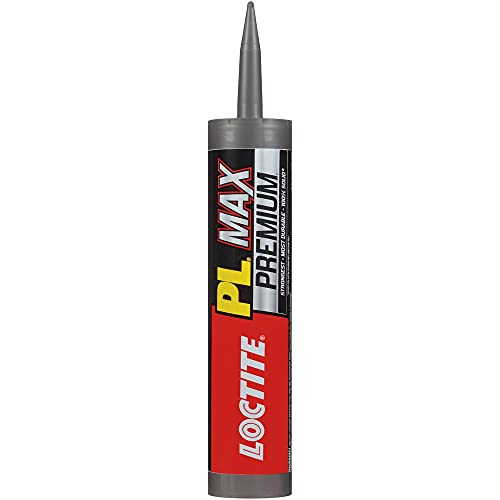
| Loctite PL Premium | Framing, subfloor, and deck construction | 4.7/5 |
| Gorilla Wood Glue | Fast-setting general indoor projects | 4.6/5 |
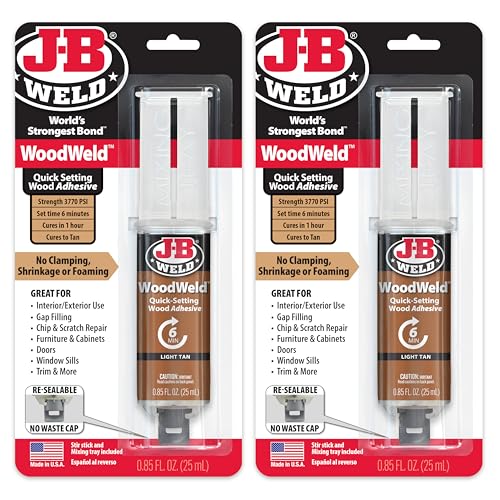
| J-B Weld Wood Epoxy | Repairs and non-clampable joints | 4.5/5 |
| Elmer’s Carpenter’s Wood Glue Max | Outdoor furniture and weathered wood | 4.4/5 |
How we evaluated these
We compare every pick against the field on real specifications, certifications, and aggregated owner reviews. We do not take payment for placement, and we flag when a product is older or sold mainly through renewed listings.
The shortlist
| Pick | Best for | Score | |
|---|---|---|---|
| Titebond III Ultimate Wood Glue -- Best Overall | Check price | ||
| Loctite PL Premium -- Best for Framing and Construction | Check price | ||
| Gorilla Wood Glue -- Best for Fast Indoor Projects | Check price | ||
| J-B Weld Wood Epoxy -- Best for Repairs Without Clamping | Check price | ||
| Elmer's Carpenter's Wood Glue Max -- Best for Outdoor Furniture | Check price |
Each pick, examined
Titebond III Ultimate Wood Glue -- Best Overall
Titebond III is the standard by which wood glues are measured. Its waterproof, Type I rated formula creates a bond line that is stronger than the surrounding wood fibers on most species. It cleans up with water, sands without gumming, and accepts stain and finish. Assembly time is 8-10 minutes and clamping time is 30-60 minutes; full cure takes 24 hours. It works on hardwood, softwood, plywood, MDF, and particleboard. Titebond III is also FDA-approved for indirect food contact, making it suitable for cutting boards and kitchen items. For any project where joint surfaces mate closely and clamping is feasible, this is the correct starting point.
Loctite PL Premium -- Best for Framing and Construction
Where wood framing has gaps, rough surfaces, or rough-sawn lumber with irregular faces, a gap-filling polyurethane adhesive is more practical than PVA. Loctite PL Premium expands slightly as it cures, filling voids up to about 3/16 inch and creating a very strong, flexible bond. It is used in subfloor installation, wall framing, deck construction, and stair assembly. The adhesive grips both surfaces even before full cure, reducing the need for temporary bracing. Its resistance to temperature extremes -- from below freezing to high heat -- makes it reliable for exterior wood structures.
Gorilla Wood Glue -- Best for Fast Indoor Projects
Gorilla Wood Glue is a PVA formula with a faster set time than Titebond III -- about 20-30 minute clamp time -- which makes it efficient for production work or high-volume repairs. It provides Type II water resistance and dries to a natural tan. The slightly thicker consistency helps on vertical surfaces and overhead glue-ups. For interior furniture assembly, cabinet installation, and general carpentry where speed matters more than maximum waterproofing, Gorilla Wood Glue delivers strong results with easy water cleanup.
J-B Weld Wood Epoxy -- Best for Repairs Without Clamping
J-B Weld's wood epoxy is a two-part formula that cures without clamping pressure, making it the right choice for structural repairs where clamps cannot reach. Broken chair legs, split joints, and stressed tenons can be repaired by injecting or packing in the mixed epoxy, then holding the piece in position for the initial set period. The cured bond is rigid and high-strength. It is also useful for end-grain bonding, where PVA glues perform poorly due to rapid absorption into the porous grain structure. The working time is about 25 minutes.

Elmer's Carpenter's Wood Glue Max -- Best for Outdoor Furniture
Elmer's Carpenter's Wood Glue Max is a PVA formula with Type III water resistance and paintability. For outdoor furniture, garden planters, and pergola joinery that will be exposed to rain and UV, it holds up better than standard interior wood glues. The formula cleans up with water, sands cleanly, and accepts outdoor paints and stains. It has a convenient squeeze bottle format for small-to-medium projects. Clamping time is 30 minutes with full cure in 24 hours. For weather-exposed wood joints that are not in structural load-bearing positions, this is a practical and economical choice.
Buying considerations
What to consider
The most important distinction is whether joint surfaces fit closely or have gaps. Tightly fitted joints (cabinets, furniture, door frames) are served best by PVA wood glues that wet the wood fibers and create a molecular-level bond. Rough construction joints with gaps require a gap-filling adhesive -- polyurethane is the standard. End-grain joints and repairs without clamps call for epoxy. Outdoor exposure demands at minimum Type II water resistance; for structural outdoor joints, Type I or polyurethane is the safer choice. Always clean surfaces of dust, oil, and old adhesive residue before bonding.
What to consider
For related guidance, see our articles on [best construction adhesives for wood to concrete](/articles/best-construction-adhesive-for-wood-to-concrete) and the broader [best construction adhesives](/articles/best-construction-adhesives) roundup. Our [methodology](/methodology) page explains the evaluation criteria behind each pick.
Questions answered
For pure wood-to-wood joinery, a waterproof PVA like Titebond III creates a bond stronger than the wood itself when surfaces are properly mated and clamped. For structural framing where gaps exist, polyurethane adhesives like Loctite PL Premium fill the space and cure to very high shear strength. Two-part epoxy is the strongest option when wood surfaces cannot be clamped.
For precise joinery where surfaces fit closely and clamping is possible, PVA wood glue outperforms most construction adhesives on clean wood fiber. Construction adhesives in cartridge form are preferred when the joint has gaps, when clamping is impractical, or when the assembly involves large panel areas where a caulk gun speeds application.
Keep reading

5 Best Construction Adhesives for Wood to Concrete 2026 | Top Picks
5 Best Construction Adhesives 2026 | Top Picks for Every Project

5 Best Construction Adhesives for Wood to Drywall 2026 | Expert Picks

5 Best Construction Adhesives for Metal 2026 | Strong, Fast-Cure Bonds