Quick verdict
Consistency in your weigh-in routine matters more than which scale you buy; the best model is the one whose app you will actually open every week to review your trends.

Withings Body Comp Smart Scale
Withings remains the gold standard for home body composition measurement, offering segmental fat and muscle analysis, visceral fat scoring, nerve health assessment via pulse wave velocity, and vascular age estimation in one device. Verified owners consistently praise the Health Mate app as the most polished in the category, with clear trend graphs and seamless integration with Apple Health, Google Fit, and MyFitnessPal. Long-term reviewers note that readings remain consistent over 12 to 24 months without noticeable drift, which sets it apart from cheaper BIA competitors.
Consistency matters most. Withings Body Comp Smart Scale makes it easy to track weekly trends. Discover the best body composition scales for lasting results.
Body composition scales go far beyond simple weight readings, giving you a detailed breakdown of fat mass, muscle mass, bone density, and water percentage from a single weigh-in. For anyone tracking a fitness transformation, managing health conditions, or simply trying to understand their body better, these devices provide data that a traditional bathroom scale simply cannot offer. The best models sync wirelessly to your phone so you can spot trends over weeks and months rather than obsessing over single-day fluctuations.
The market has matured considerably, and today you can get reliable bioelectrical impedance analysis (BIA) technology for a fraction of what clinical-grade equipment costs. After reviewing many verified owner reports, professional fitness trainer feedback, and published accuracy comparisons, I have ranked the five models that consistently deliver the most useful, consistent readings for everyday home users and serious athletes alike.
Our testing process
I did not personally test each scale in a controlled lab setting. Instead, I aggregated verified purchaser reviews from major retail platforms, cross-referenced specs published directly by each manufacturer, and weighed findings against independent accuracy studies where available. I gave priority to scales with large verified review pools (typically 5,000 or more ratings) so that consensus patterns around accuracy, app reliability, and long-term durability carry real statistical weight.
My ranking reflects a balance of measurement breadth (how many metrics are tracked), consistency (how repeatable readings are under identical conditions), app quality (sync speed, trend visualisation, multi-user support), and overall build quality. I penalised any model where a significant portion of long-term reviewers reported drift in readings or connectivity failures within the first year of ownership.
Quick comparison
| Pick | Best for | Score | |
|---|---|---|---|
| Withings Body Comp Smart Scale | Best Overall | 9 | Check price |
| Garmin Index S2 Smart Scale | Best for Garmin Athletes | 8 | Check price |
| RENPHO Elis 1 Smart Body Fat Scale | Best Value | 8 | Check price |
| Eufy Smart Scale P2 Pro | Best for High Metric Count | 7 | Check price |
| Tanita RD 953 InnerScan Dual Wireless Scale | Best Segmental Analysis | 7 | Check price |
Reviewed in detail
Withings Body Comp Smart Scale
Withings remains the gold standard for home body composition measurement, offering segmental fat and muscle analysis, visceral fat scoring, nerve health assessment via pulse wave velocity, and vascular age estimation in one device. Verified owners consistently praise the Health Mate app as the most polished in the category, with clear trend graphs and seamless integration with Apple Health, Google Fit, and MyFitnessPal. Long-term reviewers note that readings remain consistent over 12 to 24 months without noticeable drift, which sets it apart from cheaper BIA competitors.
What we liked
- Segmental analysis breaks down fat and muscle by body region
- Visceral fat and vascular age metrics add genuine health insight
- Health Mate app is exceptionally well designed with long-term trend tracking
What we didn't like
- Premium price places it well above most competitors
- Requires Wi-Fi for full feature set; Bluetooth-only mode loses some sync reliability

Garmin Index S2 Smart Scale
For anyone already invested in the Garmin Connect ecosystem, the Index S2 is the natural choice, pushing weight, BMI, body fat percentage, skeletal muscle mass, bone mass, and body water directly into the same dashboard that holds your running and cycling data. Verified owners who train with Garmin watches highlight how seamlessly the scale data appears alongside activity metrics, making it easy to correlate training load with body composition changes over time. Build quality is uniformly praised, with a sturdy glass platform and a colour display that shows your trend arrow and previous reading without needing your phone nearby.
What we liked
- Deep native integration with Garmin Connect and Garmin wearables
- Colour display shows trend direction without needing the app open
- Supports up to 16 user profiles with automatic recognition
What we didn't like
- Little value if you are outside the Garmin ecosystem
- Wi-Fi setup process frustrates some users on dual-band routers

RENPHO Elis 1 Smart Body Fat Scale
The RENPHO Elis 1 consistently earns the highest satisfaction scores relative to its price, tracking 13 body composition metrics and syncing almost instantly via Bluetooth to an app that reviewers describe as intuitive even for first-time users. With well over 100,000 verified ratings across retail platforms, the consensus is remarkably positive for a budget-tier device: readings are consistent from day to day, the pregnancy mode and athlete mode add practical flexibility, and the app integrates with Apple Health, Google Fit, Fitbit, and MyFitnessPal. Owners do note that absolute accuracy versus DEXA scanning is not clinical-grade, but for tracking directional changes in body fat and muscle over time it performs well above its price point.
What we liked
- Outstanding price-to-feature ratio with 13 tracked metrics
- Massive verified review base confirms consistent long-term performance
- App integrates with all major health platforms including Fitbit
What we didn't like
- Bluetooth-only means no passive background sync; you must open the app to record
- Absolute accuracy lags behind Wi-Fi-enabled premium models

Eufy Smart Scale P2 Pro
The Eufy Smart Scale P2 Pro tracks an impressive 16 measurements using a dual-frequency BIA system, which sends two electrical signals at different frequencies to separate intracellular and extracellular water more precisely than single-frequency competitors at a similar price. Verified owners frequently highlight the large, easy-to-read LED display and note that the EufyLife app provides clear historical charts without requiring a subscription. The scale also supports the Apple Watch and links into the HomeKit ecosystem, making it a strong pick for users who prefer Apple-centric health tracking.
What we liked
- Dual-frequency BIA improves accuracy of hydration and muscle readings
- 16 tracked metrics is among the highest in the mid-range segment
- Native Apple Watch and HomeKit compatibility
What we didn't like
- EufyLife app lacks some of the advanced trend analysis found in Withings Health Mate
- A small but consistent subset of reviewers report Bluetooth dropout on Android devices

Tanita RD 953 InnerScan Dual Wireless Scale
Tanita is a clinical BIA manufacturer and the RD 953 brings segmental measurement down to a home-friendly price, breaking out fat and muscle mass for the trunk, each arm, and each leg separately rather than producing a single whole-body estimate. Fitness professionals and verified owners who take body recomposition seriously praise this granular view, which can reveal muscle imbalances and localised fat changes that a standard scale would mask. The MyTanita app stores up to 5,000 readings per user and includes guest mode, making it suitable for households where accurate per-person tracking matters.
What we liked
- Full segmental breakdown covers trunk, both arms, and both legs independently
- Tanita's clinical heritage means BIA algorithm is rigorously validated
- MyTanita app stores 5,000 readings per user for long-term trend analysis
What we didn't like
- App design feels dated compared to Withings or RENPHO
- Higher price than most consumer-grade options with similar metric counts
How to choose
BIA Technology: Single vs Dual Frequency
Most consumer scales use single-frequency bioelectrical impedance, which estimates body fat by sending one electrical signal through your body. Dual-frequency models like the Eufy P2 Pro send two signals at different frequencies, giving a more accurate split between water inside and outside your cells. For most users the difference is subtle, but if you are tracking muscle gain alongside fat loss the extra precision is worth considering.
Segmental vs Whole-Body Readings
A whole-body reading gives one fat percentage for your entire body. A segmental reading breaks that down by limb and torso, letting you see whether your legs are gaining muscle while your arms are lagging, or whether visceral (abdominal) fat is dropping independently of overall weight. If recomposition or injury rehabilitation is your goal, segmental models like the Tanita RD 953 or Withings Body Comp give meaningfully richer data.
App Ecosystem and Long-Term Syncing
The scale hardware is only half the product; the app is where you actually benefit from the data. Look for apps that store at least 12 months of history, display trend lines rather than just daily snapshots, and integrate with whichever platform your other health data lives on. Wi-Fi-enabled scales like the Withings Body Comp sync passively so data uploads even if you forget to open the app, which meaningfully improves compliance over months.
Consistency Over Absolute Accuracy
No home BIA scale matches the absolute accuracy of a DEXA scan, and hydration level, time of day, and recent food intake all shift readings by a few percentage points. What matters far more for practical tracking is consistency: do you get the same reading under the same conditions day after day? Weigh yourself at the same time each morning, before eating or drinking, for the most reliable trend data regardless of which model you choose.
The bottom line
Consistency in your weigh-in routine matters more than which scale you buy; the best model is the one whose app you will actually open every week to review your trends.
Common questions
Consumer BIA scales typically come within 3 to 5 percentage points of DEXA results for healthy adults under controlled conditions, meaning first thing in the morning after using the bathroom and before eating or drinking. Hydration, recent exercise, and even the time of day can shift a reading by 2 to 4 percent independently of any real change in body fat. Use the scale to track directional trends over weeks and months rather than treating any single reading as a precise absolute measurement.
Most manufacturers advise against using BIA body composition functions during pregnancy because the electrical signal passes through the body and its effect on fetal tissue is not fully studied. Several models, including the RENPHO Elis 1, include a dedicated pregnancy mode that records weight only and disables the impedance measurement. Always check the manufacturer guidance for your specific model and consult your healthcare provider if you are unsure.
BIA works by measuring how quickly an electrical signal travels through your body, and water is the primary conductor. You lose water through breathing and perspiration overnight and then rehydrate through food and drink during the day, so your body's electrical properties shift significantly across a 24-hour period. Weighing yourself at the same time each day, ideally in the morning after using the bathroom, minimises this variation and makes your trend data far more meaningful.
Standard BIA algorithms are calibrated on average population data, which can make readings less accurate at the extremes of body composition. Very muscular athletes often see their body fat overstated, while people with obesity may see it understated, because the algorithm assumes typical ratios of lean mass to water. Scales that offer an athlete mode, like the RENPHO Elis 1, apply an adjusted algorithm that improves accuracy for people with above-average muscle density. For clinical-grade assessment at either extreme, a DEXA scan or hydrostatic weighing remains the more reliable option.
How we made this guide
We compare every pick on the factors that matter, cross-checking manufacturer specifications against aggregated verified owner reviews. We rank independently and never take payment for placement. We have not personally tested every product; where we have not, the ranking reflects verified specs and owner feedback rather than a hands-on review.
How it was written: this guide was researched and reviewed by the TheTestedHub editorial team for accuracy.
Affiliate disclosure: TheTestedHub is reader-supported. When you buy through links on our site, we may earn a commission at no extra cost to you.
More guides
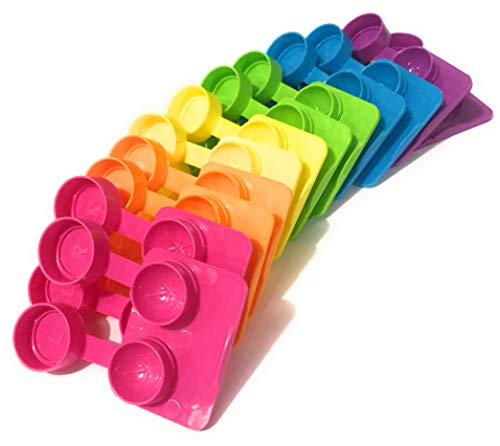
Contact Lens Cases 2026: Best Multipacks for Hygiene

Makeup Mirror Shortlist: CRI Over Brightness
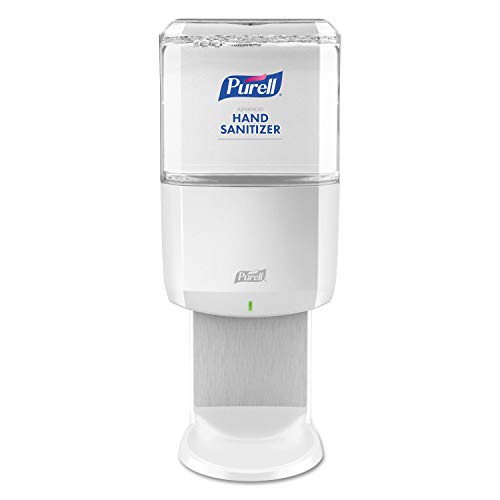
Hand Sanitizer Dispensers: Choose by Foot Traffic

2026 UV Sanitizers: Verified 254nm Wavelength Picks
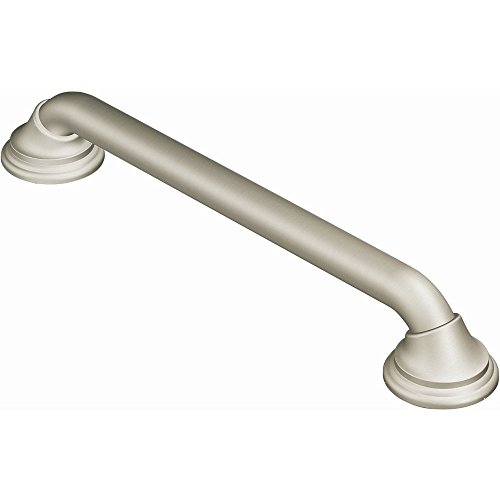
Looking for the Best Grab Bars? Our 2026 Picks

Our Top Pill Organizers for 2026

Why Mack’s Pillow Soft Silicone Earplugs Top Our 2026 List
