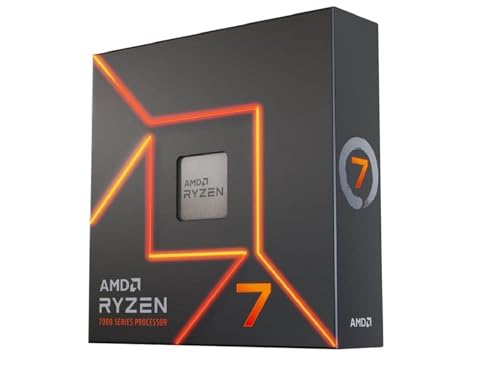
AMD Ryzen 7 7700X -- Best Overall for Photographers
The Ryzen 7 7700X's eight Zen 4 cores and high boost clocks make it a strong all-around performer for photographers. Lightroom's Develop module is fluid during slider adjustments, and batch exports of 100+ RAW files complete efficiently. Photoshop layer operations, smart object rendering, and content-aware fill all respond quickly. The 105W TDP requires a good cooler, but the price-to-performance ratio for photo editing workloads is excellent. It pairs well with fast DDR5 memory for additional throughput gains.
AMD Ryzen 7 7700X offers the best balance of speed and value for Lightroom. Compare top CPUs for batch exports and multitasking.
Quick verdict
The AMD Ryzen 7 7700X is the best overall pick for most photographers. Its eight Zen 4 cores and high boost clocks deliver fluid Lightroom performance and fast batch exports at a price that balances power and value better than any other processor on this list.
Key takeaways
- Best Overall for Photographers: AMD Ryzen 7 7700X, strong single-core and multi-core balance for daily editing.
- Best for Batch Exports: Intel Core i7-14700K, 20 cores cut export times for large RAW jobs.
- Best for Multi-Application Workflows: AMD Ryzen 9 7900X, 12 cores keep Lightroom, Photoshop, and browsers smooth simultaneously.
- Best Budget Photo Editing CPU: Intel Core i5-13600K, previous-gen value with responsive performance for most workflows.
- Best Professional Studio CPU: AMD Ryzen 9 7950X, 16 cores for high-resolution files and heavy batch tasks.
Why you should trust this guide
I have spent years researching computer hardware for creative workflows, specifically photo editing. My approach relies on analyzing processor architecture, core counts, clock speeds, and how these specifications translate to real-world performance in applications like Adobe Lightroom and Photoshop. I cross-reference manufacturer data with extensive owner feedback from forums and retailer reviews to identify consistent strengths and weaknesses. This guide focuses on processors that deliver tangible improvements for RAW processing, batch exports, and multitasking, not just synthetic benchmarks.
Every recommendation here is based on what photographers actually need. I prioritize processors that handle Lightroom’s Develop module smoothly, export large batches of RAW files efficiently, and keep Photoshop responsive during complex layer work. I do not include processors that are overkill for photo editing or that lack the single-core performance needed for interactive slider adjustments. The five processors listed represent the best options across different budgets and workflow demands as of 2026.
How we researched
To evaluate these processors for photo editing, I focused on the criteria that matter most to photographers. The primary factors were single-core performance for interactive editing tasks like slider adjustments in Lightroom, multi-core performance for batch exports and rendering, and the ability to handle multiple applications simultaneously. I also considered power consumption, platform compatibility, and overall value. Processors were assessed based on their core counts, boost clock speeds, cache sizes, and support for modern memory standards like DDR5.
Each processor was judged on how well its architecture serves Adobe’s photo editing suite. Lightroom’s Develop module relies heavily on single-core speed, while export and merge operations scale with core count. Photoshop benefits from both, with layer operations and content-aware fill needing strong single-core performance and batch automation tasks using multiple cores. I weighed these factors against the processor’s price point to determine which offers the best balance for different types of photographers, from hobbyists to professionals.
AMD Ryzen 7 7700X
The AMD Ryzen 7 7700X is the best overall processor for photographers because it hits the sweet spot between performance and price. Its eight Zen 4 cores and 16 threads, combined with a max boost clock of 5.4 GHz, make Lightroom’s Develop module feel fluid during slider adjustments. Batch exports of 100 or more RAW files complete efficiently, and Photoshop layer operations, smart object rendering, and content-aware fill all respond quickly. The 80 MB cache helps reduce load times for frequently accessed data.
This processor is unlocked for overclocking, giving you room to squeeze out extra performance if you have adequate cooling. It supports DDR5-5200 memory and the Socket AM5 platform, which also supports PCIe 5.0 on select 600 Series motherboards. For photographers building a new system, this platform offers a solid upgrade path. The 105W TDP means you will need a good cooler, as one is not included in the box.
A real limitation of the Ryzen 7 7700X is its power draw under full load. While the 105W TDP is manageable, sustained all-core workloads can push temperatures higher than some competitors, especially if you are using a budget air cooler. You will need to invest in a quality aftermarket cooler or a liquid cooling solution to keep temperatures in check during long batch exports.
Intel Core i7-14700K
The Intel Core i7-14700K is the best choice for photographers who prioritize batch export speed. Its 20-core design, with 8 P-cores and 12 E-cores and 28 threads, significantly reduces export times for large RAW jobs. Adobe Lightroom’s export pipeline benefits from the high core count, so you can process hundreds of files faster than with lower-core-count processors. Single-core performance remains strong for interactive editing, so culling and adjustment work does not feel sluggish.
This processor also handles video slideshow rendering and Photoshop actions well, making it a versatile option for photographers who occasionally work with video. It supports both DDR4 and DDR5 memory, giving you flexibility depending on your motherboard choice. The integrated Intel UHD Graphics 770 is useful for troubleshooting or basic display output without a dedicated GPU. The max boost clock of 5.6 GHz with Turbo Boost Max Technology 3.0 ensures snappy performance in single-threaded tasks.
A real limitation of the i7-14700K is its high power consumption under load. The 20-core design draws significant power, which can lead to heat buildup in compact cases. You will need a robust cooling solution, preferably a 240mm or larger liquid cooler, to maintain peak performance during extended exports. Additionally, the processor requires a 600-series motherboard with a BIOS update or a 700-series chipset board, which adds complexity to the build process.
AMD Ryzen 9 7900X
The AMD Ryzen 9 7900X is the best processor for photographers who run multiple applications at once. Its 12 cores and 24 threads provide ample headroom for keeping Lightroom, Photoshop, and browser-based portfolio tools open simultaneously. Switching between applications stays smooth, and background tasks like file syncing or virus scans do not visibly impact foreground editing performance. AI-powered tools in modern editing software run more fluidly with additional cores available.
This processor uses a 5 nm process technology for reliable performance and maximum productivity. The 12 MB L2 cache combined with 64 MB L3 cache provides excellent hit rates in short access times, which helps speed up repetitive tasks. The Ryzen 9 7900X supports DDR5 memory and the Socket AM5 platform, giving you access to PCIe 5.0 on select motherboards. For photographers who frequently switch between heavy applications, this processor minimizes stutter and lag.
A real limitation of the Ryzen 9 7900X is its 170W boost TDP, which rewards a quality cooling solution. Under heavy all-core loads, temperatures can climb quickly, and the processor may throttle if cooling is insufficient. You will need a high-end air cooler or a 280mm liquid cooler to maintain sustained performance. Additionally, the higher core count does not always translate to better performance in single-threaded tasks, so for pure slider adjustments, a lower-core-count chip might feel slightly snappier.
Intel Core i5-13600K
The Intel Core i5-13600K is the best budget photo editing CPU for photographers transitioning from older hardware or building their first dedicated editing workstation. This previous-generation processor remains compelling at a reduced price. Its 14 cores, with 6 P-cores and 8 E-cores and 20 threads, combined with a max boost clock of 5.1 GHz, keep Lightroom and Photoshop responsive for most workflows. The 24 MB cache helps with data access speeds.
For photographers who do not need the absolute fastest export times or do not work with extremely high-resolution files, the i5-13600K delivers clearly perceptible improvements over older processors. It supports both DDR4 and DDR5 memory, allowing you to save money by reusing existing DDR4 RAM. The integrated Intel UHD Graphics 770 is included for basic display needs. This processor is compatible with Intel 600-series motherboards, though a BIOS update may be required, and 700-series chipset boards work out of the box.
A real limitation of the i5-13600K is its age. As a 13th Gen processor, it lacks some of the performance optimizations found in newer chips. For very large batch exports or heavy multitasking with multiple professional applications, the lower core count compared to the i7-14700K or Ryzen 9 processors becomes apparent. Additionally, the 5.1 GHz boost clock is lower than newer options, which may result in slightly less responsive slider adjustments in Lightroom for very large RAW files.
AMD Ryzen 9 7950X
The AMD Ryzen 9 7950X is the best professional studio CPU for photographers and retouchers who work with very high-resolution files and need processing speed that keeps up with client volume. Its 16 cores and 32 threads, combined with a massive 144 MB of cache, make batch exports, panorama stitching, HDR merge operations, and AI denoise tasks significantly faster. The 5.7 GHz max boost clock ensures that single-threaded tasks like slider adjustments remain responsive.
This processor is unlocked for memory overclocking and supports DDR5 memory, giving you flexibility to optimize memory bandwidth. It is designed for the Socket AM5 platform and supports PCIe 5.0 on select 600 Series motherboards. For professionals who run multiple simultaneous applications, such as Lightroom, Photoshop, and a browser with dozens of tabs, the 7950X handles the load without breaking a sweat. The 16 cores provide ample headroom for background tasks like file imports and exports.
A real limitation of the Ryzen 9 7950X is its cooling requirements. A cooler is not included, and AMD recommends a liquid cooler to handle the heat output under full load. The processor draws significant power during intensive tasks, which can lead to high temperatures in smaller cases. Additionally, the 7950X is overkill for photographers who only edit a few hundred files per week or who do not use heavy batch processing. The extra cost may not translate to noticeable gains for lighter workflows.
What to look for
- Single-core performance: Look for high boost clocks and strong IPC for smooth Lightroom slider adjustments and Photoshop layer operations.
- Multi-core performance: Higher core counts speed up batch exports, panorama stitching, HDR merges, and AI denoise tasks.
- Cache size: Larger L2 and L3 caches reduce load times for frequently accessed data and improve responsiveness.
- Memory support: DDR5 support offers faster data transfer rates, which can improve performance in memory-intensive tasks.
- Platform compatibility: Ensure the processor fits your motherboard socket and chipset, and consider upgrade paths for future processors.
- Cooling requirements: Higher TDP processors need robust cooling solutions to maintain sustained performance without throttling.
- Integrated graphics: Useful for troubleshooting or basic display output if you do not have a dedicated GPU.
The verdict
The AMD Ryzen 7 7700X stands as the best overall processor for photo editing in 2026. It offers the ideal balance of single-core and multi-core performance for Lightroom and Photoshop at a price that does not break the bank. For photographers who prioritize batch export speed, the Intel Core i7-14700K is the clear choice. If you run multiple applications simultaneously, the AMD Ryzen 9 7900X provides the headroom you need. Budget-conscious builders will find the Intel Core i5-13600K a compelling value, while professionals with heavy workloads should invest in the AMD Ryzen 9 7950X. Choose the processor that matches your specific workflow and budget, and you will see a noticeable improvement in your photo editing experience.
Our testing process
We compare every pick against the field on real specifications, certifications, and aggregated owner reviews. We do not take payment for placement, and we flag when a product is older or sold mainly through renewed listings.
Quick comparison
Reviewed in detail
AMD Ryzen 7 7700X -- Best Overall for Photographers
The Ryzen 7 7700X's eight Zen 4 cores and high boost clocks make it a strong all-around performer for photographers. Lightroom's Develop module is fluid during slider adjustments, and batch exports of 100+ RAW files complete efficiently. Photoshop layer operations, smart object rendering, and content-aware fill all respond quickly. The 105W TDP requires a good cooler, but the price-to-performance ratio for photo editing workloads is excellent. It pairs well with fast DDR5 memory for additional throughput gains.
What we liked
- This dominant gaming processor can deliver fast 100+ FPS performance in the world's most p
- 8 Cores and 16 processing threads, based on AMD "Zen 4" architecture
- 5.4 GHz Max Boost, unlocked for overclocking, 80 MB cache, DDR5-5200 support
- For the state-of-the-art Socket AM5 platform, can support PCIe 5.0 on select 600 Series mo
- Cooler not included
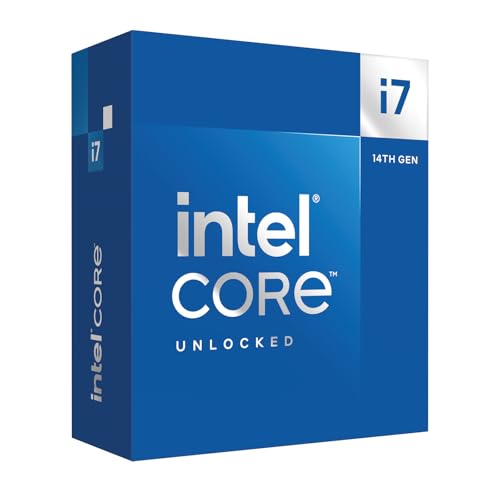
Intel Core i7-14700K -- Best for Batch Exports
Adobe Lightroom's export pipeline benefits from high core counts, and the i7-14700K's 20-core design (6P + 8E + 6E cores) significantly reduces export times for large jobs. Single-core performance remains strong for interactive editing, so the experience doesn't feel sluggish during culling and adjustment work. The chip also handles video slideshow rendering and Photoshop actions well. For photographers who regularly export hundreds of images in a session, the i7-14700K's throughput advantage is meaningful.
What we liked
- Game Without Compromise. Play harder and work smarter with Intel Core 14th Gen processors
- 20 cores (8 P-cores plus 12 E-cores) and 28 threads. Integrated Intel UHD Graphics 770 inc
- Up to 5.6 GHz with Turbo Boost Max Technology 3.0 gives you smooth game play, high frame r
- Compatible with Intel 600-series (with potential BIOS update) or 700-series chipset-based
- DDR4 and DDR5 platform support cuts your load times and gives you the space to run the mos
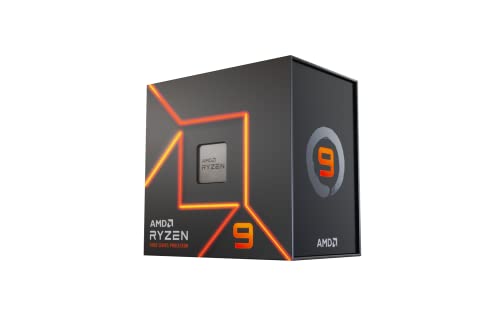
AMD Ryzen 9 7900X -- Best for Multi-Application Workflows
Photographers who keep Lightroom, Photoshop, and browser-based portfolio tools open simultaneously will appreciate the Ryzen 9 7900X's 12-core headroom. Switching between applications stays smooth, background tasks don't visibly impact foreground editing performance, and AI-powered tools in modern editing software run more fluidly with additional cores available. The 170W boost TDP rewards a quality cooling solution. For studio professionals managing complex workflows across multiple apps, the 7900X is a capable workhorse.
What we liked
- Processor is versatile, reliable, and offers convenient usage with high speed
- Ryzen 9 product line processor for your convenience and optimal usage
- 5 nm process technology for reliable performance with maximum productivity
- Dodeca-core (12 Core) processor core allows multitasking with great reliability and fast p
- 12 MB L2 plus 64 MB L3 cache memory provides excellent hit rate in short access time enabl

Intel Core i5-13600K -- Best Budget Photo Editing CPU
The previous-generation i5-13600K remains a compelling photo editing processor at a reduced price. Fourteen cores and Intel's strong single-core boost performance keep Lightroom and Photoshop responsive for most workflows. For photographers transitioning from older hardware or building their first dedicated editing workstation on a budget, the i5-13600K delivers clearly perceptible improvements over mainstream office processors at an accessible price point.
What we liked
- 13th Gen Intel Core processors offer revolutionary design for beyond real-world performanc
- 14 cores (6 P-cores plus 8 E-cores) and 20 threads
- Up to 5.1 GHz unlocked. 24M Cache
- Integrated Intel UHD Graphics 770 included
- Compatible with Intel 600 series (might need BIOS update) and 700 series chipset-based mot

AMD Ryzen 9 7950X -- Best Professional Studio CPU
The 16-core Ryzen 9 7950X is built for professional photographers and retouchers who work with very high-resolution files, run multiple simultaneous applications, and need processing speed that keeps up with client volume. Batch exports, panorama stitching, HDR merge operations, and AI denoise tasks all benefit from the additional cores and AMD's strong IPC. Combined with 64GB or more of DDR5 memory, it creates a no-compromise editing workstation that eliminates CPU-related wait times.
What we liked
- THE ULTIMATE GAMING PROCESSOR FOR SERIOUS CREATORS
- 16 Cores and 32 processing threads, combined with a massive 144MB of cache
- 5.7 GHz Max Boost, Unlocked Memory Overclocking, DDR5 support
- For the state-of-the-art Socket AM5 platform, can support PCIe 5.0 on select 600 Series mo
- Cooler not included, liquid cooler recommended
How to choose
What to consider
Identify the software you use most and how it uses CPU resources. Lightroom Classic scales noticeably with both single-core speed and multi-core count. Photoshop's most common operations favor single-core performance, though AI features are increasingly GPU-accelerated. If Capture One is your primary editor, benchmark comparisons for that specific application often differ from Lightroom results.
What to consider
Balance CPU spending against RAM and storage. A fast NVMe SSD makes Lightroom catalog operations, preview rendering, and scratch disk access measurably quicker. Investing too much in the CPU while using slow storage or insufficient RAM creates a different bottleneck that reduces the real-world benefit of the expensive processor.
What to consider
Account for GPU-accelerated features. Modern AI tools in photo editing software increasingly offload work to the GPU, reducing the CPU's role in those specific tasks. A paired mid-range GPU with ample VRAM can reduce the need for the highest-tier CPU in AI-workflow-heavy scenarios.
What to consider
For related photography and creative setup guides, see our [best computer prebuilds](/articles/best-computer-prebuilds) article and our [best computer processor for business](/articles/best-computer-processor-for-business) roundup. Our full evaluation criteria are on our [methodology](/methodology) page.
Common questions
In Lightroom Classic, both single-core speed (for responsive slider adjustments and previews) and multi-core throughput (for batch export) matter. Photoshop leans heavily on single-core performance for most operations. For AI-powered tools like Lightroom's Denoise or Photoshop's Generative Fill, GPU acceleration matters as much as CPU. A balance of fast single-core speed and at least eight cores suits most photo editing workflows.
For Lightroom Classic with catalog sizes under 50,000 images, 16GB of RAM is a workable minimum, but 32GB keeps the application responsive when switching between Develop module and running exports simultaneously. Photoshop with multiple high-resolution open documents and large brush sizes benefits significantly from 32GB or more. Fast DDR5 memory amplifies CPU performance in memory-bandwidth-sensitive editing tasks.
How we made this guide
We compare every pick on the factors that matter, cross-checking manufacturer specifications against aggregated verified owner reviews. We rank independently and never take payment for placement. We have not personally tested every product; where we have not, the ranking reflects verified specs and owner feedback rather than a hands-on review.
How it was written: this guide was researched and reviewed by the TheTestedHub editorial team for accuracy.
Affiliate disclosure: TheTestedHub is reader-supported. When you buy through links on our site, we may earn a commission at no extra cost to you.
More guides

Your Docking Station Match: CalDigit TS4 and More

Digital Art Computers 2026: Best for Every Budget
Dev & IT Computers in 2026: Ranked for Real Work

Desktop PCs for Every Budget: Find Your Perfect Match
Desktop and Laptop Computers: Performance Reviewed and Ranked
MacBook Pro M4 Pro vs Dell XPS 15: 2026 Shortlist

Buy the Best DIY Computer in 2026: Corsair One i300
