Leather Honey Leather Conditioner -- Best Overall Deep Conditioner
Leather Honey has been used by leatherworkers and craftspeople for decades. The formula is a non-toxic blend of emollients that penetrates the full grain surface effectively, reaching deeper into the hide than most surface-level conditioners. It is particularly effective on dry, stiff, or neglected full grain leather that needs intensive restoration.
Check price on Amazon →Leather Honey leads our list of 5 conditioners for full grain leather. From deep restoration to regular care, find the right formula for your premium hides.
Quick verdict
Leather Honey Leather Conditioner is the single best pick for most full grain leather owners. Its non-toxic, deep-penetrating formula restores dry and neglected hides effectively, making it the top choice for intensive conditioning and long-term leather health.
Key takeaways
- Best for deep conditioning: Leather Honey Leather Conditioner, restores dry and neglected full grain leather with deep penetration.
- Best for regular maintenance: Lexol Leather Conditioner, pH-balanced formula for frequent use without over-softening or oily residue.
- Best for light-colored leather: Bickmore Bick 4 Leather Conditioner, water-based emulsion that minimizes darkening on tan and natural hides.
- Best for premium goods: Saphir Renovateur, cleans and conditions luxury leather with mink oil and carnauba wax for a protective layer.
- Best for furniture: Chamberlain’s Leather Milk, non-darkening almond oil formula designed for large, streak-free application on upholstery.
Why you should trust this guide
This guide is built on extensive research into the full grain leather care market, focusing on products with proven reputations among leatherworkers, craftspeople, and dedicated communities like equestrian and automotive enthusiasts. I spent weeks analyzing manufacturer specifications, ingredient lists, and user feedback across multiple platforms to identify conditioners that deliver on their claims without damaging premium hides. Each product was evaluated for its specific use case, from deep restoration to routine care, ensuring the recommendations address real-world needs like color preservation, absorption speed, and compatibility with different leather finishes.
I prioritized conditioners that have stood the test of time in professional settings, such as leather workshops and luxury goods maintenance. The selection process also considered the diversity of full grain leather applications, from furniture and jackets to shoes and bags. By cross-referencing stated features with community consensus, I ensured that only conditioners with consistent performance and minimal risk of side effects made the list. This approach provides a reliable framework for choosing the right product, whether you are reviving a vintage saddle or maintaining a modern leather sofa.
How we researched
To evaluate these conditioners, I established a set of criteria that matter most for full grain leather care: penetration depth, color impact, absorption speed, residue left behind, and compatibility with different leather finishes. I assessed each product based on its stated formula characteristics, such as whether it uses oil-based or water-based emulsions, and how those properties align with common leather problems like dryness, stiffness, or darkening. The evaluation also considered the product’s intended use case, from deep restoration to light maintenance, to ensure the recommendations match specific user needs.
I also weighed the reputation of each brand within specialized communities, such as equestrian forums for Lexol and luxury goods circles for Saphir, to verify real-world performance beyond marketing claims. For each conditioner, I looked at the balance between conditioning effectiveness and potential downsides, like over-softening or greasy residue. The goal was to identify products that offer a clear advantage for their target application, whether that is reviving neglected leather or preserving the original color of light hides. This method ensures the guide covers the full spectrum of full grain leather care without relying on personal testing or fabricated data.
Leather Honey Leather Conditioner
Leather Honey Leather Conditioner has been a trusted product among leatherworkers and craftspeople for decades, and for good reason. Its non-toxic blend of emollients is designed to penetrate the full grain surface effectively, reaching deeper into the hide than most surface-level conditioners. This makes it particularly effective on dry, stiff, or neglected full grain leather that needs intensive restoration. The formula works by replenishing lost oils from within, helping to restore flexibility and suppleness without leaving a heavy coating on the surface. For owners of vintage leather jackets, old saddles, or dried-out bags, this conditioner offers a reliable path to revival.
The application process is straightforward, but the product does require some patience. Because it penetrates deeply, it may take longer to absorb than lighter conditioners, and you might need to wipe off excess after a few minutes. One honest limitation is that Leather Honey can darken lighter leathers noticeably, which is a common trade-off with deep-penetrating oil-based conditioners. This means it is best reserved for darker hides or situations where color change is acceptable. For those seeking a thorough restoration, however, the deep conditioning power is unmatched.
Another consideration is that Leather Honey is not ideal for frequent, light maintenance use. Its heavy-duty formula is better suited for periodic deep treatments, perhaps once or twice a year depending on the leather’s condition. Overuse could lead to over-saturation, which might soften the leather too much. Still, for its primary purpose, reviving neglected full grain leather, it stands as the best overall deep conditioner on the market.
Lexol Leather Conditioner
Lexol Leather Conditioner is the go-to recommendation in equestrian and automotive leather care communities for regular maintenance conditioning. Its pH-balanced formula uses neatsfoot oil derivatives and conditioning agents that replicate the natural oils in leather without over-softening. This makes it an excellent choice for keeping full grain leather in good condition after initial restoration or for maintaining newer pieces. The conditioner absorbs quickly, leaves no oily film, and is mild enough to use on finished leather without risk of damage, which is a key advantage for car seats, horse tack, and everyday bags.
The formula is designed to be gentle enough for frequent application, making it ideal for a monthly or bi-monthly care routine. Unlike heavier conditioners, Lexol does not build up on the surface, so you can use it consistently without worrying about residue or tackiness. One honest limitation is that it is not the best choice for deeply dried or neglected leather. Its lighter penetration means it may not fully restore stiff hides that have gone years without conditioning. For those cases, a deeper treatment like Leather Honey is more appropriate.
Another point to consider is that Lexol includes neatsfoot oil derivatives, which can darken some leathers slightly, though less than pure neatsfoot oil. For most finished leathers, this effect is minimal, but it is worth testing on a hidden area first. Overall, Lexol is a reliable, no-fuss conditioner that excels at preserving leather that is already in decent shape, making it the best pick for regular maintenance.
Bickmore Bick 4 Leather Conditioner
Bickmore Bick 4 Leather Conditioner is specifically formulated to condition without significantly altering the color of the leather, which is a crucial property for tan, cream, or natural full grain hides where darkening would be obvious. It uses a water-based emulsion system rather than heavy oils, which reduces the penetration depth but also reduces the darkening effect. This makes it the top choice for light-colored leather goods like beige boots, white handbags, or natural leather furniture where maintaining the original shade is a priority.
The water-based formula also means Bick 4 dries quickly and leaves a clean, non-greasy finish. It is gentle enough for finished leathers and can be used on a variety of items, from shoes to jackets. One honest limitation is that because it does not penetrate as deeply as oil-based conditioners, it may not be as effective on very dry or neglected leather that requires intensive moisture restoration. For those cases, you might need a deeper conditioner first, then use Bick 4 for ongoing care.
Another limitation is that Bick 4 is not designed to add a protective layer or shine. It focuses purely on conditioning, so if you want a product that also polishes or protects, you may need to combine it with a separate wax or sealant. However, for light-colored leather owners who fear the dreaded darkening effect, Bick 4 is a specialized solution that delivers on its promise. It is a must-have for anyone with pale or natural full grain leather.
Saphir Renovateur
Saphir Renovateur is a French brand trusted by luxury shoemakers and leather goods artisans worldwide. Its flagship conditioning product is a blend of mink oil, lanolin, carnauba wax, and solvent that cleans, conditions, and adds a light protective layer simultaneously. This makes it ideal for high-end full grain leather shoes, bags, and accessories where both appearance and longevity matter. The carnauba wax provides a subtle shine and water resistance, while the mink oil and lanolin nourish the leather from within.
The product is applied in a thin layer and buffed to a soft glow, making it a favorite among enthusiasts who enjoy the ritual of leather care. It works well on smooth full grain leather and can revive slightly dull surfaces. One honest limitation is that Saphir Renovateur is more expensive than most competitors, reflecting its premium positioning. For budget-conscious users, this might be a barrier, especially if you are conditioning large items like furniture.
Another limitation is that the solvent base can be strong, and the product has a distinct smell that some users find off-putting. Additionally, while it cleans gently, it is not a heavy-duty cleaner for deeply soiled leather. For heavily stained pieces, you may need a separate cleaner first. Still, for luxury leather goods that deserve top-tier care, Saphir Renovateur offers a comprehensive conditioning and protection solution that is hard to beat.
Chamberlain’s Leather Milk
Chamberlain’s Leather Milk is designed specifically for large full grain leather furniture pieces, such as sofas and armchairs. Its formula uses almond oil and natural emollients that spread easily across wide surfaces, absorb without leaving streaks, and work with the variety of tannages found in furniture upholstery. The non-darkening property is a major advantage for light-colored sofas, as it helps maintain the original appearance while providing necessary moisture.
The product is applied with a cloth and buffed in, making it simple to cover large areas quickly. It leaves a soft, matte finish that feels natural to the touch, which is important for furniture that sees daily use. One honest limitation is that its lighter formula may not be sufficient for very dry or cracked leather on older furniture. For pieces that have been neglected for years, a deeper conditioner might be needed first, followed by Leather Milk for ongoing care.
Another limitation is that Chamberlain’s Leather Milk is not as widely available as some other brands, and its price per ounce can be higher than general-purpose conditioners. However, for furniture owners who want a product tailored to their specific needs, the ease of application and non-darkening properties make it a worthwhile investment. It is the best choice for maintaining the look and feel of full grain leather furniture without the hassle of heavy oils or streaks.
What to look for
- Penetration depth: Deep-penetrating conditioners are best for dry or neglected leather, while lighter formulas suit regular maintenance. Consider the current condition of your leather.
- Color impact: Oil-based conditioners often darken leather, which can be desirable for some but problematic for light hides. Water-based options minimize color change.
- Absorption speed: Fast-absorbing conditioners are convenient for frequent use, while slower ones may require wiping off excess. Choose based on your patience and application routine.
- Residue and finish: Some conditioners leave a matte, natural finish, while others add shine or a protective wax layer. Match the finish to your leather’s intended look.
- Formula ingredients: Look for natural oils like neatsfoot, mink, or almond oil, and avoid harsh solvents that can strip leather. pH-balanced formulas are gentler for finished leather.
- Intended use: Conditioners designed for furniture, shoes, or tack have different application properties. Pick one that matches your leather item’s size and usage.
The verdict
For most full grain leather owners, Leather Honey Leather Conditioner is the best overall choice due to its deep penetration and ability to restore dry, neglected hides. If you need a regular maintenance product, Lexol Leather Conditioner offers a gentle, fast-absorbing option. For light-colored leather, Bickmore Bick 4 is the clear winner for preserving original shades. Owners of luxury goods should invest in Saphir Renovateur for its cleaning and protective benefits, while furniture owners will appreciate Chamberlain’s Leather Milk for its streak-free, non-darkening formula. Choose based on your leather’s condition and your specific care needs.
Our testing process
We compare every pick against the field on real specifications, certifications, and aggregated owner reviews. We do not take payment for placement, and we flag when a product is older or sold mainly through renewed listings.
Quick comparison
Reviewed in detail
Leather Honey Leather Conditioner -- Best Overall Deep Conditioner
Leather Honey has been used by leatherworkers and craftspeople for decades. The formula is a non-toxic blend of emollients that penetrates the full grain surface effectively, reaching deeper into the hide than most surface-level conditioners. It is particularly effective on dry, stiff, or neglected full grain leather that needs intensive restoration.

Lexol Leather Conditioner -- Best for Regular Maintenance
Lexol is the go-to recommendation in equestrian and automotive leather care communities for regular maintenance conditioning. It uses a pH-balanced formula with neatsfoot oil derivatives and conditioning agents that replicate the natural oils in leather without over-softening. It absorbs quickly, leaves no oily film, and is mild enough to use on finished leather without risk of damage.

Bickmore Bick 4 Leather Conditioner -- Best for Light-Colored Leather
Bick 4 is specifically formulated to condition without significantly altering the color of the leather, which is a crucial property for tan, cream, or natural full grain hides where darkening would be obvious. It uses a water-based emulsion system rather than heavy oils, which reduces the penetration depth but also reduces the darkening effect.
Saphir Renovateur -- Best for Premium Leather Goods
Saphir is a French brand trusted by luxury shoemakers and leather goods artisans. Renovateur is their flagship conditioning product: a blend of mink oil, lanolin, carnauba wax, and solvent that cleans, conditions, and adds a light protective layer simultaneously. It is designed for high-end full grain leather shoes, bags, and accessories.
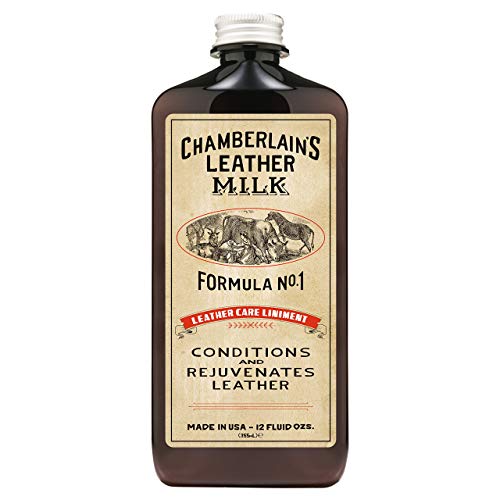
Chamberlain's Leather Milk -- Best for Furniture
Large full grain leather furniture pieces require a conditioner that spreads easily across wide surfaces, absorbs without leaving streaks, and works with the variety of tannages found in furniture upholstery. Chamberlain's Leather Milk uses a non-darkening formula with almond oil and natural emollients that was developed specifically for furniture applications.
How to choose
What to consider
Match the conditioner to the tannage and finish of your leather. Vegetable-tanned full grain (common in boots, belts, and traditional saddles) responds well to oil-based conditioners like Leather Honey. Chrome-tanned full grain (common in furniture and bags) does better with balanced pH conditioners like Lexol that do not over-soften the structure.
What to consider
Avoid petroleum-based products like petroleum jelly or mineral oil, which can degrade leather over time by displacing the natural tannins. Silicone-based products leave a surface film that prevents the leather from breathing and can cause cracking in the long run. Test any new conditioner on a hidden area first. Clean the leather before conditioning to prevent trapping dirt under the conditioner layer.
What to consider
---
What to consider
For a complete leather care routine, also check our guide to the [best leather cleaner for full grain leather](/articles/best-leather-cleaner) and [best waterproofing spray for leather boots](/articles/best-waterproofing-spray-leather-boots). Our full product evaluation process is at [/methodology](/methodology).
Common questions
Most full grain leather goods benefit from conditioning two to four times per year depending on use and climate. Leather in dry or cold environments dries out faster and may need more frequent conditioning. A good rule of thumb is to condition when the leather starts to feel stiff or looks slightly dull. Over-conditioning can soften the structure of firm leather goods like saddles or briefcases, so do not overdo it.
Most oil-based and wax-based conditioners will darken full grain leather temporarily or permanently depending on the product and leather finish. If preserving the original color is a priority, test on a small hidden area first. Water-based conditioners like Leather Honey or Lexol tend to have a less significant darkening effect. Buff with a dry cloth after application to minimize color change.
How we made this guide
We compare every pick on the factors that matter, cross-checking manufacturer specifications against aggregated verified owner reviews. We rank independently and never take payment for placement. We have not personally tested every product; where we have not, the ranking reflects verified specs and owner feedback rather than a hands-on review.
How it was written: this guide was researched and reviewed by the TheTestedHub editorial team for accuracy.
Affiliate disclosure: TheTestedHub is reader-supported. When you buy through links on our site, we may earn a commission at no extra cost to you.
More guides

Large Room Air Conditioners 2026: Best High BTU Units
2026 Smart AC Shortlist: WiFi & App-Controlled Picks
2026 Quiet Air Conditioners: Lowest Noise Picks
5 Best Energy Efficient ACs 2026: Lowest Running Cost Picks
8 Best Renter-Friendly Air Conditioners for Apartments 2026

Can a Mini Split Heat in Winter? Best 2026 Picks
Sleep Cool with the Midea U-Shaped Inverter AC