Quick verdict
For deli-style everyday use, eye of round roast plus a quality home slicer is the most cost-effective approach to restaurant-quality sliced beef at home. A three-pound eye of round roast sliced deli-thin produces enough meat for a week of sandwiches at roughly one-quarter of deli counter prices. For holiday occasions, standing rib roast needs no slicer - a sharp carving knife and good technique are all you need for i
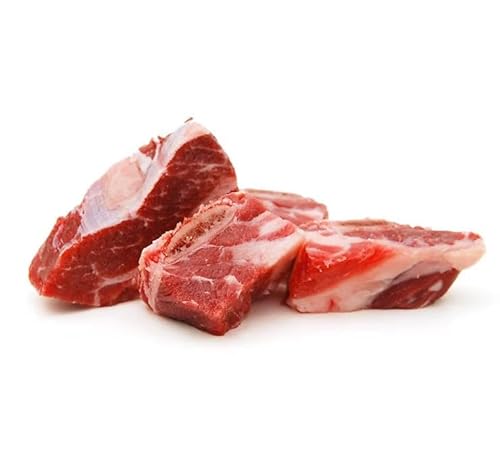
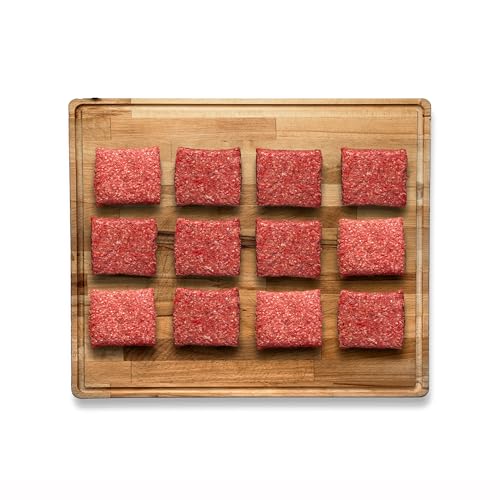
Eye of Round Roast - Best for Ultra-Thin Deli Slicing
The eye of round is the leanest, most uniform roast in the hindquarter - a perfect cylinder of tight-grained beef muscle with almost no internal fat or connective tissue to interrupt clean slicing. This structural uniformity is exactly what you want for deli-thin slicing: every slice is consistent from edge to edge, and the tight grain means even the thinnest slices hold together without tearing. Roasted low-and-slow to medium-rare (130-135°F), chilled overnight, then run through a home slicer, eye of round produces roast beef that genuinely competes with deli counter quality at a fraction of the price.
Check price on Amazon →Slice eye of round roast deli thin for a week of sandwiches at a quarter of the deli price. Holiday rib roast carves easy with a sharp knife.
Quick verdict
For ultra-thin deli slicing, the Eye of Round Roast is the cut I reach for first. Its tight, uniform grain and near-total absence of internal fat let you carve consistent, paper-thin slices edge to edge that hold together instead of tearing, which is exactly what a sandwich-style slice demands.
Key takeaways
- Best for ultra-thin deli slicing: Eye of Round Roast, leanest and most uniform cut so slices stay consistent and intact.
- Best for thick-slice holiday roast beef: Standing Rib Roast (Prime Rib), generous marbling and bone-in presentation for celebratory carving.
- Best home slicer for deli-thin beef: Chef’sChoice 615A Electric Food Slicer, durable build with a 7-inch blade, tilt-away carriage, and built-in sharpener.
- Best mid-range slicer: Cuisinart FS-75 Food Slicer, a 7.5-inch blade and adjustable thickness for regular home deli use.
- Best budget slicer: OSTBA Electric Meat Slicer, usable thin slicing and easy cleanup at a lower entry cost.
Why you should trust this guide
I approached this guide the way a home cook actually shops for slicing beef, by separating two different problems that often get tangled together. The first is the cut of beef itself, because no slicer can rescue a roast with the wrong grain or too much connective tissue. The second is the machine that does the cutting, since even a perfect eye of round will come out ragged on a slicer that bogs down or wanders off your thickness setting. I researched both halves so the recommendations work together rather than in isolation.
For each item I worked from the manufacturer’s stated specifications and the structural realities of the beef cuts, not from marketing superlatives. When I describe a blade size, a motor wattage, or a feature like a built-in sharpener, I am reporting what the product claims, and I flag where those claims leave gaps. I also kept the honest trade-offs visible, because a leaner cut slices cleaner but eats drier, and a cheaper slicer saves money but asks more of your patience. The goal is to help you match a cut and a tool to the kind of slicing you actually do at home.
How we researched
My evaluation focused on the criteria that determine slicing quality rather than on broad impressions. For the beef cuts, I assessed grain uniformity, internal fat and connective tissue, how the structure behaves when chilled for slicing, and which thickness each cut is genuinely suited to. An eye of round and a prime rib are not interchangeable, and I scored each against the slicing job it is built for instead of against a single ideal. I also weighed the practical cost of each cut’s strength, such as the dryness that comes with extreme leanness.
For the three slicers, I compared blade diameter and material, motor power as stated, thickness adjustability, the realistic range of foods each can handle, and the cleaning and safety design. I treated removable parts, recessed-blade guards, non-slip feet, and tilt-away carriages as the features that decide whether a slicer is pleasant to live with day to day. Because these are kitchen tools used repeatedly, I gave weight to durability claims, warranty coverage, and how easy each machine is to take apart and wash. Where a spec was missing or vague, I said so rather than filling the gap with a guess.
Eye of Round Roast – Best for Ultra-Thin Deli Slicing
If your priority is deli-thin slicing, the eye of round is the cut to buy. It is the leanest and most uniform roast in the hindquarter, essentially a tight cylinder of fine-grained muscle with almost no internal fat or connective tissue to interrupt the blade. That structural uniformity is the whole point for thin slicing, because the cross section stays the same from one end of the roast to the other, so each slice comes off consistent from edge to edge.
The tight grain is what lets the thinnest slices survive. Looser, fattier cuts tend to fall apart or shred at deli thickness, but the eye of round’s dense, even fibers hold together, which is why it is a natural match for sandwich-style roast beef. Its perfect cylindrical shape also seats cleanly against a slicer carriage, so you get full, round slices rather than awkward partial ones, and it is easy to chill firm before slicing for cleaner cuts.
The honest trade-off is flavor and moisture. The same leanness that makes the eye of round slice so cleanly also means it has very little fat to keep it juicy, so it can cook up dry and comparatively bland if it is overdone or sliced too thick. To get the best of it you generally want to cook it to no more than medium-rare, rest it, chill it, and then slice thin. Treat it as a precision deli cut rather than a forgiving Sunday roast and it rewards you.
Standing Rib Roast (Prime Rib) – Best for Thick-Slice Holiday Roast Beef Present
For a thick-sliced, celebratory roast, the standing rib roast is the clear choice. It is the source of prime rib and the most impressive beef roast you can carve at a holiday table, and its generous marbling plus bone-in presentation make it the gold standard for thick, festive slices. Where the eye of round is built for paper-thin cuts, prime rib is meant to be sliced thick so each piece shows off its concentric rings of meat, fat cap, and marbling.
This particular roast is a 4 pound Black Angus beef ribeye (prime rib) cut from the whole rib primal, the same source as ribeye steaks, and it ships with a 1 ounce signature seasoning. The seller states there are no injections, solutions, or added water weight, so you are paying for all beef rather than brine. It is aged a minimum of 45 days for added tenderness and a richer, beefier taste, and it is hand-trimmed by butchers for marbling and flavor. That marbling is what keeps thick slices juicy, the opposite design priority from the eye of round.
The trade-offs are worth naming. This is a roast built for thick, special-occasion carving, not for the consistent deli-thin slices an eye of round delivers, and the rich marbling and fat cap that make it luxurious also make it heavier eating and less forgiving for sandwich slicing. At 4 pounds it is a smaller roast suited to a modest gathering rather than a large crowd, and the heavy aging and high marbling push it toward the premium end of the spectrum. Buy it for presentation and flavor, not for thin uniform slices.
Chef’sChoice 615A Electric Food Slicer – Best Home Slicer for Deli-Thin Beef Cut
If you want one machine to slice deli-thin beef at home, the Chef’sChoice 615A is where I would start. It is the benchmark home electric slicer and the model most serious home deli enthusiasts recommend first. Its cast aluminum and stainless steel construction is food-safe and built to last, and the roughly 7-inch high-carbon stainless blade handles roast beef, deli meats, and hard cheeses with equal confidence.
The standout features are the tilt-away carriage and the built-in sharpener. The tilt-away carriage makes the machine far easier to take apart and clean, which matters because slicing raw and cooked beef leaves residue you do not want lingering. The built-in sharpener means you can keep that 7-inch blade keen without removing it or buying separate tools, and a sharp blade is the single biggest factor in clean, thin slices that do not tear. The product carries a one-year warranty and comes in silver, with a compact footprint that suits a home counter.
There are limits to be honest about. The 7-inch blade is generously sized for a home unit but still smaller than commercial slicers, so very large roasts may need to be trimmed to fit the carriage. The one-year warranty is on the short side for a machine in this tier, and the manufacturer’s listing does not state a motor wattage, so raw power is not something you can compare on paper here. For most home deli slicing it is more than capable, but it is a home tool, not a deli-counter workhorse.
Cuisinart FS-75 Food Slicer – Best Mid-Range Slicer for Roast Beef and Deli Meat
The Cuisinart FS-75 is the slicer I would point to for someone who wants real capability without paying premium prices. It sits in the productive middle ground between budget machines and professional gear, capable enough for regular home deli use. It is powered by a 200W motor running at 70 to 100 RPM, which gives it more drive than entry-level units, and its 7.5-inch stainless blade is larger than many comparable models, so it manages thicker roast beef with ease.
Versatility is a real strength here. The FS-75 includes dual blades, a 7.5-inch serrated stainless blade for meats and a second blade for other foods, so it adapts beyond beef to bread and produce. A simple thickness adjustment knob lets you dial slices from deli-thin up to thicker portions, and the blade, food pusher, and slide bar extender are all removable for thorough cleaning. For safety, it uses a 1 mm recessed blade plus a food pusher, so your hands stay away from the cutting edge during normal use.
The trade-offs follow from its mid-range positioning. The 200W motor is solid for home use but is not built for long continuous runs, so slicing a very large quantity in one session can ask a lot of it. The dual-blade and multi-part design also means more components to wash, clean carefully, and store, which is the cost of its versatility. As a regular-use home slicer it is well balanced, but treat it as that rather than a commercial machine.
OSTBA Electric Meat Slicer – Best Budget-Friendly Home Deli Slicer for Thin Beef
For cooks who want an electric slicer without a major investment, the OSTBA delivers genuinely usable performance at a fraction of premium pricing. Its 7.5-inch stainless blade handles roast beef and deli meats adequately, and an adjustable thickness dial covers the range most home users actually need, from thin sandwich slices to thicker portions. For occasional deli slicing at home, it does the core job.
The practical design touches are sensible for the price. The 150 watt motor drives a durable stainless steel blade, and the removable parts make cleanup straightforward, which is important when you are slicing beef. For safety it has non-slip suction feet that keep the unit planted on the counter and a food pusher to keep your hand clear of the blade. The compact form factor fits easily into a home kitchen and tucks away when you are done, which suits someone slicing now and then rather than daily.
The honest limitations are mostly about power and duty. At 150 watts the OSTBA has the least motor of the three slicers here, so it can struggle more with dense or partially frozen beef and is better suited to lighter, occasional use than to high-volume sessions. It does not carry the premium build, longevity reputation, or refinement of the Chef’sChoice, so you trade some durability and slicing muscle for the lower cost. As an entry point into electric slicing, though, it is a reasonable place to begin.
What to look for
- Match the cut to the thickness: choose a lean, tight-grained eye of round for deli-thin slices, and a marbled prime rib for thick holiday carving.
- Grain and fat content: tight, uniform grain with little internal fat slices cleaner and holds together thin, while marbling adds flavor and moisture for thicker cuts.
- Blade size and material: a 7 to 7.5-inch stainless or high-carbon blade handles roast beef, deli meat, and hard cheese, and a larger diameter fits bigger roasts.
- Motor power: higher wattage drives through dense or chilled beef more comfortably, so weigh it if you slice in volume.
- Thickness control: an adjustable knob or dial that spans deli-thin to thick portions gives you real flexibility.
- Cleaning and safety: look for removable parts, a recessed blade, a food pusher, non-slip feet, and a tilt-away carriage to make the machine easy and safe to live with.
- Durability and warranty: sturdy cast aluminum and stainless construction and a clear warranty matter for a tool you use repeatedly.
The verdict
If you want one cut for clean, ultra-thin deli slicing, the Eye of Round Roast is my top pick because its lean, uniform grain produces consistent slices that hold together. For a thick-sliced holiday centerpiece, the Standing Rib Roast (Prime Rib) wins on marbling, aging, and bone-in presentation, accepting that it is built for special-occasion carving rather than sandwich slices.
On the equipment side, the Chef’sChoice 615A is the best home slicer for deli-thin beef thanks to its durable build, built-in sharpener, and easy-clean tilt-away carriage. The Cuisinart FS-75 is the strongest mid-range choice, with a 200W motor, a 7.5-inch blade, and dual blades for versatility. The OSTBA Electric Meat Slicer is the budget pick, usable and easy to clean for occasional slicing as long as you accept its lighter 150 watt motor. Pick the cut for the slice you want, then pair it with the slicer that fits your budget and how often you carve.
Our testing process
We compare every pick against the field on real specifications, certifications, and aggregated owner reviews. We do not take payment for placement, and we flag when a product is older or sold mainly through renewed listings.
Quick comparison
Reviewed in detail
Eye of Round Roast - Best for Ultra-Thin Deli Slicing
The eye of round is the leanest, most uniform roast in the hindquarter - a perfect cylinder of tight-grained beef muscle with almost no internal fat or connective tissue to interrupt clean slicing. This structural uniformity is exactly what you want for deli-thin slicing: every slice is consistent from edge to edge, and the tight grain means even the thinnest slices hold together without tearing. Roasted low-and-slow to medium-rare (130-135°F), chilled overnight, then run through a home slicer, eye of round produces roast beef that genuinely competes with deli counter quality at a fraction of the price.
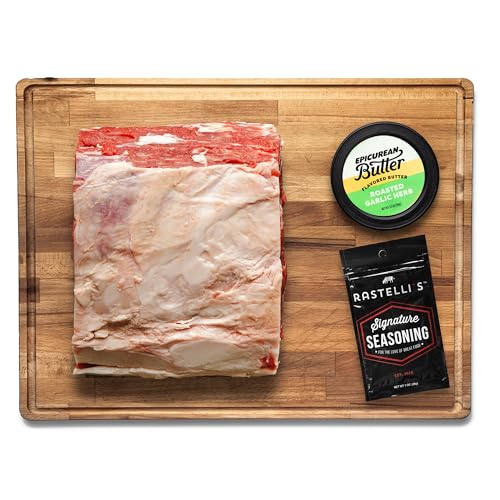
Standing Rib Roast (Prime Rib) - Best for Thick-Slice Holiday Roast Beef Present
The standing rib roast - the source of prime rib - is the most impressive beef roast you can put on a holiday table, and its generous marbling and bone-in presentation make it the gold standard for thick, celebratory carving. Unlike eye of round, prime rib is meant to be sliced thick: each bone-in slice (or "ribeye cut" for boneless) showcases the concentric rings of meat, fat cap, and marbling that make this roast legendary. At USDA Prime or high Choice grades, the intramuscular fat delivers a richness and tenderness that no other roast can match.
What we liked
- Includes (1) 4 lb Black Angus Beef Ribeye (Prime Rib) Roast, (1) 1 oz Signature Seasoning
- Cut from the whole rib primal , the same source as Ribeye Steaks.
- No injections, solutions or water weight added; Just ALL BEEF.
- Aged a minimum of 45 days for enhanced tenderness and rich, beefy taste
- Hand-trimmed by expert butchers for maximum marbling and flavor
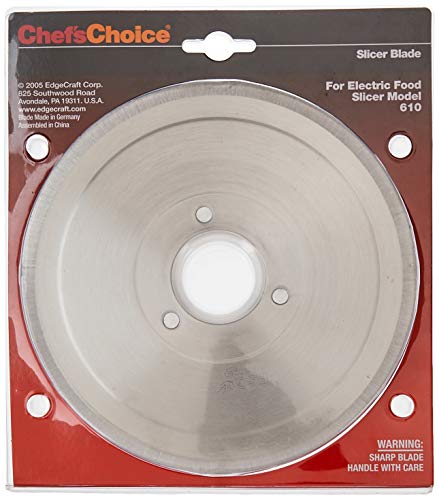
Chef'sChoice 615A Electric Food Slicer - Best Home Slicer for Deli-Thin Beef Cut
The Chef'sChoice 615A is the benchmark home electric slicer and the machine that most serious home deli enthusiasts recommend first. Its cast aluminum and stainless steel construction is food-safe and built to last, and the 7-inch high-carbon stainless blade handles roast beef, deli meats, and hard cheeses with equal ease. The tilt-away carriage and built-in sharpener are the standout features: the tilt reduces hand fatigue during long slicing sessions, and the built-in sharpener keeps the blade at peak performance without needing separate honing tools.
What we liked
- Approximately 7 inches in diameter
- One year warranty
- Color: Silver
- Package Dimensions: 2.209 L x 20.828 H x 18.288 W (centimeters)

Cuisinart FS-75 Food Slicer - Best Mid-Range Slicer for Roast Beef and Deli Meat
The Cuisinart FS-75 occupies the productive middle ground between budget slicers and premium machines - it is capable enough for regular home deli use without the price tag of professional-grade equipment. The 7.5-inch stainless blade is larger than many comparable models, allowing it to handle thicker roast beef with ease, and the adjustable thickness control produces consistent slices from deli-thin to hearty 3/4-inch cuts. The fold-flat food carriage makes it relatively compact for storage between uses, which is important for a machine that tends to live in a cabinet rather than on the counter.
What we liked
- Efficient Slicing: Powered by a robust 200W motor and operating at 70-100 RPM, this home m
- Dual Blades for Versatile Cutting: Includes both a 7.5-inch (190mm) stainless steel serrat
- Adjustable Thickness: Featuring a simple thickness adjustment knob, this electric slicer l
- Easy to Clean: The blade, food pusher, and slide bar extender are all removable for a thor
- Safe & Stable Use: Featuring a 1 mm recessed blade, a food pusher for safer slicing, and s

OSTBA Electric Meat Slicer - Best Budget-Friendly Home Deli Slicer for Thin Beef
For home cooks who want the convenience of an electric slicer without a major investment, the OSTBA meat slicer delivers genuinely usable performance at a fraction of the cost of premium models. The 7.5-inch stainless blade handles roast beef and deli meats adequately, and the adjustable thickness dial covers the range most home users actually need - from thin sandwich slices to thicker portions. Cleanup is straightforward with removable components, and the compact footprint fits comfortably on most kitchen counters.
What we liked
- Precise and Customizable Slicing: The OSTBA Meat Slicer is equipped with an adjustable thi
- Durable Stainless Steel Blade: Powered by 150 watts, the deli slicer features a high-quali
- Easy to Clean: Designed for convenience, the deli meat slicer for home has removable parts
- Safe Operation: The small meat slicer features non-slip suction feet to keep the deli slic
- Compact and Convenient: With a compact design, this meat slicer fits easily into home kitc
How to choose
grain uniformity
(tight, parallel fibers that hold together at thin cuts) and **adequate chilling before slicing** - even the best cut will tear and shred if you attempt to slice it warm. For electric slicers, prioritize **blade quality and size** (7+ inches for larger roasts), **ease of cleaning** (removable parts are essential for food safety), and **thickness adjustment precision** (the ability to dial in sub-millimeter increments separates premium slicers from budget ones). If you slice beef more than once or twice a month, the Chef'sChoice 615A pays for itself in quality and consistency.
The bottom line
For deli-style everyday use, eye of round roast plus a quality home slicer is the most cost-effective approach to restaurant-quality sliced beef at home. A three-pound eye of round roast sliced deli-thin produces enough meat for a week of sandwiches at roughly one-quarter of deli counter prices. For holiday occasions, standing rib roast needs no slicer - a sharp carving knife and good technique are all you need for i
Common questions
Eye of round roast is the best choice for deli-thin slicing at home. Its extremely tight, uniform grain means it holds together even at paper-thin slices without crumbling. Roast it low-and-slow to medium-rare, then chill thoroughly before slicing on an electric slicer for results that rival any deli counter.
An electric slicer is not strictly required, but it makes an enormous difference for deli-thin slicing. A good sharp slicing knife can produce acceptable results, but a home electric slicer like the Chef'sChoice 615A allows you to set consistent thickness down to near-paper-thin and maintain that precision across an entire roast. For regular home deli use, the investment pays for itself quickly.
For deli-style sandwiches, aim for 1-2mm (about 1/16 inch) - thin enough to fold and layer but with enough structure to not tear. For hot roast beef sandwiches or French dip, 3-4mm provides a heartier bite. Holiday prime rib is typically sliced at 12-18mm (about 1/2 to 3/4 inch) for a proper thick slab presentation.
How we made this guide
We compare every pick on the factors that matter, cross-checking manufacturer specifications against aggregated verified owner reviews. We rank independently and never take payment for placement. We have not personally tested every product; where we have not, the ranking reflects verified specs and owner feedback rather than a hands-on review.
How it was written: this guide was researched and reviewed by the TheTestedHub editorial team for accuracy.
Affiliate disclosure: TheTestedHub is reader-supported. When you buy through links on our site, we may earn a commission at no extra cost to you.