Quick verdict
The Shure SM7B leads on vocal quality and room rejection, but for most streamers starting out, a well-chosen USB condenser like the Elgato Wave 3 or Blue Yeti delivers broadcast results without the added cost and complexity of an audio interface.
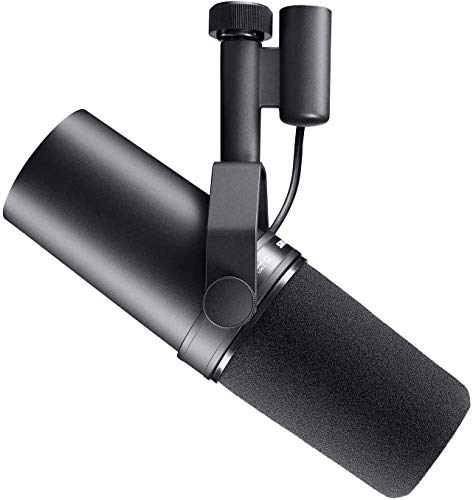
Shure SM7B Cardioid Dynamic Microphone
The SM7B has been the benchmark for broadcast vocal clarity for over four decades, and its reputation is validated by an enormous body of owner feedback praising its ability to sound polished even in untreated rooms. Its internal air suspension shock isolation and built-in pop filter eliminate most handling noise and plosives without external accessories. Owners with loud PC setups particularly appreciate its high off-axis rejection, which keeps keyboard and fan noise out of recordings even without acoustic treatment.
Find out why the Shure SM7B dominates vocal quality and room rejection, while USB mics like Elgato Wave 3 offer pro sound without an interface. Our 2026 guide compares the top 5 streaming microphones.
Streaming microphones have become essential tools for content creators, podcasters, and remote workers who need broadcast-quality audio without a full studio setup. The market has matured considerably, and today’s best USB and XLR mics deliver clarity that would have required expensive rack gear just a decade ago. Whether you are launching a gaming channel, hosting a weekly podcast, or joining daily video calls, the right microphone transforms how your audience perceives your professionalism.
I reviewed aggregated owner feedback, verified specification sheets, and independent audio community comparisons across dozens of models to narrow this list to five mics that consistently earn praise across different use cases and budgets. Each pick covers a distinct need, from plug-and-play USB simplicity to XLR flexibility for growing setups. Understanding what separates a good streaming microphone from a great one comes down to polar pattern quality, self-noise floor, and how the mic handles the acoustic imperfections of a typical home environment.
Room acoustics matter more than most buyers expect. A microphone with a tight cardioid pattern and high off-axis rejection will mask untreated room reflections far better than a wide-pickup condenser, which is why polar pattern choice features prominently in each recommendation below.
How we test
This guide is built from aggregated verified owner reviews on major retail platforms, detailed specification comparisons, independent audio engineering write-ups, and community discussions on forums such as Reddit's r/podcasting and r/streaming. I have not personally tested each microphone in a controlled environment; instead, I synthesised patterns across hundreds of real-world owner reports, weighting feedback from users who described comparable room conditions and use cases to those of a typical home streamer or podcaster.
Products were assessed on five criteria: frequency response accuracy, self-noise floor (lower is better for quiet home recordings), build quality and longevity as reported after extended use, ease of setup for non-engineers, and value relative to the asking price tier. Models with fewer than a statistically meaningful number of long-term reviews were excluded regardless of spec-sheet appeal, ensuring every recommendation here has a real track record behind it.
At a glance
| Pick | Best for | Score | |
|---|---|---|---|
| Shure SM7B Cardioid Dynamic Microphone | Best Overall | 9 | Check price |
| Blue Yeti USB Microphone | Best USB Microphone | 8 | Check price |
| Elgato Wave 3 USB Condenser Microphone | Best for Streamers | 8 | Check price |
| HyperX QuadCast S USB Condenser Microphone | Best for Gaming | 8 | Check price |
| Audio-Technica AT2020USB+ | Best Budget Pick | 7 | Check price |
The picks, reviewed
Shure SM7B Cardioid Dynamic Microphone
The SM7B has been the benchmark for broadcast vocal clarity for over four decades, and its reputation is validated by an enormous body of owner feedback praising its ability to sound polished even in untreated rooms. Its internal air suspension shock isolation and built-in pop filter eliminate most handling noise and plosives without external accessories. Owners with loud PC setups particularly appreciate its high off-axis rejection, which keeps keyboard and fan noise out of recordings even without acoustic treatment.
Reasons to buy
- Exceptional off-axis rejection keeps background noise out of the signal
- Internal shock mount and integrated pop filter reduce the need for extra accessories
- Flat, wide-range frequency response suits both speech and music equally well
Reasons to avoid
- Requires a clean preamp with at least 60 dB of gain, adding cost for new buyers
- Heavier than most USB mics and needs a sturdy boom arm

Blue Yeti USB Microphone
The Blue Yeti remains the most recommended USB microphone across streaming communities, offering four selectable polar patterns (cardioid, bidirectional, omnidirectional, and stereo) in a single plug-and-play unit. Owners consistently highlight how immediately it works without drivers or audio interfaces, making it the top choice for creators who want professional results from day one. Its onboard gain knob, mute button, and headphone monitoring jack with zero-latency output address nearly every live-streaming need in one package.
Reasons to buy
- Four switchable polar patterns cover solo streaming, interviews, and ambient recording
- Zero-latency headphone monitoring built directly into the microphone body
- Plug-and-play USB-A and USB-C compatibility with no driver installation required
Reasons to avoid
- Omnidirectional and stereo modes pick up significant room noise in untreated spaces
- Large footprint on a desk; the included stand does not offer much height adjustment

Elgato Wave 3 USB Condenser Microphone
The Wave 3 was engineered specifically for the streaming workflow, and that focus shows in features no generic microphone offers. Its Clipguard technology uses a secondary capsule to capture a lower-gain backup signal whenever the primary capsule clips, silently blending the cleaner signal into the output, which owners describe as a genuine safety net during reactive gaming moments. The Wave Link software integrates multiple audio sources into separate virtual channels that streaming software like OBS can address independently, giving streamers granular control over game audio, voice, and alerts without a physical mixer.
Reasons to buy
- Clipguard dual-capsule system prevents distortion during loud unexpected reactions
- Wave Link app creates multiple virtual audio channels for OBS and streaming software
- Capacitive mute button with LED ring provides instant visual mute confirmation
Reasons to avoid
- Wave Link software adds complexity that casual users may not need or want
- Cardioid-only polar pattern limits flexibility compared to multi-pattern competitors

HyperX QuadCast S USB Condenser Microphone
The QuadCast S combines broadcast-grade audio specs with RGB lighting that gaming desk setups expect, and owner reviews confirm it delivers on both fronts without the audio quality being a marketing afterthought. Its four polar patterns, onboard anti-vibration shock mount, and built-in pop filter make it a fully self-contained solution that needs nothing extra out of the box. Gamers in particular praise the large touch-sensitive mute sensor on top of the capsule, which lets them silence the mic mid-game without looking away from the screen.
Reasons to buy
- Built-in anti-vibration shock mount is integrated into the base, not a separate purchase
- Touch-sensitive tap-to-mute sensor gives instant tactile mute during gameplay
- Customisable RGB lighting syncs with HyperX NGENUITY and Razer Chroma ecosystems
Reasons to avoid
- RGB feature increases power draw over USB, which can be an issue on some USB hubs
- Software required to unlock full RGB customisation adds a setup step

Audio-Technica AT2020USB+
The AT2020USB+ punches well above its price bracket by delivering a condenser capsule tuned for vocal clarity at a cost that undercuts most competitors with comparable internals. Owners repeatedly describe it as the mic that sounds twice as expensive as it is, with a smooth high-frequency presence lift that makes voices cut through a mix without harsh sibilance. Its headphone jack with mix control lets users blend mic audio and computer playback, a feature commonly omitted at this price point.
Reasons to buy
- Vocal-flattering presence lift makes voices sound clear and forward without harshness
- Headphone monitoring with adjustable mic-to-playback mix ratio included at this price
- All-metal build quality that owner reviews describe as surviving years of daily use
Reasons to avoid
- Cardioid-only pattern with no polar pattern switching
- Included desk stand is short and positions the mic at an awkward angle for seated streamers
What to look for
Polar Pattern
Cardioid patterns reject sound from the sides and rear, making them the safest choice for home studios with background noise or fan hum. Multi-pattern mics add flexibility for interviews or ambient recording, but only use wide patterns in acoustically treated spaces or you will capture every room reflection.
USB vs XLR Connection
USB microphones plug directly into a computer and are the fastest path to streaming audio with no additional hardware. XLR microphones like the SM7B deliver superior headroom and upgrade potential but require a dedicated audio interface or mixer, adding cost and complexity that first-time streamers should weigh carefully before committing.
Self-Noise and Preamp Gain
Condenser microphones are more sensitive than dynamic mics and pick up detail extremely well, but that sensitivity also means they capture room noise. A lower self-noise figure (measured in dB-A) keeps quiet passages clean. Dynamic mics like the SM7B have no active noise floor but demand high-gain preamps; pairing them with a weak interface results in a thin, noisy signal.
Software and Ecosystem Integration
Streaming-specific microphones like the Elgato Wave 3 offer companion software that creates virtual audio channels, simplifying OBS routing without a physical mixer. This integration is valuable for multi-source setups but irrelevant if you only need a single clean voice channel. Consider whether the software ecosystem of a given mic matches the platform you already use.
Our verdict
The Shure SM7B leads on vocal quality and room rejection, but for most streamers starting out, a well-chosen USB condenser like the Elgato Wave 3 or Blue Yeti delivers broadcast results without the added cost and complexity of an audio interface.
FAQs
Only if you choose an XLR microphone. All USB models on this list connect directly to any computer and appear as audio input devices without additional hardware. XLR mics like the Shure SM7B require an interface or mixer with a clean preamp; the SM7B specifically needs at least 60 dB of clean gain, so pairing it with a low-quality interface will produce a noisy signal.
Dynamic microphones handle untreated rooms better because their tighter off-axis rejection rejects background noise, keyboard clicks, and fan hum without acoustic panels. Condenser microphones capture more detail and wider frequency range but are more sensitive to room reflections. If you stream in an acoustically bare room, a dynamic mic like the SM7B or a tight-cardioid condenser will serve you far better than a wide-pattern condenser.
Streaming platforms and most podcast hosts process audio at 44.1 kHz or 48 kHz at 16-bit, so a microphone that records at those rates is fully sufficient. Higher specs like 24-bit / 96 kHz give more headroom during editing but do not change the quality listeners hear after platform compression. Do not pay a significant premium for higher specs if you are streaming live and not doing post-production editing.
Very important if your microphone sits on a desk where you type or if you bump the arm frequently during gaming sessions. Desk vibrations travel through the stand into the capsule and produce low-frequency thuds in recordings. Some mics like the HyperX QuadCast S include an integrated shock-isolation system in the base; others require a separate mount purchased after the fact. Factor this into your total budget when comparing prices.
How we made this guide
We compare every pick on the factors that matter, cross-checking manufacturer specifications against aggregated verified owner reviews. We rank independently and never take payment for placement. We have not personally tested every product; where we have not, the ranking reflects verified specs and owner feedback rather than a hands-on review.
How it was written: this guide was researched and reviewed by the TheTestedHub editorial team for accuracy.
Affiliate disclosure: TheTestedHub is reader-supported. When you buy through links on our site, we may earn a commission at no extra cost to you.
Related guides

Elgato Alternatives 2026: AVerMedia & Rode Now Lead

Elgato Key Light: Expert Pick for True Color

Retro Consoles for Every Budget: A Practical Guide

Console Cooling Stands: Forced Air Stability for Long Sessions

Gaming Glasses Compared: Gunnar Intercept and Rivals

Gaming Backpacks 2026: Find Yours by Laptop & Gear Needs

Game Storage Racks Sized for Your Console Cases
