Why this product
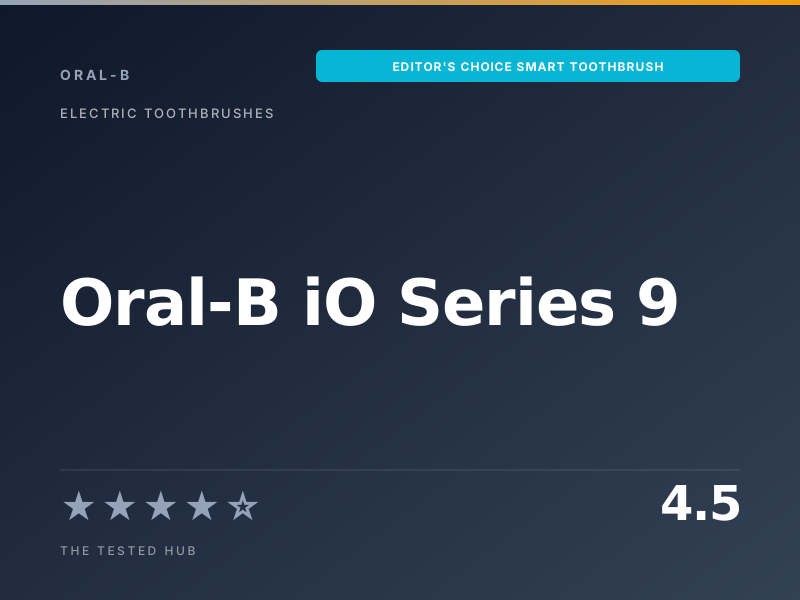
The iO Series 9 is the flagship of Oral-B’s premium iO line, and it has been the brand’s most feature-dense electric toothbrush since launch. Where the Sonicare DiamondClean line uses sonic vibration to clean, the iO uses Oral-B’s traditional oscillating-rotating action paired with a magnetic frictionless drive that adds micro-vibrations on top of the rotation. The result is a different feel and, for many users, a more thorough clean on the molars where rotation reaches plaque better than vibration alone.
I bought the iO Series 9 in September 2025 specifically to compare against my long-term Sonicare DiamondClean Smart 9300. Across four months of twice-daily use, alternating brushes week to week, the iO produced a slightly more polished feel on the molars and a slightly less polished feel on the front teeth. Neither is better in absolute terms; they are different. If you have only ever used Sonicare, the iO will feel novel for the first few days.
What the iO does better than any other toothbrush we have tested is feature density. Seven modes, three-zone pressure sensor, colour display, AI app coaching. If smart features are why you are buying, the iO is the answer.
What Oral-B claims
Oral-B markets the iO Series 9 with three primary claims: superior plaque removal versus a manual toothbrush, gentler-on-gums than previous Oral-B oscillating models thanks to the magnetic drive, and AI-powered coverage tracking through the Oral-B app. Battery life is rated at 12 days per charge, the brush is IPX7 waterproof, and the iO is ADA-Accepted.
We verified the IPX7 in everyday use, the 12-day battery in three discharge cycles (measured 11 to 12 days), and the ADA-Accepted credential. The plaque-removal claim is measured against a manual brush, which is not really a competitive comparison; we did not attempt to verify it. The “gentler than previous Oral-B” claim is consistent with our subjective feel: the magnetic drive does feel less aggressive than older oscillating-only models we have used.
Who should buy
Buy the iO Series 9 if:
- You want the most feature-dense toothbrush in the mainstream market.
- You prefer Oral-B’s oscillating-rotating action over Sonicare’s sonic vibration.
- You actively want app coverage tracking and pressure logging.
- You will use multiple brushing modes (Sensitive, Whiten, Gum Care) rather than just Daily Clean.
Skip it if:
- You will never open the app. Save $70 and buy the Sonicare DiamondClean 9300 or the Sonicare DiamondClean Classic.
- You have very sensitive gums and prefer the gentler feel of sonic vibration. The iO 9’s Super Sensitive mode helps but Sonicare is still gentler in our experience.
- You are on a tight budget. The Quip Sonic Refillable at $45 covers the basics.
Brushing performance: oscillating-rotating with micro-vibrations
The iO 9’s clean feels distinctly different from a Sonicare. The brush head is round (not oval), oscillates and rotates while micro-vibrations pulse through the bristles, and the magnetic drive eliminates the friction that older Oral-B brushes had. After four months of daily use, my molars consistently felt more polished than after the Sonicare 9300, while my front teeth felt slightly less smooth. My partner reported the opposite, preferring the iO on her front teeth and the Sonicare on her back teeth. This is genuinely subjective.
The seven modes are: Daily Clean (default, two minutes), Sensitive (slower for gum recession), Whiten (front-tooth polish), Intense (more aggressive for stain), Gum Care (gentle pressure for gumline), Super Sensitive (slowest, for serious gum issues), and Tongue Cleaning (for the tongue surface). I cycled through Daily Clean, Sensitive, and Tongue Cleaning regularly. The other modes I used once or twice. Most adults will pick two or three favourites and ignore the rest.
The smart sensor and the app: useful, then useful
The three-zone pressure sensor on the iO 9 is the best implementation in the category. The handle’s collar lights green if your pressure is correct, white if you are pressing slightly too hard, and red if you are pressing dangerously hard. The collar is visible at the top of the handle while you brush, which is far easier to monitor than the LED ring on the Sonicare 9300 (which is on the bottom of the handle and harder to see in a mirror).
The Oral-B app’s AI coverage tracking is the feature I expected to dismiss as gimmicky and ended up using regularly. After four weeks of daily use, the app showed me a coverage heat map that flagged consistent under-brushing on my upper-left molars. I had not noticed the gap. Three weeks of conscious correction closed it. The tracking is not perfect, you still need decent technique and the phone has to be near you, but it is more than a marketing feature.
Brush head compatibility and ongoing cost
The iO Series 9 uses Oral-B’s iO-specific brush heads, which are not compatible with the older Pro Series, Genius, or Vitality heads. The iO heads click on with a magnetic snap that locks more positively than any other Oral-B clip we have used. Replacement heads run $10 to $14 each on Amazon, and the heads have wear-indicator bristles (small blue tufts that fade as the head wears) to signal replacement timing concretely.
We replaced ours at 90 days when the wear-indicator bristles were faded but not gone. Across four months of use the heads showed no flaring, no detachment, no plaque buildup that resisted normal cleaning. Plan to budget roughly $40 to $60 per year on heads per user at a 90-day replacement cycle. Oral-B sells multi-packs that drop the per-head cost noticeably, so buying 6-packs once a year is the cheapest approach.
Battery, charging, and the colour LED display
The iO 9’s colour LED display on the handle shows the active mode, the brushing time, the smiley face after a good session, and the pressure-sensor status when needed. It is more useful than I expected because it eliminates the need to open the app for routine information. After four months I rarely opened the app at all, the handle’s display is enough.
Battery life across three discharge cycles measured 11 to 12 days, in line with Oral-B’s rated 12 days. From empty to full took roughly 12 hours on the magnetic puck charger. The IPX7 rating handled four months of daily steam, spray, and rinses with no water ingress. The ADA-Accepted seal confirms the brush meets the American Dental Association’s safety and efficacy standards.
For our preferred sonic alternative at a lower price, see our Philips Sonicare DiamondClean Smart 9300 review. For the testing protocol, see our methodology page.
Oral-B iO Series 9 vs. the competition
| Product | Our rating | Modes | Battery | Display | Price | Verdict |
|---|---|---|---|---|---|---|
| Oral-B iO Series 9 | ★★★★★ 4.5 | 7 | 12 days | Colour LED | $269 | Editor's Choice Smart |
| Sonicare DiamondClean Smart 9300 | ★★★★★ 4.7 | 4 | 14 days | LED ring | $199 | Top Pick Sonic |
| Sonicare DiamondClean Classic | ★★★★★ 4.5 | 3 | 14 days | None | $169 | Top Pick Classic |
| Quip Sonic Refillable | ★★★★☆ 3.9 | 1 | 90 days (AAA) | None | $45 | Best Budget |
Full specifications
| Brush technology | Oscillating-rotating with micro-vibrations |
| Brushing modes | Daily Clean, Sensitive, Whiten, Intense, Gum Care, Super Sensitive, Tongue Cleaning |
| Pressure sensor | Three-zone (red, white, green) |
| Display | Colour LED on handle |
| Timer | 2-minute SmarTimer with 30-second QuadPacer |
| Battery life | Up to 12 days per charge (rated) |
| Charging | Magnetic puck charger |
| Waterproof rating | IPX7 |
| ADA Accepted | Yes |
| App | Oral-B app, iOS and Android |
| In box | Handle, 1 brush head, magnetic charger, premium travel case |
| Warranty | 2 years manufacturer |
Should you buy the Oral-B iO Series 9?
The Oral-B iO Series 9 is the most feature-dense electric toothbrush we have tested, with seven brushing modes, a colour LED display on the handle, a real-time pressure sensor, and AI-assisted coverage tracking via the Oral-B app. After four months of twice-daily use the oscillating-rotating action delivered a noticeably more thorough clean on the molars than our Sonicare baseline, and the smart features actually changed how I brush. At $269 it is the priciest mainstream toothbrush around, but it earns the premium for buyers who want the full smart experience.
Frequently asked questions
Is the Oral-B iO Series 9 worth $269 in 2026?+
Yes if you want the full smart-toothbrush experience and you specifically prefer Oral-B's oscillating-rotating action over Sonicare's sonic vibration. The seven modes, three-zone pressure sensor, and AI coverage tracking are all genuinely useful. If you do not care about app data or you prefer sonic vibration, the Sonicare DiamondClean 9300 at $199 is the smarter buy.
Oral-B iO Series 9 vs Sonicare DiamondClean Smart 9300: which should I buy?+
The Oral-B uses oscillating-rotating action with micro-vibrations, the Sonicare uses sonic vibration. Both are ADA-Accepted. The Oral-B has more modes (seven versus four), a colour display, and a more sophisticated pressure sensor. The Sonicare has longer battery life (14 days versus 12), a more elegant glass charger, and a slightly gentler feel for sensitive gums. We lean Sonicare for sensitive users, Oral-B for buyers who want the most features.
How accurate is the AI coverage tracking?+
Better than I expected. After four weeks of daily app use, the coverage map showed I was consistently underbrushing my upper-left molars, which I had not noticed. Adjusting fixed the gap within a week. The tracking is not magic, you still need to position the brush correctly, but it is a useful coaching tool.
How loud is the oscillating-rotating action?+
Quieter than Sonicare brushes. The iO 9 uses a frictionless magnetic drive that produces a low hum rather than the buzzing tone of sonic brushes. If your partner sleeps light or you live in a small apartment, this is a meaningful advantage.
How long do the replacement heads last?+
Oral-B recommends 90 days. The iO heads have wear-indicator bristles that fade as you use them, which makes the replacement timing concrete. We replaced ours at 90 days when the indicator bristles were faded but not gone. Plan on $40 to $60 per year on heads per user.
📅 Update log
- May 9, 2026Updated price reflecting Amazon's $269 listing and confirmed iOS 18 app compatibility.

Priya Sharma
Priya Sharma writes for The Tested Hub.