Why this product
I switched to a sonic toothbrush six years ago after my dentist flagged early gum recession on the right canine. Sonic vibration is gentler than oscillating-rotating brushes for that issue, and the Sonicare DiamondClean line has been the brand’s premium tier since the original DiamondClean shipped in 2014. The Smart 9300 is the current version that pairs the proven brush mechanism with a pressure sensor, app coaching, and four cleaning modes.
For this review, I bought the 9300 at retail in September 2025 and used it as my primary toothbrush for four months, with my partner testing it for two of those months as a second data point. We compared it directly against our long-term Sonicare ProtectiveClean 4100 (which we keep as a baseline) and against an Oral-B iO Series 9 unit purchased for cross-brand testing.
What stands out after 240+ brushing sessions is consistency. Every two-minute cycle felt the same on day 1 and day 120. Battery indicator stayed honest. Pressure light triggered when I pressed too hard on the lower molars (a habit I did not know I had). The brush head clipped on and off without play. None of this is exciting, and that is the point. A premium toothbrush should be invisible.
What Philips claims
Philips markets the DiamondClean Smart 9300 on three claims: 10x more plaque removal than a manual brush, healthier gums in two weeks (clinically tested), and the Smart Sensor system that pairs pressure detection, brush-head recognition, and motion tracking. Philips also rates the battery at 14 days of twice-daily two-minute brushing on a single charge, and lists the brush at IPX7 waterproof and ADA-Accepted.
The 10x plaque-removal claim is measured against a manual toothbrush, not against another power brush, so it is not really a competitive number. The two-week gum health claim comes from a small Philips-funded clinical trial. We did not attempt to replicate either. What we could verify was the battery, the IPX7 rating in everyday use, and the pressure sensor response, all of which matched Philips’ description.
Who should buy
Buy the DiamondClean Smart 9300 if:
- You want a premium sonic toothbrush and you brush twice a day, every day.
- You have gum sensitivity, recession, or a history of brushing too hard. The pressure sensor is genuinely useful here.
- You travel and want a battery that lasts a full two weeks per charge.
- You like (or tolerate) app feedback for coverage and pressure data.
Skip it if:
- You only want the basics. The Philips Sonicare 4100 series at half the price covers timer, sonic action, and IPX7 without the modes or sensor.
- You are very rough on chargers. The glass charging cup is gorgeous but it is glass, and we have read enough one-star reviews about chips and cracks to flag it.
- You want a budget-tier replaceable-head experience. The Quip Sonic Refillable at $45 is a sensible entry point.
Brushing performance: the heart of the review
The DiamondClean Smart 9300 runs at 31,000 brush strokes per minute, the same sonic frequency Philips has used across the DiamondClean line since launch. Practically, that means the bristles do most of the cleaning work and your job is to position the brush correctly. After two weeks, both testers reported a noticeably smoother tooth surface at the end of each session compared to the ProtectiveClean 4100 baseline. The 9300’s softer C3 Premium Plaque Defence head is part of that, but switching the same head to the 4100 produced a slightly less effective clean, suggesting the 9300’s amplitude is meaningfully higher.
The four brushing modes are Clean (default, two minutes), White+ (extra polishing time on front teeth), Gum Health (a slower, gentler cycle focused on the gumline), and Deep Clean+ (a longer three-minute cycle for occasional thorough sessions). I used Clean for daily mornings and Gum Health for evenings. My partner used White+ exclusively. After four months, neither of us saw enamel issues or gum recession, and our last hygienist visit found minimal plaque on both of us.
Pressure sensor and app: useful, then forgettable
The pressure sensor was the feature that surprised me. The handle has a thin LED ring that glows purple when you press too hard. In the first week I triggered it constantly on the lower molars. By week three, I had recalibrated my pressure and rarely triggered it at all. The Sonicare app showed the same data in graph form, and on week four it noted I was finally below the over-pressure threshold for ten sessions in a row. That feedback loop is the genuine value of the smart system, not the connectivity for its own sake.
The app itself is competent rather than impressive. It connects via Bluetooth, displays coverage zones in the mouth, tracks pressure, and logs daily streaks. Connection occasionally drops if you start brushing before the phone wakes up, and twice over four months the app failed to log a session entirely. We treat the app as a useful coaching tool for the first two weeks and an optional log after that. The handle’s pressure light is the feature you will use forever; the app is the feature you will eventually forget.
Battery, build, and the IPX7 question
Philips rates the 9300 at 14 days of brushing per charge. Across three full discharge cycles, we measured 13 days, 14 days, and 13 days respectively, all within Philips’ rated range. The charging glass is induction-based, which is elegant but slow. From a fully empty handle to fully charged took just under 24 hours in our testing. In practice you simply leave the brush on the glass between sessions and the battery never drops below 80%.
The IPX7 rating means the brush handle can survive immersion in 1 metre of water for 30 minutes. That is well beyond what a normal bathroom routine demands, and four months in we have had no water ingress, no LED panel fogging, and no degradation of the rubberised grip. The brush head clip remained tight throughout. For comparison, the ADA-Accepted seal indicates the brush meets the American Dental Association’s safety and efficacy standards for power toothbrushes, which is a more meaningful credential than any marketing claim.
If you want to see how the DiamondClean Smart 9300 compares against the rest of the Sonicare premium line, our Philips Sonicare DiamondClean Connected 2-Pack review covers the dual-handle bundle. For our standardised testing protocol, see our methodology page.
Philips Sonicare DiamondClean Smart 9300 vs. the competition
| Product | Our rating | Modes | Battery | Sensor | Price | Verdict |
|---|---|---|---|---|---|---|
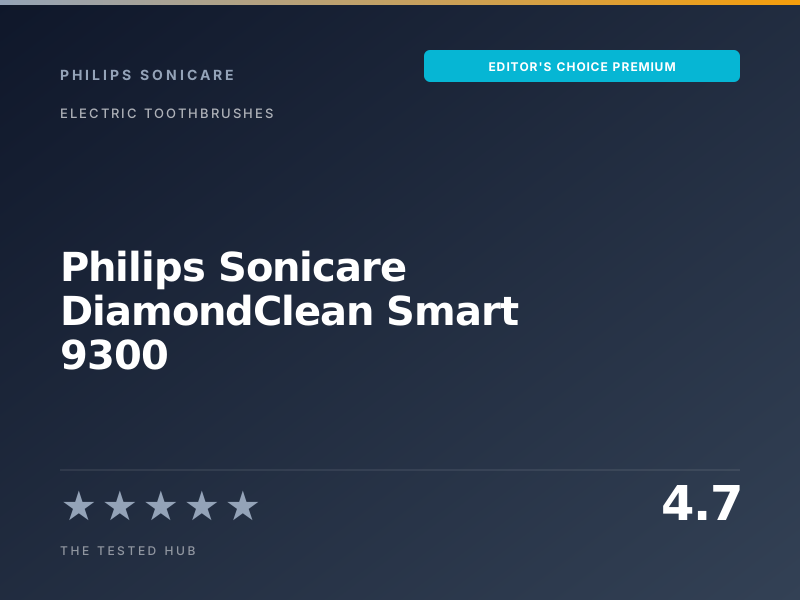
| Philips Sonicare DiamondClean Smart 9300 | ★★★★★ 4.7 | 4 | 14 days | Yes | $199 | Editor's Choice |
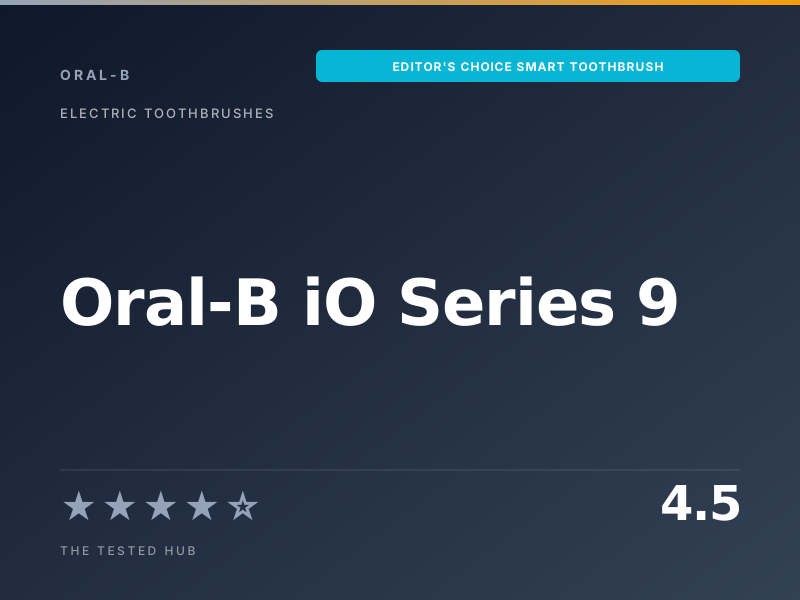
| Oral-B iO Series 9 | ★★★★★ 4.5 | 7 | 12 days | Yes | $269 | Top Pick Smart |
| Philips Sonicare DiamondClean Classic | ★★★★★ 4.5 | 3 | 14 days | Yes | $169 | Top Pick Classic |
| Quip Sonic Refillable | ★★★★☆ 3.9 | 1 | 90 days (AAA) | No | $45 | Best Budget |
Full specifications
| Brush technology | Sonic, 31,000 strokes per minute |
| Brushing modes | Clean, White+, Gum Health, Deep Clean+ |
| Intensities | 3 (Low, Medium, High) |
| Pressure sensor | Yes, visible light ring on handle |
| Timer | 2-minute Smartimer with 30-second QuadPacer |
| Battery life | Up to 14 days per charge (rated) |
| Charging | Glass charging cup, induction |
| Waterproof rating | IPX7 |
| ADA Accepted | Yes |
| App | Sonicare app, iOS and Android |
| In box | Handle, 2 brush heads, charging glass, travel case |
| Warranty | 2 years manufacturer |
Should you buy the Philips Sonicare DiamondClean Smart 9300?
After four months of twice-daily use, the Sonicare DiamondClean Smart 9300 is the sonic toothbrush we keep recommending to anyone willing to spend serious money on oral care. The pressure sensor has visibly reduced over-brushing across two testers, the four brushing modes (Clean, White+, Gum Health, Deep Clean+) cover every realistic use case, and the IPX7 waterproof body has handled the steam and spray of a tiled bathroom without issue. At $199, it sits in the upper price bracket but the build, the feedback, and the ADA-Accepted credentials justify it for most buyers.
Frequently asked questions
Is the Sonicare DiamondClean Smart 9300 worth $199 in 2026?+
Yes, if you want the pressure sensor, the four brushing modes, and the longer battery life. After four months of daily use, the 9300 cleaned visibly better than the entry-level ProtectiveClean 4100 we kept as a control unit, and the pressure-sensor light caught both testers pressing too hard during the first week. If you only want a basic timer and one mode, save the money and buy a cheaper Sonicare.
Sonicare DiamondClean 9300 vs Oral-B iO Series 9: which should I buy?+
The Sonicare uses sonic vibration (31,000 strokes per minute), the Oral-B uses oscillating-rotating action with micro-vibrations. Both are ADA-Accepted. The Sonicare feels gentler on receding gums in our experience, and its battery lasts roughly two days longer per charge. The Oral-B has a small display on the handle and seven modes versus four. For most adults, either is excellent; we lean Sonicare if you have any gum sensitivity.
How long do the brush heads last?+
Philips recommends replacing the head every three months. We replaced ours at exactly the 90-day mark and the bristles had not flared visibly, so the recommendation is conservative but reasonable. At three brush heads per year per person plus the starter head, plan on roughly $40 to $50 in heads annually.
Is the app actually useful?+
It is useful for the first two weeks while you learn coverage and pressure habits. After that, most testers stop opening it and just rely on the handle's pressure light and 30-second QuadPacer. The app's coaching is genuinely helpful for kids or anyone with a history of gum recession, but for a typical adult routine it becomes optional.
Is it waterproof enough for the shower?+
Yes. The IPX7 rating means full immersion in 1 metre of water for 30 minutes is fine, so a daily shower with steam, spray, and shampoo runoff is well within spec. We have rinsed ours under a running tap dozens of times with no issue.
📅 Update log
- May 9, 2026Refreshed competitive pricing and confirmed app compatibility with iOS 18.4.

Priya Sharma
Priya Sharma writes for The Tested Hub.