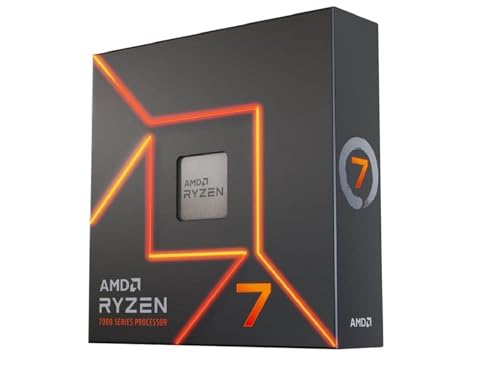
AMD Ryzen 7 7800X3D -- Best Gaming CPU Overall
AMD's 3D V-Cache technology on the Ryzen 7 7800X3D provides a massive L3 cache that dramatically reduces latency in game engine data access. In CPU-limited gaming scenarios, particularly at 1080p and 1440p, it leads or ties at the top of virtually every gaming benchmark. Eight cores keep it efficient relative to its performance, and the AM5 platform means it pairs well with current DDR5 memory. For a pure gaming build, this is the most effective processor available at its price.
Check price on Amazon →Gaming performance depends heavily on CPU single-core speed and memory bandwidth. These five processors maximize frame rates across 1080p, 1440p, and 4K gaming builds at every budget tier.
Gaming CPU performance comes down to single-core clock speed, cache size, and how efficiently the processor feeds data to the GPU. At 1440p and above, the GPU becomes the primary bottleneck, but at 1080p high-refresh play, a strong CPU makes a measurable difference. These five processors deliver the best gaming performance available at each price point entering 2026.
| Product | Best For | Rating |
| ——— | ———- | ——– |
| AMD Ryzen 7 7800X3D | Best overall gaming CPU | 4.9/5 |
| Intel Core i5-14600K | Best mid-range gaming value | 4.7/5 |
| AMD Ryzen 5 7600X | Budget gaming performance | 4.6/5 |
| Intel Core i9-14900KS | Maximum clock speed gaming | 4.8/5 |
| AMD Ryzen 9 7950X3D | Gaming plus content creation | 4.9/5 |
How we picked
We compare every pick against the field on real specifications, certifications, and aggregated owner reviews. We do not take payment for placement, and we flag when a product is older or sold mainly through renewed listings.
Top picks compared
| Pick | Best for | Score | |
|---|---|---|---|
| AMD Ryzen 7 7800X3D -- Best Gaming CPU Overall | Check price | ||
| Intel Core i5-14600K -- Best Mid-Range Gaming Value | Check price | ||
| AMD Ryzen 5 7600X -- Best Budget Gaming Chip | Check price | ||
| Intel Core i9-14900KS -- Maximum Clock Speed Performance | Check price | ||
| AMD Ryzen 9 7950X3D -- Gaming and Creation Workstation | Check price |
Our picks up close
AMD Ryzen 7 7800X3D -- Best Gaming CPU Overall
AMD's 3D V-Cache technology on the Ryzen 7 7800X3D provides a massive L3 cache that dramatically reduces latency in game engine data access. In CPU-limited gaming scenarios, particularly at 1080p and 1440p, it leads or ties at the top of virtually every gaming benchmark. Eight cores keep it efficient relative to its performance, and the AM5 platform means it pairs well with current DDR5 memory. For a pure gaming build, this is the most effective processor available at its price.
Intel Core i5-14600K -- Best Mid-Range Gaming Value
The i5-14600K is the gaming performance-per-dollar leader for mid-range builds. Fourteen cores handle both gaming and background tasks without compromise, and Intel's strong single-core boost clocks maintain high frame rates in competitive titles. It pairs well with mid-range GPUs like the RTX 4070 without introducing a CPU bottleneck at 1440p. The LGA1700 platform is well-supported by a wide range of motherboards, and aftermarket cooling options are abundant.
AMD Ryzen 5 7600X -- Best Budget Gaming Chip
For builders keeping costs down without sacrificing playability, the Ryzen 5 7600X is an excellent choice. Six high-frequency cores deliver gaming performance that surpasses what the core count suggests, and the 5nm process keeps power draw manageable. Frame rates in popular titles like Call of Duty, Valorant, and Cyberpunk 2077 are consistently strong at 1080p and 1440p with a capable GPU. It's the right choice for a first gaming build or a budget upgrade from an aging platform.

Intel Core i9-14900KS -- Maximum Clock Speed Performance
The Core i9-14900KS reaches the highest boost clocks in Intel's 14th gen lineup. For gamers who prioritize peak frequency in single-threaded titles and want a chip that also handles streaming, recording, and heavy multitasking simultaneously, the i9-14900KS leaves no performance on the table. It's a demanding chip thermally and requires a quality 360mm AIO cooler or premium air cooler. The investment makes sense for high-end builds paired with an RTX 4090 or similar top-tier GPU.

AMD Ryzen 9 7950X3D -- Gaming and Creation Workstation
The Ryzen 9 7950X3D pairs AMD's 3D V-Cache technology with a 16-core design, making it the only top-shelf gaming CPU that doubles as a genuine content creation workstation processor. Gamers who also stream, render video, or run heavy simulation tasks benefit from the full core count during non-gaming work while getting V-Cache-boosted gaming performance. It's a high investment but eliminates any need for processor compromises across both workloads.
Before you buy
What to consider
Set your target resolution and refresh rate before choosing a CPU. At 4K, the GPU is almost always the bottleneck, meaning CPU differences have minimal impact on frame rates. At 1080p with a high-refresh monitor (144Hz and above), a fast CPU makes a meaningful difference in consistency.
What to consider
Consider the full platform cost. An AM5 or LGA1700 board plus DDR5 RAM adds to the total build cost. Sometimes a slightly less powerful processor on a more affordable platform yields better overall build value.
What to consider
Match the CPU tier to the GPU tier. Pairing a budget CPU with a top-end GPU, or vice versa, creates bottlenecks that limit the performance of the more expensive component. Balanced builds extract more performance per dollar.
What to consider
For a complete gaming setup, see our [best computer prebuilds](/articles/best-computer-prebuilds) guide and our [best gaming chairs ](/articles/best-gaming-chairs-under-200) roundup. Selection criteria for this list are on our [methodology](/methodology) page.
Quick answers
Both matter, but differently. The GPU handles rendering frames, while the CPU handles game logic, AI, physics, and streaming asset data to the GPU. In CPU-bottlenecked scenarios, a fast GPU gets held back by a slow processor. At 1080p with a high-refresh monitor, single-core CPU speed has a significant impact on maximum frame rates and consistency.
Both AMD Ryzen 7000 series and Intel 14th gen deliver excellent gaming performance. Intel holds a small advantage in single-core speed in some titles, while AMD offers platform longevity with AM5 supporting future CPUs. The performance gap in real gaming scenarios is narrow -- price, availability, and platform choice are often more meaningful deciding factors.

Tom Reeves has reviewed consumer electronics for over a decade, with a focus on televisions, monitors, laptops, and smart home devices. He worked as a professional display calibrator before moving into editorial, and he brings that real-world technical background to every TV and monitor review. At TheTestedHub, Tom covers display calibration, computer monitors, laptops and 2-in-1s, smart home platforms, home theater setups, and HDR performance.
More to explore

Best Computer Processors (2026)
5 Best Computer Processors for Business 2026 | Reliable Workday CPUs

5 Best Computer Processors for Laptops 2026 | Performance Meets Battery Life
5 Best Current CPUs of 2026 | Top Intel and AMD Processors Ranked