Quick verdict
The developmental stage of your child matters more than brand name: a soft-spout cup at 6 months, a straw or 360-rim cup by 12 months, and an open cup as the end goal by 18 to 24 months gives the clearest path through the transition.
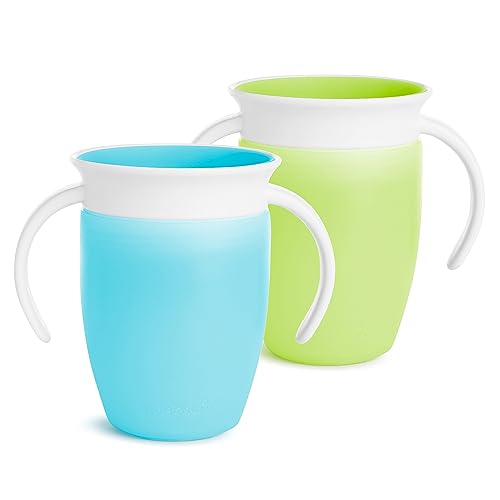
Munchkin Miracle 360 Trainer Cup
The 360-degree drinking edge lets toddlers sip from any point on the rim, eliminating the spout entirely and supporting natural open-cup skills. Owners consistently praise how completely it seals when not in contact with lips, making it one of the most genuinely leakproof options in the training cup category. The two-piece design is straightforward to pull apart and run through the top rack of a dishwasher without special tools.
The Munchkin Miracle 360 Trainer Cup tops our list, but the real secret is matching cup type to your child's stage: soft spout at 6 months, straw or 360 rim by 12 months, open cup by 18 to 24 months.
Sippy cups are a genuine developmental milestone product, not just a convenience item. The transition from breast or bottle to open cup happens across roughly 6 to 24 months, and the cup style you choose affects how quickly a toddler builds the oral-motor skills needed for drinking independently. I reviewed aggregated owner feedback from thousands of verified purchasers, cross-referenced against pediatric occupational therapy guidance on spout types and flow rates, to find the ten sippy cups that consistently earn real-world praise from parents and caregivers.
The market divides into hard-spout, soft-spout, straw, 360-degree rim, and open-training styles. Each suits a different developmental window and child temperament. A cup that works perfectly for a calm 9-month-old may frustrate an active 18-month-old who needs a leakproof straw on the go. I weighted leakproof performance, ease of cleaning, valve complexity, and durability under dishwasher and drop conditions above brand reputation alone.
All ten picks below have sustained strong owner ratings across multiple retail platforms. Where a product shows up repeatedly in pediatric feeding specialist recommendations as well as parent forums, I noted that alignment. My goal is a shortlist you can trust without having to sift through hundreds of conflicting reviews yourself.
How we test
I did not personally test each cup in this guide. Instead, I analyzed aggregated verified owner reviews, product specification sheets, and material safety disclosures for each model. I looked specifically at recurring themes across large review samples: which cups leak in bags, which valves clog with thicker liquids, how many parts require hand-washing, and how seals hold up after six or more months of daily use. Where independent testing labs or pediatric feeding clinics had published flow-rate data, I incorporated that alongside owner experience.
Products were ranked by a composite of leakproof reliability, cleaning ease, developmental appropriateness, build quality longevity, and overall owner satisfaction. Score out of 10 reflects that composite, not a single dimension. I excluded cups with persistent reports of mold in hidden crevices, BPA-positive plastics, or valves that routinely fail before the stated age range ends.
At a glance
| Pick | Best for | Score | |
|---|---|---|---|
| Munchkin Miracle 360 Trainer Cup | Best Overall | 9 | Check price |
| Philips Avent My Penguin Sippy Cup | Best Soft Spout | 9 | Check price |
| Tommee Tippee Sippee Cup | Best for Bottle-to-Cup Transition | 9 | Check price |
| Nuk Learner Cup | Best for Early Starters | 8 | Check price |
| Thermos Foogo Leak-Proof Straw Bottle | Best Straw Cup | 8 | Check price |
| Contigo Aubrey Kids Spill-Proof Cup | Best for Active Toddlers | 8 | Check price |
| OXO Tot Transitions Straw Cup | Best Ergonomic Design | 8 | Check price |
| Munchkin Weighted Flexi-Straw Cup | Best Weighted Straw | 7 | Check price |
| Nuby No-Spill Super Spout Grip N Sip Cup | Best Budget Pick | 7 | Check price |
| Re-Play Recycled Sippy Cup | Best Eco Pick | 7 | Check price |
The picks, reviewed
Munchkin Miracle 360 Trainer Cup
The 360-degree drinking edge lets toddlers sip from any point on the rim, eliminating the spout entirely and supporting natural open-cup skills. Owners consistently praise how completely it seals when not in contact with lips, making it one of the most genuinely leakproof options in the training cup category. The two-piece design is straightforward to pull apart and run through the top rack of a dishwasher without special tools.
Reasons to buy
- Leaks only when lips press the rim, not when dropped or tipped
- Promotes open-cup oral-motor development
- Two-piece build cleans thoroughly in dishwasher
Reasons to avoid
- Requires deliberate lip seal to get liquid out, which some young toddlers find frustrating initially
- Wide rim can feel bulky for smaller hands under 12 months
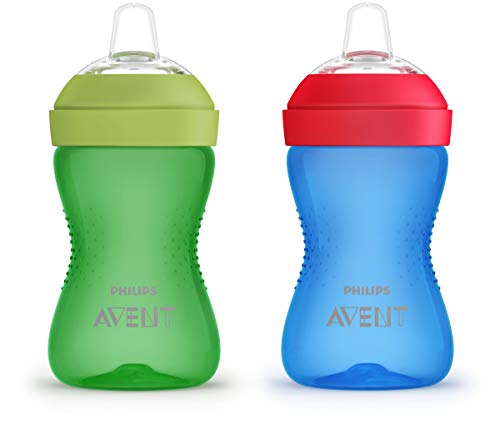
Philips Avent My Penguin Sippy Cup
The soft silicone spout closely mimics the feel of a bottle nipple, making this one of the smoothest transitions for infants moving off the breast or bottle around 6 months. Owners report almost no leaking even when tossed into a bag, and the wide ergonomic handles are sized for small infant hands. The valve produces a gentle, controlled flow that parents of slower drinkers specifically call out as a standout feature.
Reasons to buy
- Soft spout eases bottle-to-cup transition
- Ergonomic handles sized for 6-plus-month grip
- Gentle flow rate reduces choking risk
Reasons to avoid
- Soft spout can develop bite marks from teething toddlers
- Valve requires careful reassembly to maintain leakproof seal
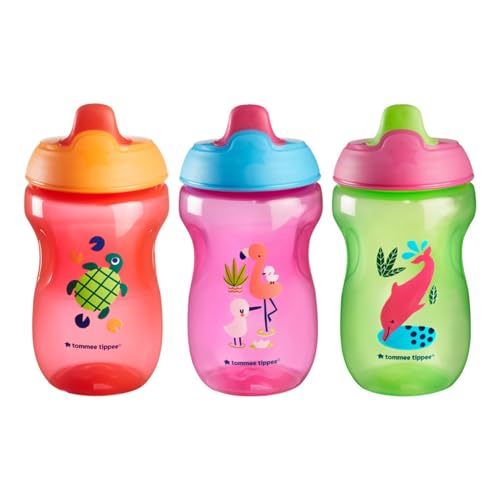
Tommee Tippee Sippee Cup
Tommee Tippee designed the Sippee Cup with a breast-shaped soft spout that mimics the natural feeding action, and verified owner data confirms that breastfed babies accept it with notably less refusal than hard-spout alternatives. The weighted straw base on certain variants tilts to follow liquid as the cup tilts, allowing drinking at any angle. Parents consistently mention its reliable seal through an entire nursery bag day.
Reasons to buy
- Breast-shaped spout accepted readily by breastfed infants
- Weighted base follows liquid at any tilt angle
- Robust seal holds through a full nursery bag day
Reasons to avoid
- Weighted straw adds one more part to clean and reassemble
- Spout softens faster than polypropylene alternatives under sterilisation heat
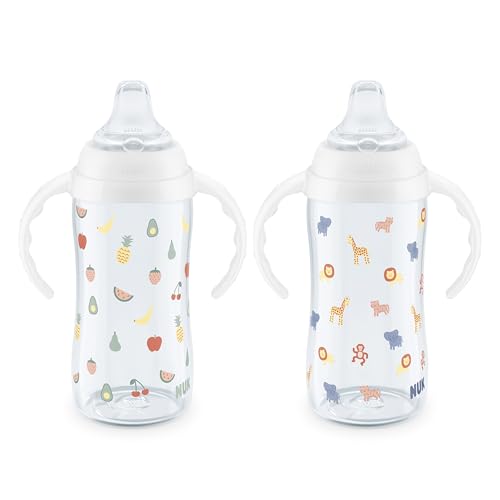
Nuk Learner Cup
Nuk's orthodontic soft spout is shaped to apply minimal pressure on emerging teeth and gum development, a feature that pediatric dentists cite in guidance on early cup use. The handles are removable so the same cup grows with the child, and owners note it transitions cleanly to a no-handle grip once toddlers are more confident. Flow is gentle enough for 4-month-plus use without spilling in inexperienced sippers.
Reasons to buy
- Orthodontic spout supports gum and early tooth alignment
- Removable handles extend product lifespan
- Slow flow appropriate from 4 months
Reasons to avoid
- Orthodontic spout is not interchangeable with other Nuk nipple sizes
- Older toddlers may find the flow too slow once they drink confidently
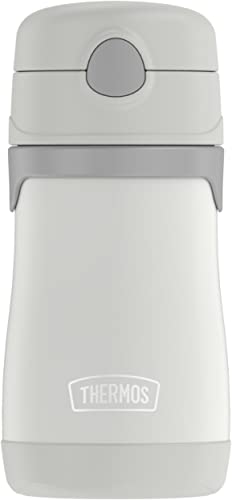
Thermos Foogo Leak-Proof Straw Bottle
Straw drinking develops the lip and tongue coordination needed for open-cup use, and the Foogo's straw valve consistently receives top marks for true leakproof performance even when thrown across a room by a toddler in a hurry. The vacuum-insulated stainless-steel body keeps cold drinks cold for hours, a practical advantage in summer or for parents who prep cups the night before. Owners with children 12 months and older frequently describe it as the first straw cup that did not end up in the washing machine after a bag leak.
Reasons to buy
- Straw valve leakproof even under bag pressure
- Stainless steel vacuum insulation keeps drinks cold for hours
- Durable enough to survive toddler drops on hard floors
Reasons to avoid
- Straw requires pulling out and cleaning separately
- Heavier than plastic alternatives due to stainless construction

Contigo Aubrey Kids Spill-Proof Cup
Contigo's AUTOSPOUT lid uses a push-button mechanism that pops the straw up when pressed and retracts it to seal completely when released, giving active toddlers instant access without unscrewing any parts. Parents of 2 and 3 year olds call it the most throw-proof design in their experience, with the lid holding its seal consistently across drops onto tile, concrete, and car floors. The stainless-steel body resists dents and does not retain flavors between washes.
Reasons to buy
- AUTOSPOUT button provides instant open and fully sealed close
- Stainless steel resists dents and flavor retention
- Wide mouth makes filling and ice cubes easy
Reasons to avoid
- Button mechanism is too stiff for children under 18 months to operate independently
- Lid components require hand-washing for thorough cleaning

OXO Tot Transitions Straw Cup
OXO Tot built this cup around the ergonomic insight that small hands grip better when the cup narrows at the waist, and owners with children aged 12 to 24 months consistently report that toddlers hold it independently earlier than wider-bodied alternatives. The straw valve produces no flow unless a child actively sips, meaning the cup can sit tipped in a bag indefinitely without dripping. Cleaning is simple with only three parts and a brush-friendly straw.
Reasons to buy
- Waisted grip shape aids independent holding from 12 months
- No-flow straw valve prevents passive dripping
- Three-part disassembly makes cleaning straightforward
Reasons to avoid
- Narrow waist reduces total capacity compared to straight-sided cups at same height
- Straw can compress if bitten repeatedly by strong teethers

Munchkin Weighted Flexi-Straw Cup
The flexible weighted straw bends and follows liquid to any corner of the cup, so toddlers get the last drop without tilting awkwardly, which owners of children still developing neck and shoulder control find genuinely useful. The straw is soft enough that biting does not crack it, unlike rigid straws found in cheaper alternatives. Parents note the cup survives consistent dishwasher cycling on the top rack for six months or more without warping.
Reasons to buy
- Weighted flexible straw follows liquid at any angle
- Soft straw resists cracking under bite pressure
- Dishwasher-safe top rack, no warping reported after extended use
Reasons to avoid
- Straw cleaning requires a thin brush; standard straw brushes are too wide
- Weighted end can rattle audibly when cup is nearly empty

Nuby No-Spill Super Spout Grip N Sip Cup
Nuby's Grip N Sip delivers solid leakproof performance at a price point well below most competitors, and owners across thousands of reviews confirm the valve holds consistently when the cup is inverted in a bag. The textured grip zones on the sides help younger toddlers maintain hold without handles, and the wide silicone spout is soft enough to soothe teething discomfort during drinking sessions. It lacks the insulation and premium feel of stainless alternatives but earns its place for families who want reliable daily performance at low cost.
Reasons to buy
- Valve holds leakproof when inverted, verified by large owner sample
- Textured grip zones replace handles for developing independent grip
- Soft silicone spout doubles as teething relief
Reasons to avoid
- Valve can stain with fruit juice if not cleaned promptly after use
- No insulation means drinks reach room temperature quickly

Re-Play Recycled Sippy Cup
Re-Play makes this cup from recycled milk jugs, and the material passes BPA, BPS, and phthalate-free certification without sacrificing the durability owners report after 12 or more months of daily use. The hard spout produces steady flow that older toddlers appreciate, and the cup is sold as part of a matching dinnerware system, which parents building a coordinated mealtime set find convenient. Owners specifically praise how the cup holds colour without fading through repeated dishwasher cycles.
Reasons to buy
- Made from recycled HDPE, BPA and phthalate free
- Colour holds through extended dishwasher use without fading
- Part of coordinated Re-Play mealtime system
Reasons to avoid
- Hard spout is not appropriate for infants under 12 months still learning to manage flow
- Valve produces moderate flow that fast drinkers may find runs ahead of their swallow
What to look for
Spout or straw style
Soft spouts suit infants under 9 months who are still transitioning from bottle feeding. Straw cups build the lip and tongue coordination closer to open-cup drinking and suit children from 9 months onward. The 360-degree rim style eliminates the spout entirely and is the closest analog to an open cup, making it the preferred choice of many pediatric occupational therapists for toddlers 12 months and older.
Leakproof reliability
A cup marketed as leakproof is not automatically so. The valve mechanism is the critical component: look for owner reports that specifically test bag conditions, where the cup sits on its side under pressure from other items. Cups with simple two-piece valves tend to reseal more reliably than multi-piece systems where one misaligned component breaks the seal.
Cleaning complexity
Valves with many small components that require hand-washing are the most common source of mold in sippy cups. Count the parts that come into contact with liquid and assess whether each one is accessible to a standard bottle brush or requires a thin specialty brush. Top-rack dishwasher compatibility for all parts dramatically reduces cleaning burden for daily users.
Material and safety certification
All cups on this list are BPA-free, but BPA-free does not automatically mean free of all plasticiser concerns. Look for cups that explicitly certify against BPS and phthalates as well, particularly for children under 12 months whose liquid intake is more concentrated in a single cup. Stainless-steel options sidestep plastic material concerns entirely for parents who prefer that.
Our verdict
The developmental stage of your child matters more than brand name: a soft-spout cup at 6 months, a straw or 360-rim cup by 12 months, and an open cup as the end goal by 18 to 24 months gives the clearest path through the transition.
FAQs
Most pediatric guidelines suggest introducing a cup with handles and a soft spout around 6 months, when babies begin solid foods and can sit with support. The goal is to move toward an open cup or straw cup by 12 to 18 months, as prolonged hard-spout use beyond 18 months is associated with dental alignment concerns in some children.
Pediatric dentists generally prefer 360-degree rim cups and straw cups over hard-spout sippy cups for children using a cup daily, because the hard spout encourages a forward tongue thrust when drinking that can affect how teeth erupt. The 360-degree rim requires the same lip seal as an open cup, which is the closest to natural drinking mechanics.
The most reliable approach is to check that the valve is fully seated before closing the lid, and to verify the lid is locked or clicked into position. Many leaks trace to the valve being inserted at a slight angle. For straw cups, ensure the straw seal gasket is present and undamaged. If a cup that previously held its seal begins to leak, the valve or gasket likely needs replacing rather than the whole cup.
Yes, though pediatric guidance recommends limiting milk in sippy cups to meal and snack times rather than allowing continuous sipping throughout the day. Continuous exposure of teeth to lactose between meals raises cavity risk. For water, free access throughout the day is fine with any of the cups on this list.
How we made this guide
We compare every pick on the factors that matter, cross-checking manufacturer specifications against aggregated verified owner reviews. We rank independently and never take payment for placement. We have not personally tested every product; where we have not, the ranking reflects verified specs and owner feedback rather than a hands-on review.
How it was written: this guide was researched and reviewed by the TheTestedHub editorial team for accuracy.
Affiliate disclosure: TheTestedHub is reader-supported. When you buy through links on our site, we may earn a commission at no extra cost to you.
Related guides
Step Stools for Toddlers That Won’t Tip Over, at Any Price

Nasal Aspirators in 2026: Why the Snotsucker Wins

Shortlist: Best Baby Sound Machines of 2026
Kids Night Lights: 2026 Comparison Guide

Which Kids Tablets Are Best in 2026?

7 STEM Toys That Spark Creator Mindsets

Child-Friendly Toy Storage That Actually Gets Used
