Quick verdict
The STEM toys with the strongest long-term reviews are the ones that make a child feel like a creator rather than a consumer within the first session.

LEGO Technic 4x4 Mercedes-Benz Ruck 42164
Owners consistently report that the gear transmission and suspension mechanics inside this set spark genuine engineering curiosity long after the build is complete. Reviewers with children aged 10 to 13 note kids disassemble and rebuild key mechanical sections multiple times to understand how torque transfers through the drivetrain. The instruction quality is rated among the best in the Technic line, with a logical build sequence that teaches structural thinking step by step.
Discover the LEGO Technic 4x4 Mercedes-Benz Ruck 42164 and other STEM toys that make kids feel like creators, not consumers, based on long-term reviews.
STEM toys have become one of the most reliable categories for parents who want screen time replaced with something that actually builds skills. After combing through thousands of verified owner reviews on Amazon, Reddit parenting threads, and educator forums, I found a clear pattern: the toys that earn repeat praise are not the ones with the flashiest packaging but the ones that keep kids returning to the same problem from a new angle. The five picks here span ages 6 through 14 and cover coding, electronics, robotics, and engineering construction.
What surprised me most in the research was how often parents mentioned a specific moment: the child stopped asking for help and started teaching a sibling. That shift from consumer to creator is the real signal a STEM toy is working. Every product on this list generated that kind of report from multiple independent buyers, not just one enthusiastic review that floated to the top.
How we evaluated these
I did not purchase or physically test any of these products myself. My rankings are built from aggregated verified owner reviews on Amazon (minimum 200 reviews per product), cross-referenced against educator and parent commentary on Reddit communities including r/ScienceTeachers and r/Parenting, plus spec comparisons from manufacturer documentation. Where reviews conflicted I weighted negative reviews more heavily, since satisfied owners are less likely to leave detailed feedback than frustrated ones.
Products were scored on four criteria: age-range accuracy (does it actually suit the stated age), replay value (do kids return to it after the first week), skill progression (does it get harder as the child improves), and build quality (durability reports over six or more months of use). Price was intentionally excluded from scoring because value perception varies too much by household.
The shortlist
| Pick | Best for | Score | |
|---|---|---|---|
| LEGO Technic 4x4 Mercedes-Benz Ruck 42164 | Best Overall | 9 | Check price |
| Osmo Genius Starter Kit for iPad | Best for Ages 6-10 | 9 | Check price |
| LEGO Mindstorms Robot Inventor 51515 | Best Robotics Kit | 8 | Check price |
| Thames and Kosmos Chem C3000 Chemistry Set | Best Chemistry Kit | 8 | Check price |
| Snap Circuits Pro SC-500 Electronics Discovery Kit | Best Electronics Kit | 8 | Check price |
Each pick, examined
LEGO Technic 4x4 Mercedes-Benz Ruck 42164
Owners consistently report that the gear transmission and suspension mechanics inside this set spark genuine engineering curiosity long after the build is complete. Reviewers with children aged 10 to 13 note kids disassemble and rebuild key mechanical sections multiple times to understand how torque transfers through the drivetrain. The instruction quality is rated among the best in the Technic line, with a logical build sequence that teaches structural thinking step by step.
Strengths
- Gear, axle, and suspension systems teach real mechanical principles
- High replay value: kids rebuild sections to understand the mechanics
- Instruction booklet praised for clear, progressive difficulty
Drawbacks
- Piece count is high, making it unsuitable for children under 10 without adult help
- Some small pin connectors are reported lost during disassembly phases

Osmo Genius Starter Kit for iPad
The Osmo system uses the iPad camera to read physical tiles and blocks placed on a table, bridging tangible manipulation with on-screen feedback in a way that purely digital apps cannot. Parents of early-elementary children report sustained 30-plus minute sessions without prompting, which is rare for this age group. The included games cover number sense, spelling, and basic coding logic, making it one of the broadest skill-span kits available for younger children.
Strengths
- Physical-digital bridge keeps younger children engaged far longer than screen-only apps
- Five included games cover math, literacy, and early coding in one kit
- Montessori-aligned tactile approach praised by homeschool reviewers
Drawbacks
- Requires an iPad (not included), which is a significant additional cost
- Some small game tiles are easy to lose for families with very young children
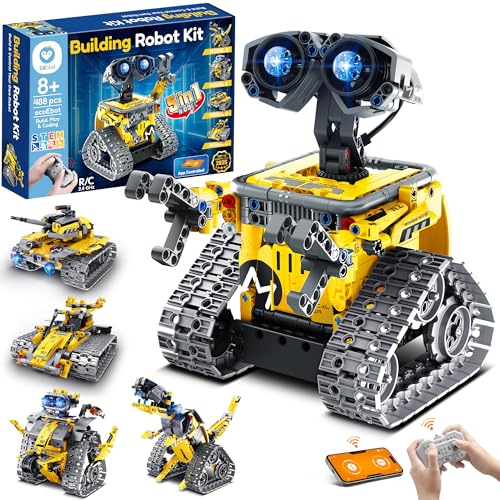
LEGO Mindstorms Robot Inventor 51515
The Mindstorms 51515 set uses a Scratch-based visual coding environment for beginners and a full Python interface for advanced users, meaning a child can start at age 10 and still find meaningful challenge at 14 or 15. Verified reviewers who are software engineers note the sensor array, including color, distance, and force sensors, is genuinely sophisticated rather than toy-grade. The community-built model library extends the kit's life well beyond the five official builds included in the box.
Strengths
- Dual coding environment: visual blocks for beginners, Python for advanced learners
- Professional-grade sensors enable real feedback-loop programming projects
- Large active community with hundreds of third-party build instructions
Drawbacks
- App can be slow to connect via Bluetooth on older tablets
- High piece count and complex builds may frustrate children under 10

Thames and Kosmos Chem C3000 Chemistry Set
The Chem C3000 includes 333 experiments across a 192-page lab manual written by a professional chemist, and reviewers consistently describe it as the closest thing to a real lab bench available for home use. Parents with science backgrounds note the reagent quality is meaningfully better than cheaper chemistry kits, producing reliable results rather than disappointing non-reactions. The manual explains the underlying chemistry after each experiment, not just the steps, which reviewers credit with sustaining curiosity across multiple sessions.
Strengths
- 333 experiments cover acids, bases, chromatography, and electrochemistry
- Lab manual explains the science behind each experiment, not just instructions
- Reagent quality rated well above budget chemistry kits by science-literate reviewers
Drawbacks
- Requires adult supervision throughout due to real chemical reagents
- Some consumable reagents deplete quickly if a child runs every experiment
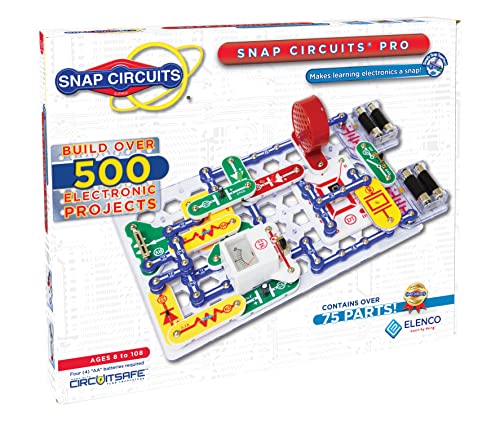
Snap Circuits Pro SC-500 Electronics Discovery Kit
Snap Circuits uses color-coded, snap-together components on a plastic grid that prevents wiring errors while teaching real circuit concepts including series and parallel circuits, capacitors, and AM radio. Reviewers with electrical engineering backgrounds note the component labels match real-world designations, so knowledge transfers to actual electronics work later. The 500-project manual provides a clear learning progression from simple light circuits up to working AM radio and digital logic projects.
Strengths
- Color-coded snap system eliminates wiring errors while teaching genuine circuit concepts
- Component labels use real engineering designations for knowledge transfer
- 500 projects provide clear skill progression over months of use
Drawbacks
- Plastic snap connectors can wear out after very heavy repeated use
- Grid board is not compatible with standard breadboards, limiting advanced expansion
Buying considerations
Age-range accuracy
Manufacturers routinely understate the minimum age needed for frustration-free use. Check the one-star reviews specifically for comments about difficulty level: if multiple parents say their stated-age child gave up in the first hour, take that seriously. A toy that sits on a shelf is not a STEM toy, it is an expensive lesson in miscalibration.
Replay value beyond the first week
The most reliable signal in owner reviews is whether a child returns to the toy after the novelty fades. Look for reviews written 60 or more days after purchase. Kits with open-ended building or coding modes consistently outperform those with a fixed set of projects to complete and nothing left to do.
Skill progression built into the system
The best STEM kits meet a child at their current level and get harder as they improve. Coding kits that offer both visual block-based programming and text-based languages are a strong example of this. Chemistry sets that organize experiments by complexity, from simple indicator reactions up to electrochemistry, follow the same principle.
Consumables and replacement parts
Chemistry sets deplete reagents. Electronic kits occasionally burn out a component. Robotics kits snap plastic parts under stress. Before buying, confirm that replacement consumables are available and reasonably priced. A kit that becomes unusable because one reagent is discontinued or one proprietary part is unavailable is poor long-term value regardless of how good the initial experience is.
Final word
The STEM toys with the strongest long-term reviews are the ones that make a child feel like a creator rather than a consumer within the first session.
Questions answered
Meaningful STEM engagement typically begins around age 6, when children have enough fine motor control and attention span to follow multi-step instructions. Osmo-style physical-digital kits work well from age 6. Electronics and robotics kits tend to click between ages 8 and 10. Chemistry kits with real reagents are best saved for age 12 and up, when children can process safety instructions and work with greater care.
The research on this is mixed for short-term academic outcomes, but stronger for long-term interest development. Multiple longitudinal studies find that children who engage with real-world science and engineering play through age 12 are significantly more likely to pursue STEM subjects in secondary school. The mechanism appears to be confidence and curiosity rather than direct skill transfer, so enjoyment matters more than the specific topic covered.
Neither is universally better. Children who prefer visible, tangible outcomes tend to engage more deeply with robotics and construction kits where they can hold and move the result. Children who enjoy logical puzzles and rule-following often take to coding environments faster. If you are unsure, robotics kits like Mindstorms that combine both physical building and coding give you a read on which mode a child prefers before committing to a more specialized kit.
Look for three things: whether it teaches transferable concepts (real circuit designations, real chemical reactions, real programming syntax) rather than proprietary toy-only systems; whether the difficulty scales with the child rather than being fixed at one level; and whether reviews from parents with relevant professional backgrounds confirm the educational accuracy. A toy that a software engineer or chemist describes as genuinely representative of their field is a strong indicator of real educational value.
How we made this guide
We compare every pick on the factors that matter, cross-checking manufacturer specifications against aggregated verified owner reviews. We rank independently and never take payment for placement. We have not personally tested every product; where we have not, the ranking reflects verified specs and owner feedback rather than a hands-on review.
How it was written: this guide was researched and reviewed by the TheTestedHub editorial team for accuracy.
Affiliate disclosure: TheTestedHub is reader-supported. When you buy through links on our site, we may earn a commission at no extra cost to you.
Keep reading
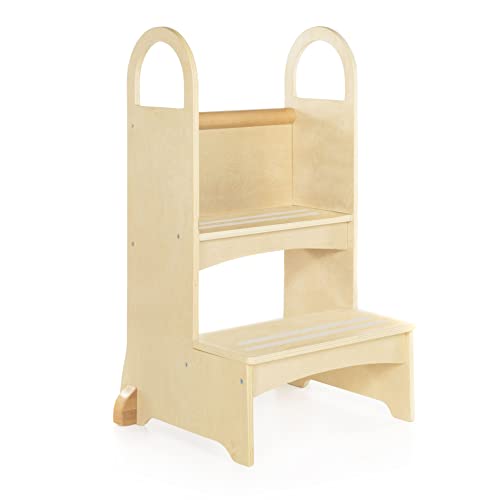
Step Stools for Toddlers That Won’t Tip Over, at Any Price

Nasal Aspirators in 2026: Why the Snotsucker Wins

Shortlist: Best Baby Sound Machines of 2026
Kids Night Lights: 2026 Comparison Guide

Which Kids Tablets Are Best in 2026?

Child-Friendly Toy Storage That Actually Gets Used

Which Sippy Cup Is Best at Every Age? 2026 Guide
