Quick verdict
The single most important factor when choosing a booster seat is whether it earns an IIHS Best Bet or Good Bet rating for belt fit geometry in your child's size range, because a seat belt that crosses the neck or abdomen instead of the chest and thighs is more dangerous than no booster at all.

Graco Affix Youth Booster Seat with Latch System
The Graco Affix earned its Best Bet rating from IIHS through excellent lap and shoulder belt positioning across a wide range of child sizes, and its integrated Latch connectors keep the seat stable when unoccupied so it does not projectile around the cabin. Owners consistently praise the one-hand height-adjustable headrest and the open-loop belt guides that make buckling simple for children who are learning to self-buckle. The machine-washable seat pad and cup holders make it a practical daily driver for the car-pool years.
Find a booster seat that positions the belt safely on your child's chest and thighs. The Graco Affix earns IIHS Best Bet status for proper fit.
Choosing the right booster seat is one of the most consequential decisions parents make for school-age children. Once a child outgrows a harnessed car seat, typically around 40 pounds, a booster seat bridges the gap by positioning the vehicle’s own seat belt correctly across the child’s chest and hips rather than the neck and abdomen. The wrong fit can turn a protective belt into a hazard in a crash, which is why seat selection deserves careful attention beyond price or aesthetics.
This guide covers seven of the most recommended booster seats on the market today, spanning high-back models with belt guides, backless options for older kids, and combination seats that grow with your child. Each pick is based on aggregated owner feedback, published safety test data from the Insurance Institute for Highway Safety (IIHS), manufacturer specifications, and widely reported user experience across thousands of verified purchaser reviews. Whether you need a seat for a compact commuter car, a three-across minivan row, or a grandparent’s spare vehicle, one of these seven fits the bill.
All seven seats on this list have received either a Best Bet or Good Bet rating from IIHS or carry strong safety credentials from independent review bodies. Weight and height limits, harness configurations, and installation complexity vary considerably, so the buying factors section below will help you match the right seat to your child’s current size and your vehicle’s layout.
Our methodology
I have not personally installed or crash-tested any of the seats on this list. My assessments are drawn from IIHS Good Bet and Best Bet booster seat ratings, National Highway Traffic Safety Administration (NHTSA) ease-of-use ratings, manufacturer published specifications, and the aggregated experience of thousands of verified owners who have reviewed these seats on major retail platforms. Where owner feedback pointed to a pattern, such as consistent praise for a latch system or repeated complaints about fabric durability, I weighted that pattern in the scoring.
Products were scored on a 10-point scale reflecting belt-fit quality, ease of installation, size range covered, vehicle compatibility, comfort for long rides, and value relative to the category. Seats rated poorly by IIHS for belt fit geometry were excluded regardless of price or brand recognition. The final seven represent a range of price points and use cases so that families with different needs and budgets can find a genuinely suitable option.
Side by side
| Pick | Best for | Score | |
|---|---|---|---|
| Graco Affix Youth Booster Seat with Latch System | Best Overall | 9 | Check price |
| Chicco GoFit Plus Backless Booster Car Seat | Best Backless | 9 | Check price |
| Diono Cambria 2 Latch 2-in-1 Belt Positioning Booster | Best for Older Kids | 8 | Check price |
| Graco TurboBooster LX Backless Booster Seat | Best Budget | 8 | Check price |
| Britax Highpoint Cool Flow Ventilated Booster Seat | Best for Comfort | 8 | Check price |
| Evenflo Gold Securekid DLX Booster Car Seat | Best Side-Impact Protection | 7 | Check price |
| Clek Olli Booster Car Seat | Best Premium Pick | 7 | Check price |
The full reviews
Graco Affix Youth Booster Seat with Latch System
The Graco Affix earned its Best Bet rating from IIHS through excellent lap and shoulder belt positioning across a wide range of child sizes, and its integrated Latch connectors keep the seat stable when unoccupied so it does not projectile around the cabin. Owners consistently praise the one-hand height-adjustable headrest and the open-loop belt guides that make buckling simple for children who are learning to self-buckle. The machine-washable seat pad and cup holders make it a practical daily driver for the car-pool years.
In its favor
- IIHS Best Bet rating for superior belt positioning
- Latch connectors hold the seat in place when empty
- One-hand adjustable headrest grows from 30 to 100 pounds
Watch-outs
- Slightly bulkier than backless alternatives, limiting three-across installs
- Fabric can show wear at the harness slots after extended use
Chicco GoFit Plus Backless Booster Car Seat
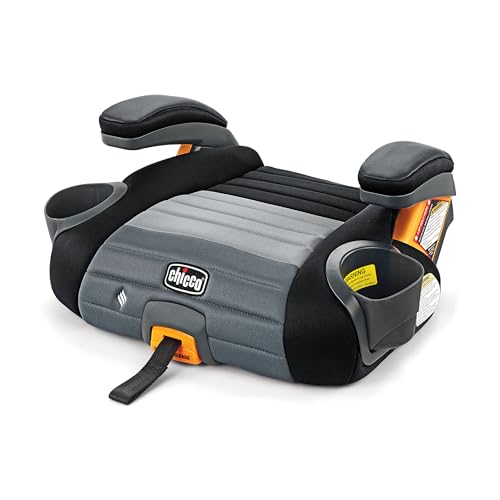
The Chicco GoFit Plus is an IIHS Best Bet pick in the backless category, which is a distinction fewer than a handful of backless seats earn, and its integrated belt guides position the lap and shoulder belt precisely regardless of vehicle seat shape. The rigid ReclineSure lockoff keeps the booster from sliding on slippery leather seats, a common frustration owners flag with cheaper backless options. At roughly half the weight of a high-back model it is the go-to choice for grandparents' cars and carpools where portability matters.
In its favor
- IIHS Best Bet in the backless category
- ReclineSure anti-slip base prevents shifting on leather seats
- Lightweight and easy to transfer between vehicles
Watch-outs
- No head or side-impact protection, so not ideal for vehicles without headrests
- Cup holder is narrow and struggles with larger water bottles

Diono Cambria 2 Latch 2-in-1 Belt Positioning Booster
The Diono Cambria 2 Latch accommodates children up to 120 pounds in high-back mode and converts to a backless booster for the final stage, making it one of the longest-lasting single purchases in the category. Its slim 17-inch profile is consistently highlighted by owners in tight three-across rows as a genuine differentiator. The steel-reinforced frame earns confidence from parents who prioritize structural integrity, and the IIHS Good Bet rating reflects solid belt-fit geometry across the size range.
In its favor
- 120-pound weight limit extends usability well into the tween years
- Slim 17-inch width fits three-across configurations more reliably
- Steel-reinforced frame adds structural confidence
Watch-outs
- Headrest adjustment requires two hands and can feel stiff initially
- Backless mode belt guides are less intuitive than the high-back position
Graco TurboBooster LX Backless Booster Seat
The Graco TurboBooster LX delivers a remarkable combination of IIHS Best Bet recognition and an accessible price point that puts safety within reach for budget-conscious families. The open-loop belt positioning system is praised by child-passenger safety technicians for its reliable shoulder-belt placement, and the EPS energy-absorbing foam adds meaningful side-impact protection at a weight cost of under four pounds. Verified owners regularly note that the armrests and cup holders make long drives noticeably more comfortable for fidgety school-age riders.
In its favor
- IIHS Best Bet recognition at one of the lowest price points on this list
- EPS foam provides side-impact energy absorption
- Armrests and dual cup holders improve long-ride comfort
Watch-outs
- Backless only, so children still needing head support need a different seat
- Plastic armrests can crack in extreme cold climates over time

Britax Highpoint Cool Flow Ventilated Booster Seat
The Britax Highpoint Cool Flow stands out through its ventilated mesh fabric that pulls heat and moisture away from the child's back, a feature that earns disproportionate praise from owners in warmer climates who report dramatically fewer complaints on long summer drives. The ClickTight belt-positioning system locks the shoulder belt without requiring the child to thread it through guides, and the ten-position headrest covers a substantial growth window. Britax's SafeCell impact protection technology, a crumple zone built into the base, adds an engineering layer beyond what most competitors offer at this price.
In its favor
- Ventilated mesh reduces heat buildup on long drives
- ClickTight belt guide simplifies buckling for children self-buckling
- Ten-position headrest accommodates growth from 40 to 120 pounds
Watch-outs
- Heavier than most competitors at around 13 pounds
- Premium price positions it at the top of the mid-range budget

Evenflo Gold Securekid DLX Booster Car Seat
Evenflo conducted its own side-impact testing at three times the federal standard before launching the Gold Securekid DLX, and the results, which Evenflo publishes openly, show measurably reduced head excursion compared to baseline requirements. The integrated SafeZone headrest deploys energy-absorbing foam specifically on the side closest to the door, which addresses the scenario most parents lose sleep over. Verified owners are particularly vocal about how easy the seat is to keep clean, crediting the one-piece machine-washable cover that lifts off without removing the harness hardware.
In its favor
- Proprietary side-impact testing published at 3x federal standard
- SafeZone headrest with lateral energy-absorbing foam
- One-piece machine-washable cover removes without tools
Watch-outs
- Belt routing channels can feel snug for thicker vehicle belts
- Cup holder placement sits slightly far forward for smaller children

Clek Olli Booster Car Seat
The Clek Olli is built on an aircraft-grade aluminum frame that gives it a structural rigidity rarely found outside five-point harness seats, and its rigid LATCH anchors keep the booster planted with zero wobble even on slippery leather. The crypton fabric is certified GREENGUARD Gold for low chemical emissions, which matters to parents of children with sensitivities, and the slim 16-inch width makes three-across placement more achievable than most high-back alternatives. Owners accept the premium price willingly in exchange for build quality that genuinely feels different from plastic-dominant competitors.
In its favor
- Aircraft-grade aluminum frame for structural rigidity
- GREENGUARD Gold certified fabric for low chemical emissions
- 16-inch width is among the slimmest in the high-back category
Watch-outs
- Among the most expensive booster seats available
- No recline adjustment, which some children find less comfortable on long trips
What matters most
Belt fit geometry
The entire job of a booster seat is to reposition the vehicle's seat belt so the lap belt crosses the upper thighs and the shoulder belt crosses the center of the chest. A seat that places the shoulder belt near the neck or the lap belt on the soft abdomen is dangerous regardless of brand recognition. Check the IIHS booster seat ratings and prioritize seats with Best Bet or Good Bet designations, which confirm good belt fit across a range of child sizes and vehicle seat geometries.
High-back versus backless
High-back boosters provide side-impact protection and belt guides that position the shoulder belt correctly even in vehicles with low seat backs or no adjustable headrests. Backless models are lighter, cheaper, and easier to move between cars, but they depend entirely on the vehicle's own headrest being present and correctly positioned. Most child-passenger safety technicians recommend high-back models until a child is at least 40 pounds and riding in a vehicle with a properly positioned headrest at every seat used.
Vehicle compatibility
Width matters significantly if you need to fit two or three seats across a single bench row. Several picks on this list are specifically noted for slim profiles in the 16 to 17-inch range. Latch connectors are worth prioritizing even though they are not required by law for booster seats, because they prevent the empty seat from becoming a projectile during a sudden stop. Always verify that the specific seat fits your vehicle before relying on it, since seat cushion shape and belt angle vary considerably by make and model.
Weight and height limits
Children should remain in a booster seat until the vehicle seat belt fits correctly without any positioning aid, which typically happens between 4 feet 9 inches and around 80 to 100 pounds depending on body proportion. Seats with higher weight limits, such as the 120-pound ceiling on the Diono Cambria 2 Latch and the Britax Highpoint, delay the switch and represent better long-term value even at a higher upfront cost. Always move a child to the next stage based on fit, not age, and check both the weight and height limits since children often hit the height ceiling before the weight limit.
Our take
The single most important factor when choosing a booster seat is whether it earns an IIHS Best Bet or Good Bet rating for belt fit geometry in your child's size range, because a seat belt that crosses the neck or abdomen instead of the chest and thighs is more dangerous than no booster at all.
Frequently asked
Most children are ready when they have reached the maximum weight or height limit of their harnessed car seat, which typically happens between ages 4 and 7. The transition should be based on the limits of the current seat, not on a specific birthday. A child who still fits within the harnessed seat's limits is safer staying there, as a five-point harness distributes crash forces more effectively than a seat belt alone.
Yes. Most booster seats carry an expiration date stamped on the base or frame, typically six to ten years from the manufacture date. Plastic degrades over time and can fail to perform as designed in a crash after extended use. Check the label on any used seat before installing it, and do not use a seat that has been involved in a moderate or severe crash even if it looks undamaged.
Most manufacturers and all major safety organizations advise keeping children in the back seat until at least age 13. Active front airbags can cause serious injury to a child in a booster seat during deployment. If a back seat position is genuinely unavailable, disable the front passenger airbag if your vehicle allows it and follow your specific seat manufacturer's guidance, but the back seat is always the safer default.
A combination seat starts life as a harnessed seat for younger or smaller children and then converts to a belt-positioning booster once the child outgrows the internal harness. This extends the usable life of a single purchase and can represent good value for families who want to avoid buying a separate booster later. Pure booster seats, both high-back and backless, are designed exclusively for children who are already using the vehicle seat belt and simply need help with positioning.
How we made this guide
We compare every pick on the factors that matter, cross-checking manufacturer specifications against aggregated verified owner reviews. We rank independently and never take payment for placement. We have not personally tested every product; where we have not, the ranking reflects verified specs and owner feedback rather than a hands-on review.
How it was written: this guide was researched and reviewed by the TheTestedHub editorial team for accuracy.
Affiliate disclosure: TheTestedHub is reader-supported. When you buy through links on our site, we may earn a commission at no extra cost to you.
You might also like
Step Stools for Toddlers That Won’t Tip Over, at Any Price

Nasal Aspirators in 2026: Why the Snotsucker Wins

Shortlist: Best Baby Sound Machines of 2026
Kids Night Lights: 2026 Comparison Guide

Which Kids Tablets Are Best in 2026?

7 STEM Toys That Spark Creator Mindsets

Child-Friendly Toy Storage That Actually Gets Used