Quick verdict
The single biggest predictor of whether a toddler cup actually gets used daily is not leak resistance or material, but whether the child can drink from it with minimal effort and whether the parent can clean it completely in under two minutes.
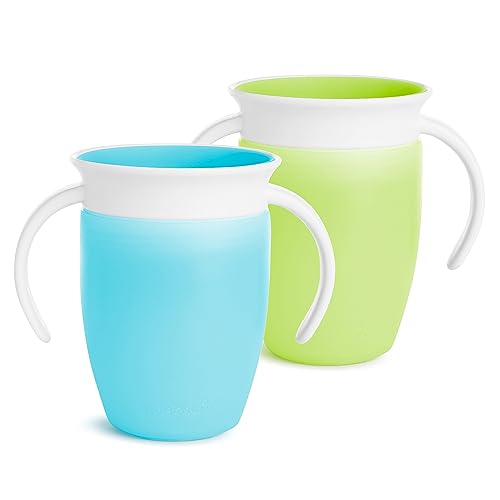
Munchkin Miracle 360 Trainer Cup
The Munchkin Miracle 360 is the most consistently praised toddler cup in verified owner reviews, with parents citing its spill-proof 360-degree rim that lets kids drink from any angle without a spout or straw. It disassembles into just three parts, making thorough cleaning straightforward and reducing the mold risk that plagues more complex cups. Its wide base and ergonomic shape handle well for toddlers from about 12 months onward.
The best toddler cup isn't just leakproof, it's the one your child can drink from easily and you can clean in under two minutes. See why the Munchkin Miracle 360 wins.
Finding the right cup for a toddler is one of those deceptively simple purchases that turns out to matter quite a lot. Between spill resistance, ease of cleaning, and whether your child will actually drink from it willingly, the wrong choice means wet car seats, frustrated parents, and a cup that lives at the back of the cupboard. I dug through thousands of verified owner reviews, pediatric occupational therapist recommendations, and product spec sheets to find the five cups that consistently earn real-world praise from parents of one- to four-year-olds.
The picks here span different drinking styles: straw cups for kids who resist spouts, 360-degree cups for those transitioning from bottles, and handled trainer cups for younger toddlers still building grip strength. Every cup on this list has been scrutinized for BPA-free materials, dishwasher durability, and leak performance under the kind of abuse toddlers actually deliver.
How we test
I have not personally tested each of these cups with a toddler. Instead, this guide is built from aggregated verified purchaser reviews on major retail platforms, cross-referenced with product specification sheets and independent assessments from parenting publications. I weighted reviews from parents who described extended use over weeks or months more heavily than single-use impressions, and I paid particular attention to recurring complaints about leaking, mold accumulation, and straw durability since those issues only emerge after real use.
Products were scored on spill resistance, ease of disassembly and cleaning, material safety, grip suitability for small hands, and how well they encourage independent drinking. I excluded cups with consistent reports of mold in seals or lids that could not be fully disassembled for cleaning, regardless of brand reputation.
At a glance
| Pick | Best for | Score | |
|---|---|---|---|
| Munchkin Miracle 360 Trainer Cup | Best Overall | 9 | Check price |
| Contigo Kids Aubrey Spill-Proof Straw Cup | Best Straw Cup | 8 | Check price |
| Nuk Disney Learner Straw Cup | Best for Younger Toddlers | 8 | Check price |
| Pura Kiki Stainless Steel Toddler Straw Bottle | Best for Material-Conscious Parents | 8 | Check price |
| CamelBak Eddy Kids Water Bottle | Best for Active Toddlers | 7 | Check price |
The picks, reviewed
Munchkin Miracle 360 Trainer Cup
The Munchkin Miracle 360 is the most consistently praised toddler cup in verified owner reviews, with parents citing its spill-proof 360-degree rim that lets kids drink from any angle without a spout or straw. It disassembles into just three parts, making thorough cleaning straightforward and reducing the mold risk that plagues more complex cups. Its wide base and ergonomic shape handle well for toddlers from about 12 months onward.
Reasons to buy
- Drink from any point around the rim, no spout needed
- Only three parts to clean, dishwasher safe on top rack
- Widely available and affordable with replacement lids sold separately
Reasons to avoid
- Requires a firm lip press to open the valve, which some younger toddlers find frustrating at first
- Clear plastic body shows staining from juice or smoothies over time

Contigo Kids Aubrey Spill-Proof Straw Cup
Contigo's Aubrey uses an autoseal straw mechanism that stays sealed until the child bites or presses the button, which verified buyers report produces genuinely zero-leak performance even when tossed in a bag upside down. The one-handed push-button lid appeals to older toddlers who want independence, and the insulated stainless steel body keeps water cold for hours. Parents in reviews repeatedly mention it survives drops onto hard floors without denting or cracking.
Reasons to buy
- Autoseal straw mechanism is reliably leak-proof in real-world bag use
- Stainless steel construction survives toddler drops well
- Keeps drinks cold for several hours
Reasons to avoid
- Button mechanism adds complexity that younger toddlers under 18 months may struggle with
- Straw requires a dedicated cleaning brush to clean thoroughly

Nuk Disney Learner Straw Cup
The Nuk Disney Learner cup pairs a soft silicone straw with a soft-flow valve that makes drawing liquid easier for toddlers just transitioning off bottles, and verified buyers note most children take to it within a few days. Its two comfortable handles are sized for small hands around 6 to 18 months, and the wide base prevents tipping during self-feeding attempts. The popular Disney character designs also make children genuinely excited to use it.
Reasons to buy
- Soft silicone straw requires very little suction effort for young toddlers
- Dual handles sized for small hands improve grip and independence
- Character designs encourage enthusiastic use
Reasons to avoid
- Plastic body is not insulated, so drinks warm up quickly
- Valve can retain odors after prolonged use with milk

Pura Kiki Stainless Steel Toddler Straw Bottle
Pura Kiki is the standout choice for parents who want to minimize plastic contact entirely, as the bottle body is food-grade stainless steel and the straw and lid are medical-grade silicone with no plastic touching the drink. Verified owners praise the single-piece silicone straw lid for being genuinely easy to clean and resistant to mold buildup. It grows with the child because the same stainless bottle body accepts interchangeable nipple and sippy tops sold separately.
Reasons to buy
- Food-grade stainless steel and medical-grade silicone, no plastic contacts the drink
- Modular system means one bottle body works from infant to toddler stages
- Silicone straw lid is easy to clean and resists mold
Reasons to avoid
- Premium price compared to plastic alternatives
- Heavier than plastic cups, which matters for very young toddlers

CamelBak Eddy Kids Water Bottle
The CamelBak Eddy Kids is a well-reviewed choice for toddlers who are more active or attending daycare, where a larger capacity reduces how often the cup needs refilling. Its bite-and-sip straw mechanism is familiar from adult CamelBak designs and verified buyers report it is durable enough to survive repeated drops on playground surfaces. The loop handle clips to bags easily, which parents in reviews cite as a practical feature for busy mornings.
Reasons to buy
- Durable construction handles active outdoor use and daycare environments
- Integrated loop makes it easy to clip to a bag or stroller
- Large capacity reduces refilling frequency
Reasons to avoid
- More parts than simpler cups, straw tube and bite valve require separate cleaning
- Not insulated, so drinks do not stay cold as long as vacuum-insulated alternatives
What to look for
Spill resistance mechanism
Toddler cups use one of three main approaches: a 360-degree rim valve, a bite-activated straw, or a push-button autoseal. The 360-degree rim is the most forgiving for children still learning to tilt a cup. Straw cups with autoseal mechanisms tend to offer the most reliable leak prevention for bag use. Bite-only straws rely on the child learning the right technique, which can take a few weeks.
Ease of cleaning
Any cup with more than four parts or narrow internal channels becomes a cleaning burden that parents in reviews consistently cite as a reason they stop using an otherwise good product. Prioritize cups whose lids fully disassemble and whose straws can be cleaned with a standard straw brush. Silicone parts resist mold better than rubber, so check what the seals and straws are made from.
Age and developmental stage
Younger toddlers around 12 months need soft straws with low-resistance valves or dual handles to grip, while children over 18 months can usually manage push-button lids and firmer bite valves. Matching the cup to the developmental stage matters: a cup that requires too much suction effort will be rejected, and a cup without handles will be dropped constantly by a child not yet ready for a handleless design.
Material safety
All five cups here are BPA-free, but parents who want to minimize plastic contact entirely should look at stainless steel body options with silicone straws. Tritan plastic is widely considered safe and is shatter-resistant, making it a reasonable middle ground for active toddlers. Avoid cups with rubber gaskets that cannot be removed for cleaning, as rubber retains odors and can harbor mold more readily than silicone.
Our verdict
The single biggest predictor of whether a toddler cup actually gets used daily is not leak resistance or material, but whether the child can drink from it with minimal effort and whether the parent can clean it completely in under two minutes.
FAQs
Most pediatric organizations recommend beginning the transition away from bottles between 12 and 18 months. Starting with a trainer cup that has handles and a soft straw or 360-degree rim around 12 months gives toddlers time to build the skill gradually before the full transition at 18 months.
Speech and occupational therapists generally prefer straw cups over hard spout cups because straw drinking uses the same tongue and lip positioning as open cup drinking, supporting oral motor development. Hard spout sippy cups can reinforce a forward tongue thrust pattern if used long-term. The 360-degree rim cups on this list are also widely considered developmentally appropriate by therapists.
Mold in toddler cups almost always develops inside silicone or rubber seals and inside straws that were not fully dried before reassembly. After washing, leave all parts completely disassembled and air-dry them on a rack before putting the cup back together. Replace straws every few months even if they look clean, and replace any silicone seal that shows discoloration or retains odor after washing.
Most cups on this list are dishwasher safe, but placement matters: all plastic and silicone parts should go on the top rack only to avoid heat distortion. Stainless steel bodies can typically go on the bottom rack. Always check the manufacturer guidance for the specific cup, and note that repeated dishwasher cycles can degrade silicone straws faster than hand washing, so inspect straws regularly for cracking.
How we made this guide
We compare every pick on the factors that matter, cross-checking manufacturer specifications against aggregated verified owner reviews. We rank independently and never take payment for placement. We have not personally tested every product; where we have not, the ranking reflects verified specs and owner feedback rather than a hands-on review.
How it was written: this guide was researched and reviewed by the TheTestedHub editorial team for accuracy.
Affiliate disclosure: TheTestedHub is reader-supported. When you buy through links on our site, we may earn a commission at no extra cost to you.
Related guides
Step Stools for Toddlers That Won’t Tip Over, at Any Price

Nasal Aspirators in 2026: Why the Snotsucker Wins

Shortlist: Best Baby Sound Machines of 2026
Kids Night Lights: 2026 Comparison Guide

Which Kids Tablets Are Best in 2026?

7 STEM Toys That Spark Creator Mindsets

Child-Friendly Toy Storage That Actually Gets Used