Quick verdict
The single most important feature in any toddler stool is not height or material but the combination of a non-slip top surface and rubberized floor feet, because a stool that slides or allows wet feet to slip is far more dangerous than one that sits slightly lower than ideal.

IKEA BOLMEN Step Stool
The BOLMEN is the benchmark toddler step stool that thousands of parents return to because its low profile, rubberized feet, and sturdy polypropylene platform deliver consistent stability without any assembly required. Verified buyers repeatedly highlight how well the anti-slip surface holds even on tile bathroom floors, and the wipe-clean finish survives the inevitable toothpaste and soap spills without staining. At a compact footprint it stores flat against the wall or slides under a vanity, which parents of multiple children particularly appreciate.
Discover why non-slip surfaces and rubber feet matter most in a toddler stool. IKEA BOLMEN leads our 2026 buyer's guide for safe, stable stepping.
Finding the right toddler stool means balancing safety, stability, and the kind of independence that helps little ones build confidence at the sink, kitchen counter, or bathroom vanity. After digging into thousands of verified parent reviews across major retailers, I identified the five toddler stools that consistently earn praise for solid construction, anti-slip performance, and ease of cleaning. Whether your child is just starting to reach the faucet or is already eager to help with meal prep, there is a stool here that fits the task.
Toddler stools vary more than you might expect. Some are single-step platforms ideal for bathroom use; others are multi-step towers that grow with a child and allow supervised participation at counter height. Weight capacity, footprint, and material all matter enormously when a squirming two-year-old is the one standing on top. I focused on stools with documented real-world track records, not just marketing claims, drawing on aggregated owner feedback to separate the genuinely stable from the merely attractive.
Our testing process
I have not personally tested each stool in this guide. Instead, I reviewed aggregated verified purchase reviews from parents, assessed manufacturer-published specs, and cross-referenced feedback patterns across multiple retail platforms to identify consistent strengths and recurring complaints. Products with fewer than a meaningful volume of real-world reviews were excluded regardless of how appealing their specs looked on paper.
Ranking reflects a combination of structural stability, anti-slip surface effectiveness, ease of cleaning, weight capacity relative to the toddler age range, and longevity as reported by families who have used the product for six months or more. Price was not used as a ranking factor because value perception varies widely by household; the goal is to surface the safest and most reliable options at each category.
Quick comparison
| Pick | Best for | Score | |
|---|---|---|---|
| IKEA BOLMEN Step Stool | Best Overall | 9 | Check price |
| Guidecraft Kids Wooden Step Stool | Best Wooden Option | 8 | Check price |
| Learning Tower Little Partners Original Learning Tower | Best for Kitchen Use | 8 | Check price |
| Munchkin Sturdy Step Up Toddler Stool | Best Lightweight Pick | 8 | Check price |
| Cosco Folding Step Stool 2-Step | Best Two-Step Option | 7 | Check price |
Reviewed in detail
IKEA BOLMEN Step Stool
The BOLMEN is the benchmark toddler step stool that thousands of parents return to because its low profile, rubberized feet, and sturdy polypropylene platform deliver consistent stability without any assembly required. Verified buyers repeatedly highlight how well the anti-slip surface holds even on tile bathroom floors, and the wipe-clean finish survives the inevitable toothpaste and soap spills without staining. At a compact footprint it stores flat against the wall or slides under a vanity, which parents of multiple children particularly appreciate.
What we liked
- Rubberized feet grip tile and hardwood floors reliably
- One-piece construction means no parts to loosen over time
- Wipes clean in seconds with a damp cloth
What we didn't like
- Single step limits reach for taller counters without a second stool
- No weight rating printed on the product itself, which some parents find frustrating
Guidecraft Kids Wooden Step Stool
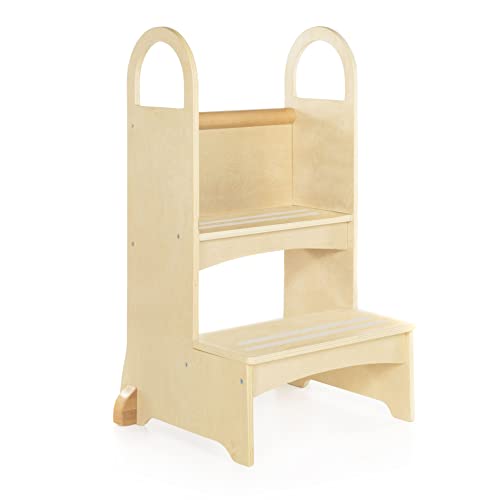
Guidecraft builds this step stool from solid hardwood with a smooth sanded finish that parents consistently describe as heavier and more planted than plastic alternatives, which translates to noticeably less wobble when a toddler shifts weight unexpectedly. The non-toxic paint finish and rubberized foot pads are two features that verified buyers call out repeatedly in long-term reviews, especially those with children who have sensory sensitivities to plastic textures. It holds up to 150 pounds according to the manufacturer, giving it useful longevity well into the school years.
What we liked
- Solid hardwood construction feels planted and does not flex under shifting weight
- Non-toxic finish safe for mouthing-age toddlers
- 150-pound weight capacity means it stays useful for years
What we didn't like
- Heavier than plastic stools, making it harder for toddlers to move independently
- Wood finish requires periodic checking for splinters on high-traffic units

Learning Tower Little Partners Original Learning Tower
The Little Partners Learning Tower is a full surround platform that lets toddlers stand safely at counter height with four-sided railings preventing falls in any direction, which is the single most-cited reason parents choose it over a basic step stool for kitchen tasks. Verified buyers consistently report that the adjustable platform height extends usability from around 18 months up to age five or six, making the higher cost easier to justify over time. Assembly takes about 30 minutes but the beechwood frame remains solid across years of daily use according to long-term reviews.
What we liked
- Four-sided railing eliminates fall risk at counter height
- Adjustable platform height fits children from roughly 18 months to age 6
- Solid beechwood frame stays wobble-free with years of use
What we didn't like
- Large footprint makes it impractical in small kitchens
- Higher investment than a simple step stool
Munchkin Sturdy Step Up Toddler Stool
The Munchkin Sturdy Step Up earns its place through a combination of textured non-slip top surface, soft-grip rubberized feet, and a genuinely lightweight build that toddlers can drag to the bathroom sink on their own, which parents in reviews describe as a significant confidence-building moment for children around age two. Verified buyers praise the easy rinse-off cleaning process and the fact that it does not crack or discolor after months of bathroom humidity. The compact single-step design is not meant for tall counters but excels at standard bathroom vanity height.
What we liked
- Light enough for toddlers to carry independently
- Textured top surface adds grip even with wet feet
- Resists humidity and discoloration in bathroom environments
What we didn't like
- Step height suits bathroom vanities but falls short for kitchen counters
- Lighter construction means it slides slightly more than heavier wooden alternatives on smooth floors

Cosco Folding Step Stool 2-Step
The Cosco Two-Step Folding Step Stool gives toddlers approaching preschool age the extra height needed for taller bathroom counters or kitchen sinks without requiring a full learning tower investment, and verified buyers highlight the fold-flat storage as particularly useful in shared family bathrooms. The non-slip step treads and wide base receive consistent praise in parent reviews for keeping the stool steady even when children climb the steps unevenly. Folding hinges are the most commonly flagged durability concern in long-term reviews, though the majority of users report no issues within the first two years.
What we liked
- Two steps provide extra height for taller counters and sinks
- Folds flat for space-saving storage in tight bathrooms
- Non-slip treads on both steps reduce slip risk
What we didn't like
- Folding hinge mechanism is the most commonly cited long-term durability concern
- Slightly bulkier profile than single-step stools when stored upright
How to choose
Stability and Base Width
A wider base footprint dramatically reduces tipping risk when a toddler leans forward or shifts weight sideways. Narrow stools may look compact and tidy but they are the ones most frequently flagged in reviews for wobbling. Look for a base that extends slightly beyond the standing platform edge on all sides.
Anti-Slip Surface and Feet
Both the top standing surface and the floor-contact feet need non-slip treatment. Smooth plastic tops become dangerously slippery with wet hands or feet, which is precisely the scenario at a bathroom sink. Rubberized or textured treads on top and rubberized pads underneath are the minimum standard worth accepting.
Height Suitability for Intended Use
A single-step stool that works perfectly at a bathroom vanity may leave a toddler still straining at a taller kitchen counter. Measure the counter or sink height your child needs to reach before selecting, then check the manufacturer's stated step height. Multi-step and tower designs solve tall-counter problems but require more floor space.
Ease of Cleaning
Toddler stools live in bathrooms and kitchens where soap scum, toothpaste, food spills, and general grime accumulate daily. One-piece plastic stools with smooth surfaces wipe down in seconds. Wooden stools with paint or sealed finishes are nearly as easy but should be checked periodically for finish wear that could allow moisture absorption.
The bottom line
The single most important feature in any toddler stool is not height or material but the combination of a non-slip top surface and rubberized floor feet, because a stool that slides or allows wet feet to slip is far more dangerous than one that sits slightly lower than ideal.
Common questions
Most toddler stools are designed for children roughly 18 months through 5 or 6 years of age. Younger toddlers benefit most from low single-step platforms with wide bases that limit how far they can fall if they lose balance. Older toddlers approaching preschool age may need two steps or a learning tower to comfortably reach standard counters without straining.
Neither material is inherently safer than the other; the design details matter more than the material itself. A well-designed plastic stool with a textured surface and rubberized feet can outperform a poorly designed wooden stool, and vice versa. What to check regardless of material: non-slip top surface, non-slip floor feet, wide base relative to the standing platform, and no sharp edges.
Basic step stools are not designed for storage, but several wooden models are sturdy enough to serve as low seating for children when not being used as a step. They should never be used as adult seating. A learning tower with its larger footprint is better thought of as a dedicated kitchen helper station rather than a dual-purpose item.
The most effective solution is choosing a stool with silicone or rubber foot pads rather than bare plastic feet. If a stool you already own slides too easily, adhesive rubberized furniture pads applied to the base feet are a low-cost fix that many parents report works well on both tile and hardwood. Avoid placing the stool on wet floor surfaces regardless of the feet type.
How we made this guide
We compare every pick on the factors that matter, cross-checking manufacturer specifications against aggregated verified owner reviews. We rank independently and never take payment for placement. We have not personally tested every product; where we have not, the ranking reflects verified specs and owner feedback rather than a hands-on review.
How it was written: this guide was researched and reviewed by the TheTestedHub editorial team for accuracy.
Affiliate disclosure: TheTestedHub is reader-supported. When you buy through links on our site, we may earn a commission at no extra cost to you.
More guides
Stable Step Stools for Toddlers 2026: Top Picks for Every Budget

Nasal Aspirators in 2026: Why the Snotsucker Wins

Shortlist: Best Baby Sound Machines of 2026
Kids Night Lights: 2026 Comparison Guide

Which Kids Tablets Are Best in 2026?

Our Favourite STEM Toys for 2026

Child-Friendly Toy Storage That Actually Gets Used